- Title
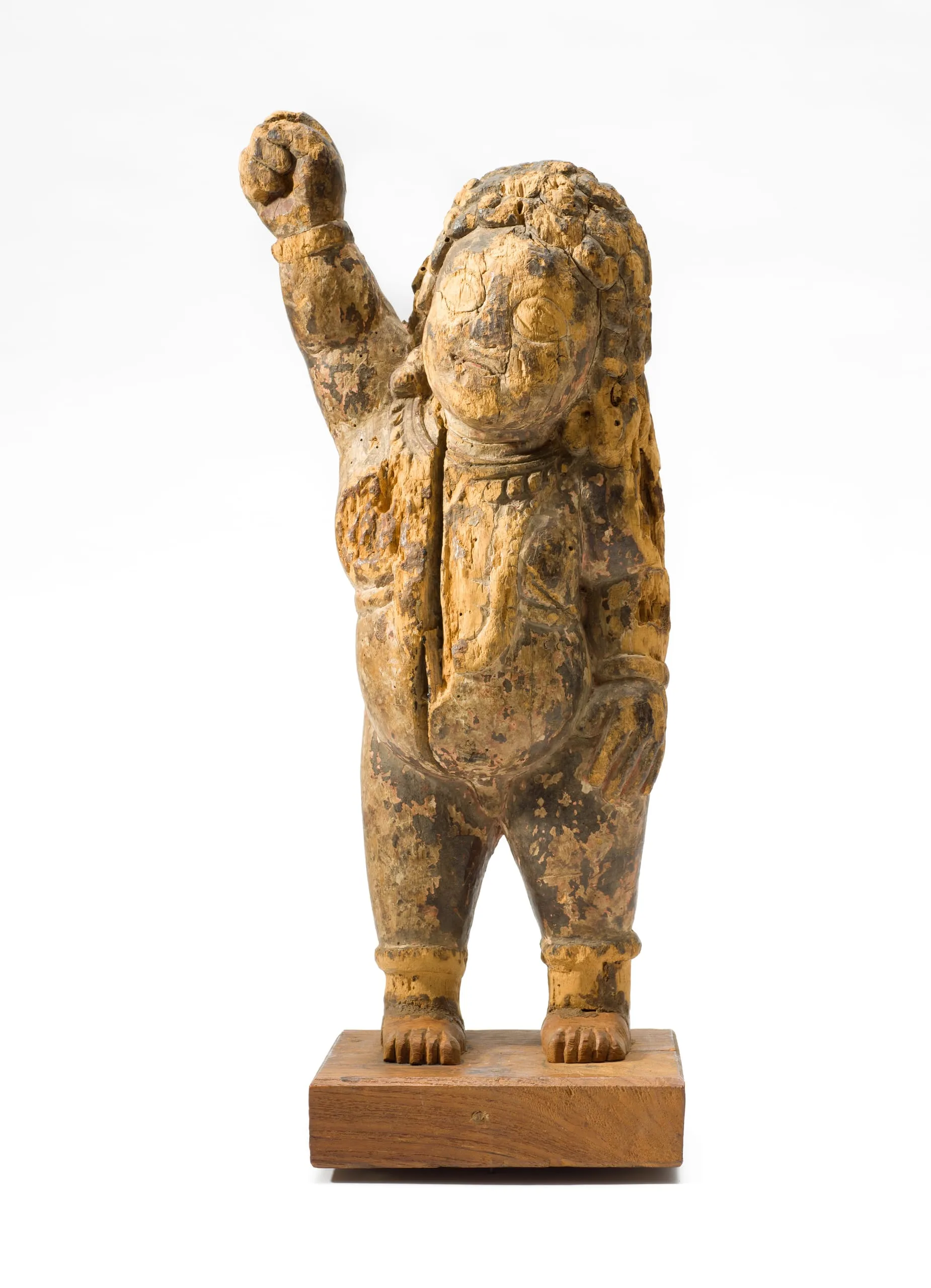
- A Dwarf Attendant
- Date Made
- 10th century
- Medium
- Wood with traces of paint
- Dimensions
- 16 1/2 x 7 1/2 x 4 1/2 in. (41.91 x 19.05 x 11.43 cm)
- Accession Number
- M.73.4.1
- Curatorial Notes
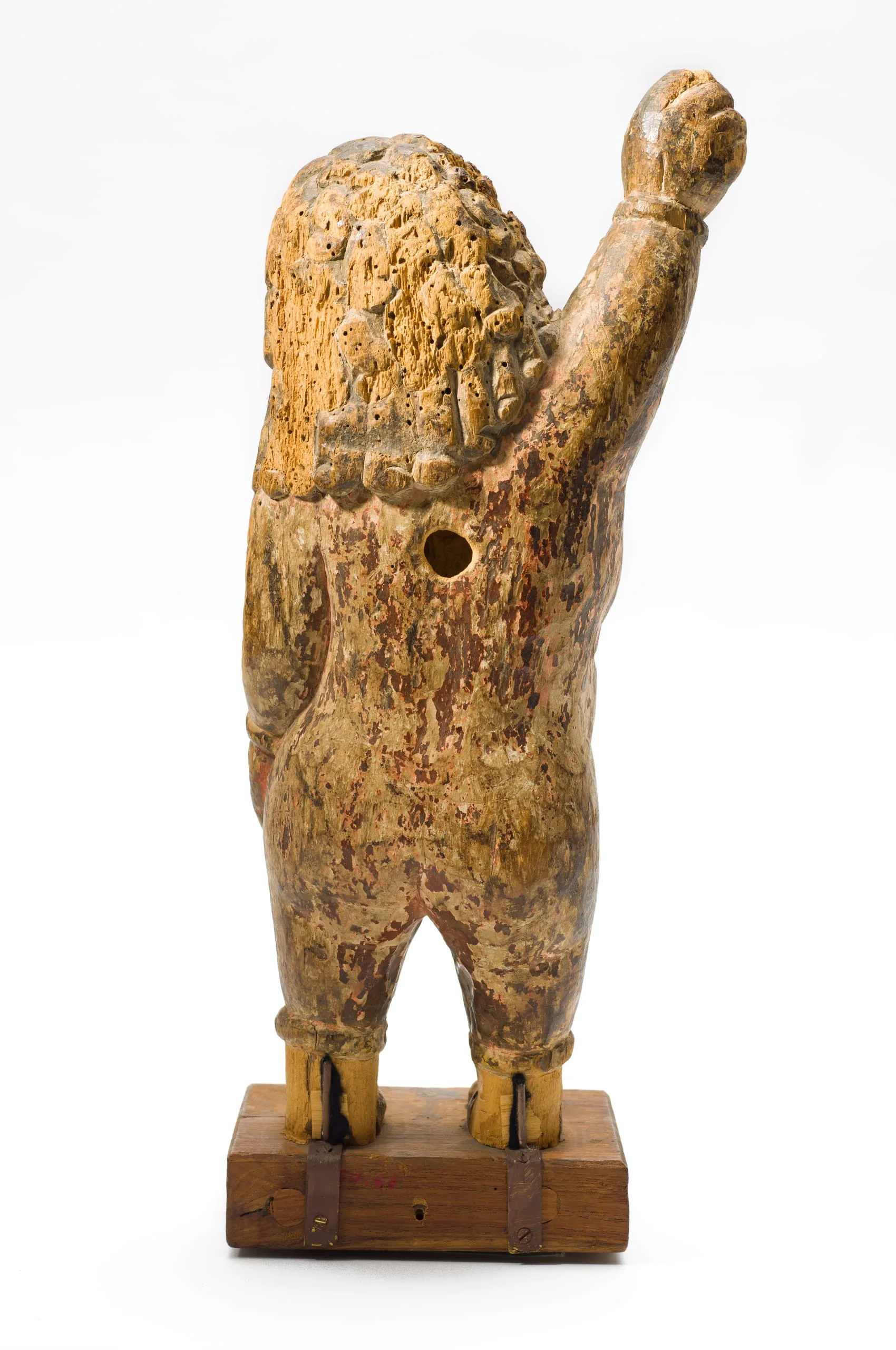
Ganas (troop or multitude) are types of demigods who principally serve as attendants for the Hindu god Shiva, as well as some Buddhist deities (see M.75.4.14). They are envisioned as rotund gnomes, often rambunctious and full of zest. They dance and play music for Shiva and his wife Parvati. Their leader is Ganesha/Ganapati (lord of the ganas). Hosts of ganas are often depicted accompanying Shiva and Parvati in group representations of their Holy Family (see M.81.23). This gana is naked and has shoulder length curly hair and a pot belly. His right arm is extended upright with the fist closed. Pratapaditya Pal has suggested is similar to a child holding onto an adult (Pal 1985, p. 93, no. S11). His feet are modern replacements. A carbon-14 test has indicated the tree dates from the 10th century. See also M.69.13.10.
- Selected Bibliography
- Pal, Pratapaditya. Art of Nepal. Los Angeles: Los Angeles County Museum of Art; University of California Press, 1985.
- Rosenfield, John. The Arts of India and Nepal: The Nasli and Alice Heeramaneck Collection. Boston: Museum of Fine Arts, Boston, 1966.