- Title
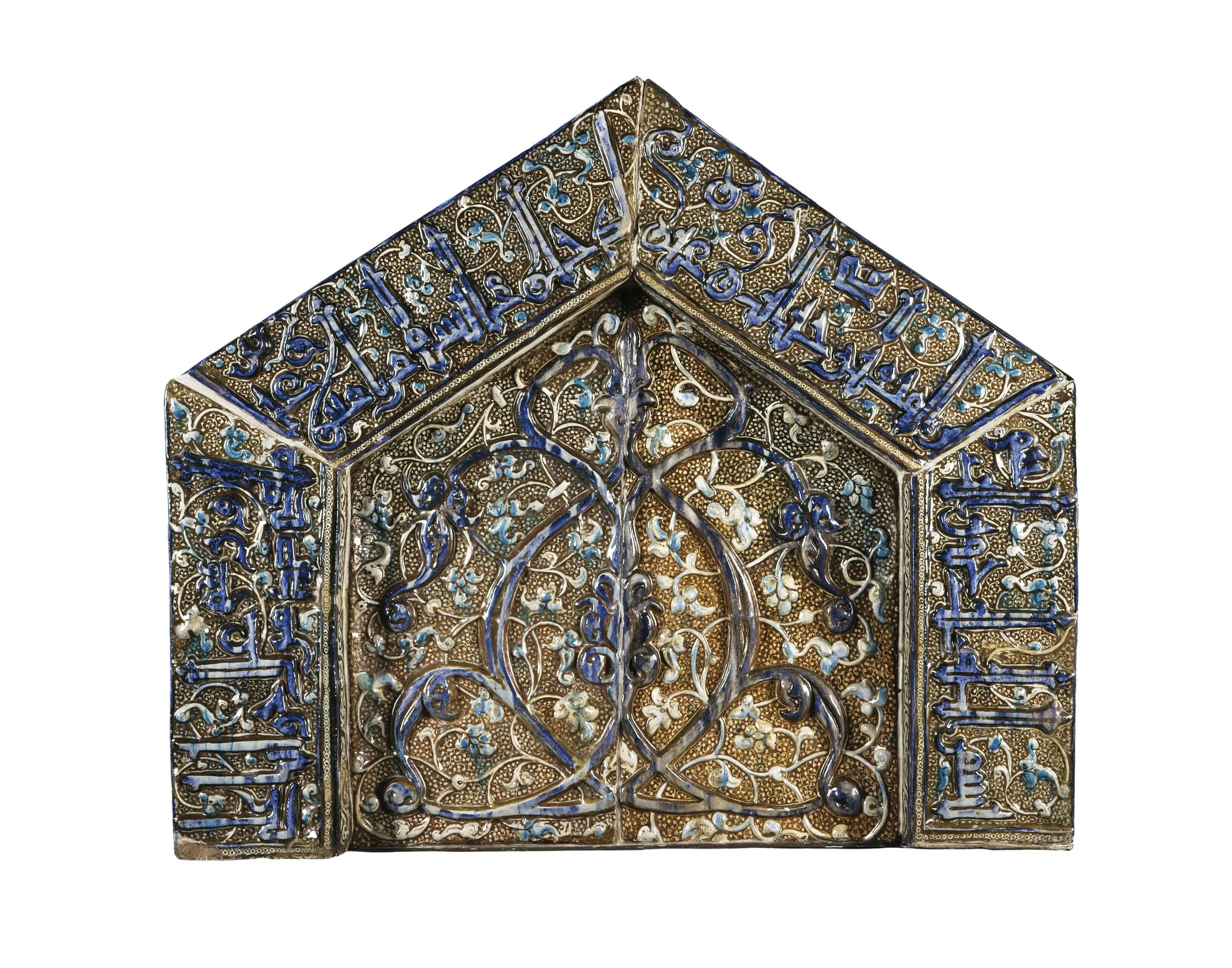
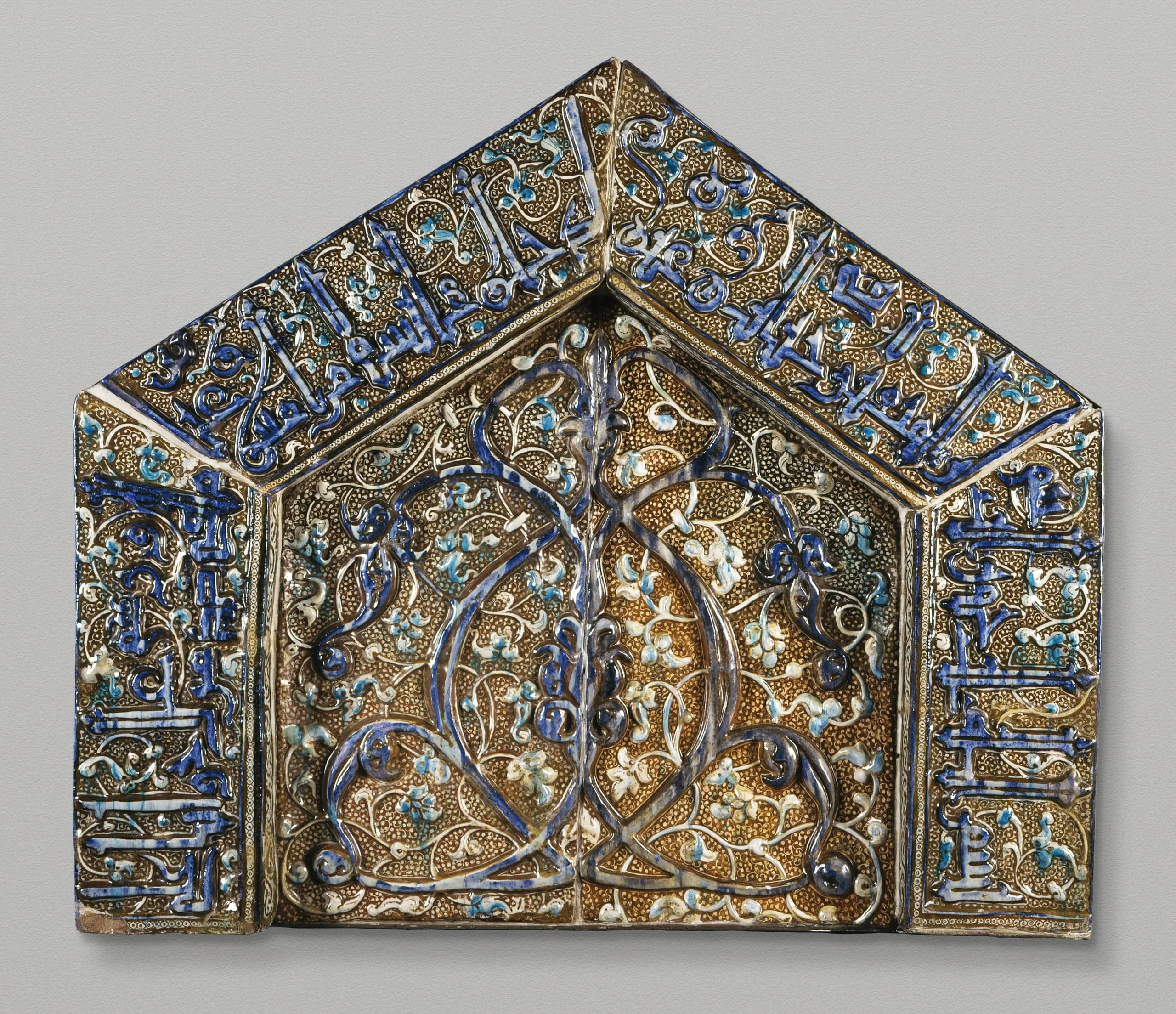
- Tile section of a mihrab
- Date Made
- early 14th century
- Medium
- Fritware, overglaze luster-painted, with cobalt and turquoise
- Dimensions
- overall: 40 1/2 x 46 7/8 in. (102.87 x 119.0625 cm)
unspecified (unspecified): 40 1/2 x 46 7/8 in. (102.87 x 119.06 cm)
Weight: 270 lb. (122.5 kg)
- Accession Number
- M.73.5.1
- Curatorial Notes
A mihrab is a characteristic architectural element in mosques and other places where Muslims worship. It serves to emphasize the direction of Mecca, toward which all prayer is oriented. Shaped like a niche, the mihrab is usually concave, but flat examples also occur, as here. This mihrab represents only the upper central panel of what was undoubtedly a larger ensemble, which, based on extant examples, may have stood around twelve feet high and was assembled from dozens of individual tiles. The ensemble’s projected scale and the mihrab’s molded decoration—inglaze-painted in deep blue and turquoise, and overglaze-painted in the costly luster technique, which required a second firing using a close-kept process associated with the city of Kashan—suggest it was made for an important building. The central tile contains a leafy arabesque design. The four framing tiles are inscribed in blue kufic script with a passage from the Qur’an (15:45–47) that refers to Paradise, suggesting that it may have once graced a funerary monument.
2024