LACMA

ShopMembershipMyLACMATickets
LACMA
Los Angeles County Museum of Art
5905 Wilshire Blvd.
Los Angeles, CA 90036
info@lacma.org
(323) 857-6000
Sign up to receive emails
Subscribe
© Museum Associates 2025

Museum Hours

Monday

11 am–6 pm

Tuesday

11 am–6 pm

Wednesday

Closed

Thursday

11 am–6 pm

Friday

11 am–8 pm

Saturday

10 am–7 pm

Sunday

10 am–7 pm


  • About LACMA
  • Jobs
  • Building LACMA
  • Host An Event
  • Unframed
  • Press
  • FAQs
  • Log in to MyLACMA
  • Privacy Policy
© Museum Associates 2025
Collections

Unknown
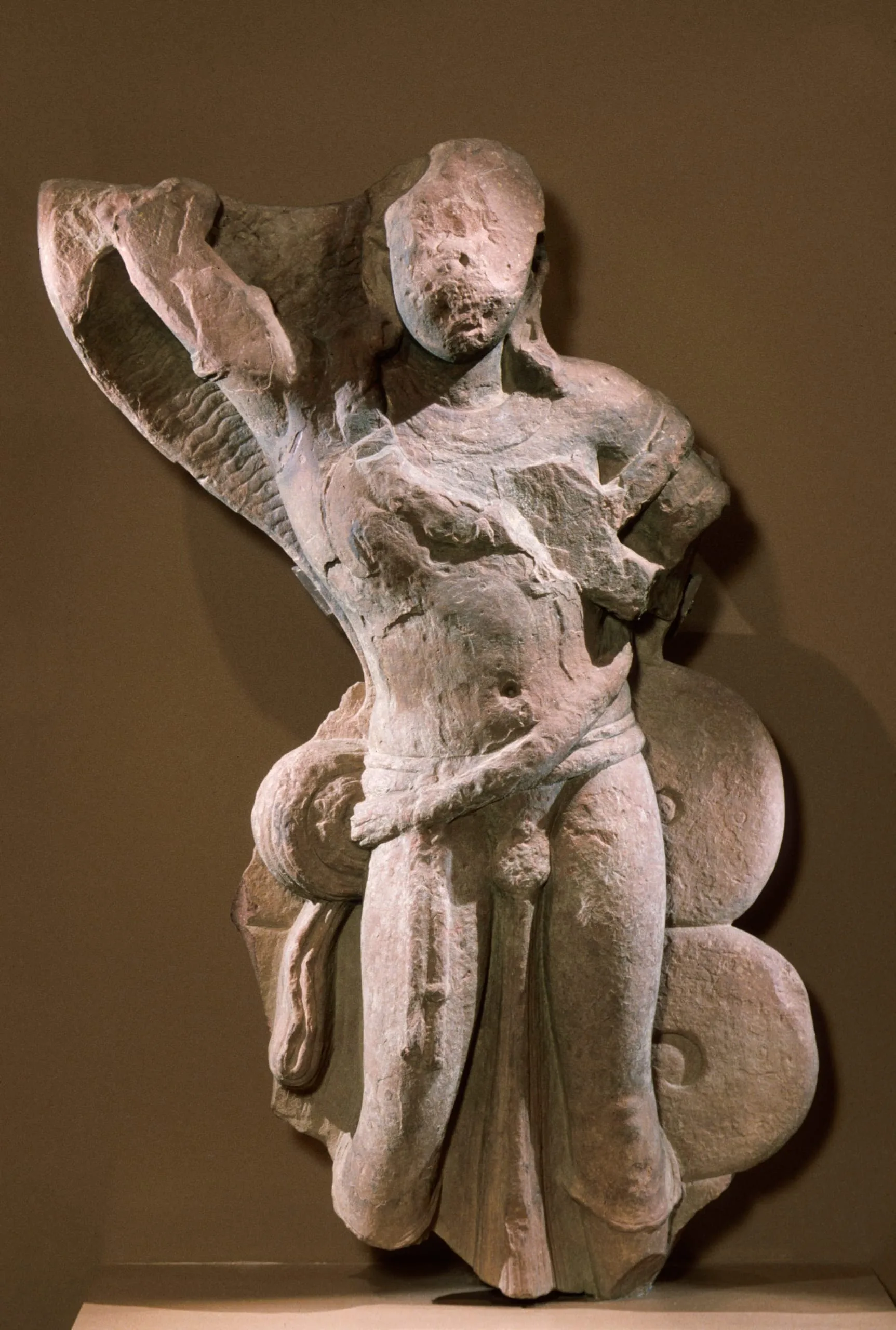
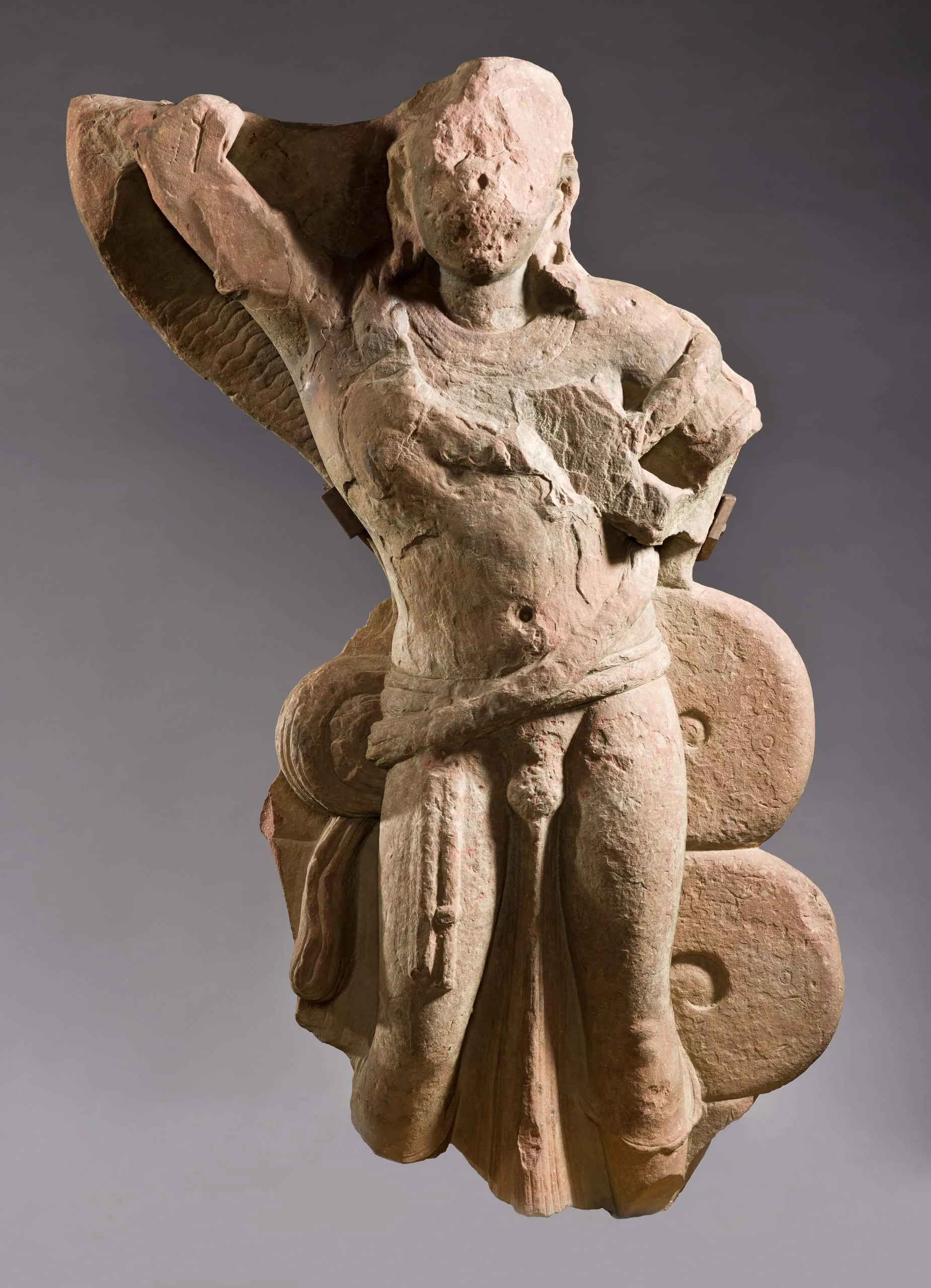
The Hindu God Balaramacirca 100-125

Not on view
Terracotta sculpture fragment of a bare-chested figure with one arm raised, holding a large curved form, with heavily weathered surface and lower body draped in thick folds
Fragmentary stone sculpture of a standing figure, partially draped, with one arm raised and a coiled serpent at the lower body; weathered surface with significant erosion to the face.
Artist or Maker
Unknown
Title
The Hindu God Balarama
Place Made
India, Uttar Pradesh, Mathura
Date Made
circa 100-125
Medium
Mottled red sandstone
Dimensions
55 x 29 x 9 1/4 in. (139.7 x 73.66 x 23.49 cm)
Credit Line
From the Nasli and Alice Heeramaneck Collection, Museum Associates Purchase
Accession Number
M.73.4.7
Classification
Sculpture
Collecting Area
South and Southeast Asian Art
Curatorial Notes
Balarama is the elder brother of the Hindu god Krishna. In some sectarian traditions, he is regarded as the eighth incarnation or avatar of Vishnu, the Hindu God of preservation. Balarama grew up in pastoral Vrindavan with Krishna and his foster-parents Nanda and Yashoda. He had numerous exploits with his brother and slew several demons, including the ass demon Dhenuka (see M.78.9.10). Balarama is also believed by some sects to be an incarnation of the five-headed serpent Ananta or Shesha that is associated with Vishnu (see M.79.111), which may be why he is represented here against a backdrop of snake coils and a rearing cobra hood. Balarama’s prodigious fondness for alcohol is conveyed by the now-damaged wine cup in his left hand. His right hand is raised in a gesture characteristic of a “universal monarch” (chakravartin). His other principal attribute, a plow, reflects his agricultural origins but is absent here. For Balarama holding his plow, see AC1999.127.33.
Selected Bibliography
  • El Universo de la India: Obras Maestras del Museo de Arte del Condado de Los Angeles. Santiago: Centro Cultural Palacio La Moneda, 2012.

  • Srinivasan, Doris Meth. Listening to Icons. Vol. 1. New Delhi: Aryan Books International, 2016.