- Title
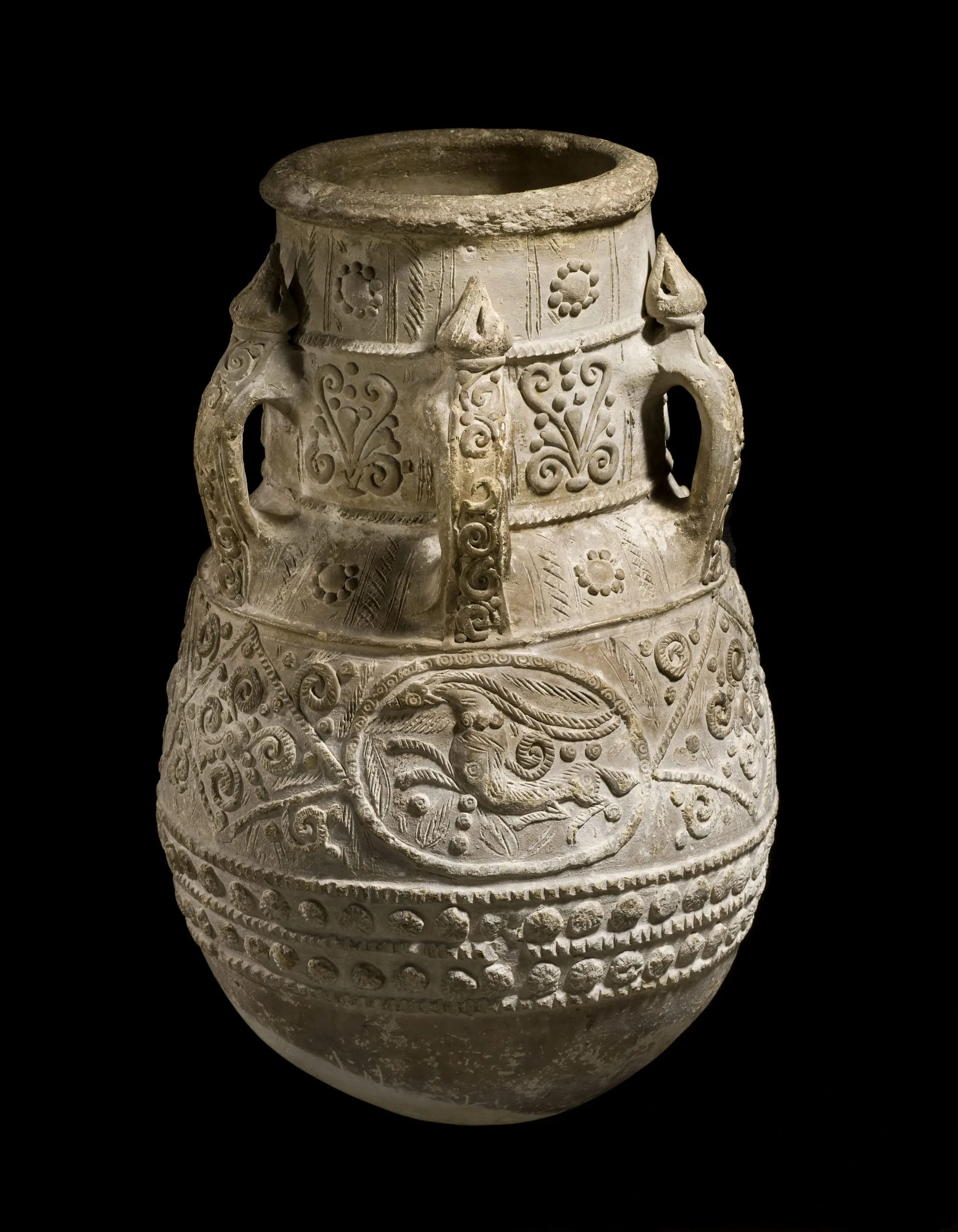
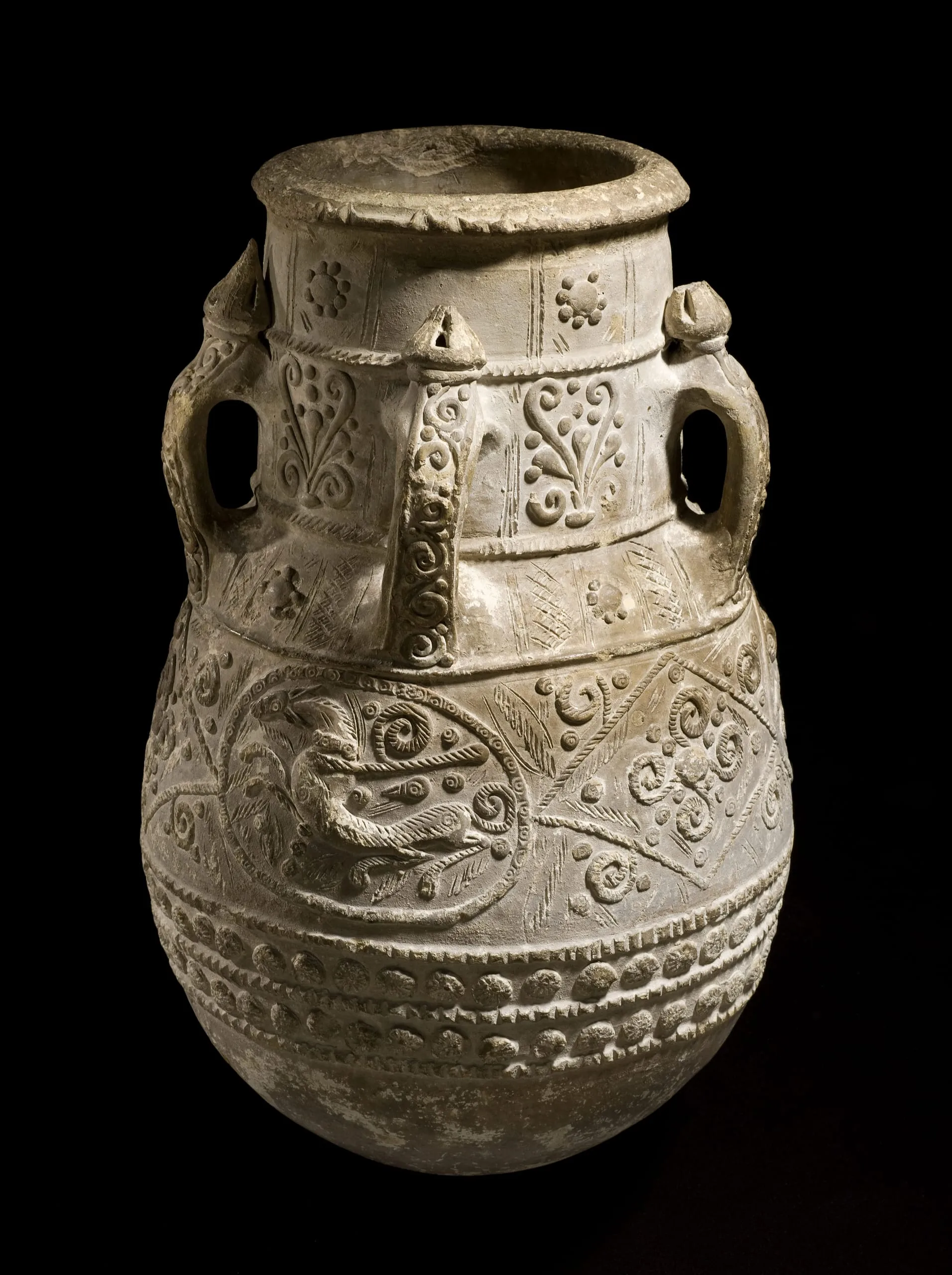
- Water Jar (habb)
- Date Made
- 8th-10th century
- Medium
- Earthenware, applied and incised decoration
- Dimensions
- 24 x 15 1/2 in. (60.96 x 39.37 cm)
- Accession Number
- M.73.5.710
- Curatorial Notes
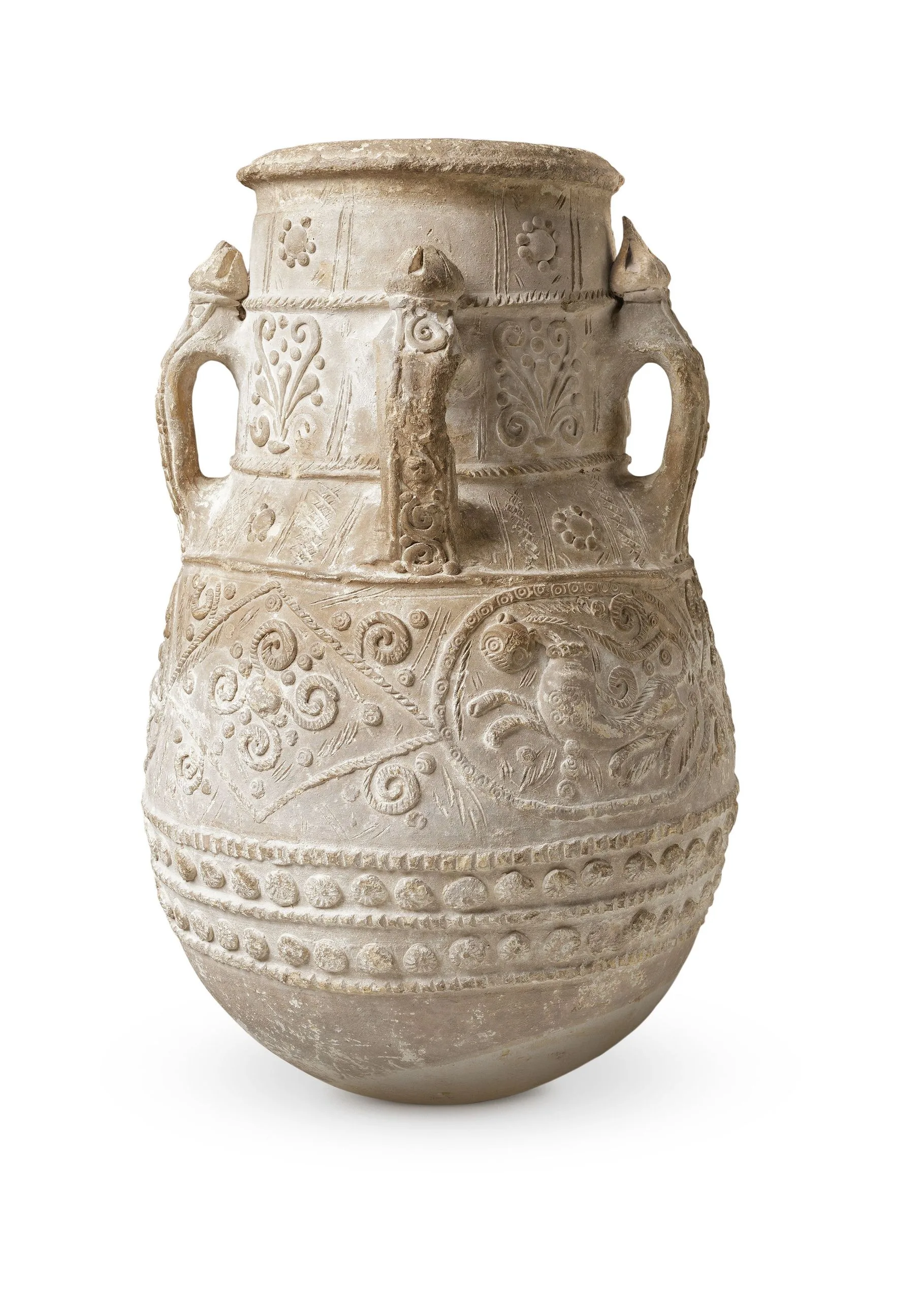
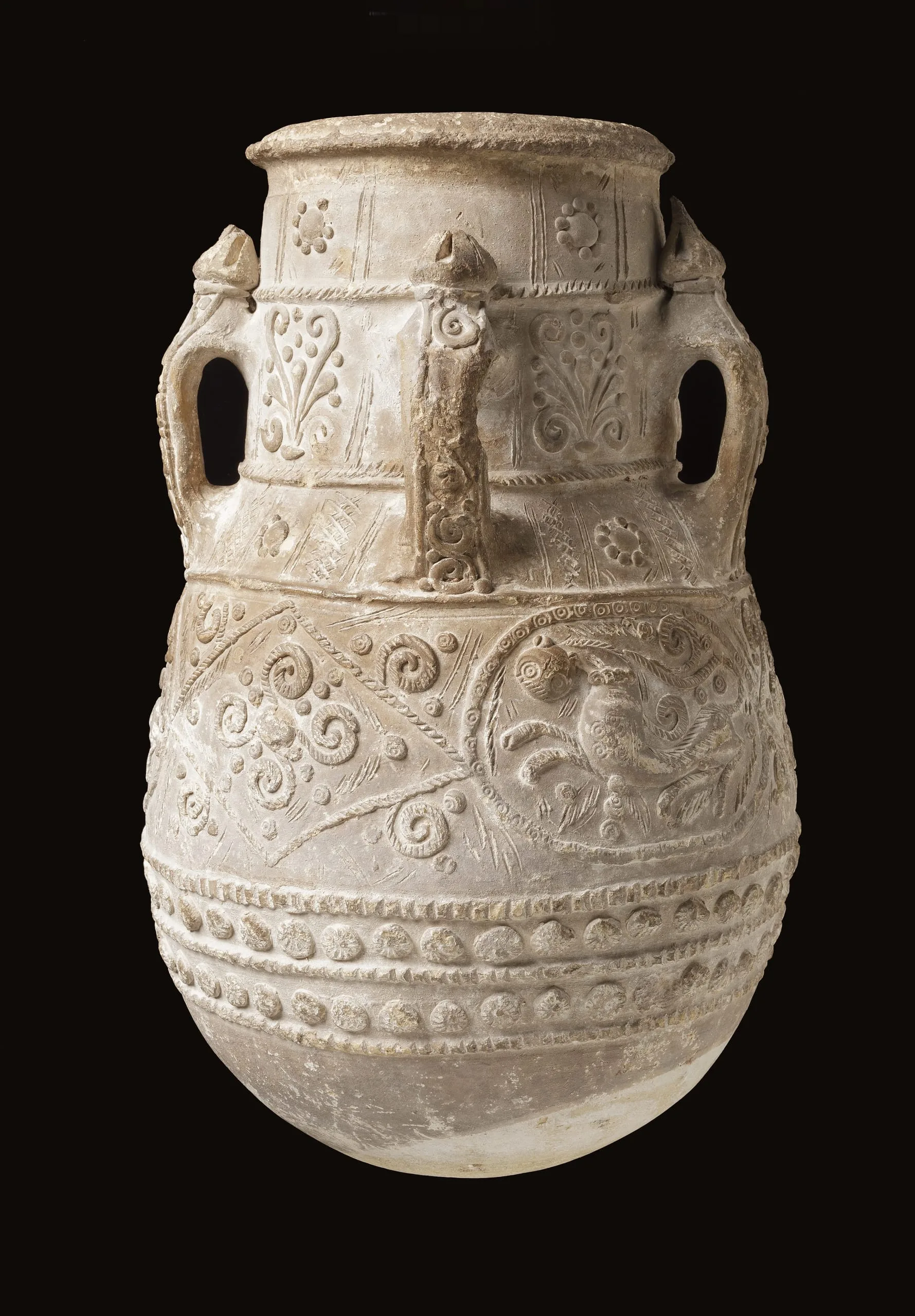
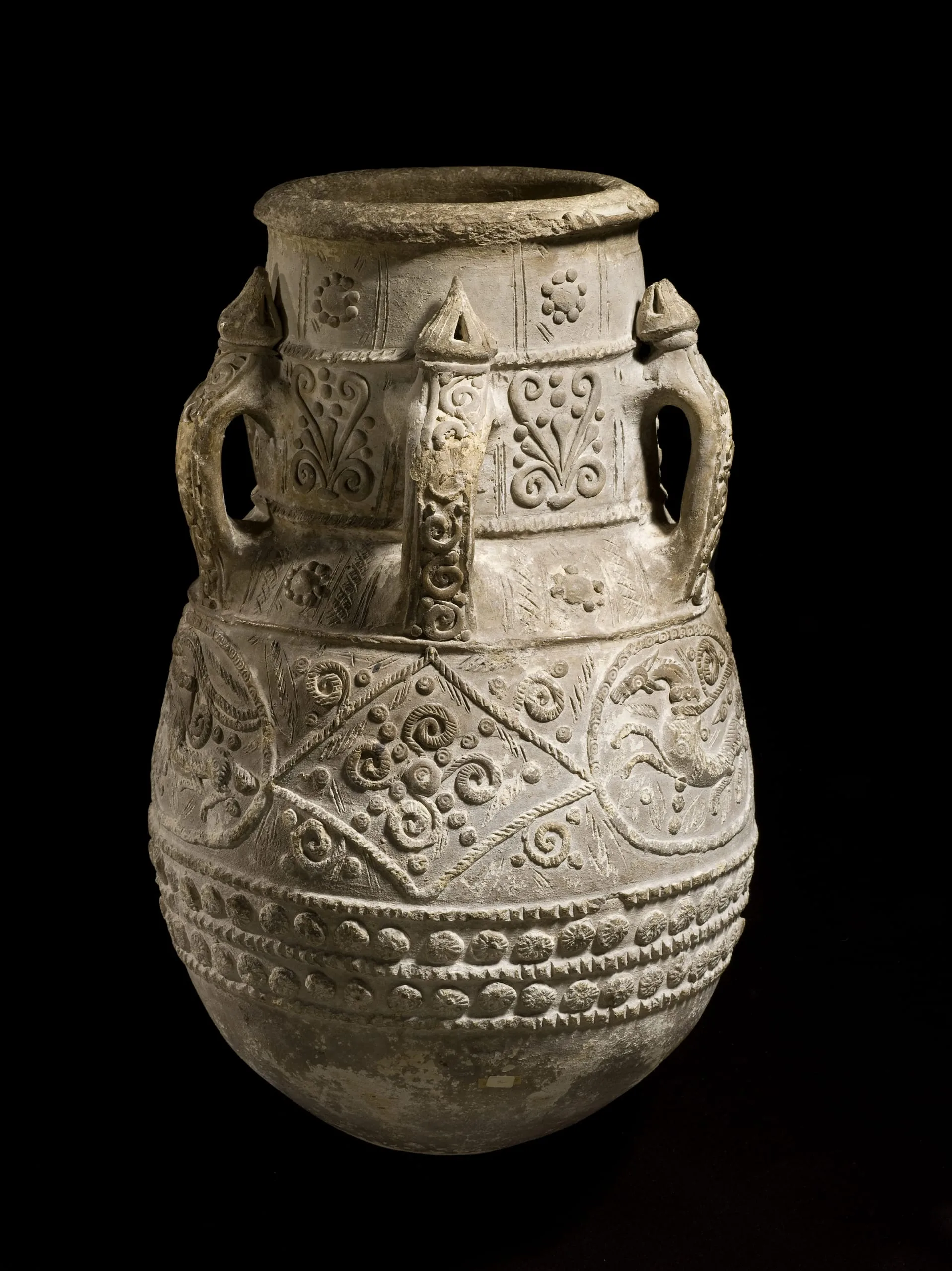
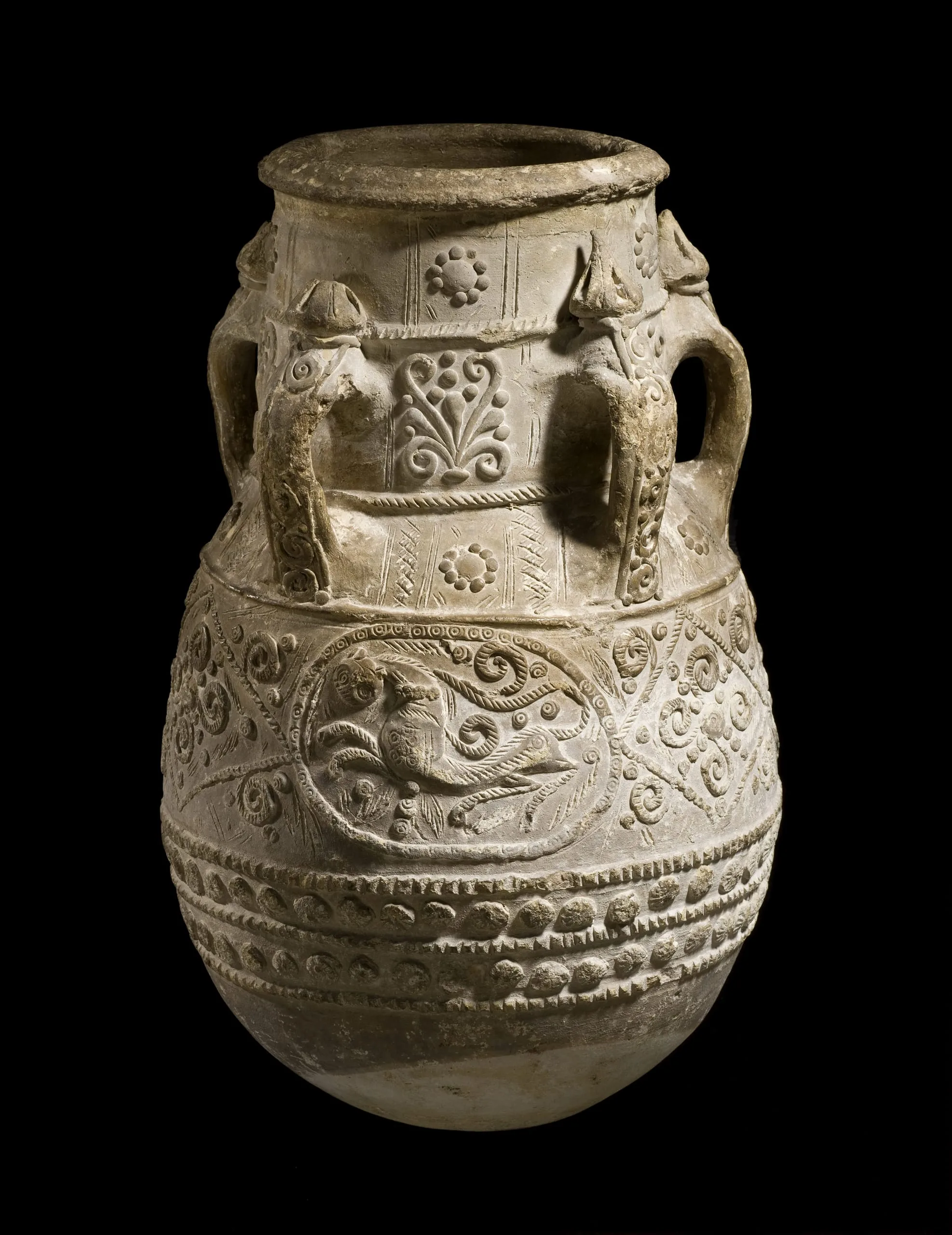
The form of this water cistern, or habb, with a narrow mouth on a large round belly, dates back to the Late Antique period. Habbs leverage the natural porosity of unglazed fired clay to filter and cool the water stored within. Due to their rounded base, they cannot stand upright on their own, so they were either buried in the floor for cooling or placed on stands known as kilgas. The latter option elevated the jar so that water would seep into a projecting well in the stand, where the filtered drink could then be collected.
While not as colorful as glazed ceramics, habbs often feature incised and applied decoration, such as the quadrupeds and swirling vegetal ornament seen on this jar. One example in Baghdad even includes an inscription that states the vessel was born of fire to quench the thirst of mankind, a valuable statement about the habb’s intended use.
2024