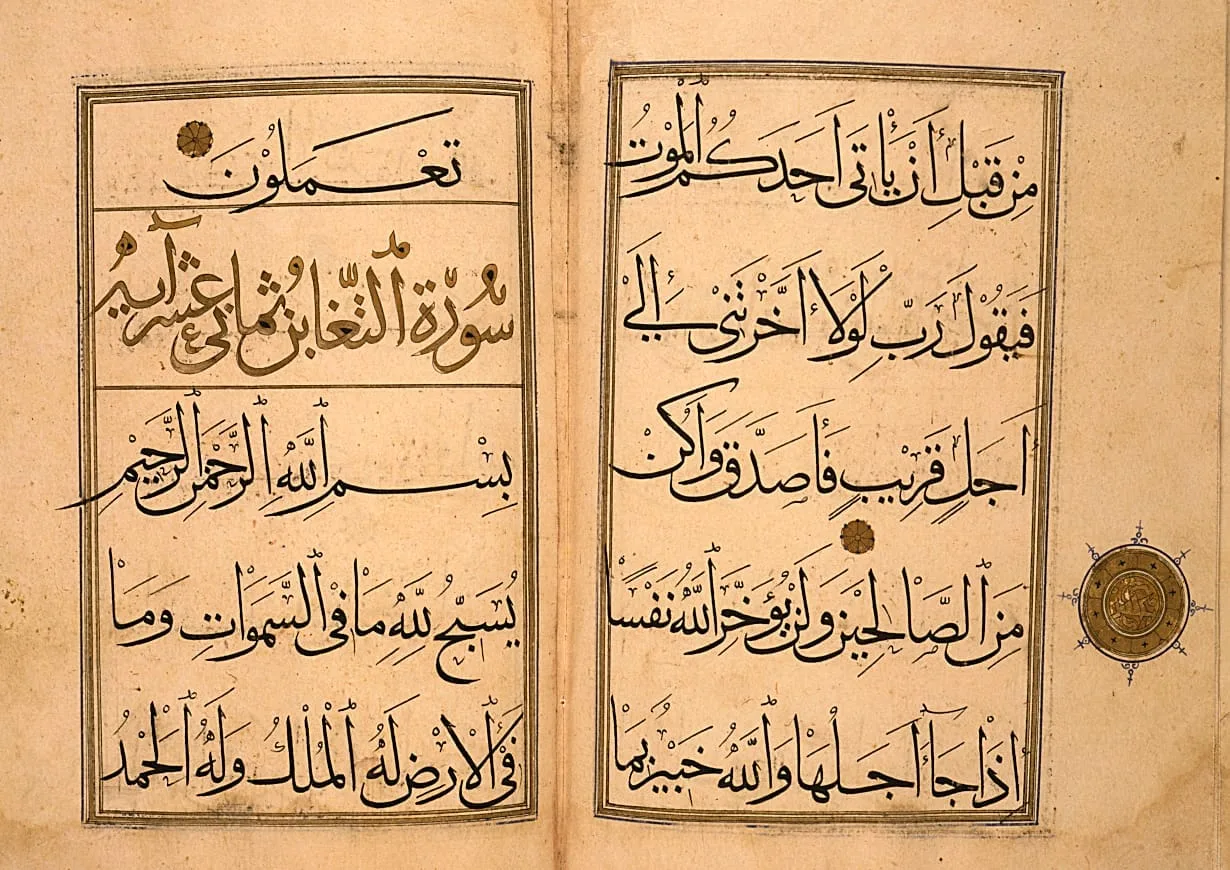
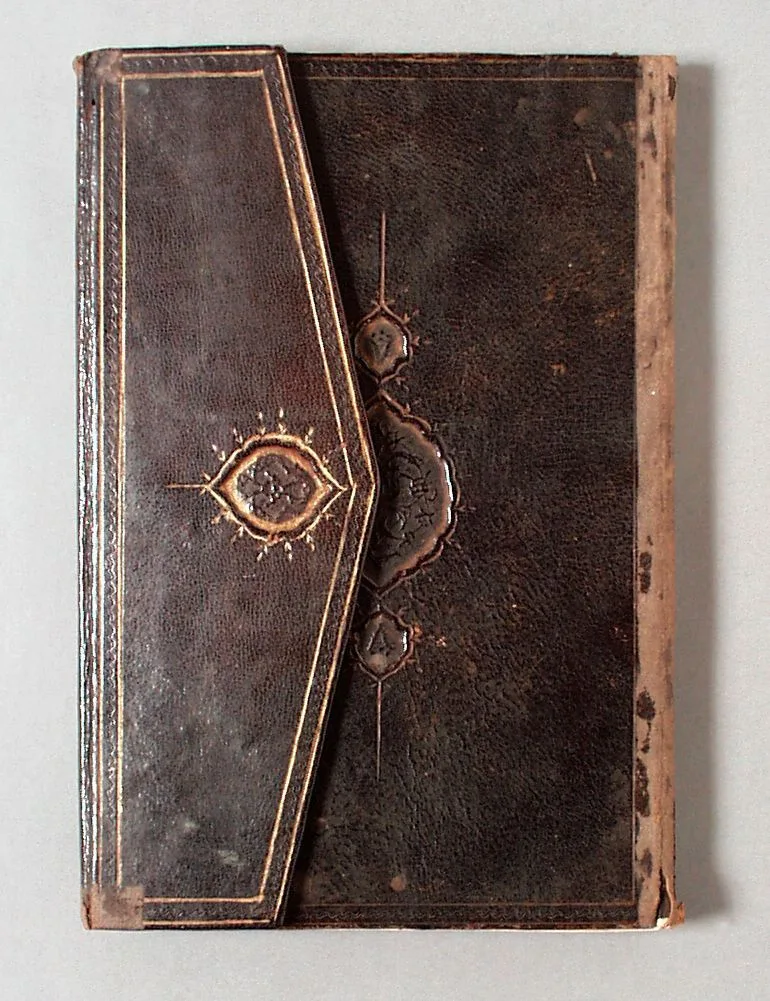
In Muslim cultures, because it is through writing that the Qur’an is transmitted, scripts in the Arabic alphabet were devised and perfected to be worthy of divine revelation. The Qur’anic text, comprising 114 chapters, might be rendered in a single manuscript (mushaf) or it might be divided into multiple parts, each bound as a separate section known as a juz’. One type of division into thirty parts coincides with the days of the month in the Muslim calendar, so that one might be read each day, especially during the month of Ramadan. Such Qur’ans were commonly endowed to religious institutions, making the text more widely available.
This slender juz’ belongs to such a now-dispersed thirty-volume manuscript of the Qur’an, likely produced in either Mamluk Egypt or Syria. It was perhaps intended for one of the many religious institutions built under the Mamluk dynasty (1250−1517), especially in their capital, Cairo. It contains the 28th juz’, from Sura 58 (Al-Mujadila) through Sura 66 (Al-Tahrim), written in muhaqqaq script in black ink with sura (chapter) titles rendered in gold. A later text inscribed on the double-page illuminated frontispiece indicates that the volume was acquired in AH 1063 (1653 CE), in Erzerum, in eastern Turkey, by a certain Sayyid Muhammad al-Mu’min.
2025