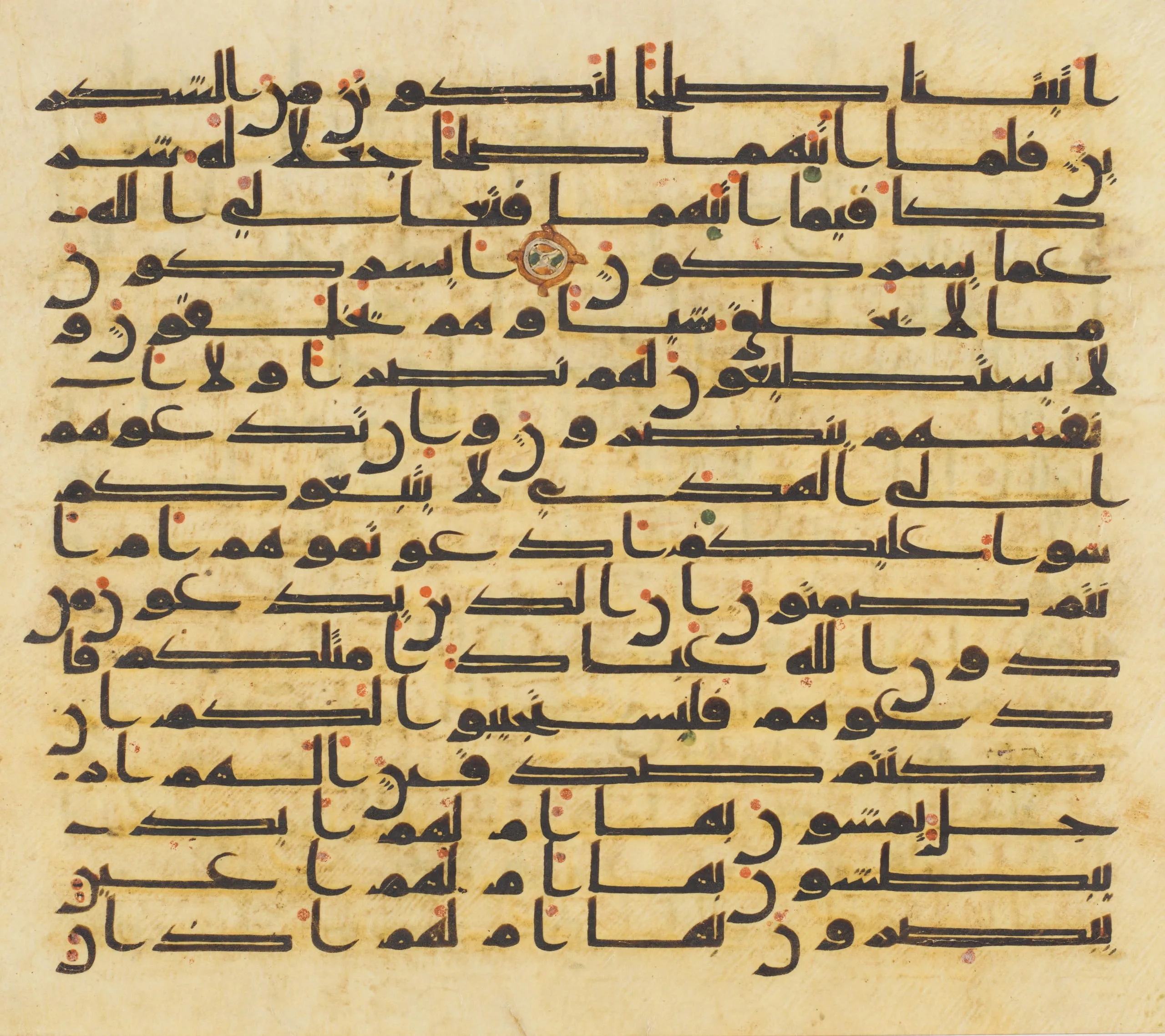
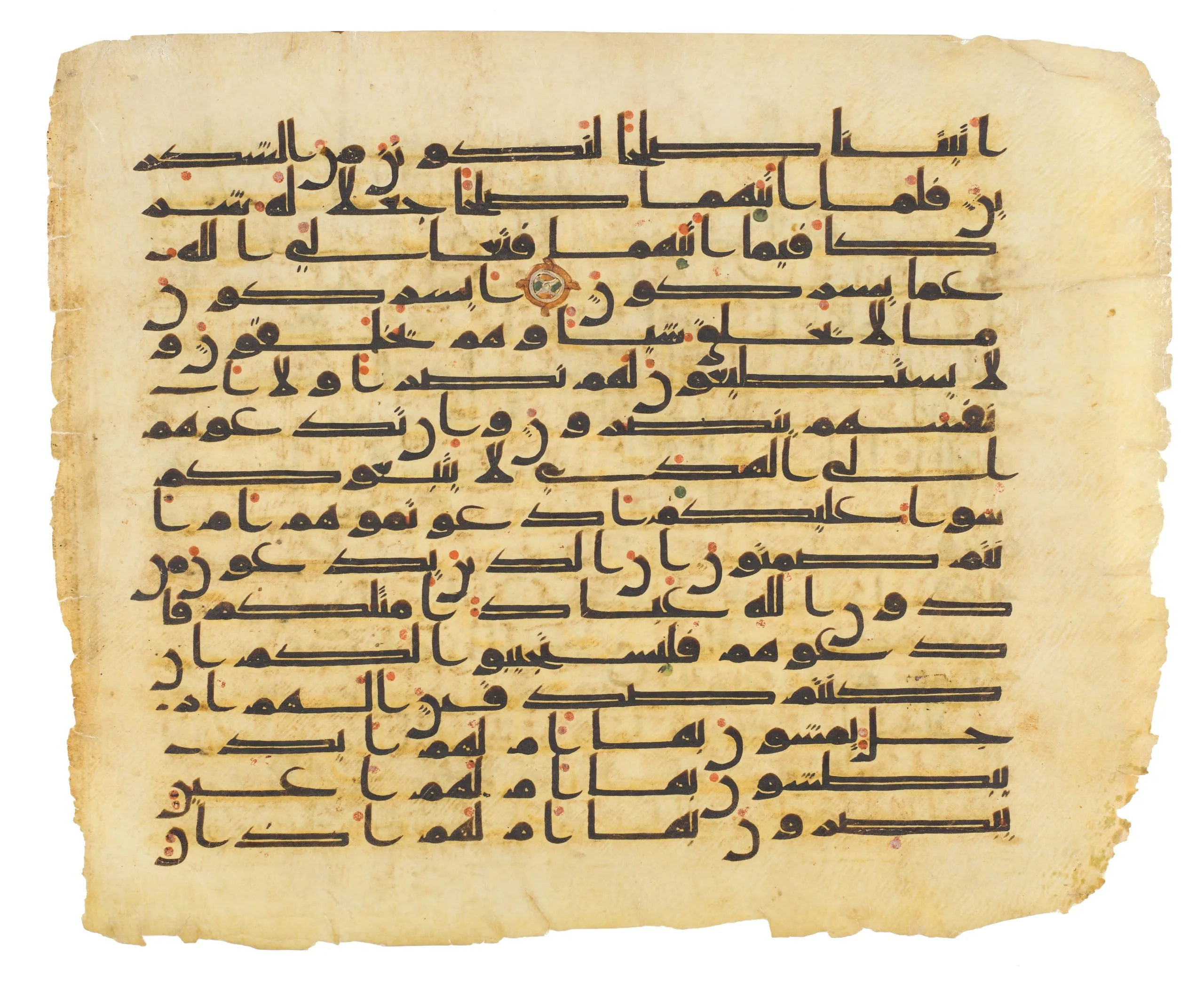
In Muslim cultures, words are used not only to communicate but to decorate. Because it is through writing that the Qur’an is transmitted, scripts in the Arabic alphabet were devised and perfected to be worthy of divine revelation. By the late eighth century, manuscripts of the Qur’an had achieved a standard format rendered in parchment, made from cured and scraped animal skin, generally sheep, and configured and bound as a codex or book. This folio is from a Qur’an dating to the ‘Abbasid period. It is rendered in rectilinear kufic script, with the horizontal ligatures of the letters lengthened to better balance and fill the parchment page. Unlike some contemporaneous manuscripts of the Qur’an with just five lines of text and considerable spacing between words (see M.2002.1.24), this example has sixteen lines of text, thereby reducing the overall amount of parchment required. The illuminated verse markers (an alif for every five, a roundel for every ten) contribute color and luxuriousness, and red points indicate vocalization.
Islamic tradition requires the respectful treatment of any written form of the word of God, and especially Qur’an manuscripts, even after they fall into disuse or disrepair. Sometime before the modern era, early manuscripts of the Qur’an that were no longer serviceable were removed to specially designated places at certain mosques, where they continued to deteriorate. The contents of several such caches were sold piecemeal on the art market following their rediscovery in the late nineteenth and twentieth centuries in connection with the burgeoning interest in collecting. This page, and several other examples in LACMA’s collection (see M.73.5.511 and M.2002.1.383), probably emerged from such a cache.