- Title
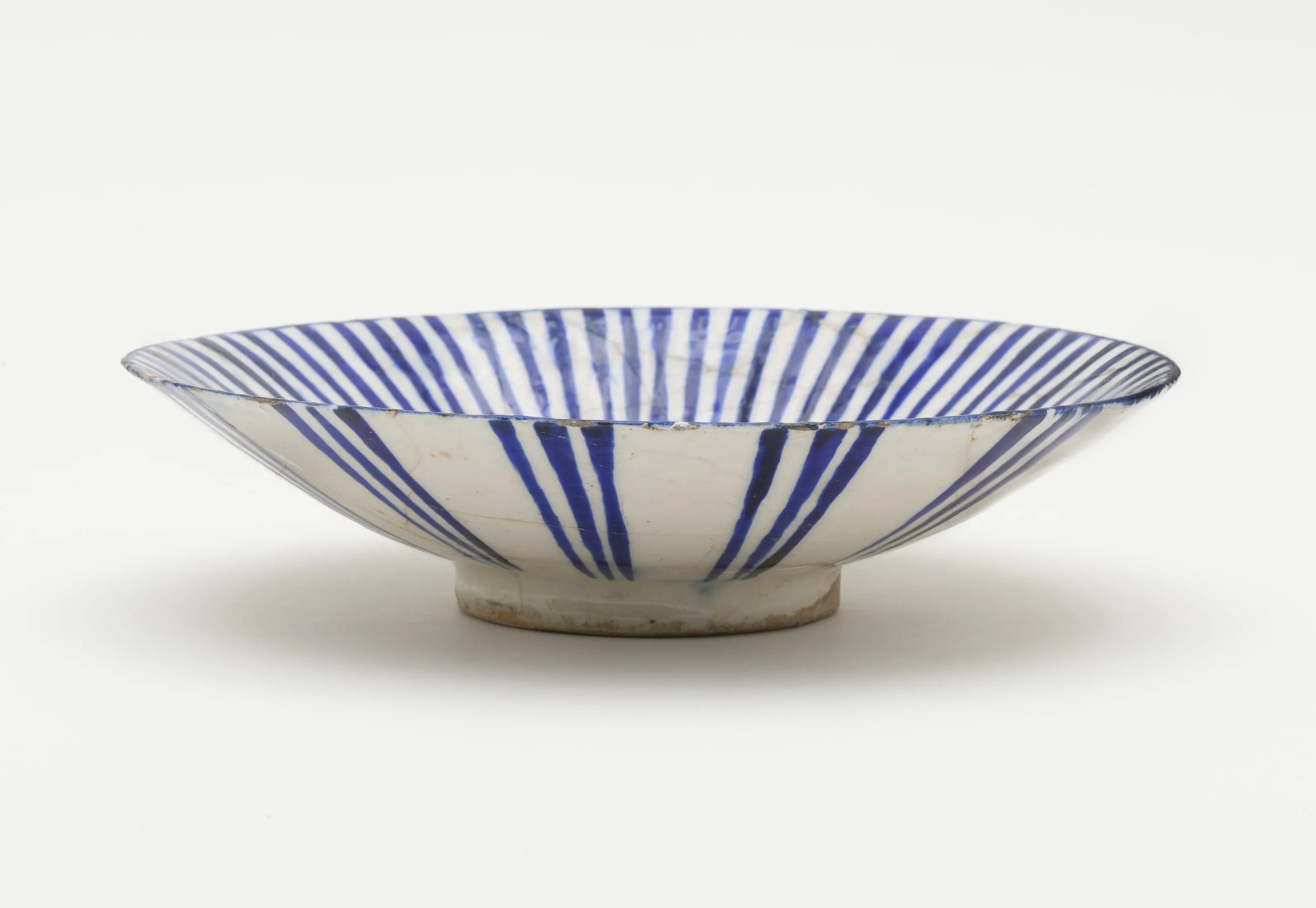
- Bowl
- Date Made
- 12th or 13th century
- Medium
- Fritware, underglaze-painted
- Dimensions
- 2 1/4 x 9 1/4 in. (5.72 x 23.50 cm)
- Accession Number
- M.73.5.285
- Curatorial Notes
In the eleventh century, potters developed fritware, a type of artificial clay body that combines quartz, glass frit, and a small amount of fine white clay to produce a strong, light-colored ware. In addition to its fineness, fritware gave potters the newfound ability to marshal line and color with precision. Glazes could now be painted directly onto the pale, quartz-rich fritted clay before firing, eliminating the need to cover a vessel in a layer of white slip, an expensive first step that sometimes caused designs to run in the kiln. Though deceptively simple, the decoration of this early fritware vessel exemplifies this revolutionary advancement in ceramics technology: the evenly spaced blue rays emanating from a central black knotted medallion in the bowl’s well emphasize its circular form.
2024