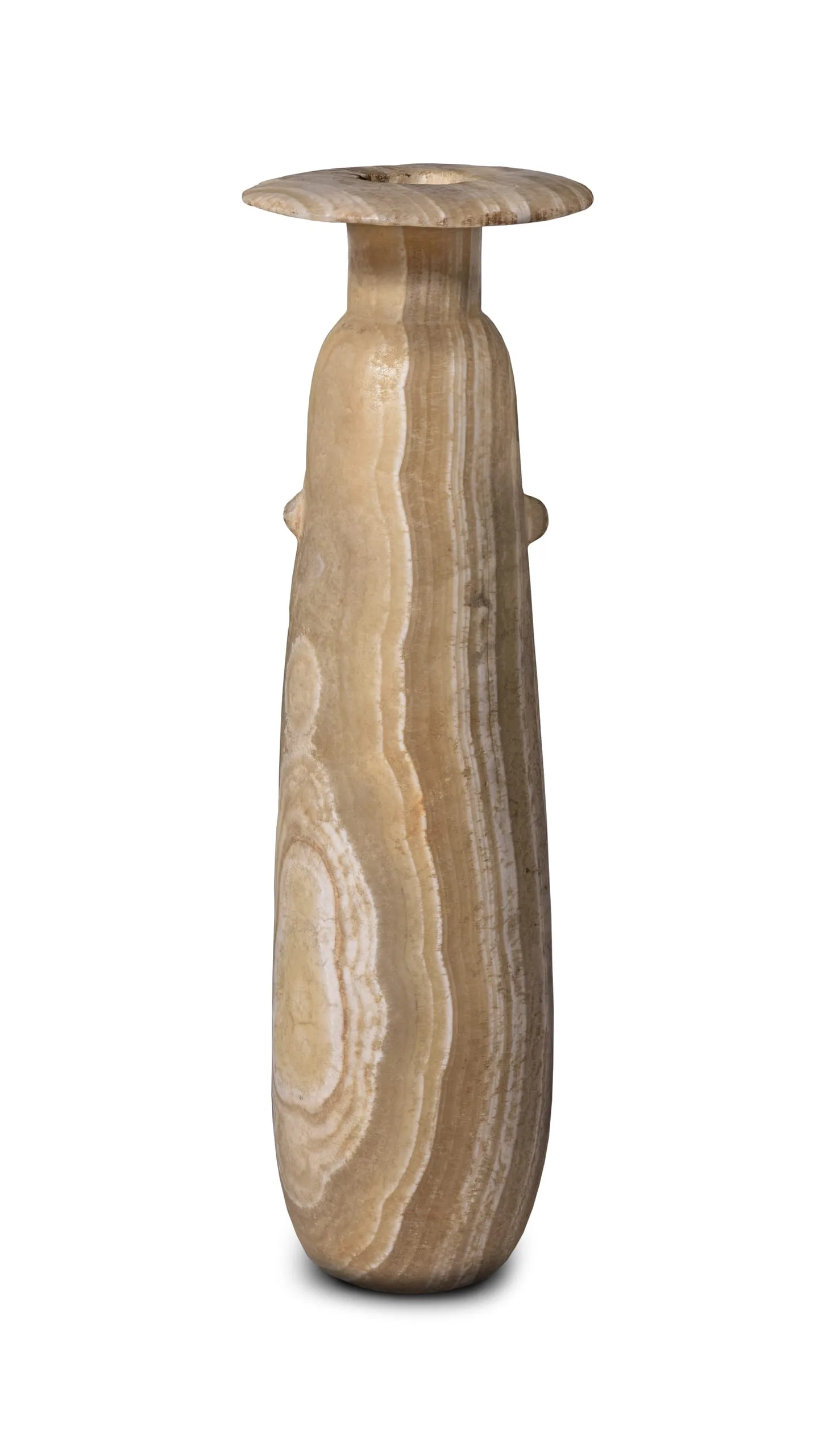
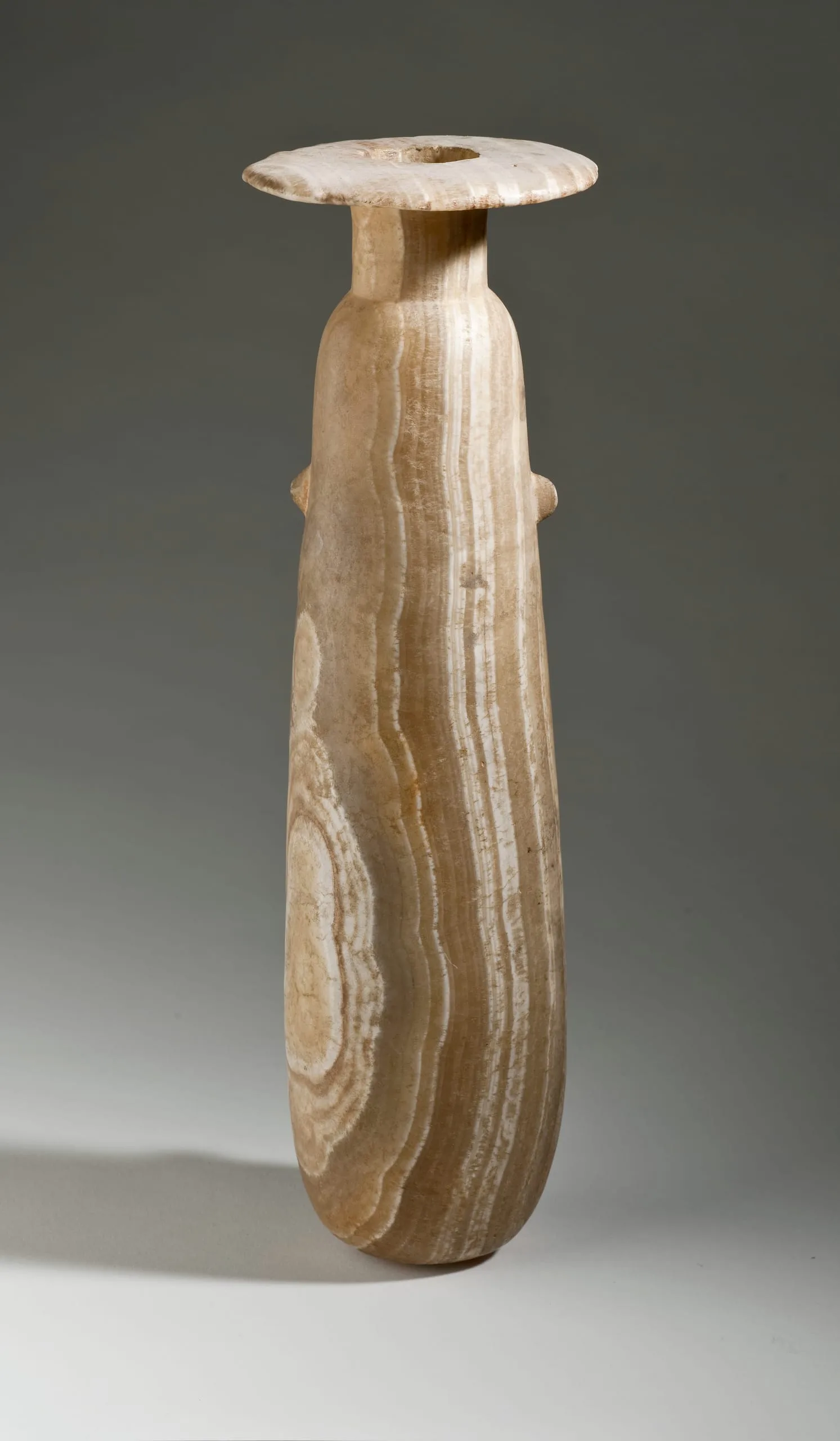
- Title
- Alabastron
- Date Made
- 26th Dynasty (664–525 BCE)
- Medium
- Calcite
- Dimensions
- Diameter: 3 in. (7.62 cm)
Height: 11 in. (27.94 cm)
- Accession Number
- M.73.5.354
- Curatorial Notes
Known as an alabastron, this vessel has long and slender proportions, a flat wide rim, a rounded base, and two very small lug handles. The artist used the bold striations of Egyptian alabaster (calcite) to complement the elongated shape. Similar vessels were made in Cyprus and imported to Egypt but were also made locally. Alabastra were used to contain precious oils or perfumes and were sometimes included in tombs as burial equipment.
Provenance: Nasli M. Heeramaneck Collection, New York. Gift to LACMA by Joan Palevsky, 1973.
- Selected Bibliography
- Ancient Bronzes, Ceramics, and Seals: The Nasli M. Heeramaneck Collection of Ancient Near Eastern, Central Asiatic, and European Art. Los Angeles: Los Angeles County Museum of Art, 1981.