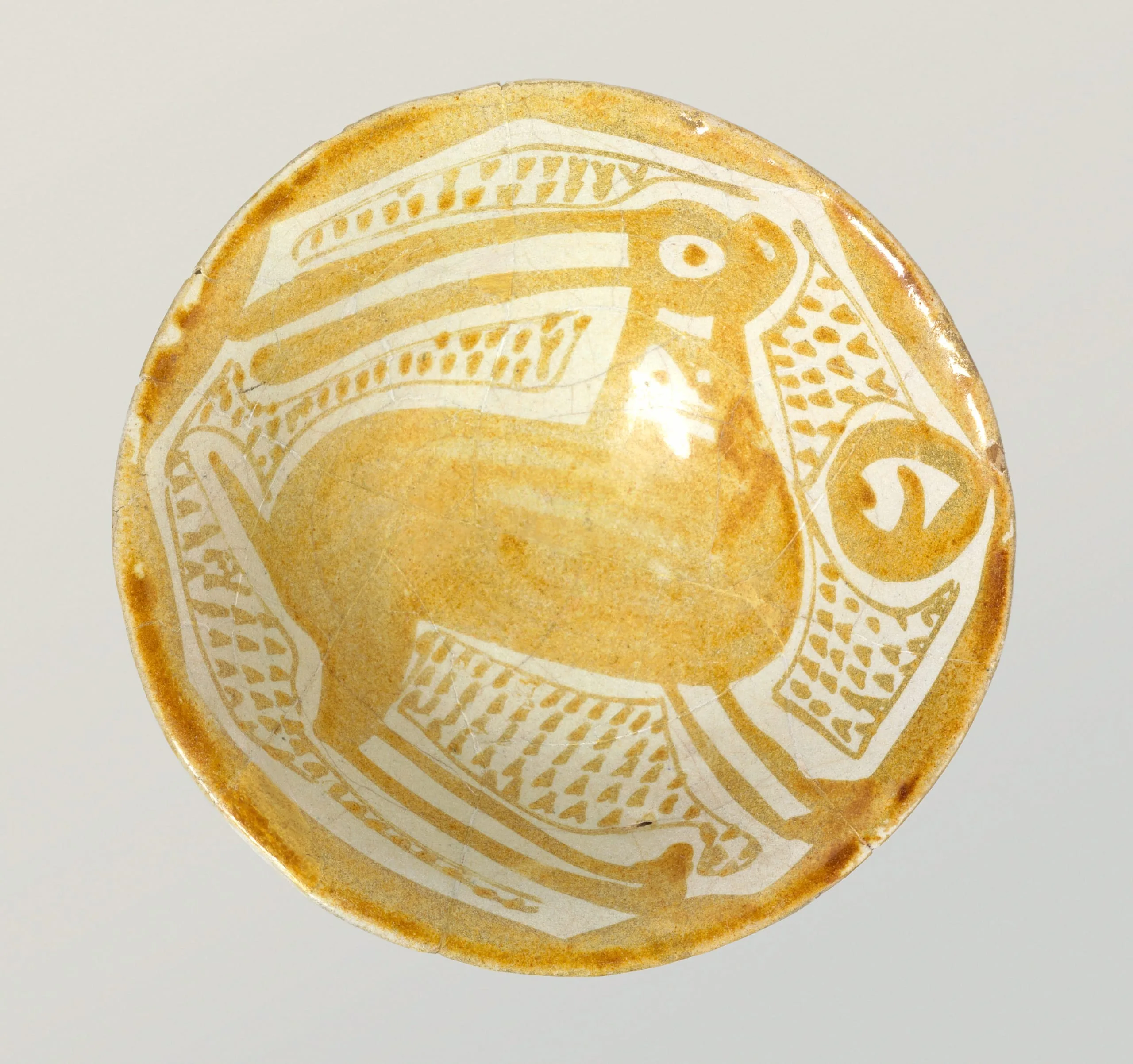
The spectacular technique of luster painting was first introduced in the ninth century, probably by Egyptian artists familiar with the secret of luster-painted glass, who had perhaps immigrated to Basra, in southern Iraq, where a new ceramic industry developed under the ‘Abbasid dynasty (750–1250). Lusterwares were luxury ceramics that required two firings. In the first firing, an opaque, generally white glaze was applied, and in the second, the design was rendered over the glaze with a paste of silver and copper compounds ground with sulfur. The second firing took place in a special kiln that restricted the flow of oxygen; this reducing atmosphere forced the metals to give up their oxygen, thereby creating a thin, lustrous film that fused with the glazed surface.
This handsome bowl, with a large lively hare as its main decoration, is an excellent example of the luster technique. Similar to the use of a rabbit’s foot today, the hare was a symbol of good luck in the medieval Islamic world, particularly in Fatimid-controlled Egypt and Syria. The animal is depicted on many objects from the period, where its presence was perhaps meant to bring good fortune and protection to the object’s owner.
2024