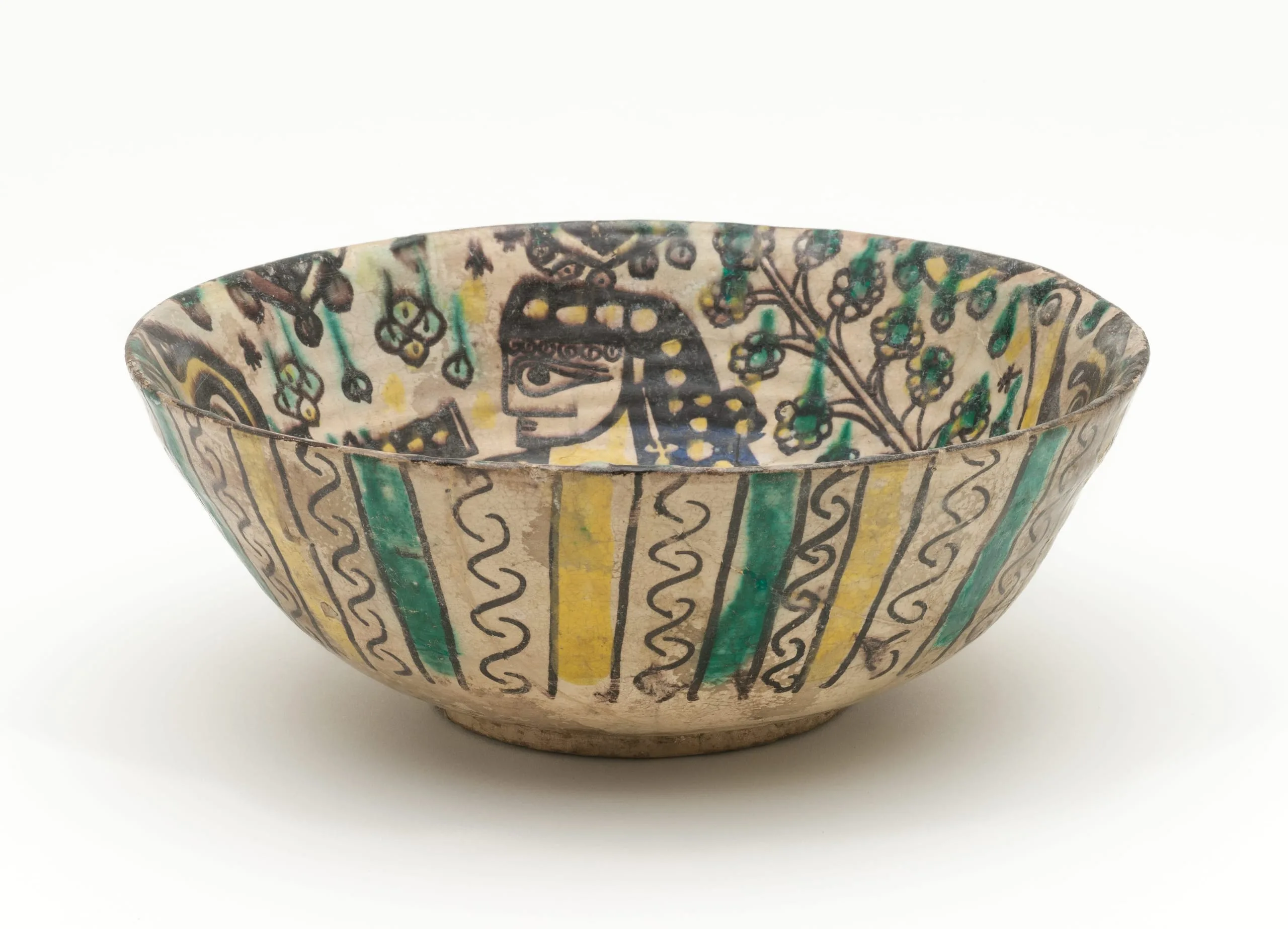
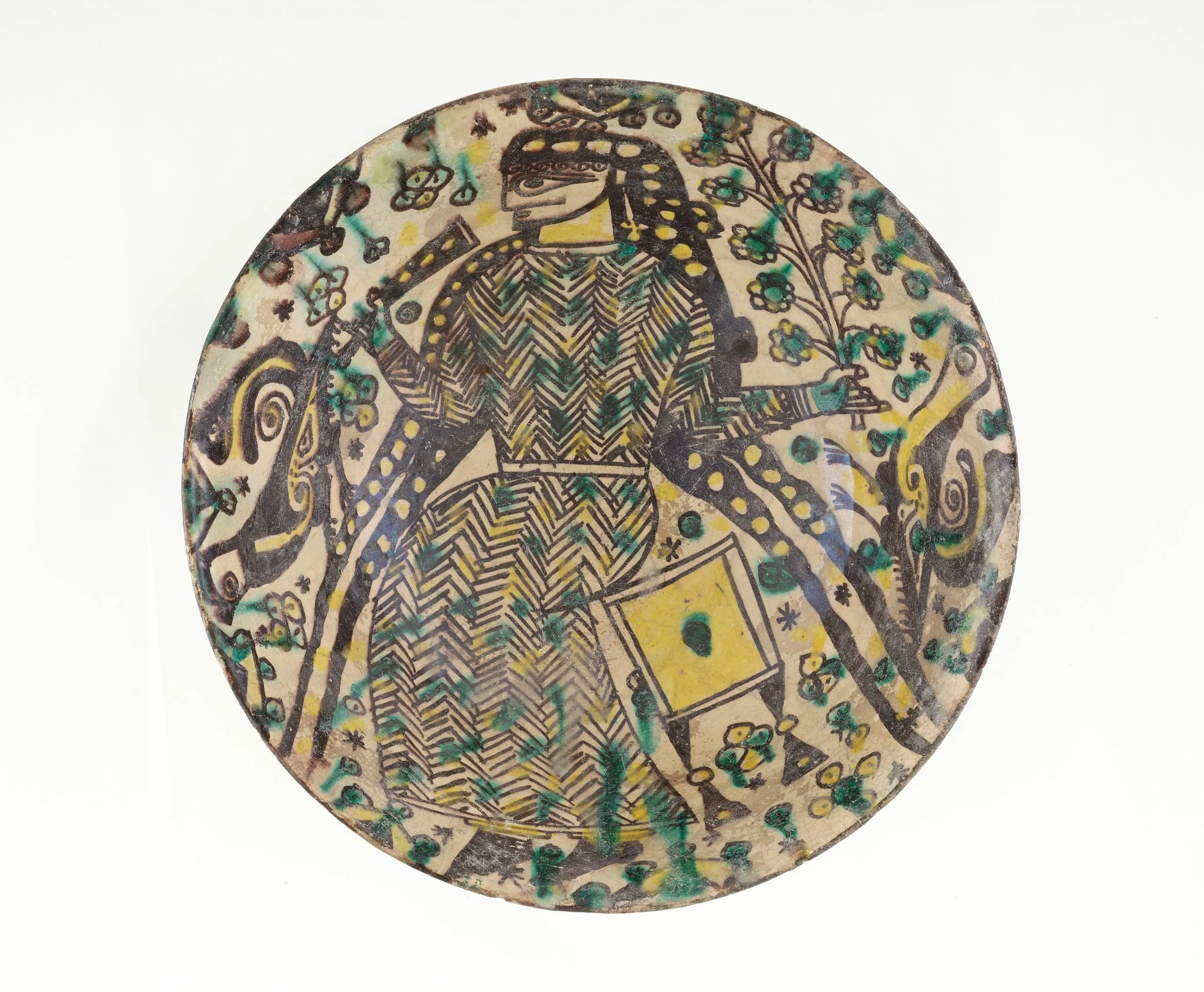
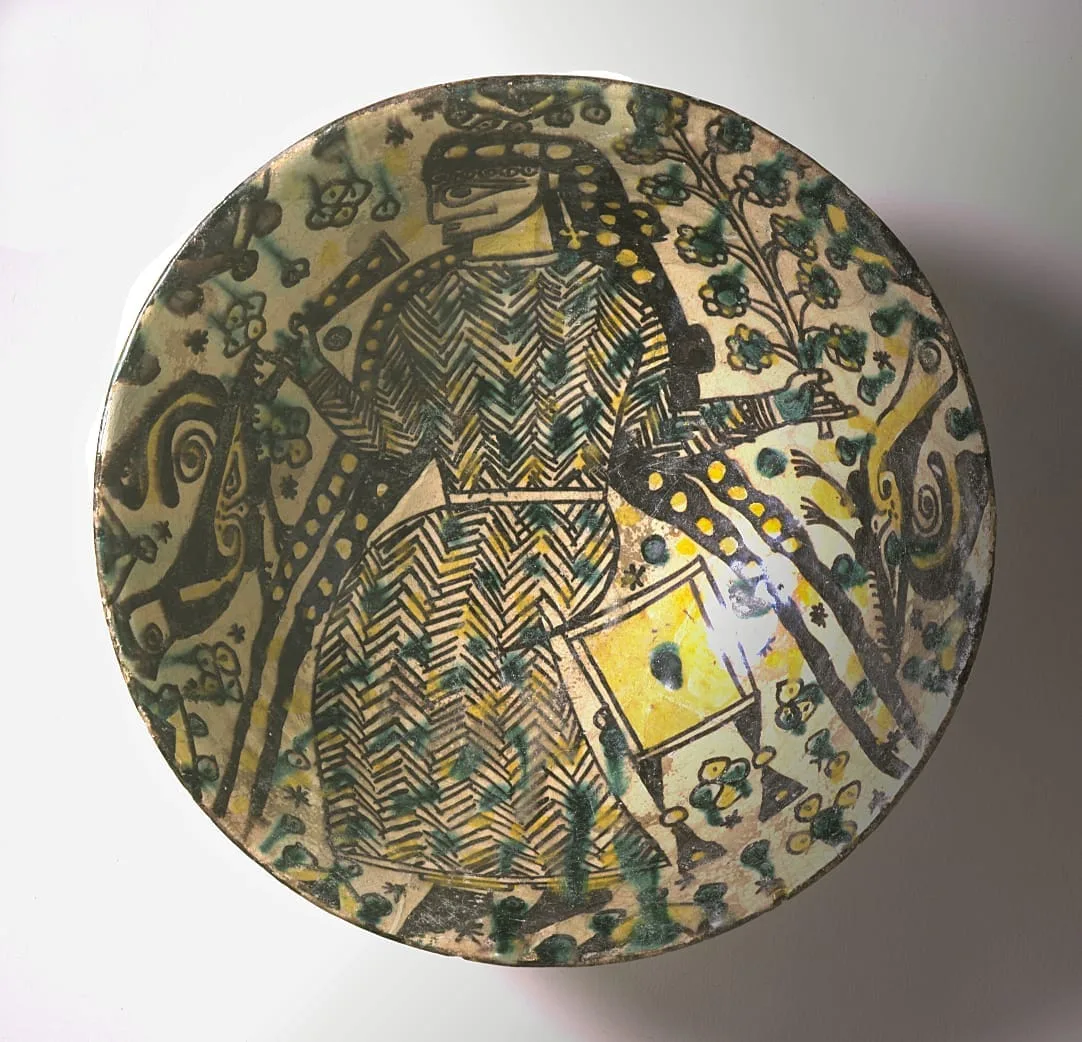
Under the Samanid dynasty (874-999), which ruled large parts of Iran and Central Asia, Nishapur, in northeastern Iran, was a center of trade, religious study, and poetry. It was also an important site for the production of ceramic wares. In the 1930s and 1940s, excavations conducted by the Metropolitan Museum of Art uncovered kilns and large quantities of pottery and wasters (flawed, discarded pots). Since then, many undocumented wares have been attributed to Nishapur, as is the case with this colorful bowl, which is stylistically and technically related to pottery excavated at that site.
The bowl exemplifies the distinctive crowded style of Nishapur ceramics. Its bold figural design evokes court culture and elite pastimes: surrounded by stylized birds and rosettes, a monumental seated figure, hair tresses extending to the bowl’s rim, holds a flowering branch and a beaker. The imagery, while not fully understood, possibly relates to ancient Iranian celebrations like Nowruz (New Year) or Mihragan (Feast of the Harvest), which continue to this day. The vessel showcases the fusion of pre-Islamic and Islamic-era artistic traditions, demonstrating the technical skill and cultural complexity of tenth-century Iranian ceramic art.
2024