LACMA

ShopMembershipMyLACMATickets
LACMA
Los Angeles County Museum of Art
5905 Wilshire Blvd.
Los Angeles, CA 90036
info@lacma.org
(323) 857-6000
Sign up to receive emails
Subscribe
© Museum Associates 2025

Museum Hours

Monday

11 am–6 pm

Tuesday

11 am–6 pm

Wednesday

Closed

Thursday

11 am–6 pm

Friday

11 am–8 pm

Saturday

10 am–7 pm

Sunday

10 am–7 pm


  • About LACMA
  • Jobs
  • Building LACMA
  • Host An Event
  • Unframed
  • Press
  • FAQs
  • Log in to MyLACMA
  • Privacy Policy
© Museum Associates 2025
Collections

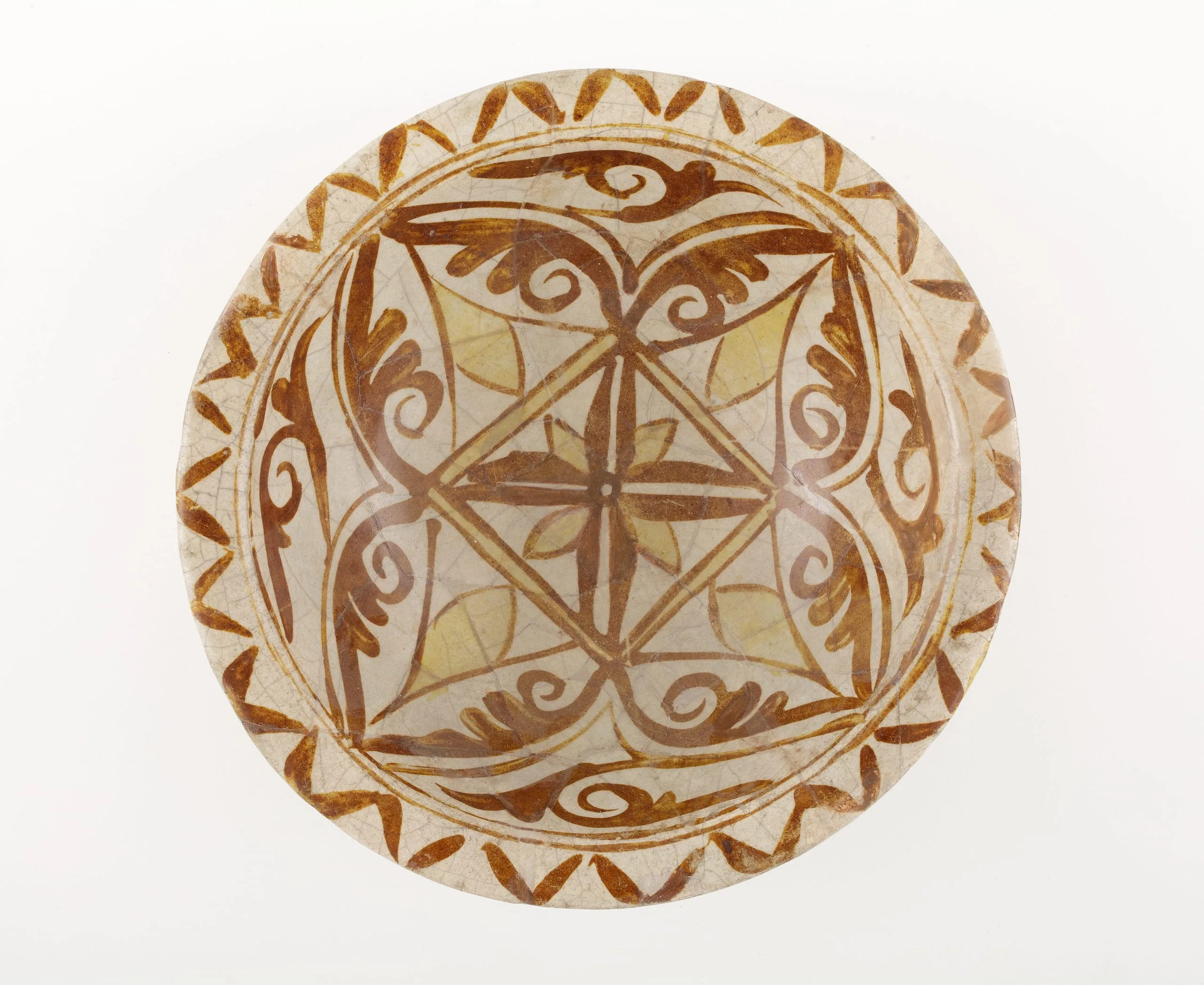
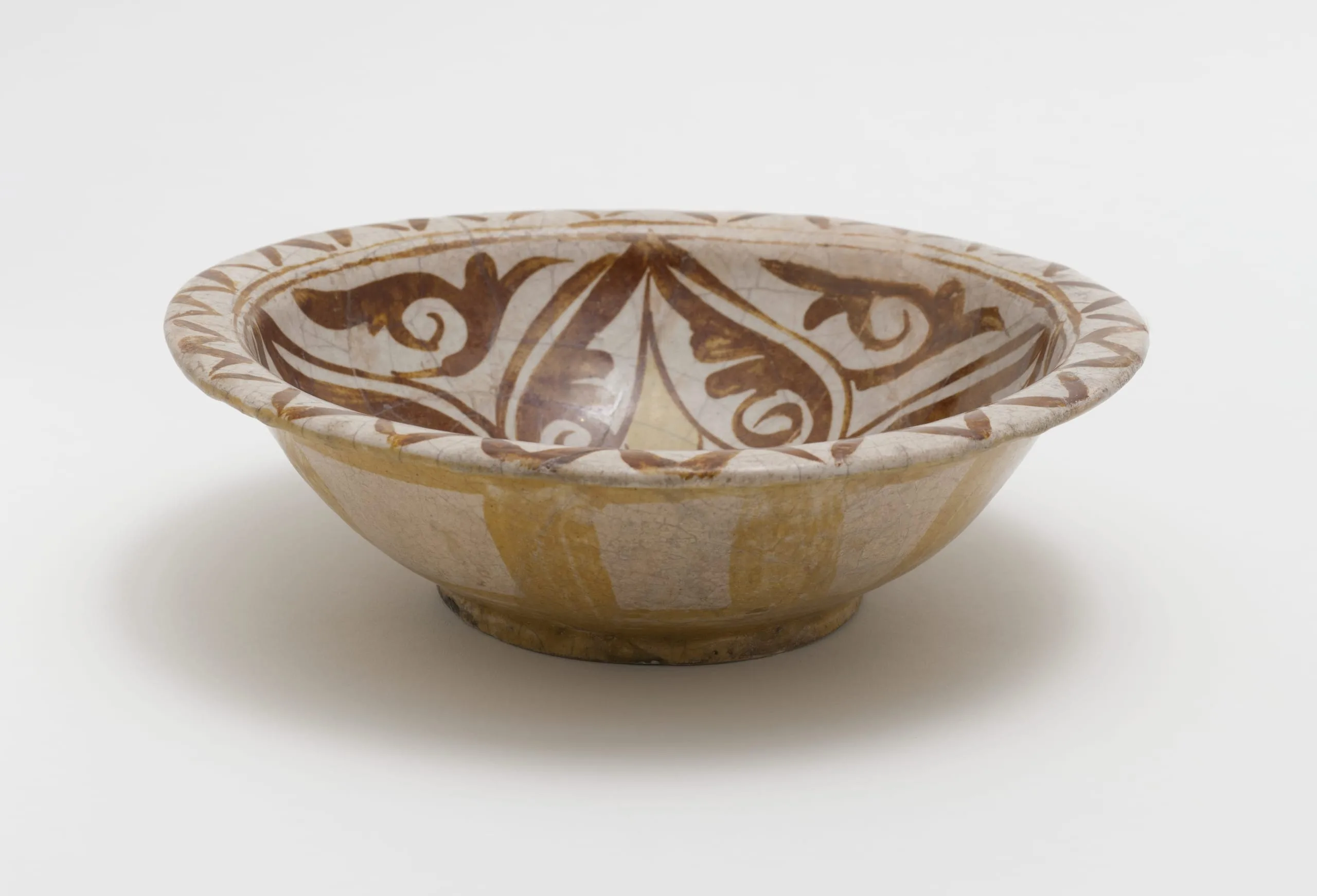
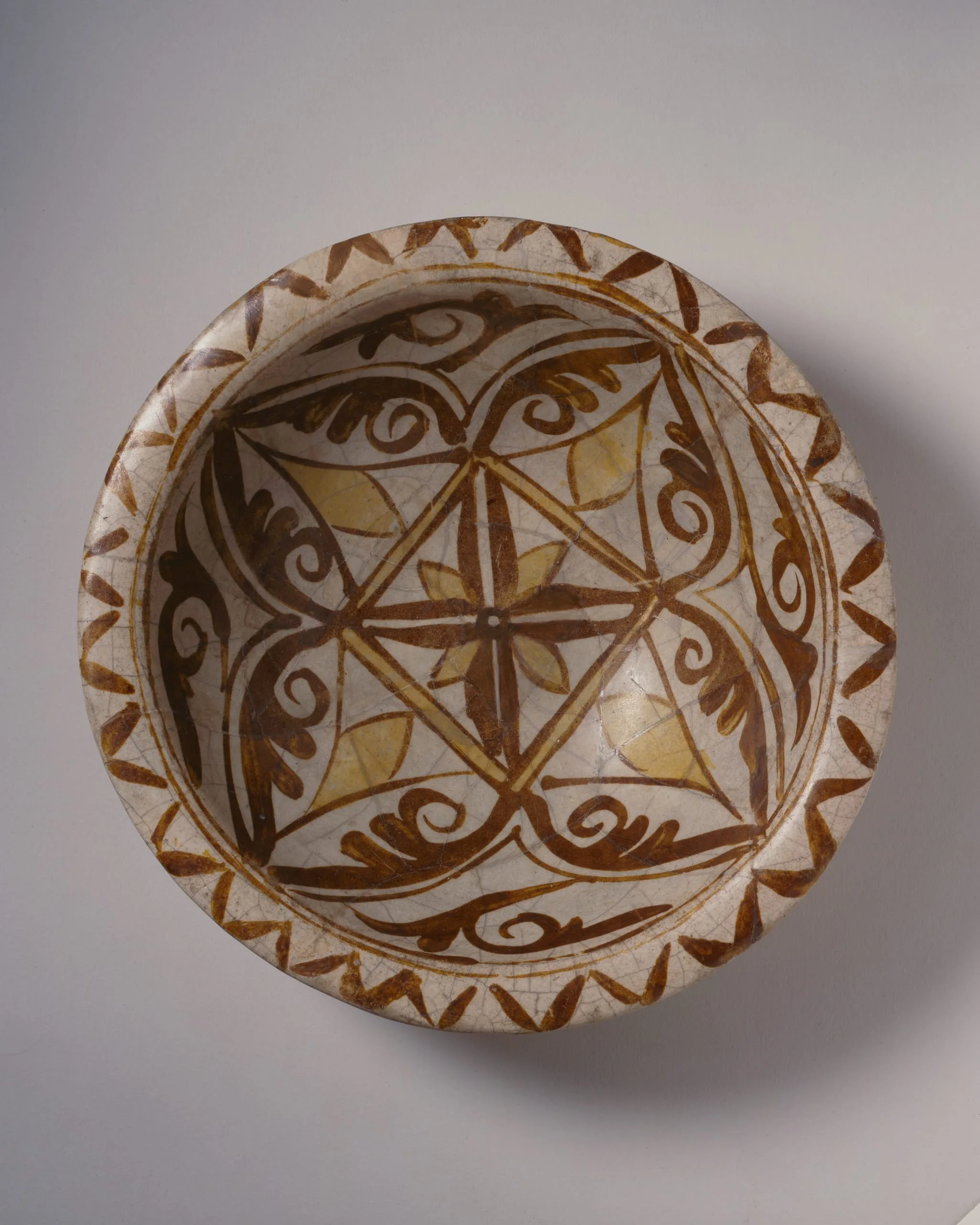
Bowl9th century

On view:
Geffen Galleries, Islamic Art and Late Antiquity
Ceramic dish viewed from above with amber lusterware decoration on a cream ground, featuring a geometric diamond and radiating scrollwork within a spiked border
Ceramic bowl with wide flared rim, cream ground decorated with copper luster foliate and scroll motifs on the interior, and vertical yellow-gold stripes on the exterior; crackled glaze throughout.
Ceramic bowl with crackled cream glaze, viewed from above, decorated in golden-brown lusterware with a central star or geometric rosette, surrounded by scrolling vine and leaf motifs; the wide rim features a repeating zigzag border.
Title
Bowl
Place Made
Iraq
Date Made
9th century
Medium
Earthenware, overglaze polychrome luster painted
Dimensions
2 3/4 x 9 1/2 in. (6.99 x 24.13 cm)
Credit Line
The Nasli M. Heeramaneck Collection, gift of Joan Palevsky
Accession Number
M.73.5.238
Classification
Ceramics
Collecting Area
Art of the Middle East: Islamic
Curatorial Notes

The spectacular technique of luster painting was first introduced in the ninth century, probably by Egyptian artists familiar with the secret of luster-painted glass who perhaps immigrated to Basra, in southern Iraq, where a new ceramic industry developed under the ‘Abbasid dynasty (750–1258). This was a luxury ceramic ware requiring two firings: in the first, an opaque, generally white glaze was applied, and in the second, the design was applied from a paste that included silver and copper compounds ground with sulfur and dissolved in grape juice or vinegar. This second firing took place in a special kiln that restricted the flow of oxygen, producing a reducing atmosphere that forced the metals to give up their oxygen, thereby creating a thin, lustrous film that fused with the glazed surface. This deep bowl painted in yellow and brown luster over a white glaze and decorated with abstract and vegetal designs is an excellent example of the earlier, more colorful phase of this technique.

Selected Bibliography
  • Lo Terrenal y lo Divino: Arte Islámico siglos VII al XIX Colección del Museo de Arte del Condado de Los Ángeles. Santiago: Centro Cultural La Moneda, 2015.

  • Komaroff, Linda. Beauty and Identity: Islamic Art from the Los Angeles County Museum of Art. Los Angeles: Los Angeles County Museum of Art, 2016.