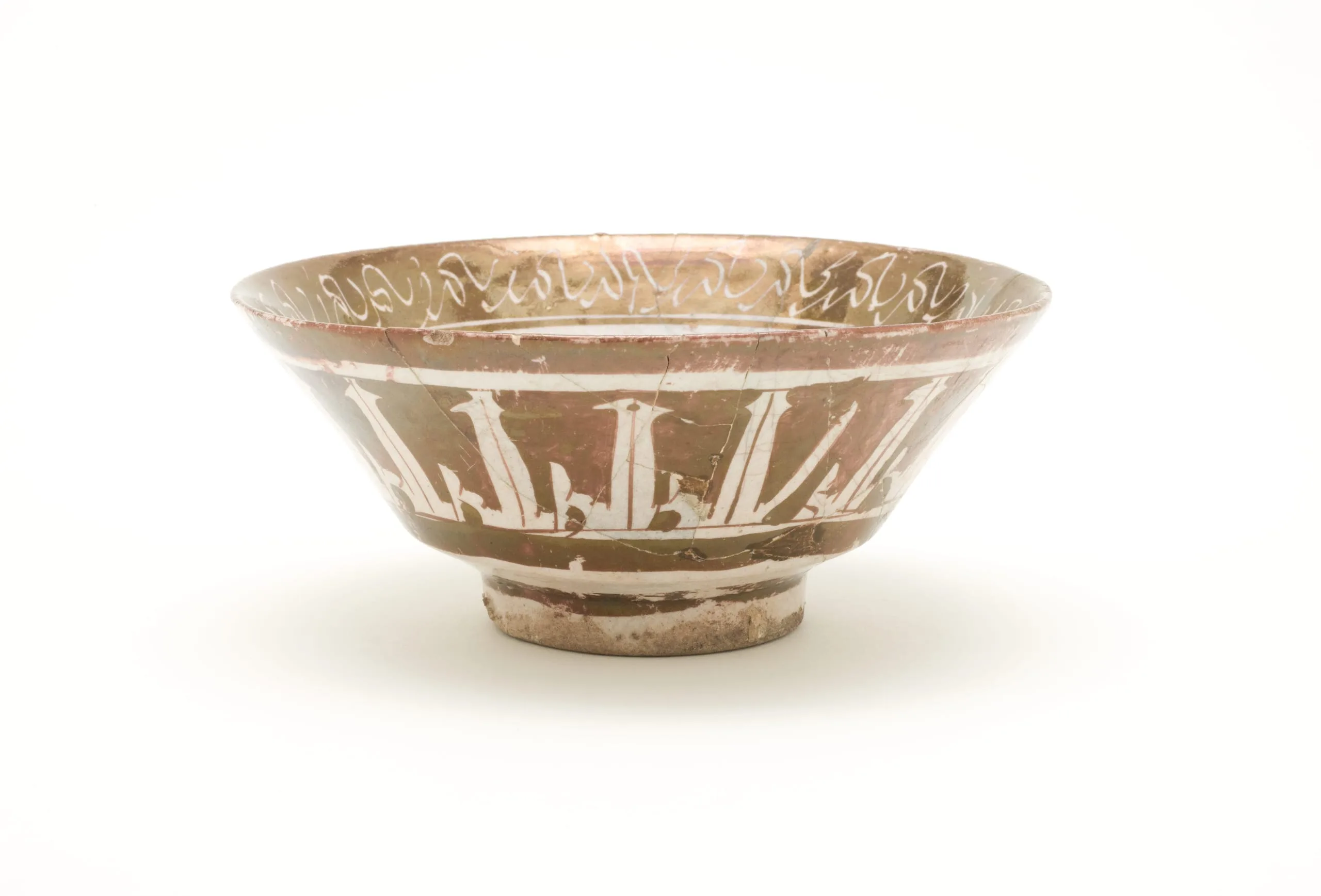
Luster-painted ceramics, which represent one of the most original and spectacular contributions of the Islamic potter, is an especially long-lived technique, and the resulting products must have always been considered a form of luxury ware, in part because they required two firings. In the first firing, an opaque, generally white glaze was applied, and in the second, the design was daubed from a paste that included silver and copper compounds ground with sulfur. The second firing took place in a special kiln that restricted the flow of oxygen; this reducing atmosphere forced the metals to give up their oxygen, thereby creating a thin, lustrous film that fused with the glazed surface.
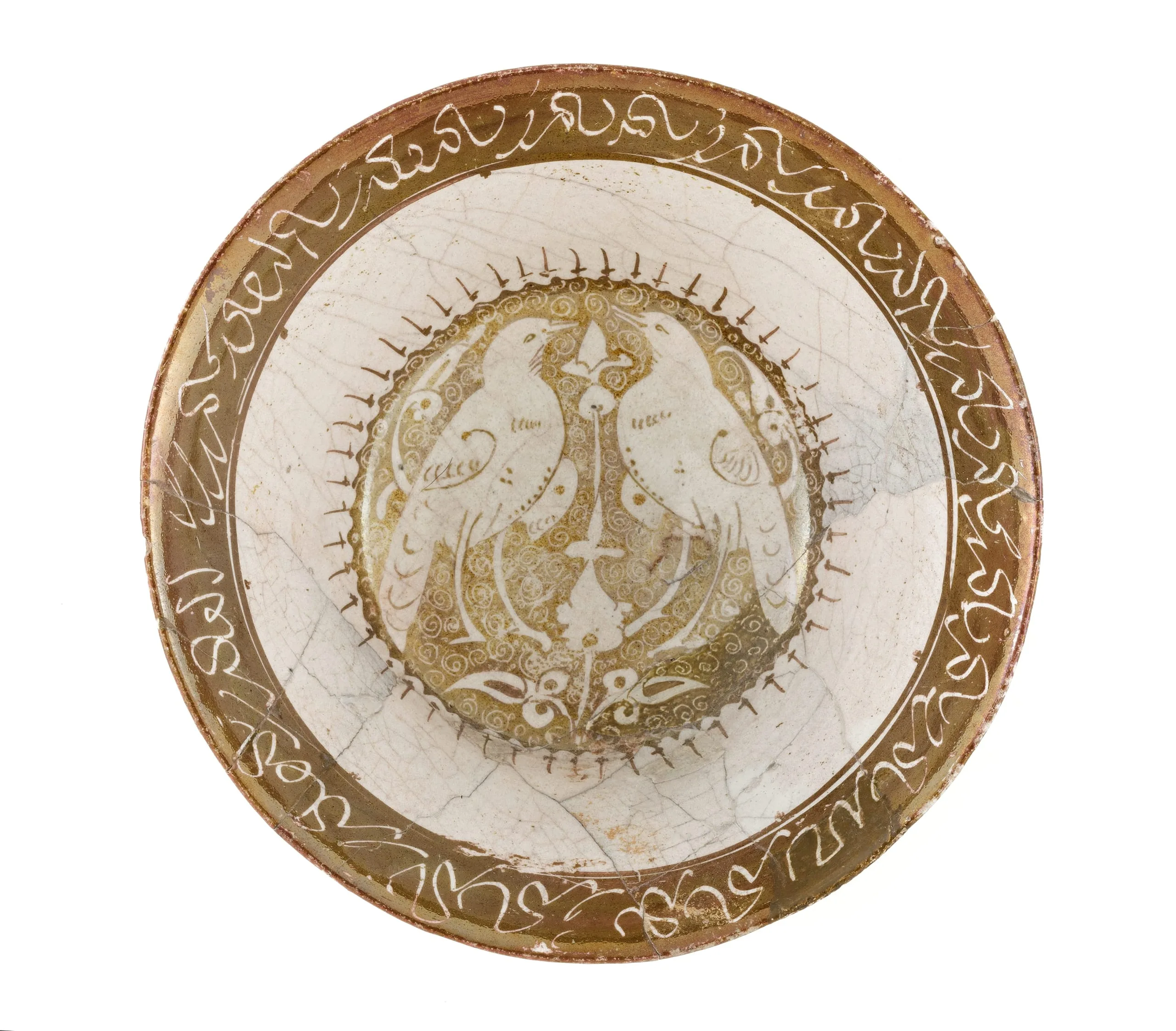
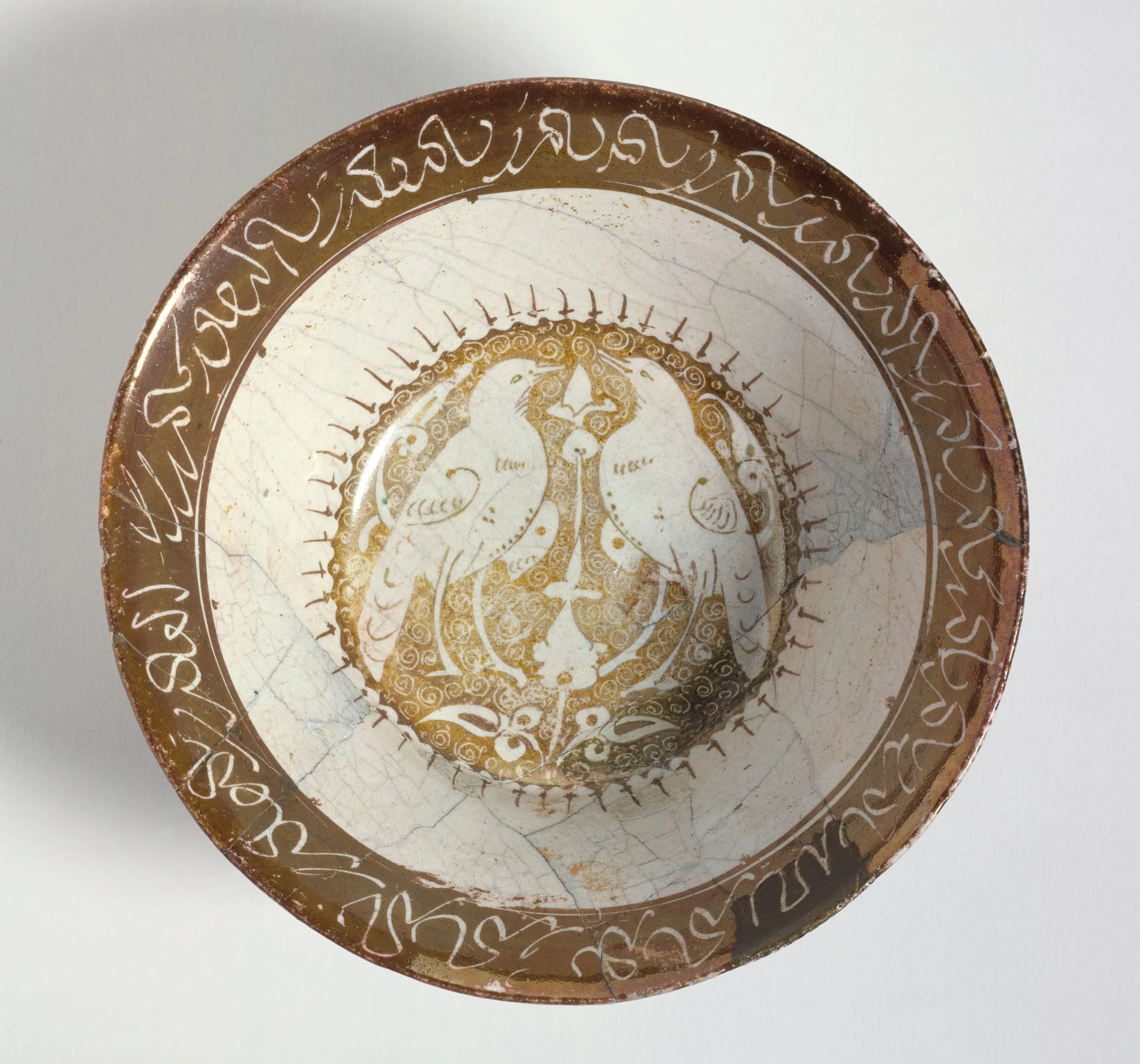
From the twelfth to the early fourteenth century, Kashan, in Central Iran, was the most prolific center for lusterware, both tiles and tableware, including this stunning gold luster bowl decorated with two delicately painted birds, arranged face-to-face at the center. It is unclear what species of bird was intended, but it is possibly a nightingale, popularly known in Persian literature for its unrequited love for the rose and easily recognizable to the literate Iranian urbanite. The inscription around the edge reads, “Perpetual glory and increasing prosperity and triumphant victory and lasting victory and rising good fortune and healthy life and pious living and . . . wealth and health and long life to its owner.”
2025