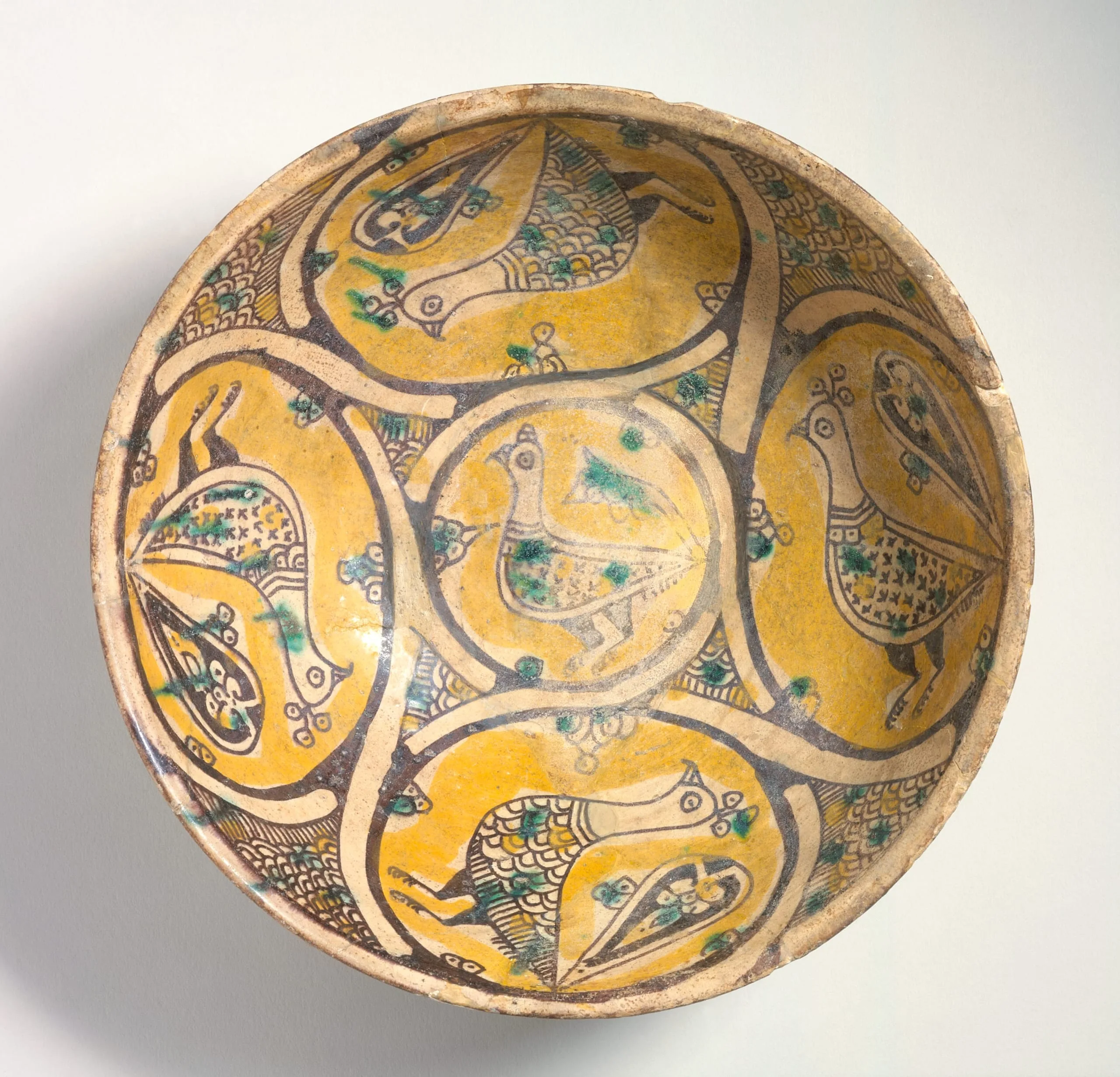
Under the Samanid dynasty (874−999), which ruled large parts of Iran and Central Asia, Nishapur, in northeastern Iran, was a center of trade, religious study, and poetry. It was also an important site for the production of ceramic wares. In the 1930s and 1940s, excavations conducted by the Metropolitan Museum of Art uncovered kilns and large quantities of pottery and wasters (flawed, discarded pots). Since then, many undocumented wares have been attributed to Nishapur, as is the case with this bowl, which is stylistically and technically related to pottery excavated at that site.
The bowl is adorned with five stylized birds resembling peacocks, rendered in black and enclosed within interlaced medallions on an opaque yellow ground. Scale patterns, hatch marks, and a random array of turquoise dabs add to the bowl’s visual appeal. Bird motifs are a prominent feature of Nishapur wares, although their meaning is debated; they may carry symbolic weight, or they may simply be stylized representations of local birds. Here, however, the use of peacocks is significant as they were long associated with courtly opulence in Islamic cultures.
2024