LACMA

ShopMembershipMyLACMATickets
LACMA
Los Angeles County Museum of Art
5905 Wilshire Blvd.
Los Angeles, CA 90036
info@lacma.org
(323) 857-6000
Sign up to receive emails
Subscribe
© Museum Associates 2025

Museum Hours

Monday

11 am–6 pm

Tuesday

11 am–6 pm

Wednesday

Closed

Thursday

11 am–6 pm

Friday

11 am–8 pm

Saturday

10 am–7 pm

Sunday

10 am–7 pm


  • About LACMA
  • Jobs
  • Building LACMA
  • Host An Event
  • Unframed
  • Press
  • FAQs
  • Log in to MyLACMA
  • Privacy Policy
© Museum Associates 2025
Collections

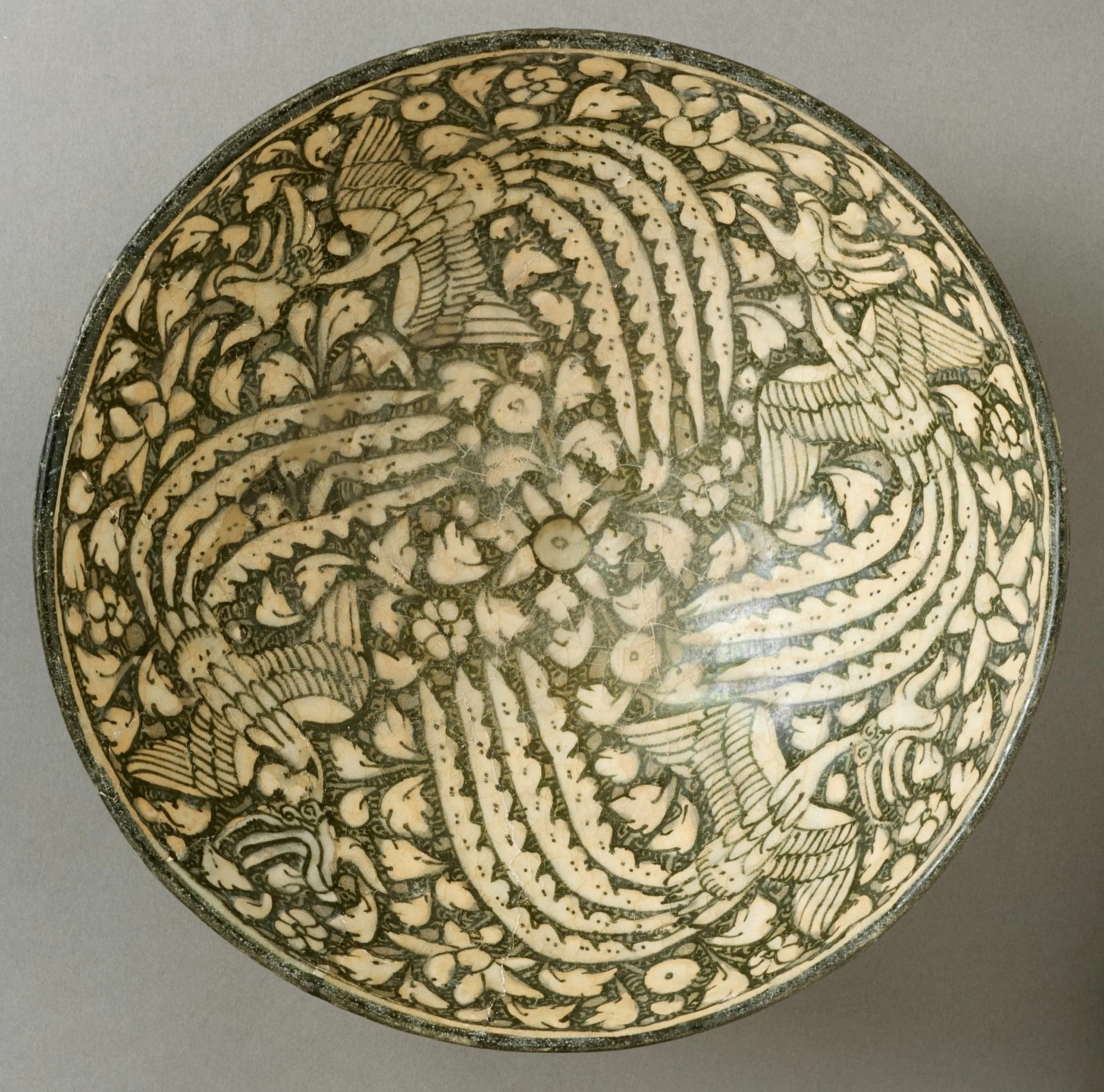
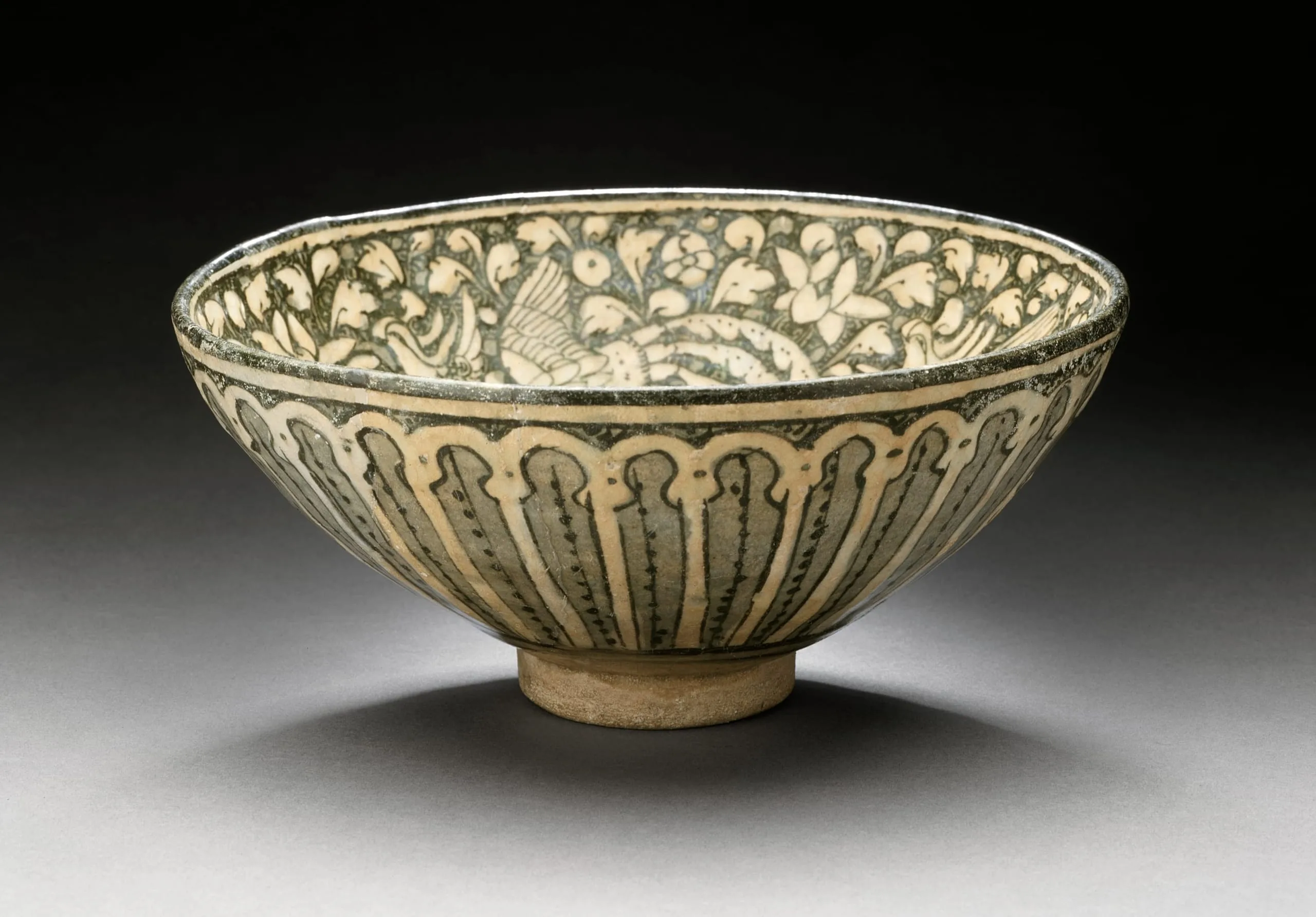
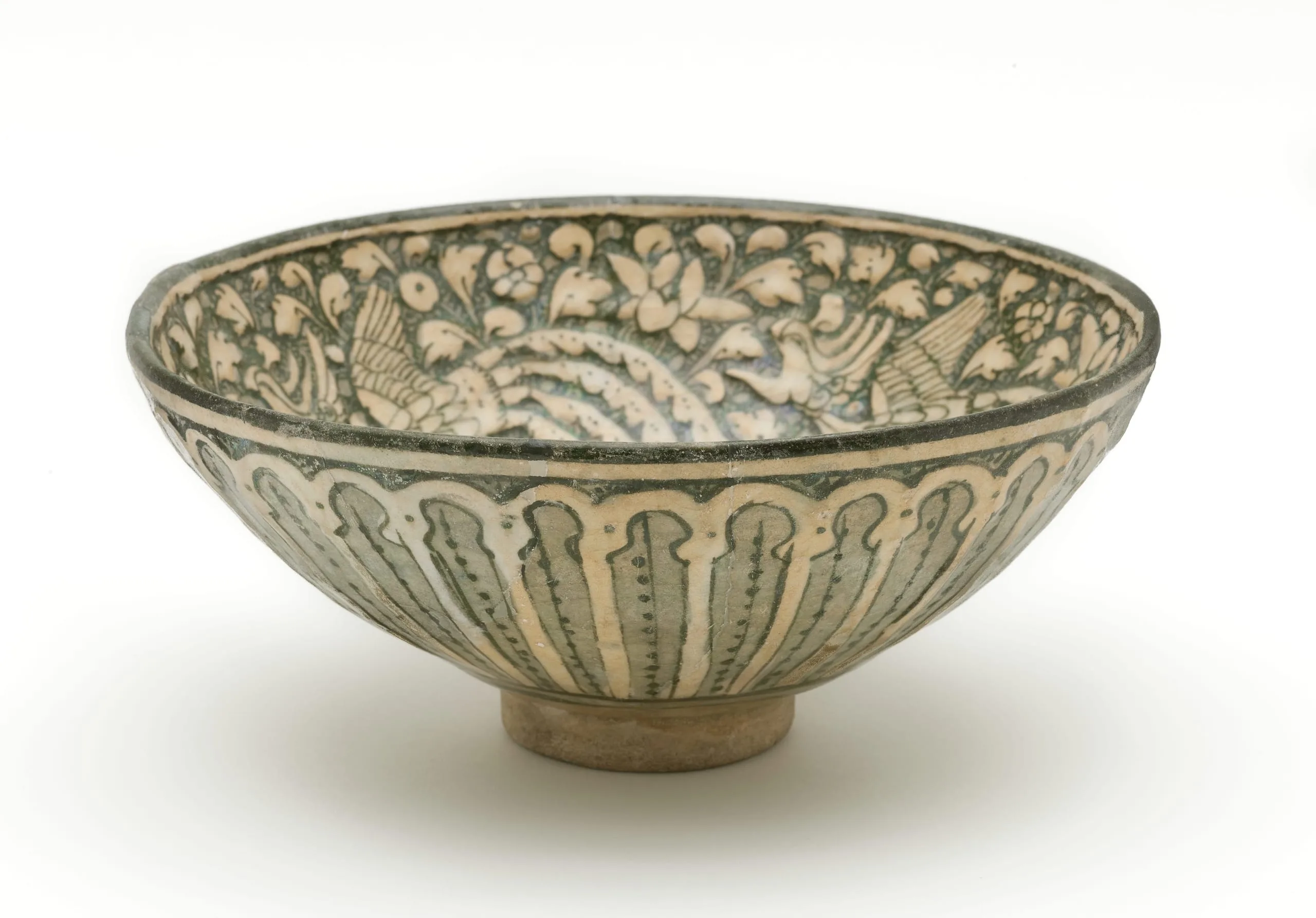
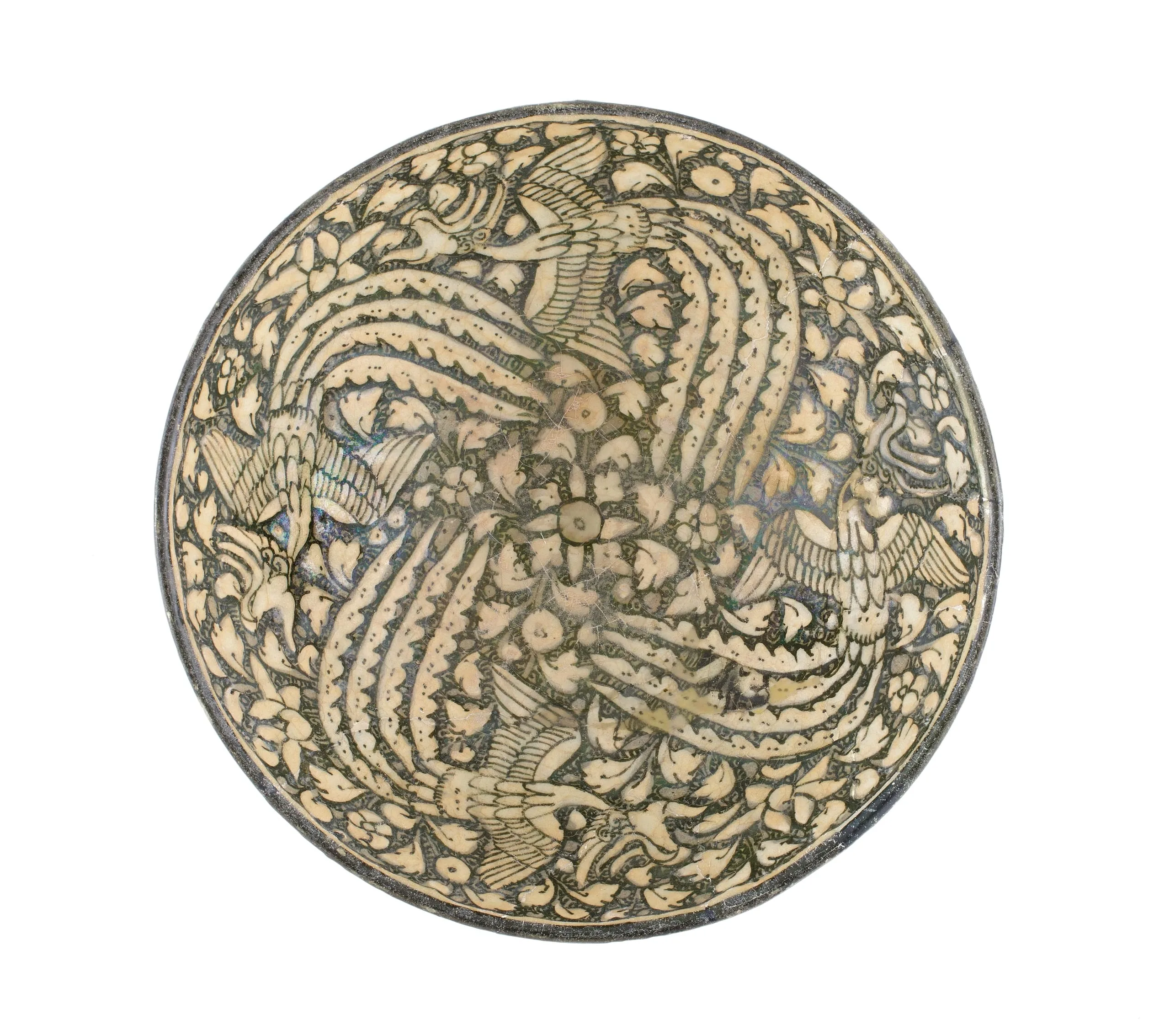
Bowl with Four Phoenixes14th century

Not on view
Ceramic bowl with buff clay body, decorated in sage green and cream with birds among scrolling vines on the interior and arched vertical panels on the exterior
Ceramic bowl viewed from above, with cream and gray-green glaze, densely decorated with swooping birds, scrolling feathers, and floral motifs in an intricate overall pattern.
Ceramic bowl viewed from above, cream-colored interior densely decorated with black-painted birds in flight amid swirling feathers and floral scrollwork; dark ground fills the spaces between motifs, creating a dynamic radiating composition.
Ceramic bowl on a low foot ring, decorated in grayish-green and cream with a bird amid scrolling foliage along the interior rim, and a band of elongated arch and petal motifs on the exterior.
Title
Bowl with Four Phoenixes
Place Made
Iran
Date Made
14th century
Medium
Fritware, green-gray slip, underglaze-painted
Dimensions
8 1/2 x 4 in. (21.5 x 10.2 cm)
Credit Line
The Nasli M. Heeramaneck Collection, gift of Joan Palevsky
Accession Number
M.73.5.215
Classification
Ceramics
Collecting Area
Art of the Middle East: Islamic
Curatorial Notes

The Mongol invasions of Iran, beginning in 1220, and the subsequent period of Ilkhanid rule by the descendants of Genghis Khan (1256–1353) had an important impact on the technique and decoration of Persian pottery, as is demonstrated by this vessel. Such underglaze-painted bowls, which are often designated as Sultanabad wares after the western Iranian city where a number of these objects were discovered (although there is no proof that any of them were actually made there), perhaps most clearly reflect the impact of the new aesthetic. The hemispheric shape, exterior decoration of radiating petal-like designs, and subdued gray-green color scheme suggest that this pottery was inspired by imported Chinese celadon; the phoenix motif, in which the mythical birds are depicted in groups of two or more, may also represent a Chinese import.
Selected Bibliography
  • The Legacy of Genghis Khan: Courtly Art and Culture and Western Asia, 1256-1353. New York: The Metropolitan Museum of Art, 2002
  • Lo Terrenal y lo Divino: Arte Islámico siglos VII al XIX Colección del Museo de Arte del Condado de Los Ángeles. Santiago: Centro Cultural La Moneda, 2015.

  • Komaroff, Linda. Beauty and Identity: Islamic Art from the Los Angeles County Museum of Art. Los Angeles: Los Angeles County Museum of Art, 2016.