LACMA

ShopMembershipMyLACMATickets
LACMA
Los Angeles County Museum of Art
5905 Wilshire Blvd.
Los Angeles, CA 90036
info@lacma.org
(323) 857-6000
Sign up to receive emails
Subscribe
© Museum Associates 2025

Museum Hours

Monday

11 am–6 pm

Tuesday

11 am–6 pm

Wednesday

Closed

Thursday

11 am–6 pm

Friday

11 am–8 pm

Saturday

10 am–7 pm

Sunday

10 am–7 pm


  • About LACMA
  • Jobs
  • Building LACMA
  • Host An Event
  • Unframed
  • Press
  • FAQs
  • Log in to MyLACMA
  • Privacy Policy
© Museum Associates 2025
Collections

Unknown
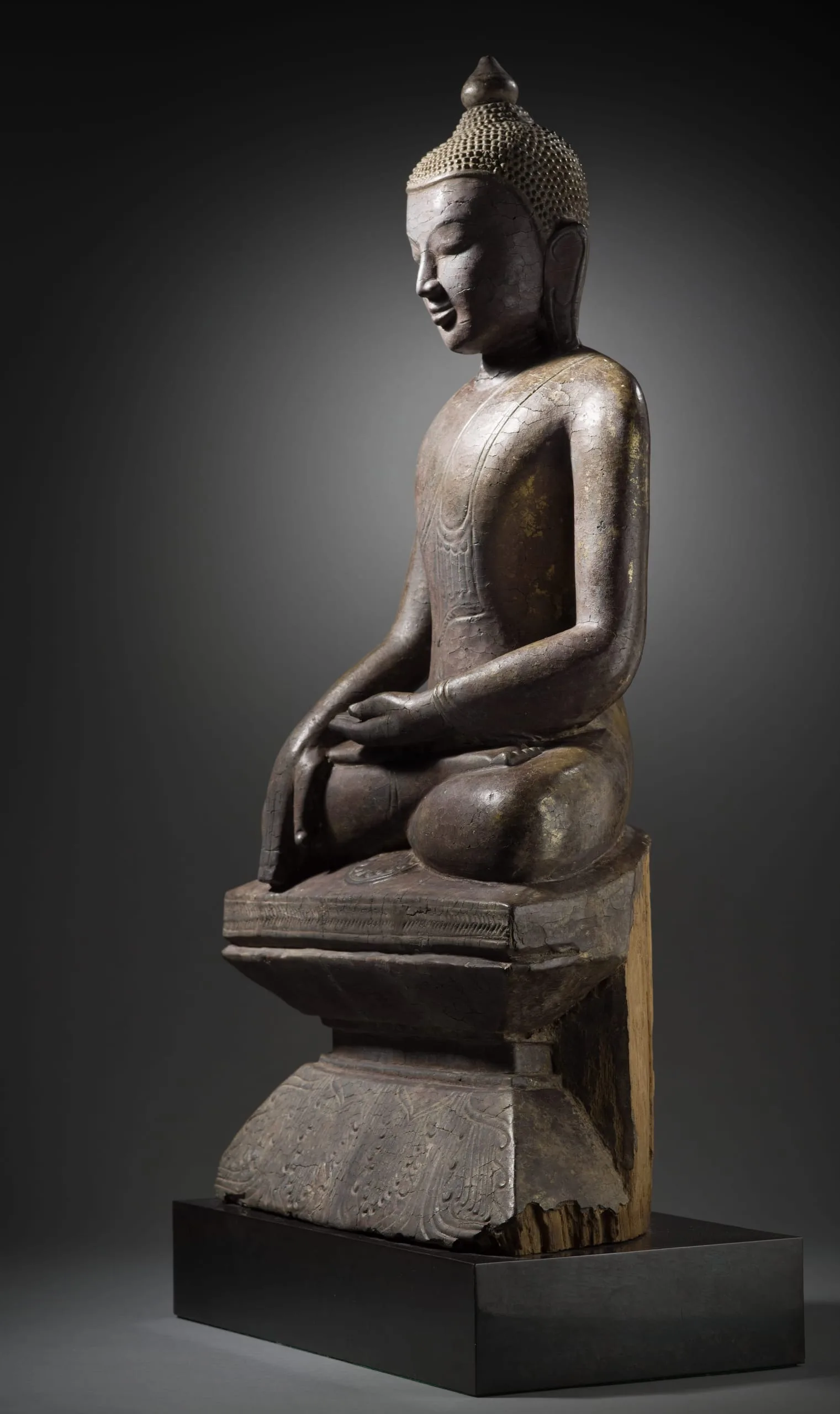
Buddha Shakyamuni18th century or later

On view:
Resnick Pavilion, floor 1
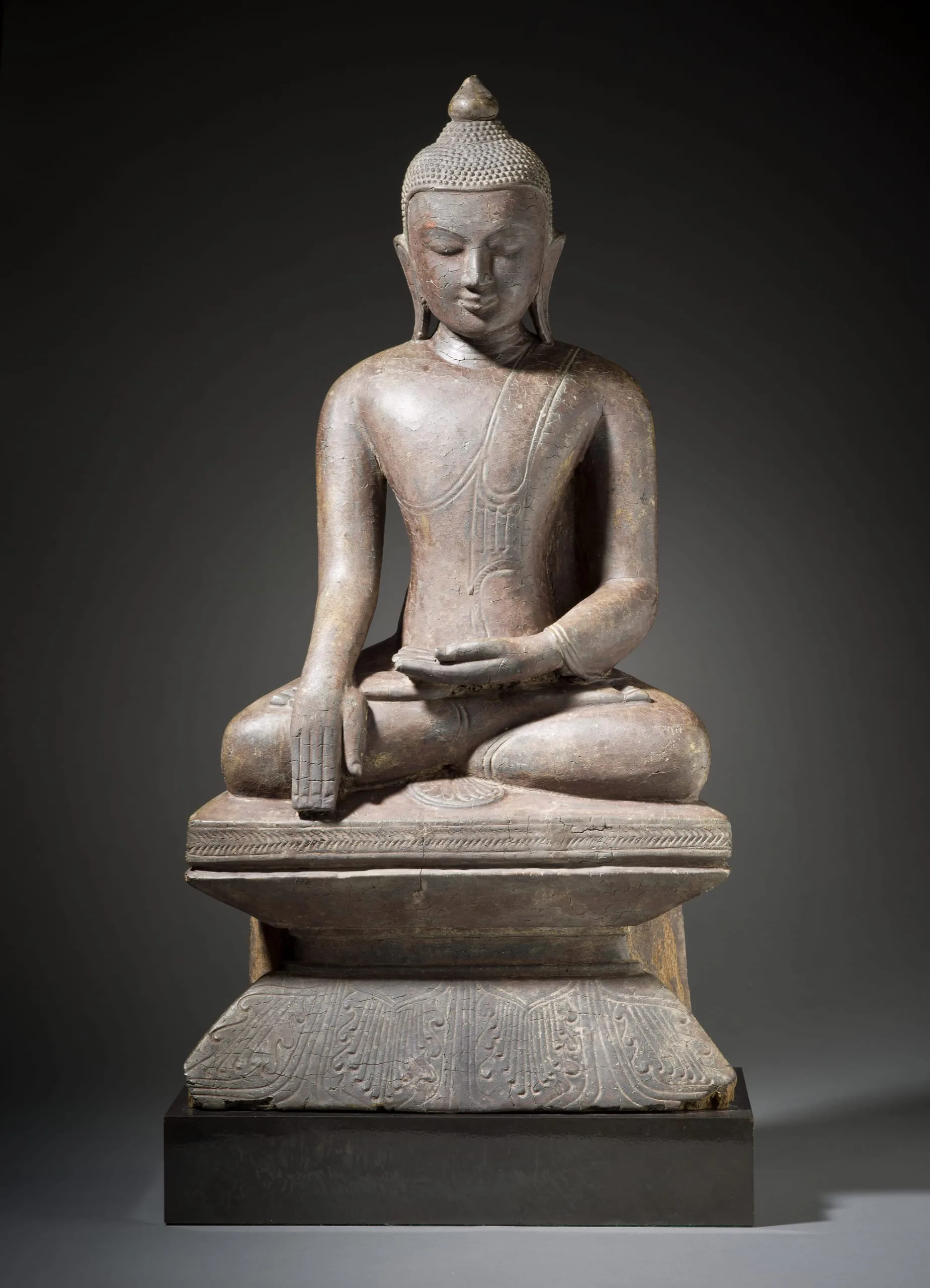
Stone sculpture of a seated figure in lotus position, hands in ritual gesture, with tightly curled hair and a pointed topknot, on a decorated tiered plinth
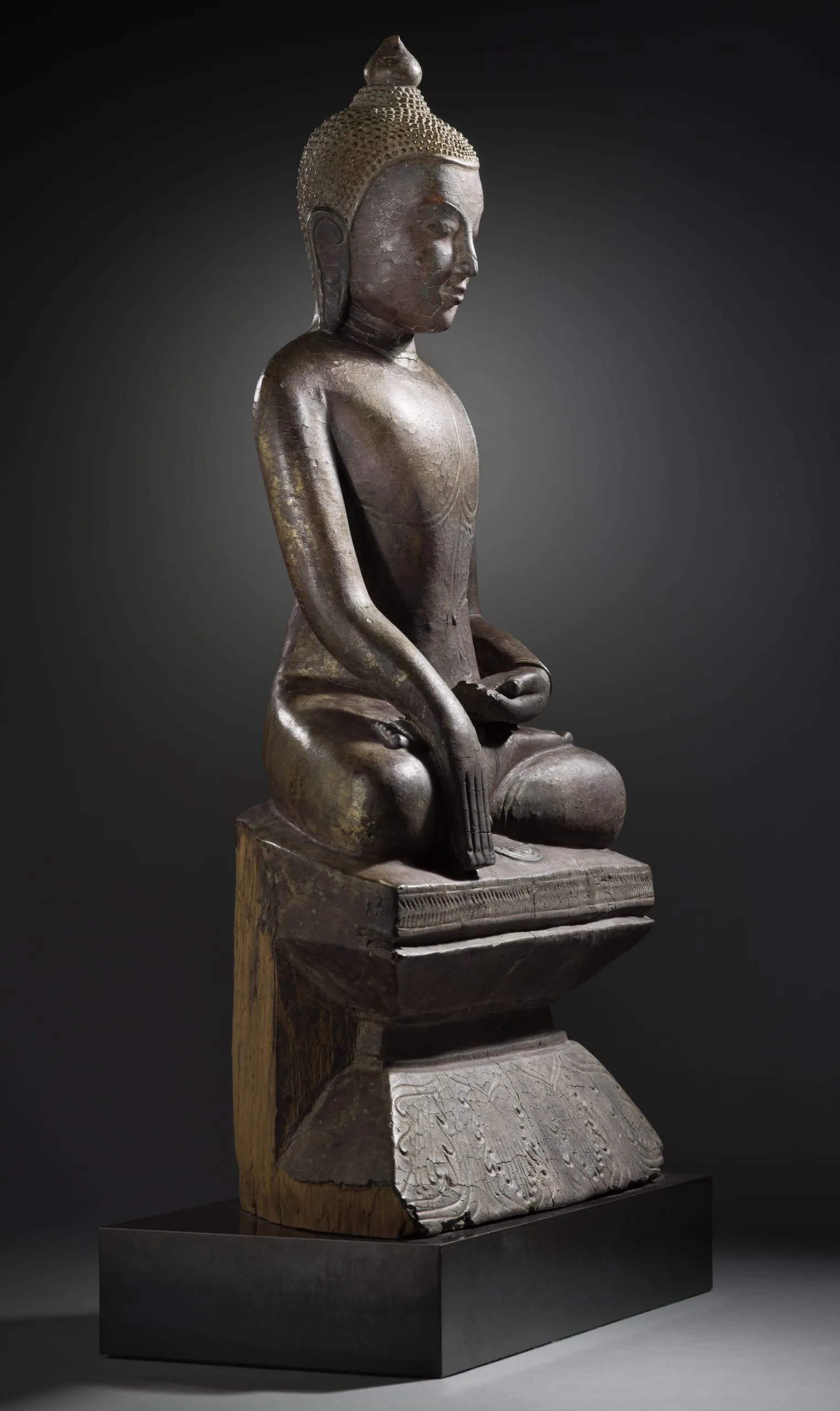
Wooden sculpture of a seated Buddha in bhumisparsha mudra, right hand reaching toward the ground, robes rendered with incised linear folds, curled hair with ushnisha, mounted on a tiered pedestal with carved scroll decoration, dark patinated surface with traces of gilding.
Bronze Buddha figure seated in meditation posture on a tiered wooden pedestal with carved decorative base, shown in three-quarter profile with ushnisha crown and smooth patinated surface.
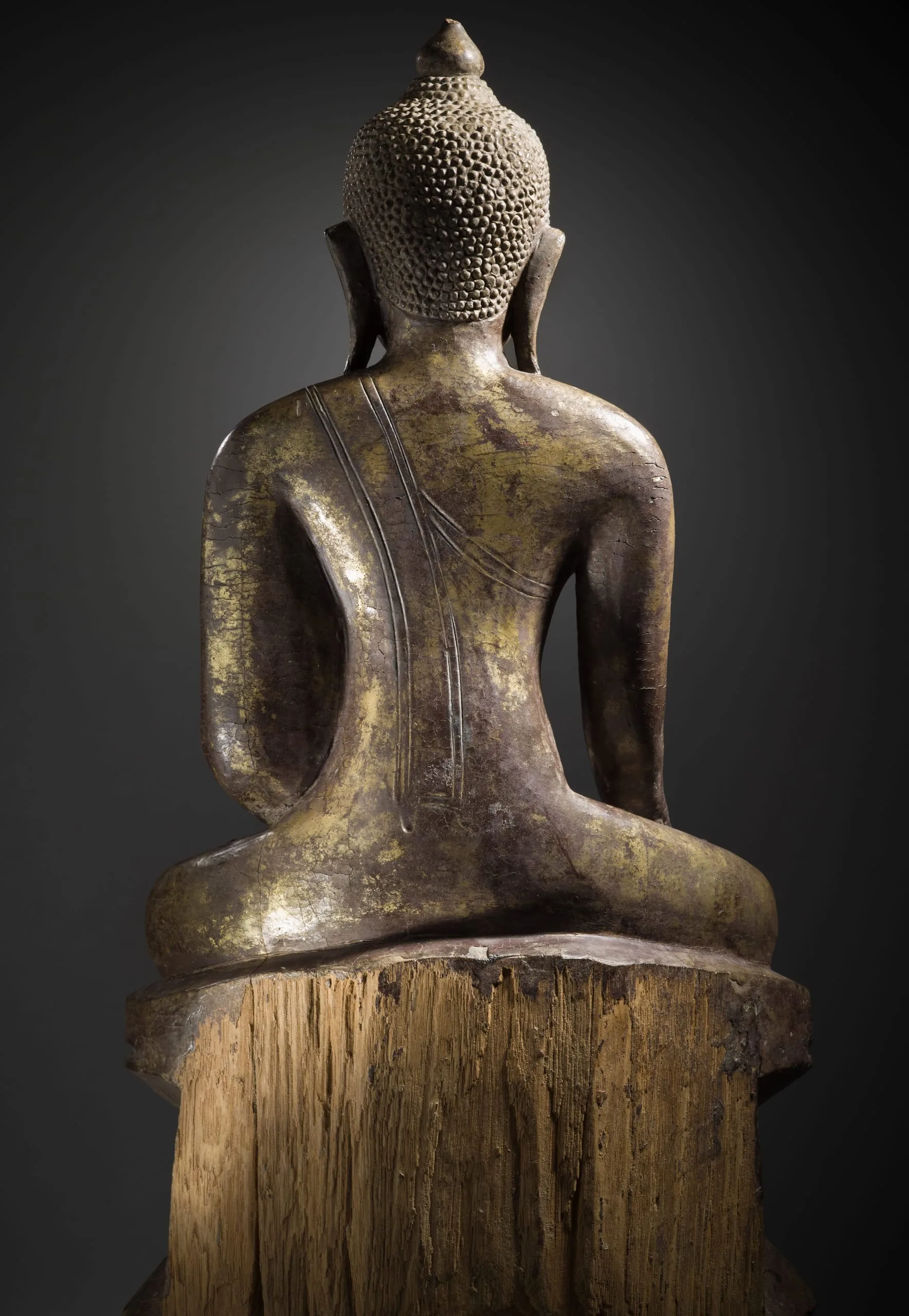
Bronze Buddha figure seen from behind, seated in meditation posture on a weathered wooden base. Curled ushnisha atop the head with rows of raised hair curls, draped robe indicated by incised lines across the back, aged patina with traces of gilt.
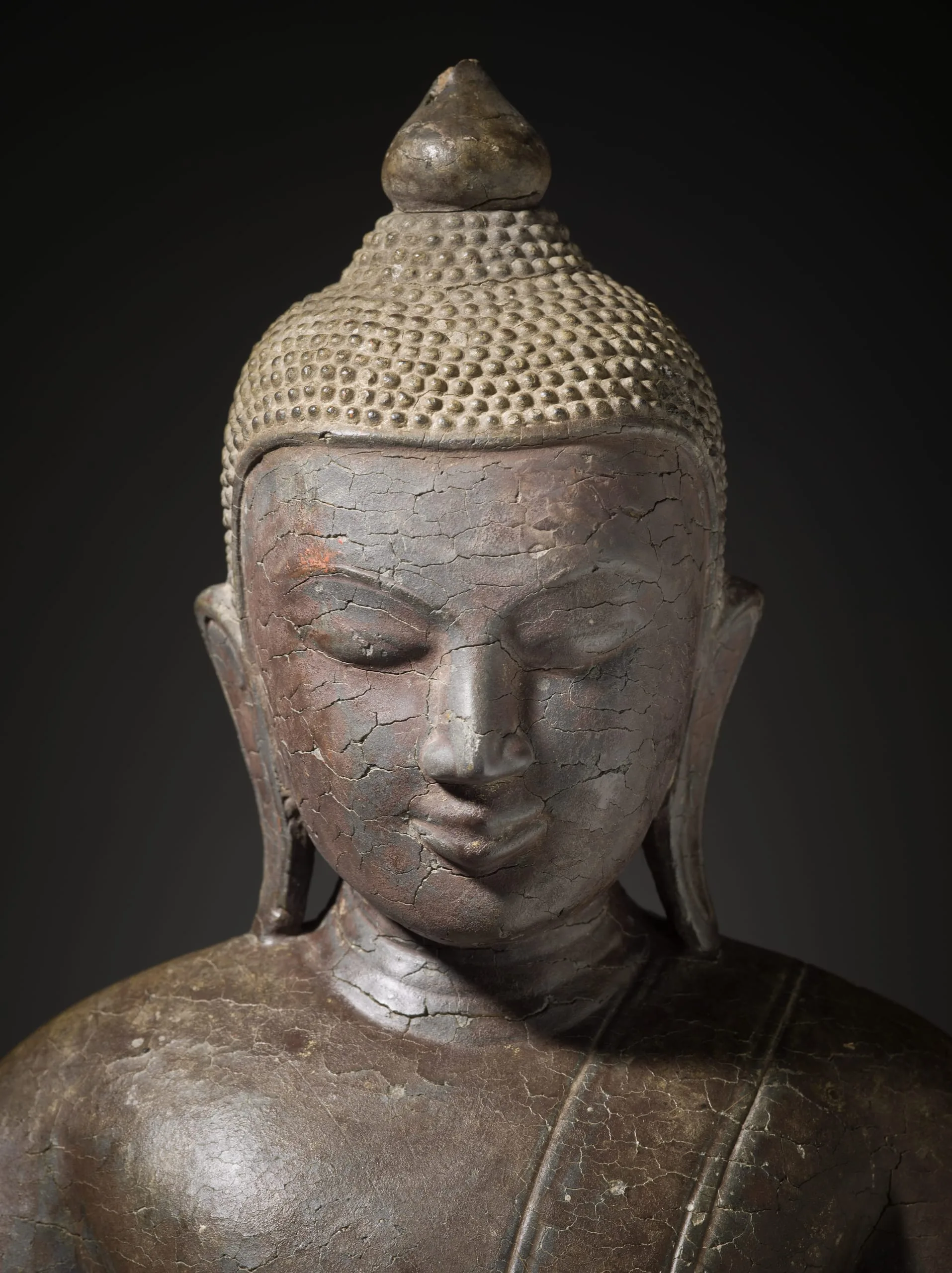
Bronze Buddhist figure, close view of head and upper torso, with ushnisha and rows of spiral hair curls, downcast eyes, and draped robe; darkened patina with crackled surface throughout.
Artist or Maker
Unknown
Title
Buddha Shakyamuni
Place Made
Myanmar (Burma)
Date Made
18th century or later
Medium
Wood with lacquer
Dimensions
19 5/8 x 10 1/4 x 5 in. (49.84 x 26.03 x 12.7 cm)
Credit Line
Gift of James and Beverly Coburn
Accession Number
M.78.129
Classification
Sculpture
Collecting Area
South and Southeast Asian Art
Curatorial Notes

This wood with lacquer image of the historical Buddha Shakyamuni displays several of the standard iconographic features. He has snail-curl hair, the cranial protuberance (ushnisha) emblematic of his omniscience, elongated earlobes symbolizing his renunciation of the material world, and heavily-lidded pensive eyes conveying his compassion for all sentient beings. There is no sacred forehead marking (urna). A jewel forms a finial on top of the head. He sits in the meditation posture (padma asana). His right hand is extended in the gesture of calling upon the earth to witness his right to achieve Enlightenment after his many lifetimes (bhumisparsha mudra). His robe is almost transparent, marked only by the hems. The outer robe is worn over his left shoulder only. Rather than a lotus base, the Buddha sits on a multitiered throne adorned with chevrons on the upper border and swags of cloth on the base. The structure of the throne is similar to that of M.80.228.3.

Stylistically, the sculpture reflects the assimilation by Burmese artists of the artistic traditions of the Pala Dynasty of Eastern India (r. 750–1161), specifically those of the 11th – 12th century. However, the radiocarbon dating of the sculpture has been calculated to between 1660 CE and 1950 CE, with the earliest date for the wood using the carving being 1690 CE. Thus, the sculpture was likely made in the 18th century, although a creation date in the 19th century or even the first half of the 20th century cannot be ruled out. (Brown 2013, Artibus Asiae 73:1, pp. 224 and 229, fig. 7)
Selected Bibliography
  • Little, Stephen, Tushara Bindu Gude, Karina Romero Blanco, Silvia Seligson, Marco Antonio Karam. Las Huellas de Buda. Ciudad de México : Instituto Nacional de Antropología e Historia, 2018.
  • Little, Stephen, and Tushara Bindu Gude. Realms of the Dharma: Buddhist Art across Asia. Los Angeles: Los Angeles County Museum of Art, 2025.