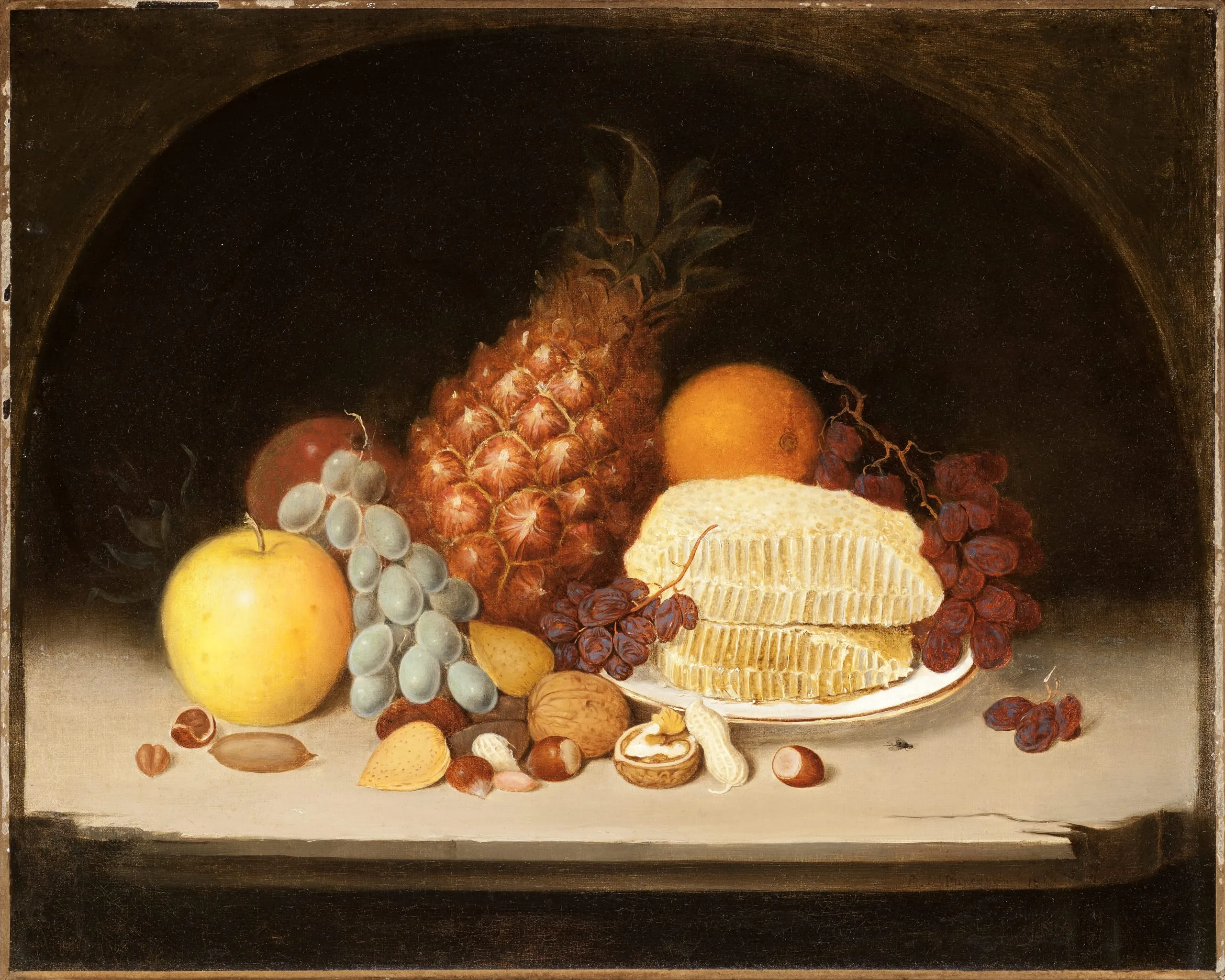
In this small but intimate still life, artist Robert Duncanson juxtaposes a host of different fruits and nuts that demonstrate bounty and variety, while also hinting at complex and fraught histories of resource cultivation. Duncanson was a free Black artist working in Cincinnati and, despite the obstacles he faced in an overwhelmingly white art world, he shifted from early work as a house painter and glazier to become one of the nation’s most celebrated artists. Frederick Douglass praised his virtuoso talents, writing, “Who shall answer to this age and to posterity for the sin and shame of crushing a race, thus gifted with the power of genius . . . of which [Duncanson] proves them capable?”
Although today Duncanson is widely known for his landscapes, between 1842 and 1849 he painted at least seven still lifes. In their symbols of abundance and mastery over land and resources, these arrangements of edible delicacies nevertheless echo the messages of Manifest Destiny commonly attributed to landscape paintings of the era. In addition, as recent scholarship has demonstrated, Cincinnati was a center for both fruit cultivation and abolitionism in the mid-nineteenth century, and Duncanson’s still lifes may have been a means by which the artist could obliquely engage in contemporary discourses on labor and race. Cincinnati’s active horticulture community might have even supplied some of the fruit for Duncanson’s tableau, particularly specimens that would have been otherwise difficult to obtain in Ohio.
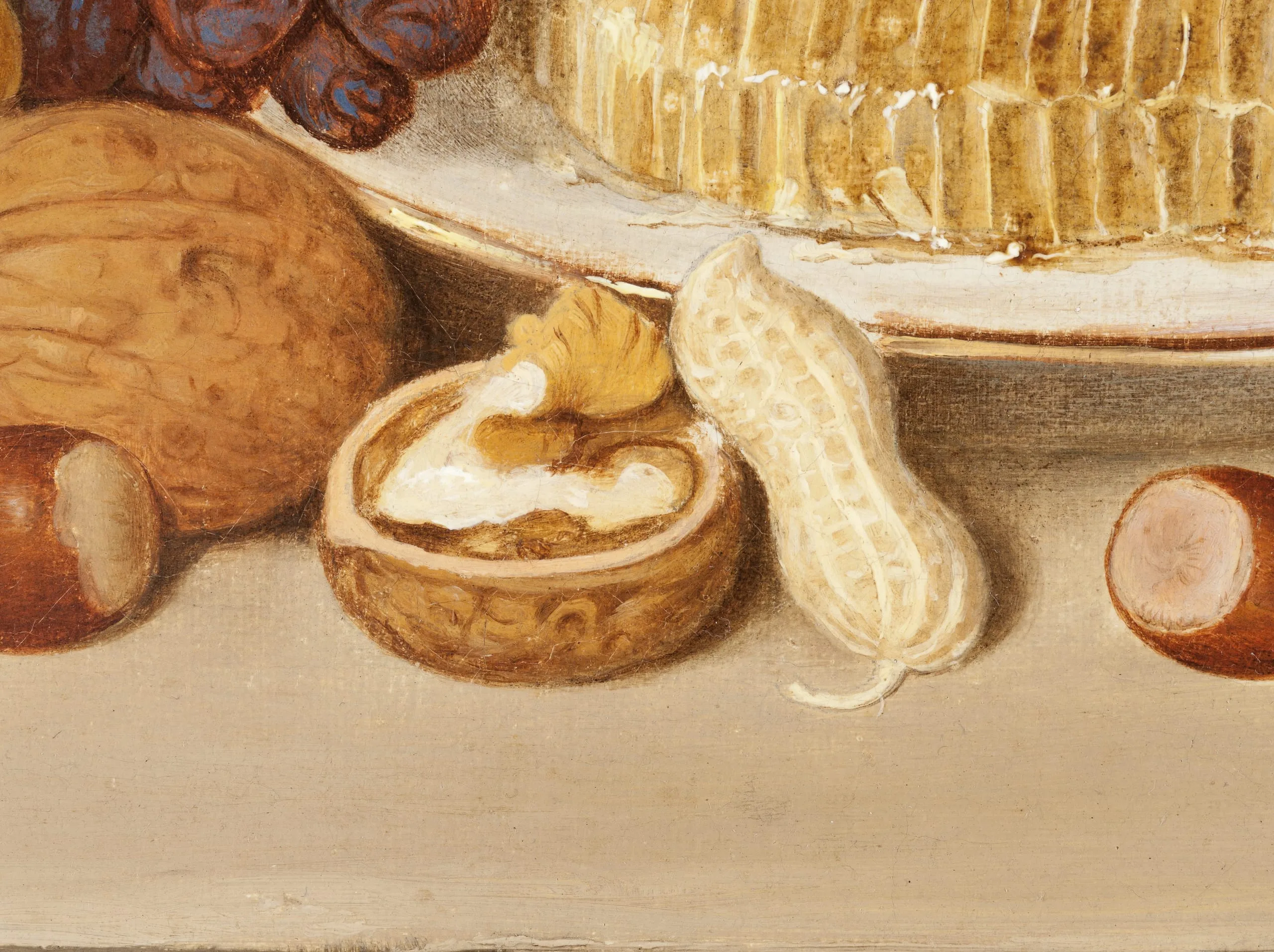
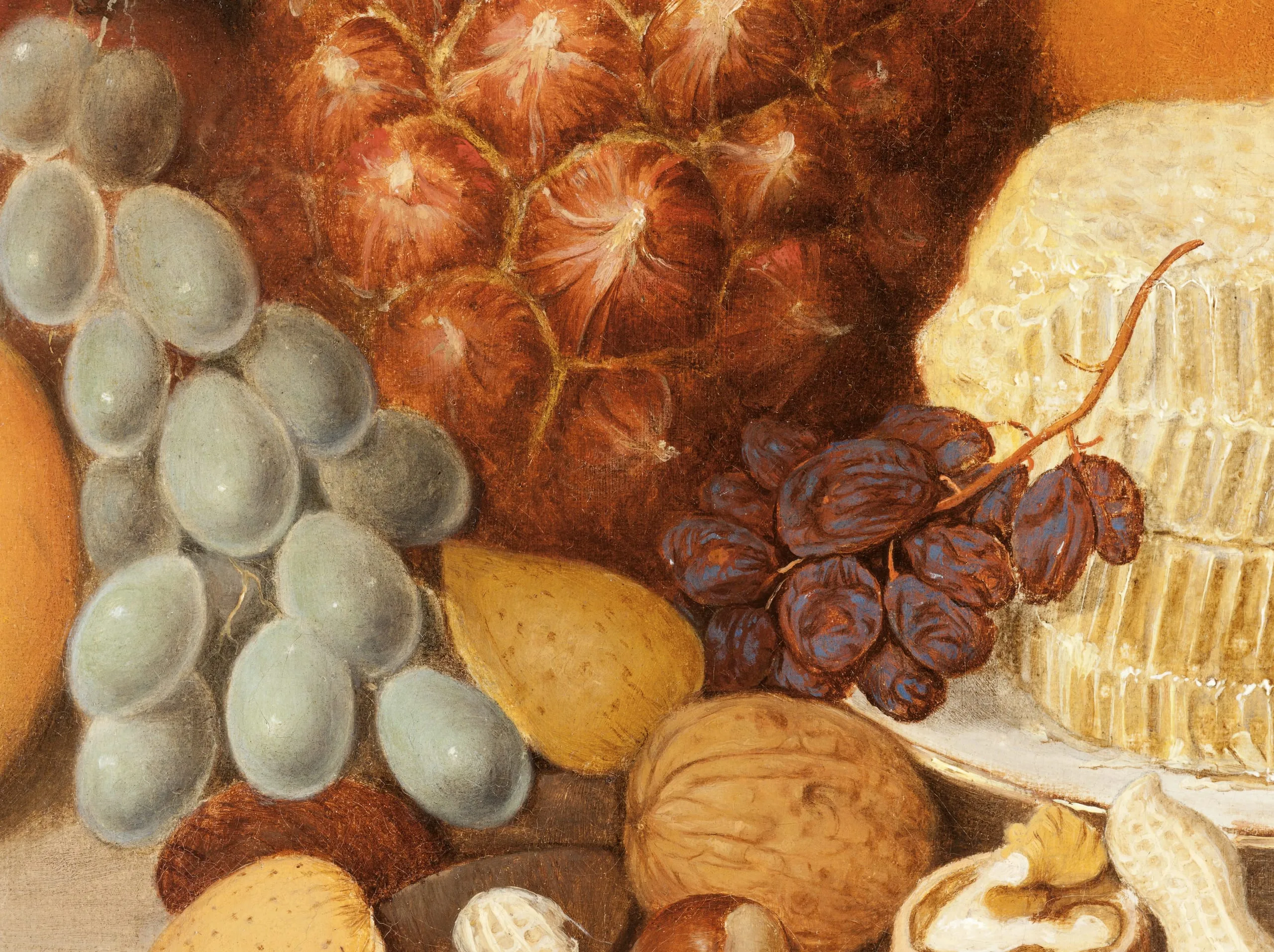
Within the painted lunette that frames the display, an apple mingles with rarer, luxurious specimens like fresh pineapple. Both grapes and dried raisins still on the vine cascade down the arrangement. Duncanson gives pride of place to a honeycomb, a “slave free” food that many abolitionists promoted as an ethical replacement for the white sugar and molasses produced by enslaved labor in other parts of the country. He also includes several varieties of nuts and a peanut, a legume. Though newspaper advertisements in Ohio offered peanuts for sale together with several other varieties of fruits and nuts, they were also deeply intertwined with the transatlantic slave trade, which brought enslaved Africans and their expertise in peanut cultivation to North America. The presence of the peanut at the front of the arrangement and next to the honeycomb might suggest this connection.
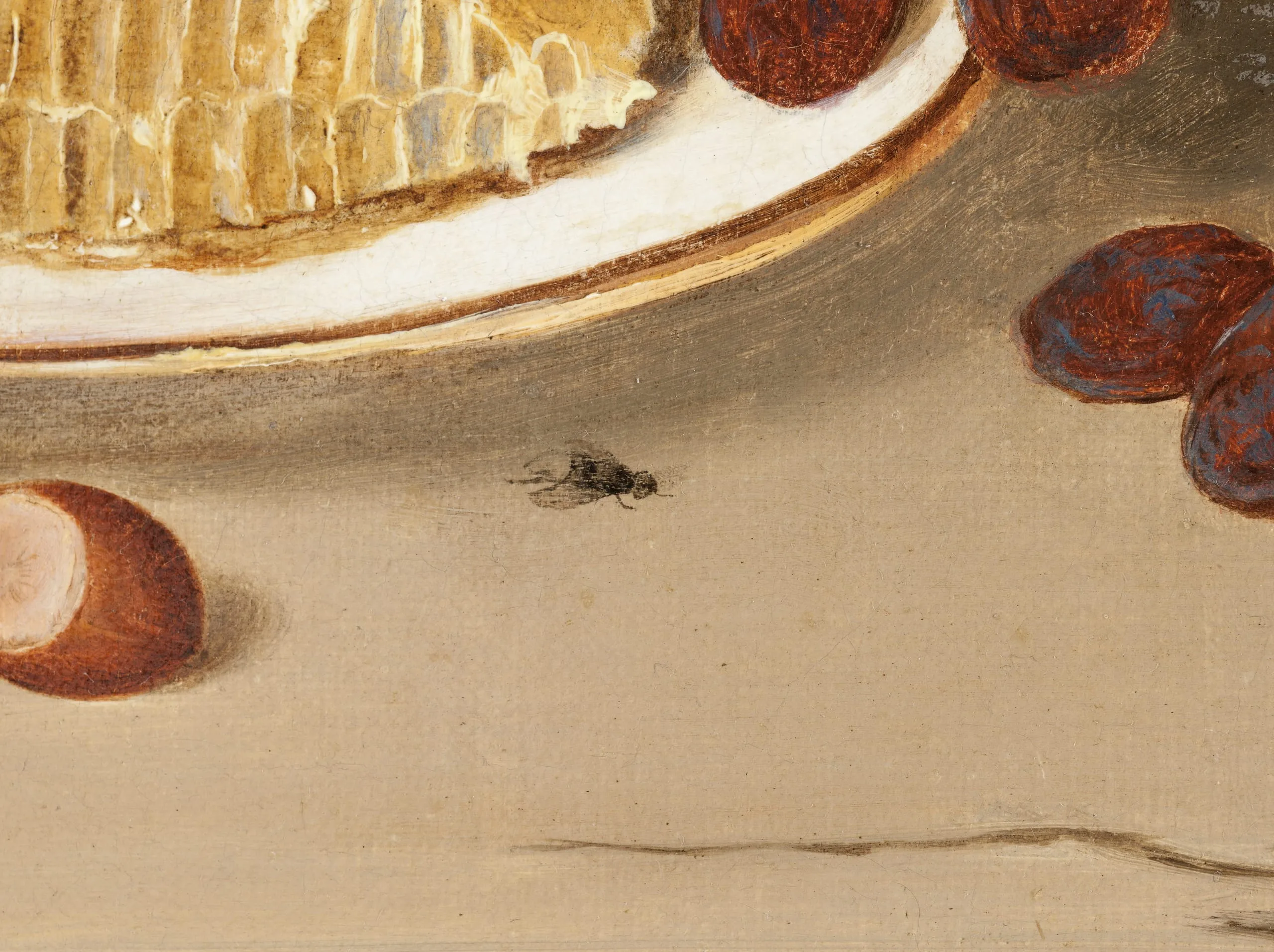
A dead fly lies on the table, referencing vanitas traditions in European still lifes, while adding an extra dose of realism to the display of gooey honey and tantalizing fruit. Although this painting depicts an arrangement of food that is common and easily recognizable to audiences today, the complexities of nineteenth-century food cultivation and culture offer deeper layers of meaning.
Selected Bibliography
Ketner, Joseph D. Robert S. Duncanson: Lifting the Veil : The Emergence of the African-American Artist, p. 61, fig. 41. Washington University in St. Louis, 1995.
Klein, Shana. “Cultivating Fruit and Equality: The Still-Life Paintings of Robert Duncanson.” American Art 29, no. 2 (2015): 64–85. https://doi.org/10.1086/683352.
Van Horn, Jennifer. “Robert Duncanson, Painter and Glazier: Enslaved and Free Black Men’s Artistic Production in the Early United States.” In Fighting for Freedom: Black Craftspeople and the Pursuit of Independence, ed. Torren L. Gatson, Tiffany N. Momon, and William A. Strollo. University of North Carolina Press, 2025. https://www.book2look.com/book/8B1mRQbie7.
Zeide, Anna. U.S. History in 15 Foods. Bloomsbury Academic, 2023.
Selected Exhibition History
Lifting the Veil: Robert S. Duncanson and the Emergence of the African-American Artist, Taft Museum of Art, Cincinnati, September–November 1995.
EATLACMA, LACMA, June−November 2010.
Nature’s Nation: American Art and Environment, Princeton University Art Museum, October 2018−January 2019.