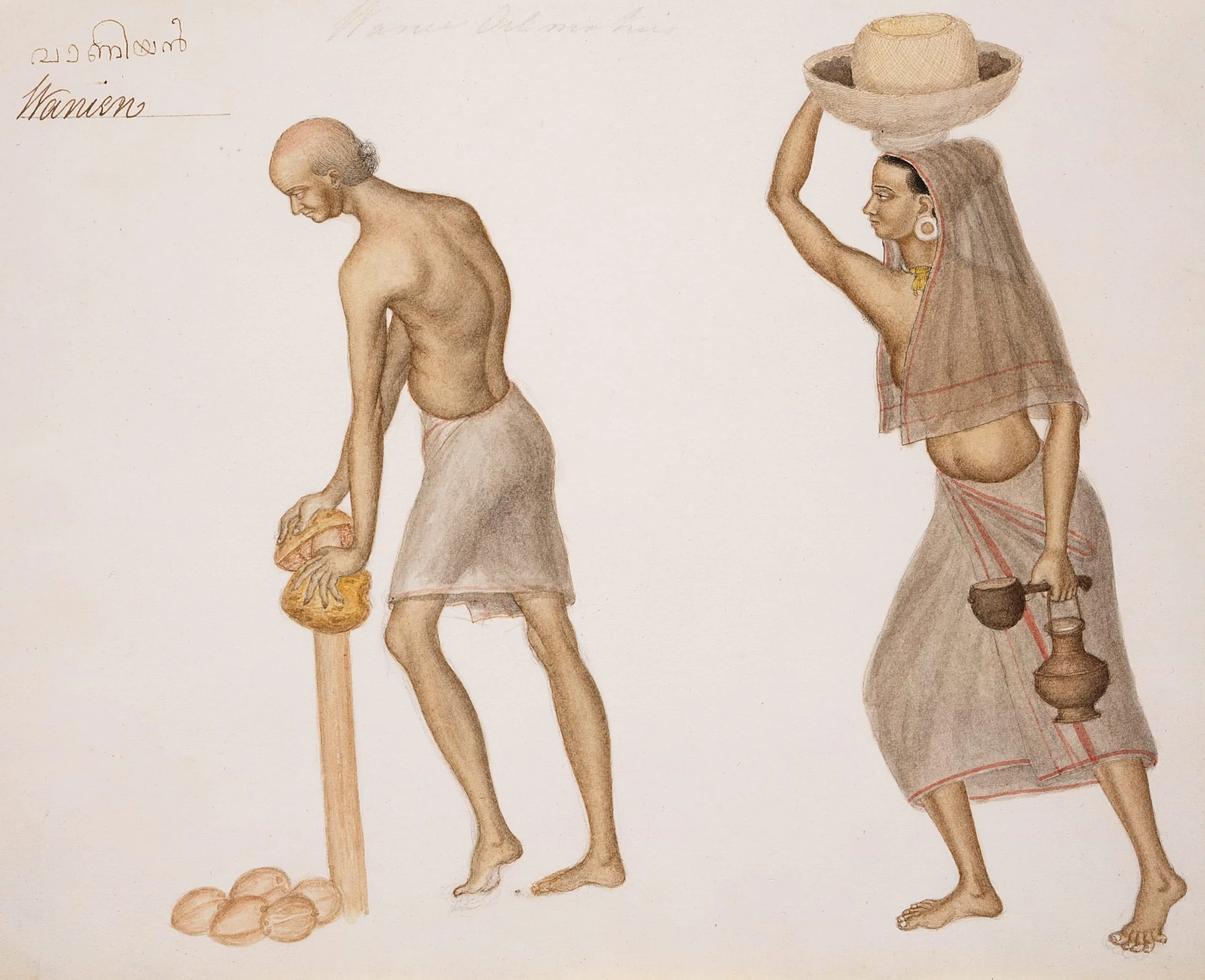
The painting has three subject identifications written along the top. The Tamil inscription reads, vaniyan. (Translation by Stephen Markel.) The Vaniyan (or Vanniyar or Palli) are a south Indian indigenous agrarian community. The English inscription on the left reads, “Wanien,” which is a 19th-century transliteration of vaniyan. The faint English inscription in the center reads, “Wanie Oilmaker”(?). It likely refers to the Vaniyans’ traditional occupation as oil mongers, including coconut oil. In this vocational illustration, an elderly man husks coconuts on a wooden pole. Behind him is his wife(?) with a basket on her head and carrying a ladle and ewer, which is filled with white coconut milk. The somber brown palette and naturalistic figures with stippled shading and touches of color are stylistically derived from British prints. Such paintings of castes and occupations were produced for English East India Company officials and military stationed in the Malabar District of the Madras Presidency (1800-1947). A comparable painting of Malabar coconut gatherers is in the Victoria and Albert Museum, London (IS.262-1951).