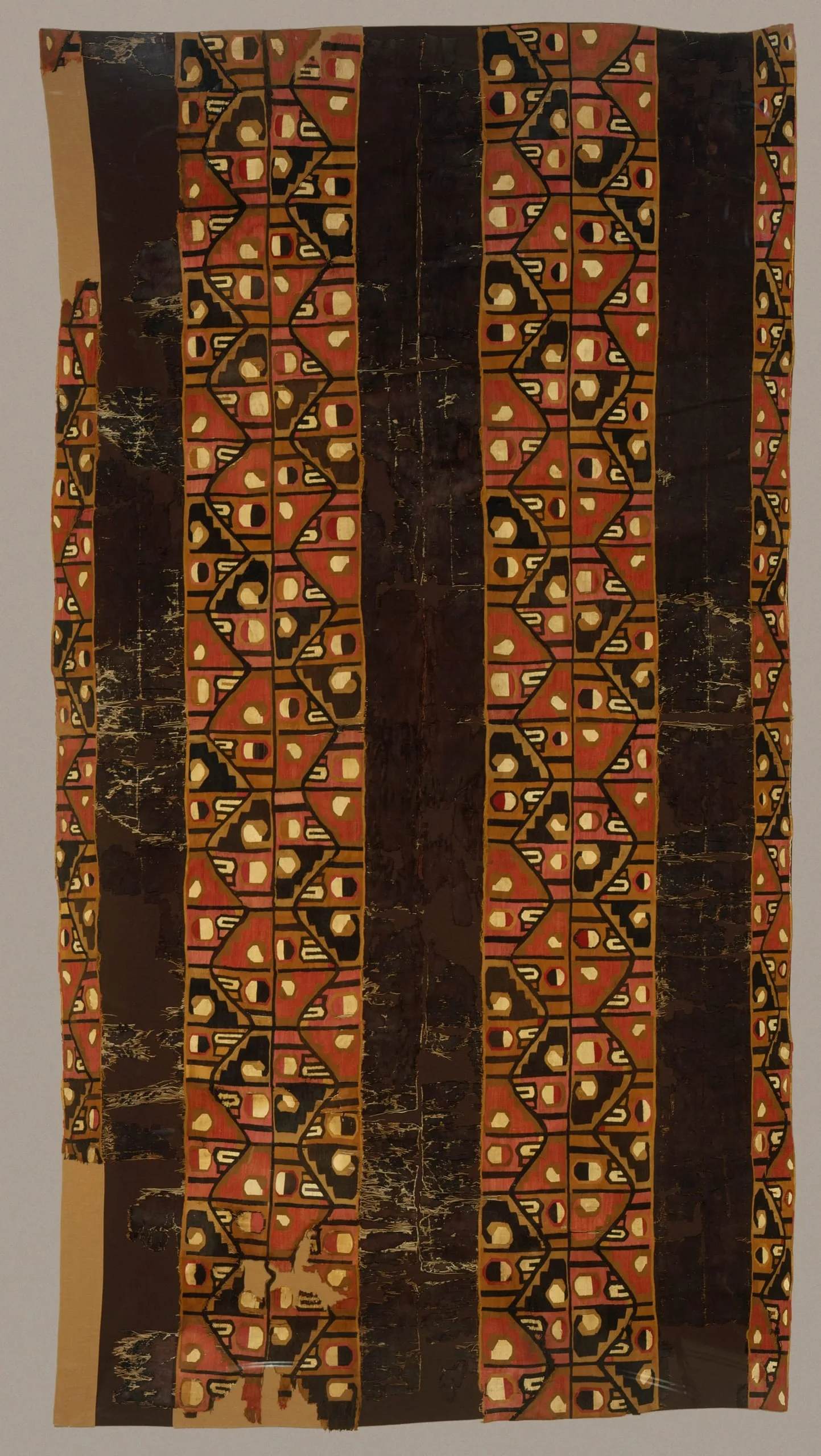
Wari tunics were created in tapestry weave using the wool-like yarn derived from the Camelidae (llama, alpaca, guanaco, and vicuña), known as camelid fiber. In this technique, the densely packed wefts render the warps invisible, necessitating a vast amount of finely spun thread for each garment. Tunics of the best quality required more than 500 hours of labor and from six to nine miles of thread to fabricate.
This tunic has been returned to its former glory by LACMA’s textile conservators. When the textile first came to the Museum, all that remained of the fragmentary brown stripes was folded back and hidden behind the pattern bands. After humidifying the garment and meticulously replacing weft threads over the course of months, the brown bands were backed with matching fabric to minimize the loss and to reestablish the tunic’s original appearance.
Nicole LaBouff via Kaye Spilker
2009