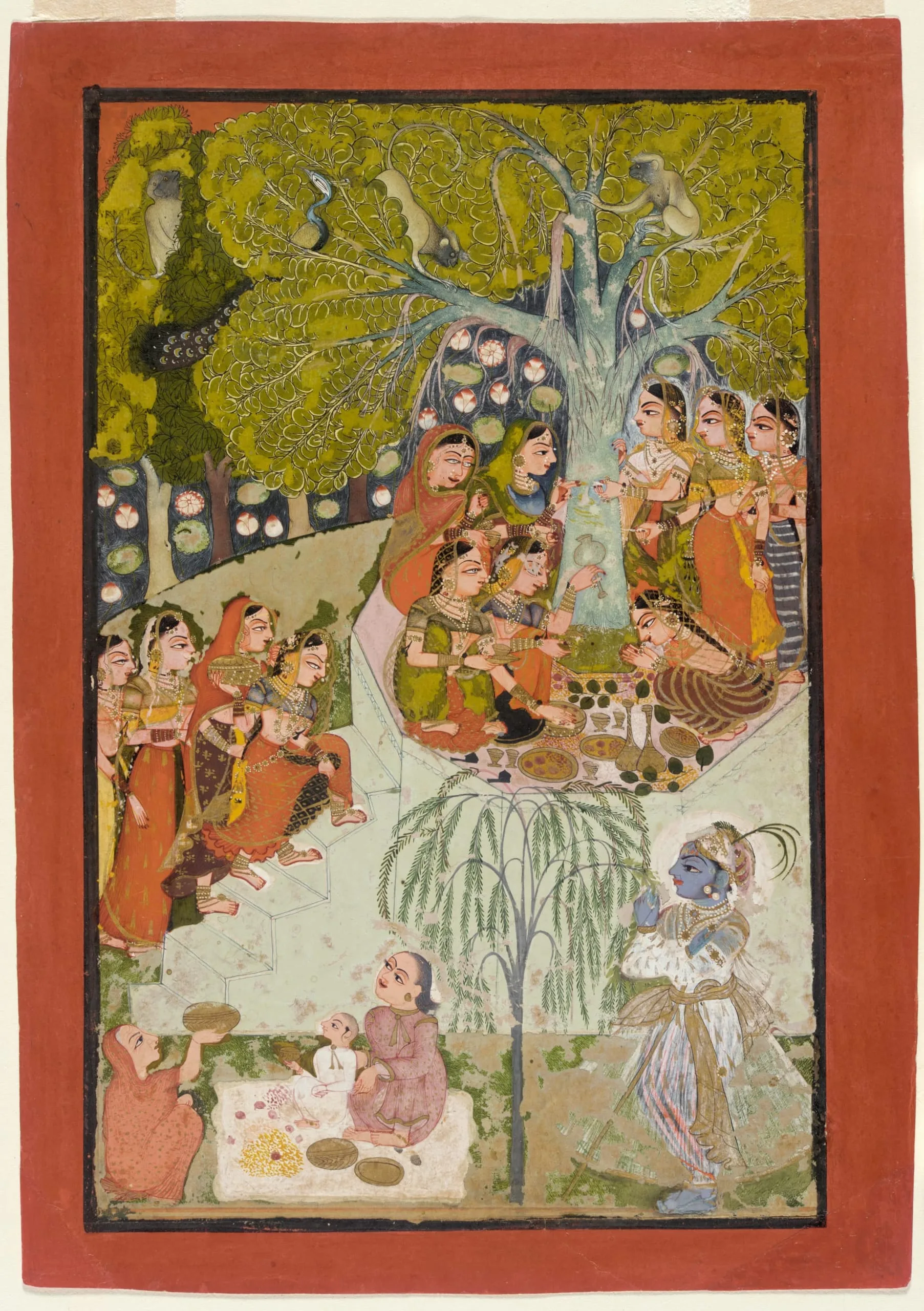
The Barahmasa (The Twelve Months) is a collection of poems adapted from India’s vast oral traditions that describe the twelve lunar months of the year and their correlating climates, emotional states, and social activities. Special emphasis is given to the effects of seasons on the feelings and behaviors of lovers. By the 16th century, images of the divine lovers Radha and Krishna had been incorporated in these texts and illustrations.
On the day of full moon in Jyeshtha (May-June), married Hindu women perform the Vata-Savitri-vrata, which is described in the Skanda Purana (8th century) and later texts. The ritual involves fasting for the entire day, circumambulating and bowing to a banyon tree (Ficus benghalensis), offering it food and water, and tying a white thread around the tree seven times to promote the health and longevity of their husband. The rite is based on the legendary story in the epic Mahabharata of Princess Savitri performing austerities to save her husband, the exiled Prince Satyavan, who was prophesied to die in a year. Impressed by her virtue, intelligence, and asceticism, Yama, the God of Death, granted Savitri a boon to restore Satyavan to life. In the foreground of the painting, Krishna is observing the ritual, and a mother and her son are selling containers of grain for offering to the tree.