LACMA

ShopMembershipMyLACMATickets
LACMA
Los Angeles County Museum of Art
5905 Wilshire Blvd.
Los Angeles, CA 90036
info@lacma.org
(323) 857-6000
Sign up to receive emails
Subscribe
© Museum Associates 2025

Museum Hours

Monday

11 am–6 pm

Tuesday

11 am–6 pm

Wednesday

Closed

Thursday

11 am–6 pm

Friday

11 am–8 pm

Saturday

10 am–7 pm

Sunday

10 am–7 pm


  • About LACMA
  • Jobs
  • Building LACMA
  • Host An Event
  • Unframed
  • Press
  • FAQs
  • Log in to MyLACMA
  • Privacy Policy
© Museum Associates 2025
Collections

Unknown
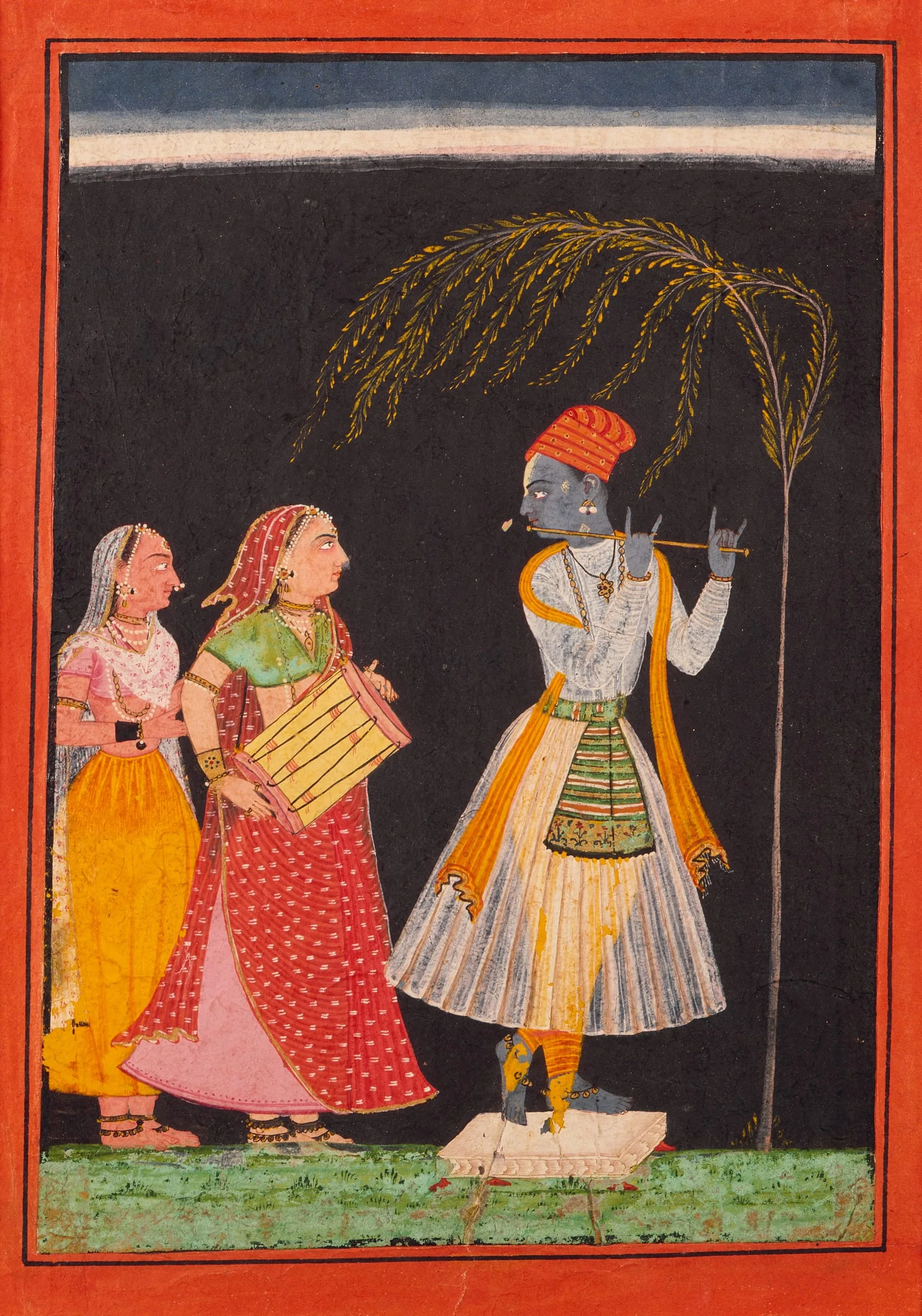
Lahula Ragaputra, Sixth Son of Dipak Raga, Folio from a Ragamala (Garland of Melodies)circa 1690

Not on view
Indian miniature painting, three figures against a black background: a blue-skinned man in a red turban plays a flute beneath a drooping tree, while two women in colorful dress stand to his left
Artist or Maker
Unknown
Title
Lahula Ragaputra, Sixth Son of Dipak Raga, Folio from a Ragamala (Garland of Melodies)
Place Made
India, Himachal Pradesh, Bilaspur
Date Made
circa 1690
Medium
Opaque watercolor and gold on paper
Dimensions
Image: 8 x 5 1/2 in. (20.32 x 13.97 cm); Sheet: 10 1/8 x 7 1/2 in. (25.71 x 19.05 cm)
Credit Line
From the Nasli and Alice Heeramaneck Collection, Museum Associates Purchase
Accession Number
M.77.19.31
Classification
Drawings
Collecting Area
South and Southeast Asian Art
Curatorial Notes

Lahula Ragaputra is the sixth son of Dipak Raga in the variant ragamala (garland of melodies) classification system known as Meshakarna’s system (developed by Meshakarna, a court priest from Rewa, Madhya Pradesh, in his Ragamala of 1570), which was followed in Pahari ragamalas. Meshakarna’s system has six males (ragas), each of whom who has five or six wives (raginis) and eight or nine sons (ragaputras). The melodies are also compared to a sound in nature or a human activity. Lahula Ragaputra is associated with the night and is likened to the sound of a mouse. Its imagery typically features a prince wearing a white garment and chewing betel nut quids (pan). Here, the melody is envisioned as a princely man wearing a red-and-orange turban, white coat (jama), yellow-and-orange striped pants, green-red-and white waist sash with gold brocade (patka), and yellow scarf. He has bluish-gray skin, plays a flute, and stands with his legs crossed. These three iconographic features and his yellow scarf suggest that he is to be equated with Krishna. He is accompanied by two women, one of whom plays a drum similar to a baya tabla. The dark background indicates it is a nighttime melody.

This folio and its series mates M.71.1.29 and M.71.1.49 have a red border and are from a slightly later Bilaspur ragamala than M.82.42.7 and M.83.105.10, which have a yellow border. Four folios from this dispersed series are in the Baroda Museum and Picture Gallery (174–176).
Selected Bibliography
  • Rosenfield, John. The Arts of India and Nepal: The Nasli and Alice Heeramaneck Collection. Boston: Museum of Fine Arts, Boston, 1966.
  • Pal, Pratapaditya. Indian Paintings in the Los Angeles County Museum of Art. New Delhi: Lalit Kala Akademi, 1982.