LACMA

ShopMembershipMyLACMATickets
LACMA
Los Angeles County Museum of Art
5905 Wilshire Blvd.
Los Angeles, CA 90036
info@lacma.org
(323) 857-6000
Sign up to receive emails
Subscribe
© Museum Associates 2025

Museum Hours

Monday

11 am–6 pm

Tuesday

11 am–6 pm

Wednesday

Closed

Thursday

11 am–6 pm

Friday

11 am–8 pm

Saturday

10 am–7 pm

Sunday

10 am–7 pm


  • About LACMA
  • Jobs
  • Building LACMA
  • Host An Event
  • Unframed
  • Press
  • FAQs
  • Log in to MyLACMA
  • Privacy Policy
© Museum Associates 2025
Collections

Unknown
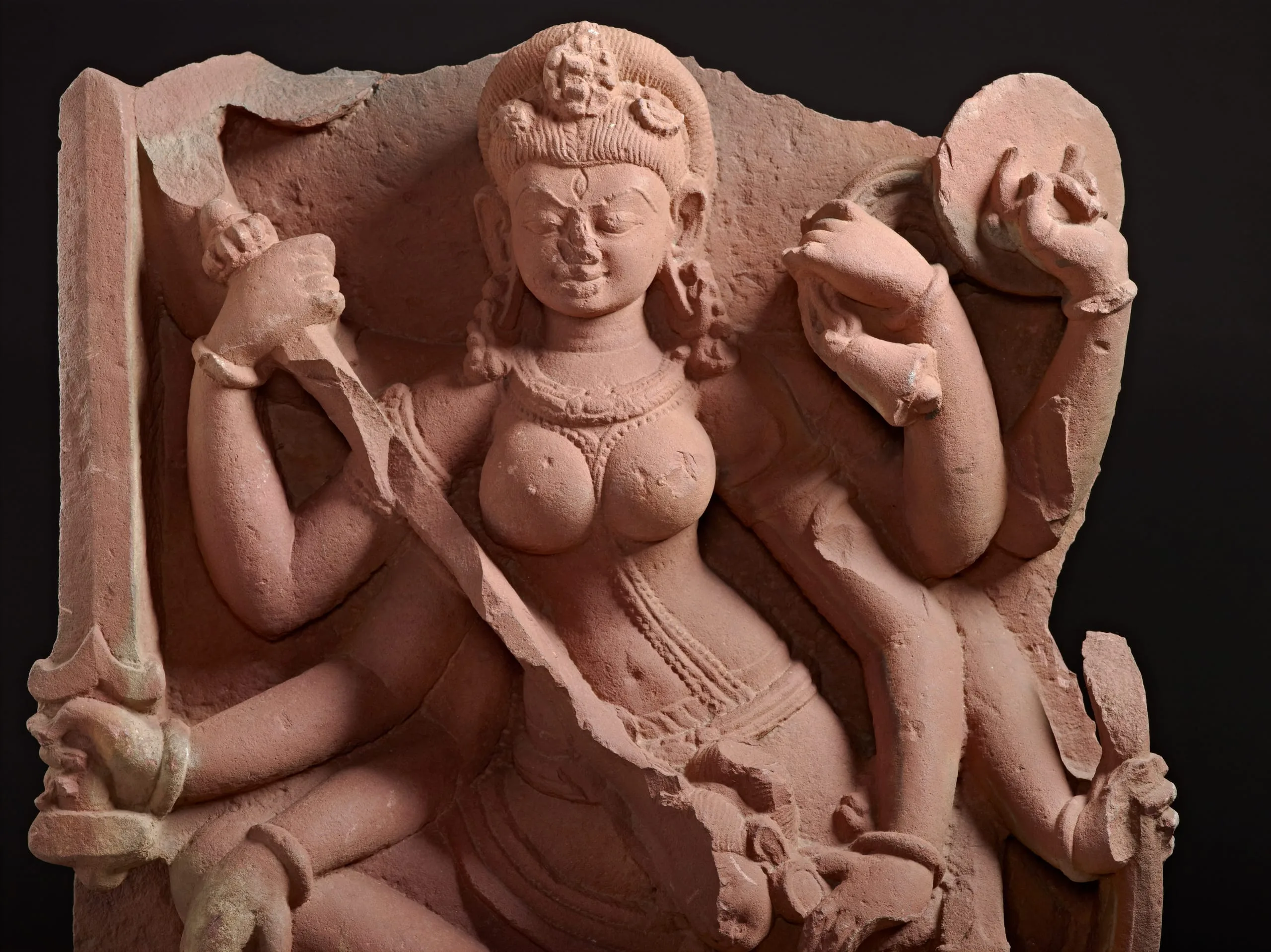
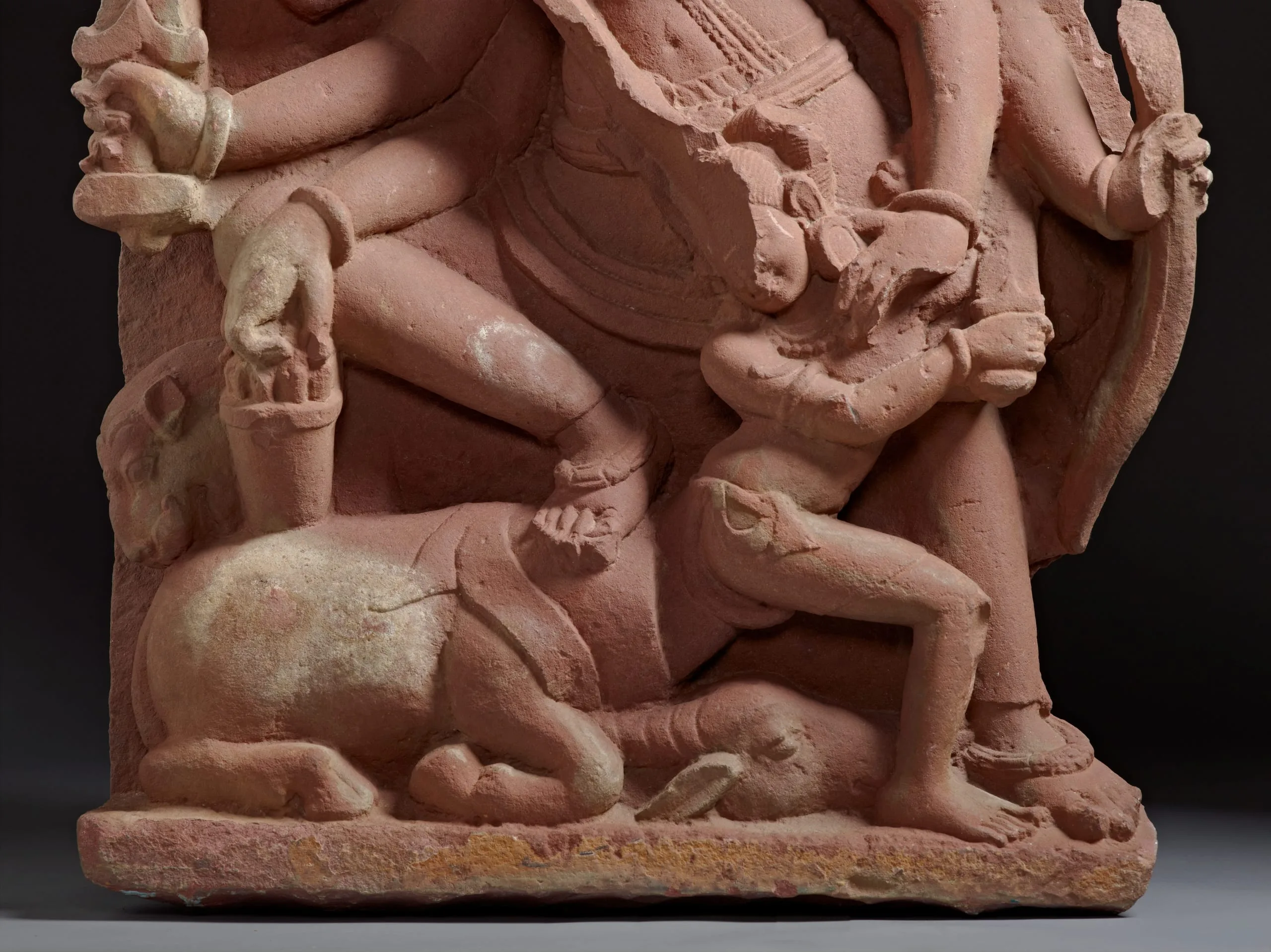
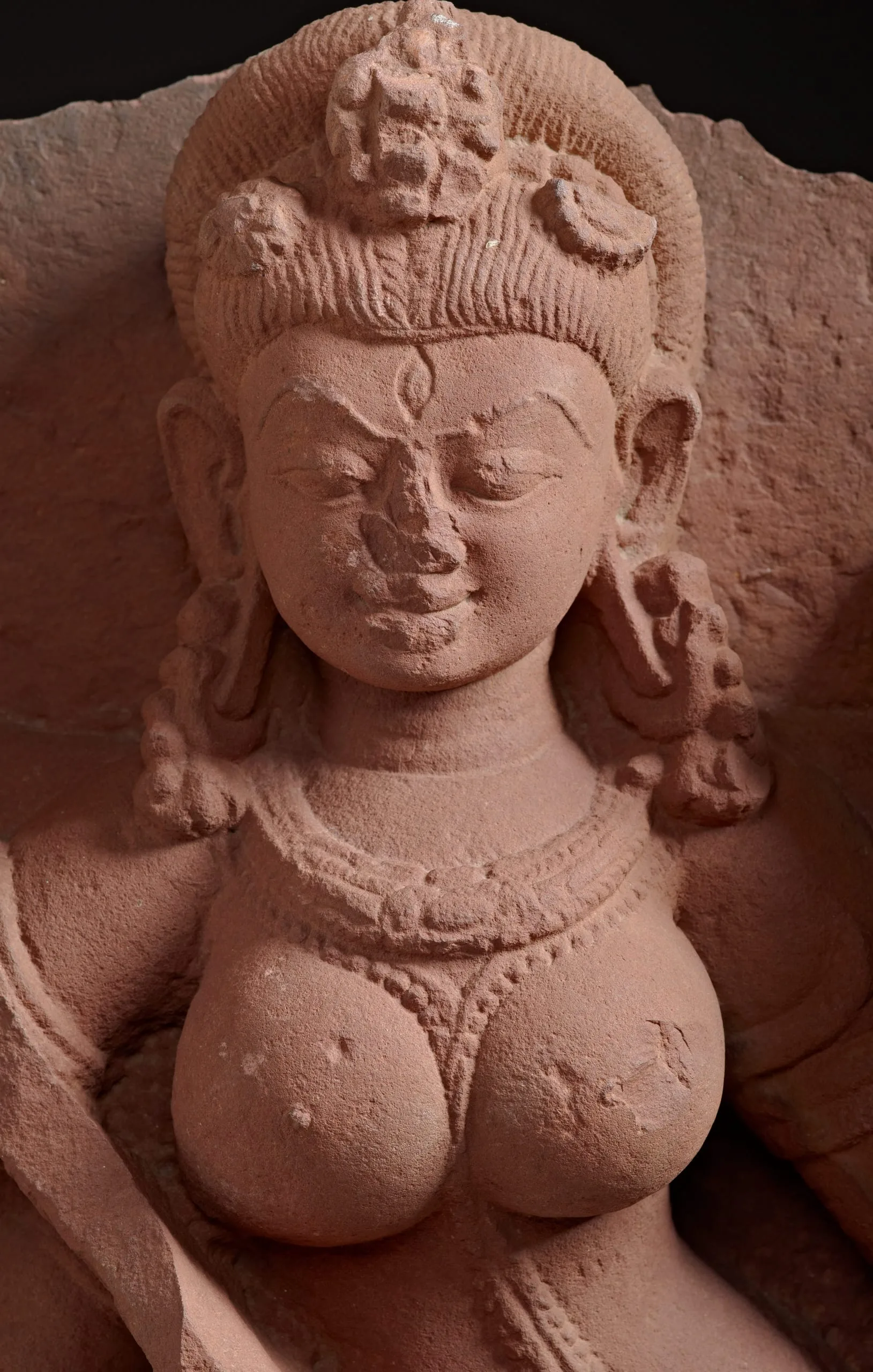
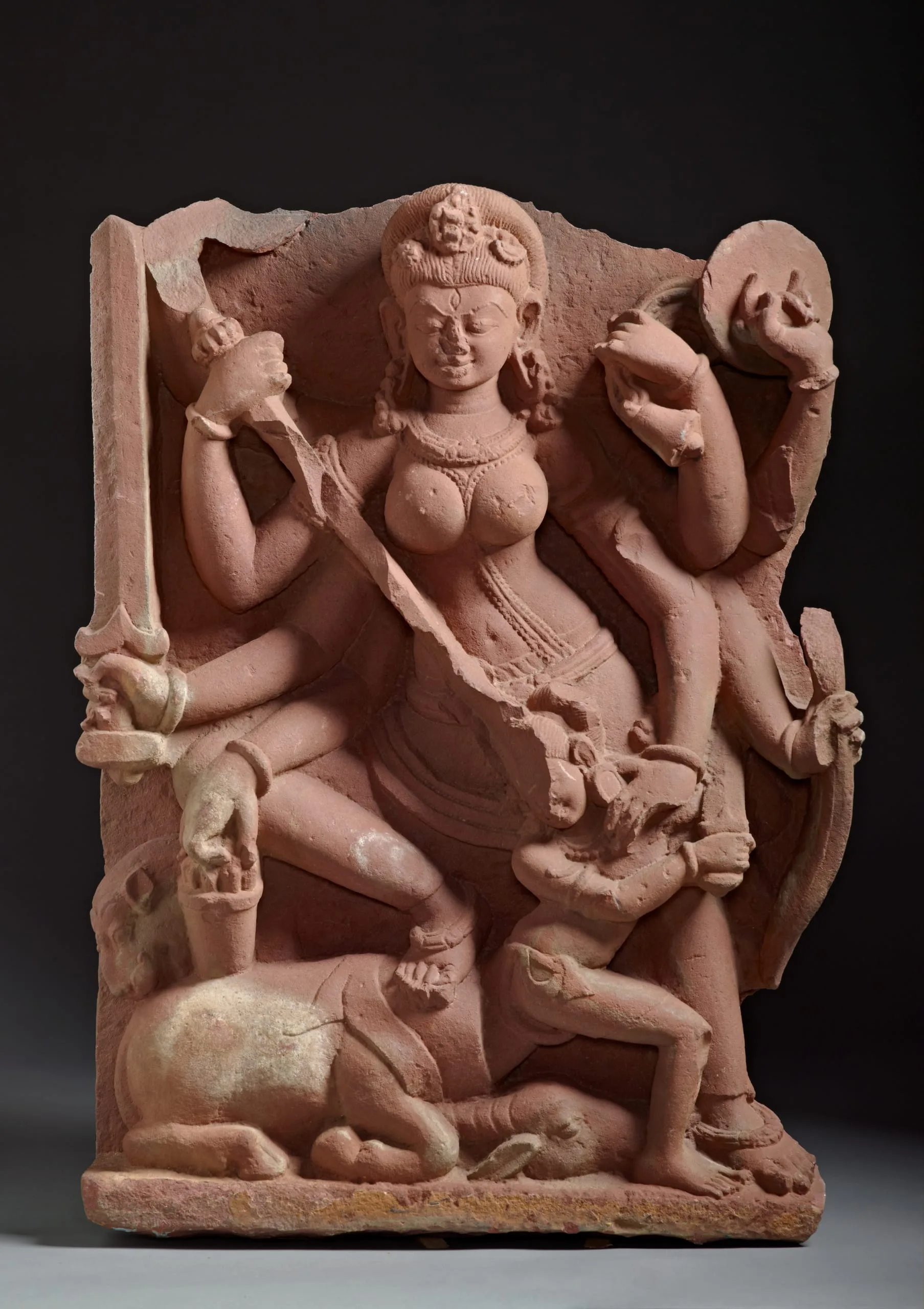
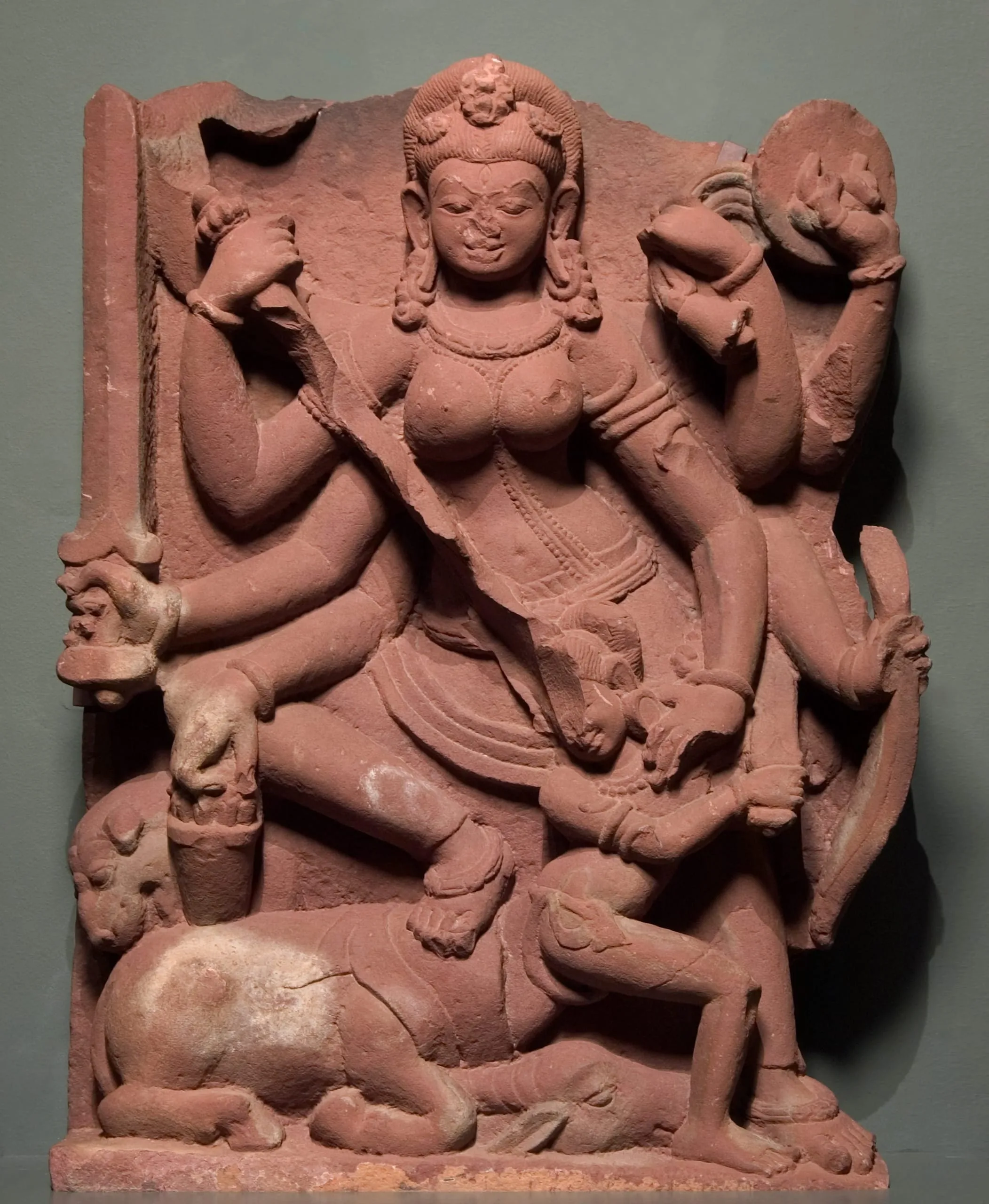
Durga Slaying the Buffalo Demoncirca 850-900

Not on view
Sandstone relief sculpture of a multi-armed female deity standing over a prostrate buffalo and crouching demon figure, terracotta-salmon stone with carved jewelry and crown
Red sandstone relief sculpture of a multi-armed goddess in dynamic stance, wearing jewelry and draped garments, holding weapons and attributes across six visible arms, standing over a fallen buffalo with a smaller demon figure at right.
Red sandstone relief sculpture of a multi-armed female deity, frontally posed, adorned with a beaded necklace, ornate crown, and jewelry, with attendant figures at the sides; high-relief carving with fine surface detail.
Red sandstone relief sculpture, detail showing a multi-armed deity standing over a recumbent buffalo, with a demon figure emerging at right, carved with fine surface detail and slight weathering.
Red sandstone relief sculpture, upper torso of a female figure with elaborately carved coiled hair, beaded necklace, and jewelry, shown against a rough stone background.
Artist or Maker
Unknown
Title
Durga Slaying the Buffalo Demon
Place Made
India, Rajasthan, Kota region, Atru (?)
Date Made
circa 850-900
Medium
Red sandstone
Dimensions
34 x 25 x 9 1/2 in. (86.36 x 63.5 x 24.13 cm)
Credit Line
From the Nasli and Alice Heeramaneck Collection, Museum Associates Purchase
Accession Number
M.77.19.27
Classification
Sculpture
Collecting Area
South and Southeast Asian Art
Curatorial Notes

The Hindu goddess Durga (Unconquerable) is the terrific aspect of Shiva’s spouse, Uma. She is the invincible goddess of the battlefield and plays a vital role in the eternal struggle between order and chaos. Durga is one of the most widely worship deities of Hinduism, being especially invoked by the warrior classes. Although she can assume many guises, the most popular and the form most encountered in art, is that of the slayer of the buffalo demon, Mahishasura. When the gods were unable to conquer the powerful demon, Durga was created from the energy of their combined anger to fight for them in their hour of extreme need. Each god gave her a portion of his powers, and she wields various weapons in her multiple arms, including the trident of Shiva, the discus of Vishnu, and the spear of Karttikeya. Durga’s many triumphal battles to preserve world order are exalted in the Devimahatmya (Glory of the Goddess) composed in circa 550 CE.

In this stark 9th-century western Indian image, the act of slaying the demon is given the main emphasis. The medium of the stone is subverted to the message of the religious meaning and the spiritual power of the image is conveyed through the powerfully direct forms and relative lack of surface embellishment. By comparison, in an elaborate 13th-century southern Indian representation (M.70.1.1), the medium is the message. Its lavish ornamentation and richness of detail aptly convey the spiritual glory of the triumphant goddess.
Selected Bibliography
  • Newman, Richard. The Stone Sculpture of India: a Study of the Materials Used by Indian Sculptors from ca. 2nd Century B.C. to the 16th Century. Cambridge, MA: Center for Conservation and Technical Studies, Harvard University Art Museums, 1984.
  • El Universo de la India: Obras Maestras del Museo de Arte del Condado de Los Angeles. Santiago: Centro Cultural Palacio La Moneda, 2012.

  • Brown, Robert L. Southeast Asian Art at LACMA: An Online Scholarly Catalogue. Los Angeles: Los Angeles County Museum of Art, 2013. Accessed June 25, 2024. http://seasian.catalog.lacma.org/.