LACMA

ShopMembershipMyLACMATickets
LACMA
Los Angeles County Museum of Art
5905 Wilshire Blvd.
Los Angeles, CA 90036
info@lacma.org
(323) 857-6000
Sign up to receive emails
Subscribe
© Museum Associates 2026
  • About LACMA
  • Jobs
  • Building LACMA
  • Host An Event
  • Unframed
  • Press
  • FAQs
  • Log in to MyLACMA
  • Privacy Policy
© Museum Associates 2026
Collections

Unknown
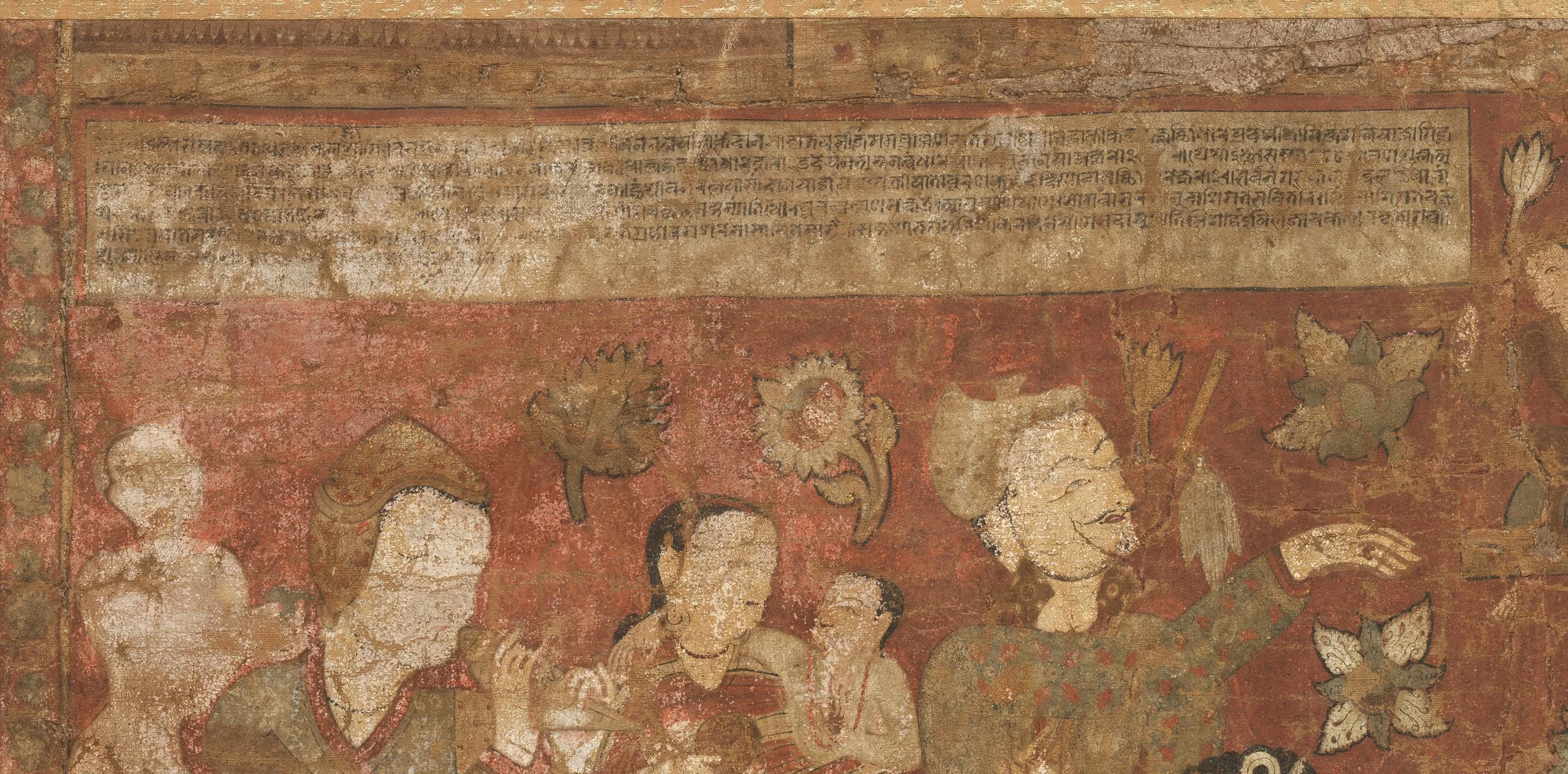
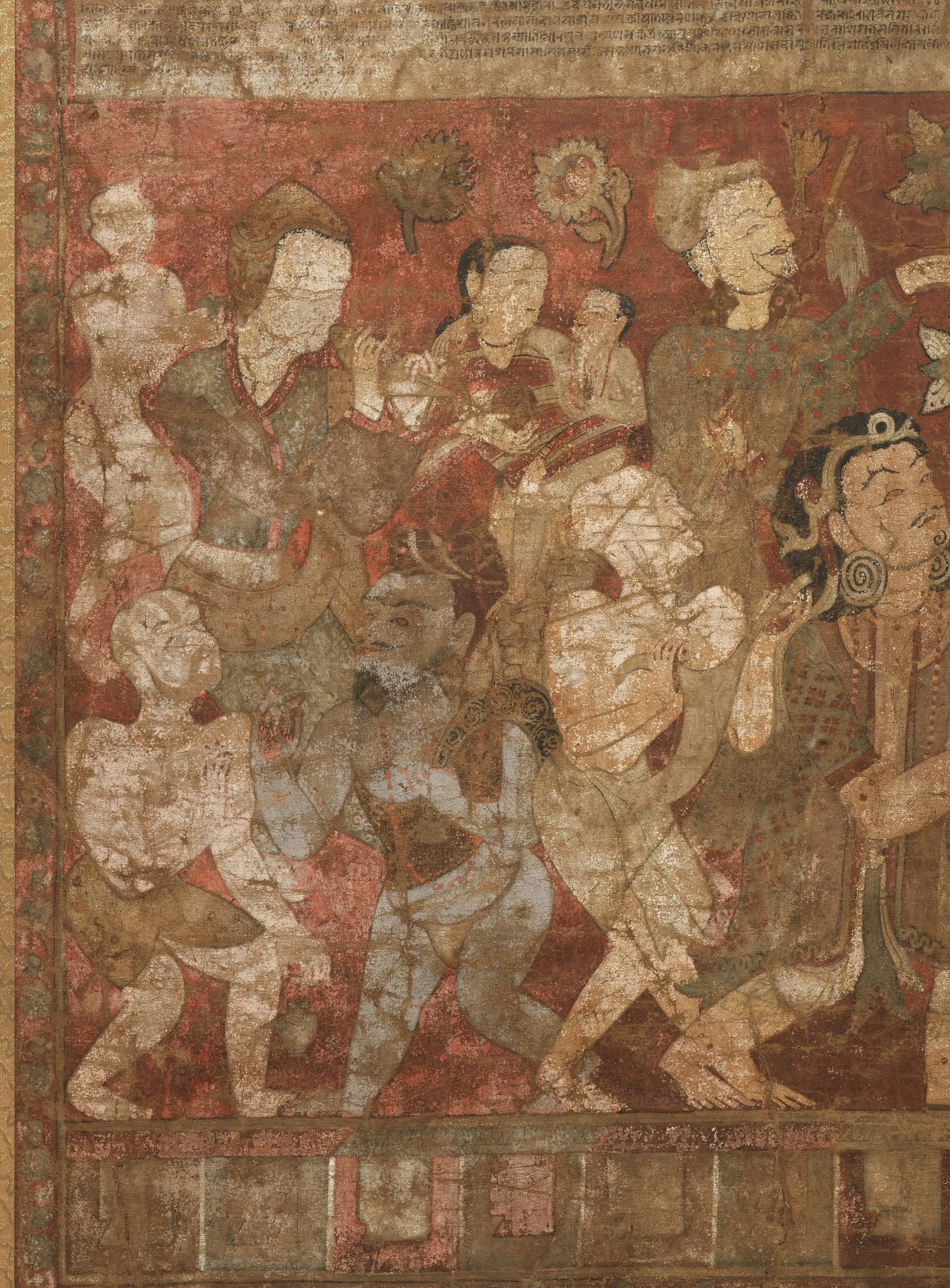
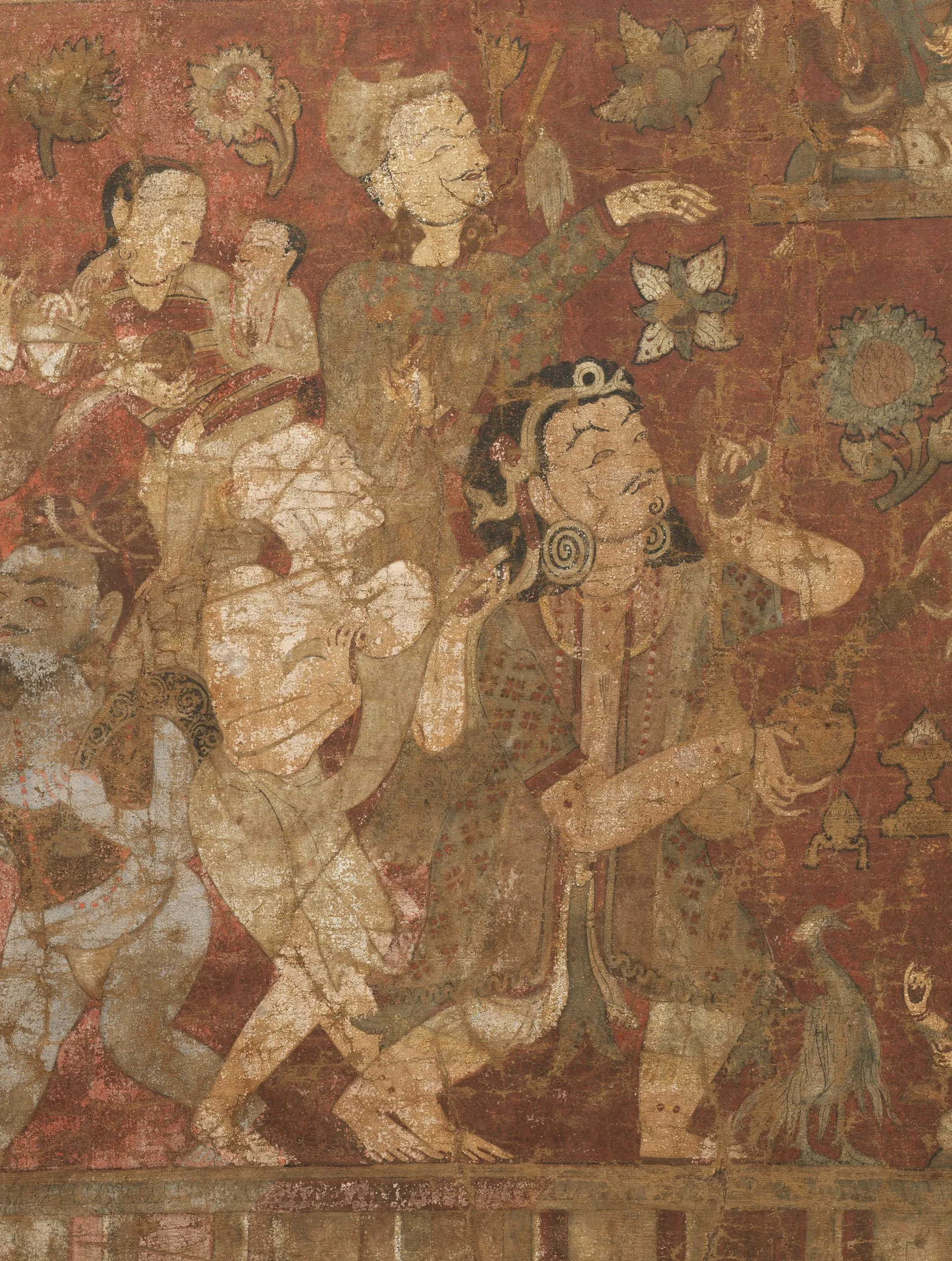
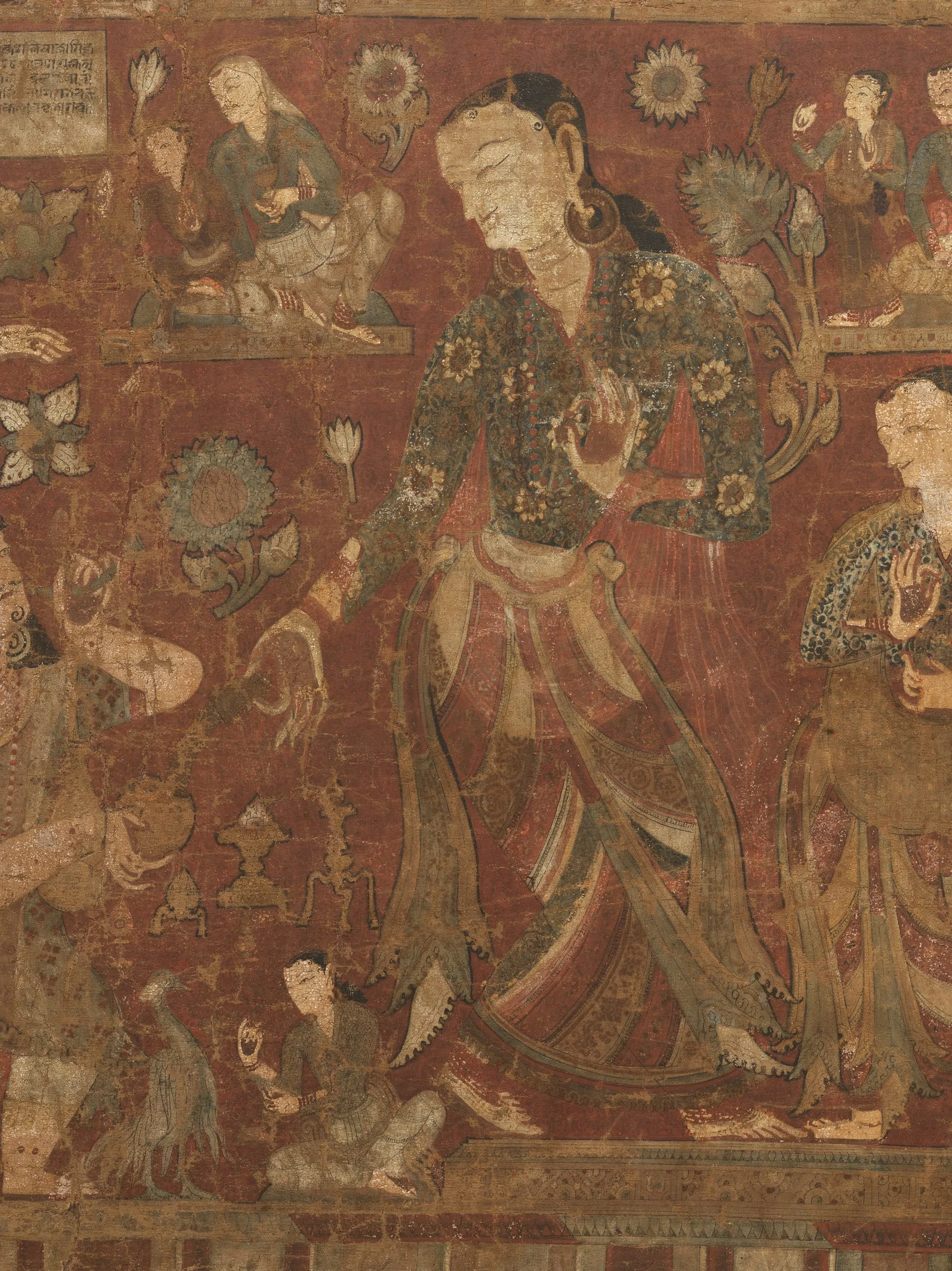
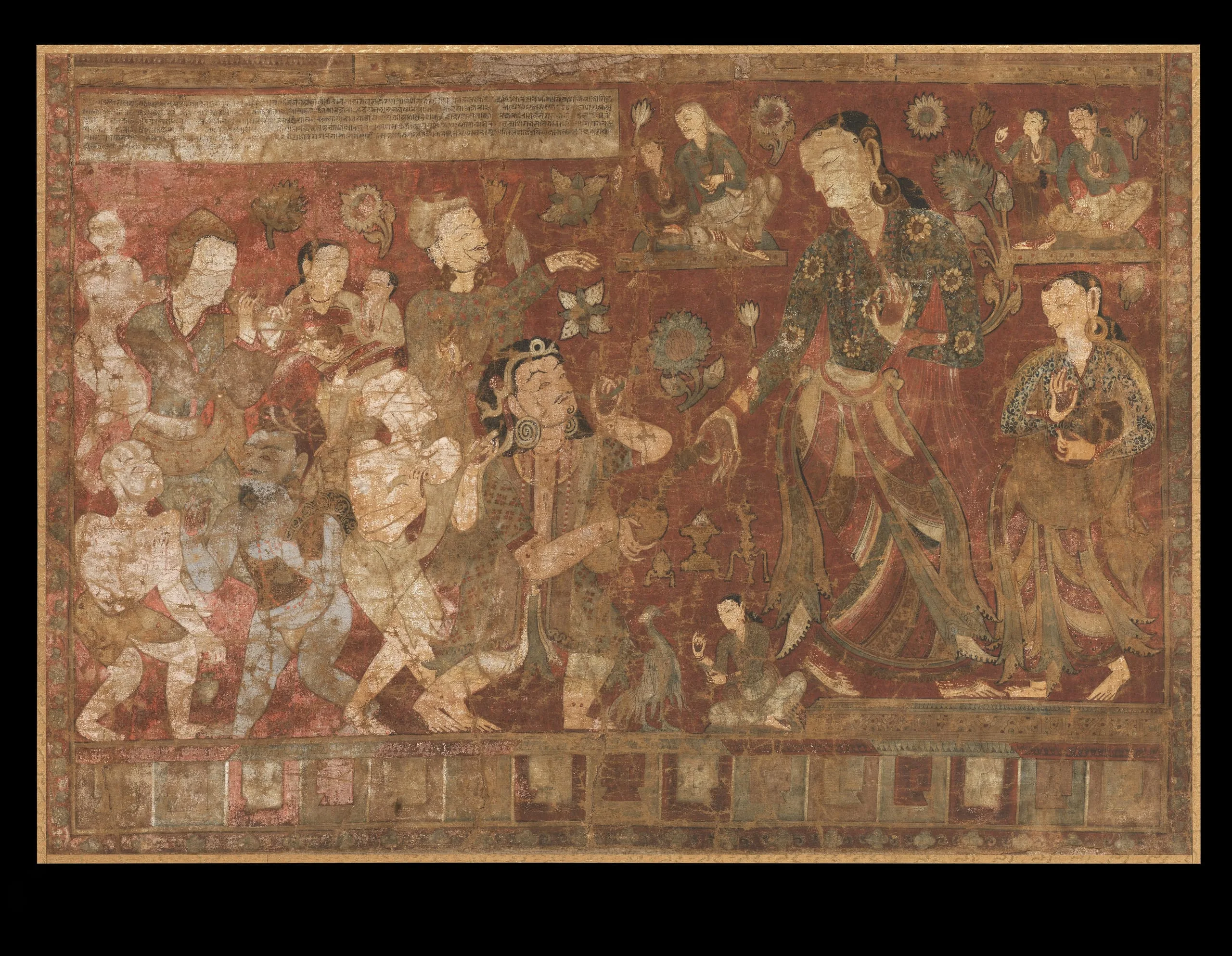
The Mahasiddha (Great Adept) Vanaratna (1384-1468) Receiving Abhishekha (Initiation) from White (Sita) Tara)dated 1469

On view:
Resnick Pavilion, floor 1
Fragmentary narrative painting on panel, brick-red ground with crowd of figures in motion at left and two tall standing figures at right, extensive paint loss and cracking, small inset scene in upper right
Manuscript painting on a red ground, depicting a group of figures in close arrangement with lotus flowers and foliage. Pigments are flaked and aged. Lines of Indic script fill a rectangular panel above the scene.
Fragmentary South or Southeast Asian mural painting on reddish-brown ground, depicting a crowded procession of figures in courtly and divine dress; heavily abraded surface with visible pigment loss; a row of script along the upper border and a geometric meander border at the base.
Fragmentary mural painting on a red-ochre ground, depicting multiple figures in flowing robes and ornate jewelry, with a prominent foreground figure wearing a circular earring and headdress, arms raised; floral and animal motifs fill the background; muted earth tones with areas of paint loss.
Fragmentary tempera painting on cloth with terracotta-red ground; central standing bodhisattva figure in floral-patterned robes holds a lotus stem, flanked by smaller attendant figures; smaller seated figures visible in upper register with a panel of Brahmi script at upper left; muted earth tones with traces of white and green pigment.

Unknown, The Mahasiddha (Great Adept) Vanaratna (1384-1468) Receiving Abhishekha (Initiation) from White (Sita) Tara), dated 1469, Los Angeles County Museum of Art, From the Nasli and Alice Heeramaneck Collection, Museum Associates Purchase, photo © Museum Associates/LACMA

Artist or Maker
Unknown
Title
The Mahasiddha (Great Adept) Vanaratna (1384-1468) Receiving Abhishekha (Initiation) from White (Sita) Tara)
Place Made
Nepal, Patan, Pintu Bahi
Date Made
dated 1469
Medium
Mineral pigments on cotton cloth
Dimensions
27 5/16 x 39 1/4 in. (69.4 x 99.7 cm)
Credit Line
From the Nasli and Alice Heeramaneck Collection, Museum Associates Purchase
Accession Number
M.77.19.3
Classification
Paintings
Collecting Area
South and Southeast Asian Art
Curatorial Notes

This rare work commemorates the life and teachings of the Indian Buddhist master Vanaratna (1384–1469), who was born as a prince in the Chittagong region of present-day Bangladesh. Vanaratna was ordained as a novice at the age of eight and received full monastic ordination at the age of twenty. He then traveled to Sri Lanka, where he spent six years studying religious texts, meditation, and yoga. One day, according to legend, a stone statue of the bodhisattva Avalokiteshvara spoke, instructing him to go to Tibet, where he initiated monks into the esoteric Buddhist practices of the Kalacakra and Chakrasamvara Tantras. Vanaratna also traveled repeatedly to Nepal, where he finally settled late in life at the hermitage of Govichandra. In 1469, at age eighty-five, he expired while seated in meditation. Vanaratna is considered to be the last great Indian Buddhist master to travel to Tibet. His life and teachings are eulogized in The Blue Annals, which record the lineage of the Kagyupa sect of Tibetan Buddhism.

Vanaratna is elegantly depicted with jewelry and luxurious garments and holds a lotus blossom indicating his identification with Avalokiteshvara, the Bodhisattva of Compassion. Despite his mature age of seventy-one at the time of his charitable act, he is shown in an idealized representation in the prime of life, which suggests that this painting was most likely commissioned as a eulogy shortly after his death. The grain flowing from his hands to the ascetics is perhaps meant to symbolize not only his distribution of food as recorded in the painting’s dedicatory inscription but also his offering of profound religious teachings, for which he was famous.

Dedicatory inscription from an 1862 copy in the Bharat Kala Bhawan, Varanasi:

In the year 575 (1455 CE) Vanaratnapa [the pa suffix is honorific], while residing in Govichandra monastery, made donations of grains to ascetics, Shaiva ascetics, brahmins, and householders. Gifts were made to all who came from sunrise to sunset. Again in the year 588 (1468 CE), on the eighth day of the bright fortnight of the month of Sravana (July–August), on a Wednesday, Vanaratnapa made donations to the entire monastic order consisting of 1,590 persons. In the following year [1469], on the seventh day of the dark fortnight of the month of Margasirsha (November–December), a Monday, Vanaratnapa attained Buddhahood.

(Translation by Ian Alsop, Dhanavajra Vajracharya, and Hemraj Shakya.)
Selected Bibliography
  • Pal, Pratapaditya. Art of Nepal. Los Angeles: Los Angeles County Museum of Art; University of California Press, 1985.
  • Rosenfield, John. The Arts of India and Nepal: The Nasli and Alice Heeramaneck Collection. Boston: Museum of Fine Arts, Boston, 1966.
  • Huntington, John C. and Dina Bangdel. The Circle of Bliss: Buddhist Meditational Art. Columbus: The Columbus Museum of Art; Chicago: Serindia Publications, 2003.
  • Pal, Pratapaditya. 1977. Bhimaratha rite and Nepali art. Oriental art: new series 23(2): 176-189.
  • Little, Stephen, and Tushara Bindu Gude. Realms of the Dharma: Buddhist Art across Asia. Los Angeles: Los Angeles County Museum of Art, 2025.