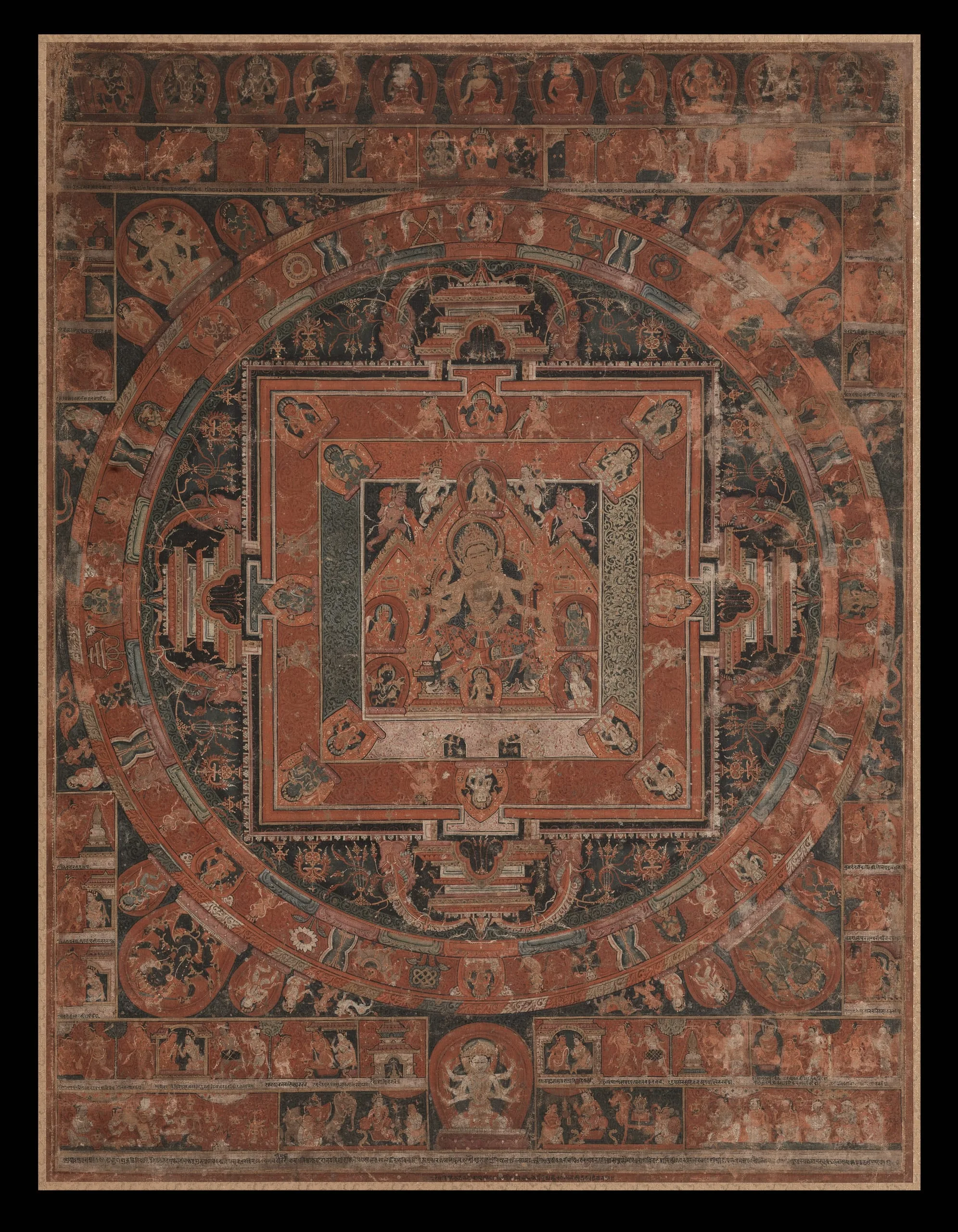
Elaborate and exquisitely painted mandalas dedicated to Vasundhara, the Buddhist goddess of wealth and abundance, are a significant theme in the Newar Buddhist artistic tradition. It is common practice among the lay community to offer mandalas of the goddess to commemorate her annual celebration, which falls on a harvest full moon during the lunar month of Bhadra (October–November). This painting is one of the most fully developed mandalas of Vasundhara.
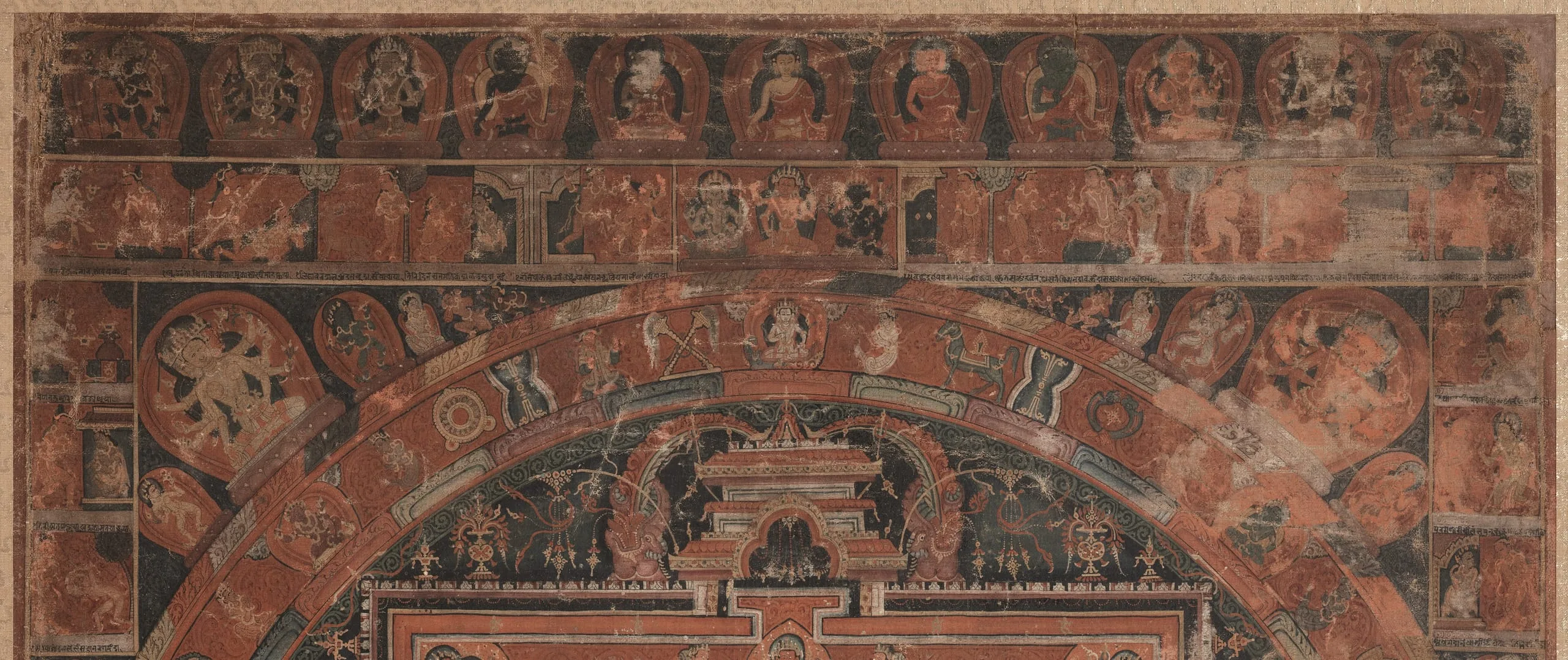
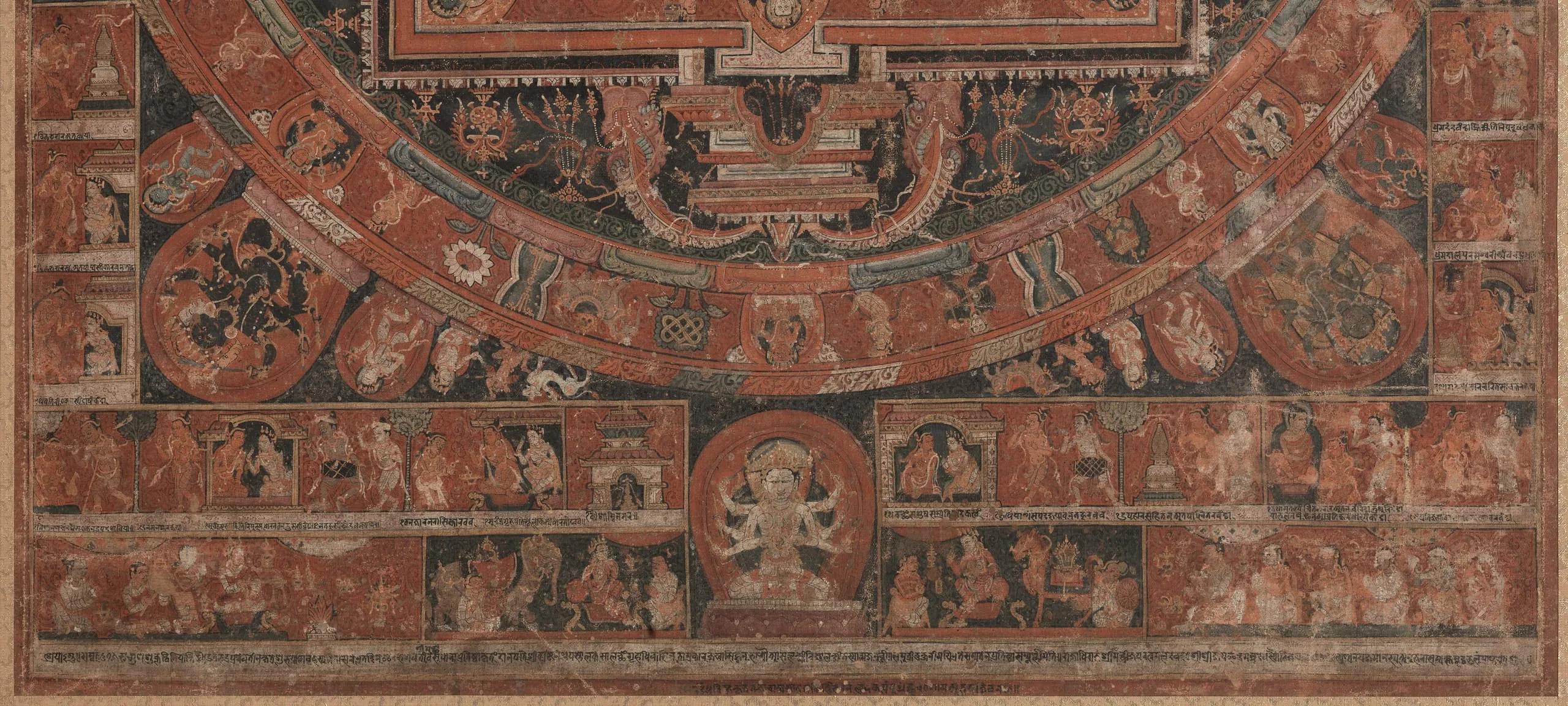
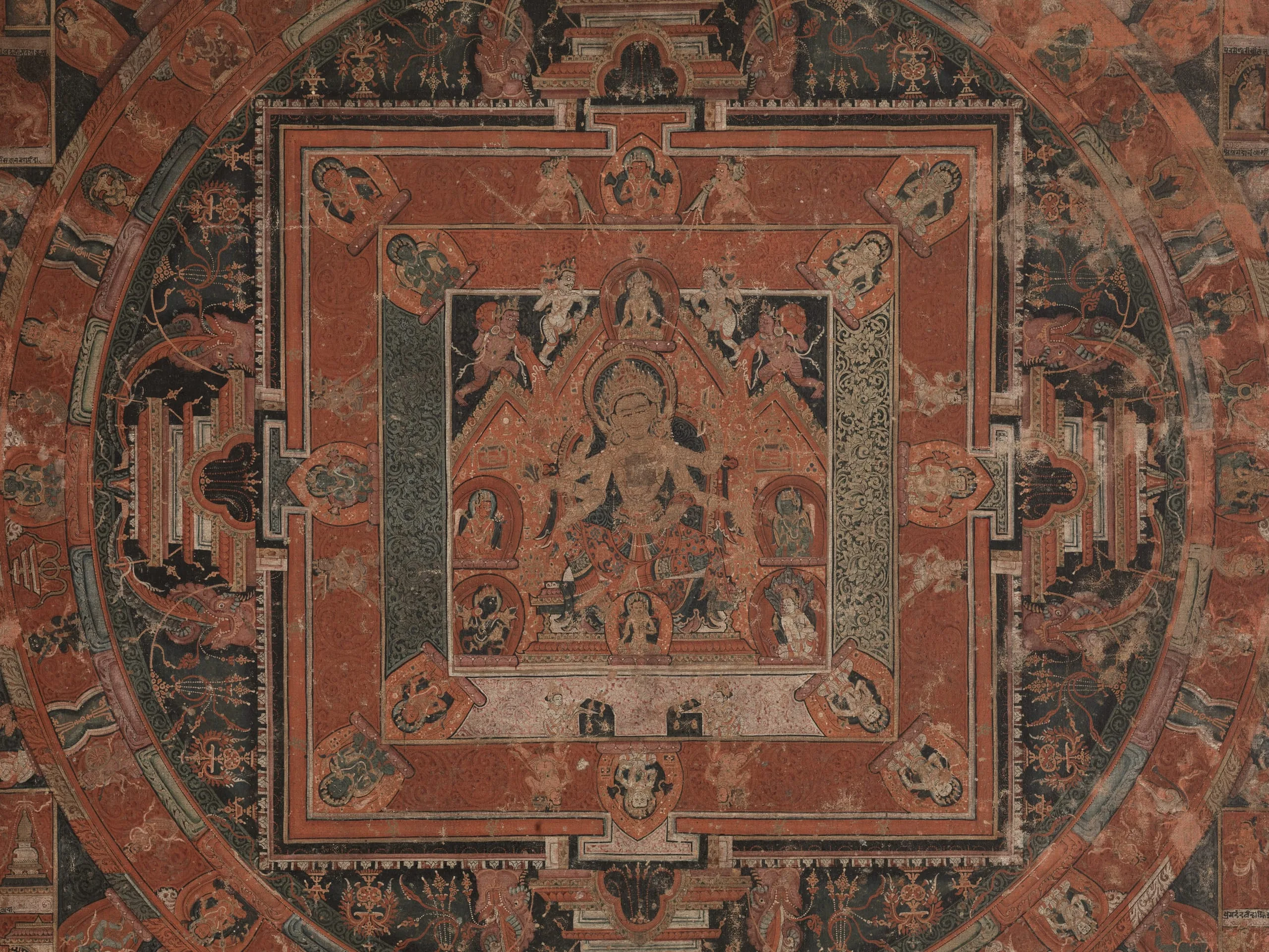
The inner mandala closely follows a description of the Vasundharoddhesa, with the golden goddess as the central figure placed against an ornate trilobate mountain and surrounded by wealth deities in two concentric squares. Directly above Vasundhara, in the top center, is Ratnasambhava, the generative source of this system and establishing that she is the female aspect of this Jina Buddha. The outer square of the mandala presents a detailed narrative of the Suchandra Avadana, a didactic story in praise of the worship of Vasundhara that is generally recited to the laity at the culmination of her festival. The narrative scenes are identified with Newari captions.
The Newari dedicatory inscription written in the footer records that in 1495 (N.S. 615), on the second day of the bright fortnite of the month of Phalguna (February–March), this painting was commissioned by Jakhasimhana Tamrakara, a metalsmith from Kathmandu, together with his wives and daughter. A Newari inscription in the bottom red border contains the names of the priests (vajracharyas) who consecrated the painting.
See Himalayan Art Resources, no. 85817, https://www.himalayanart.org/items/85817.
See also M.84.221.1 and a comparable Newari Vasudhara mandala dated 1504 (N.S. 624) in the British Museum, London (1933,0722,0.1).