LACMA

ShopMembershipMyLACMATickets
LACMA
Los Angeles County Museum of Art
5905 Wilshire Blvd.
Los Angeles, CA 90036
info@lacma.org
(323) 857-6000
Sign up to receive emails
Subscribe
© Museum Associates 2025

Museum Hours

Monday

11 am–6 pm

Tuesday

11 am–6 pm

Wednesday

Closed

Thursday

11 am–6 pm

Friday

11 am–8 pm

Saturday

10 am–7 pm

Sunday

10 am–7 pm


  • About LACMA
  • Jobs
  • Building LACMA
  • Host An Event
  • Unframed
  • Press
  • FAQs
  • Log in to MyLACMA
  • Privacy Policy
© Museum Associates 2025
Collections

Unknown
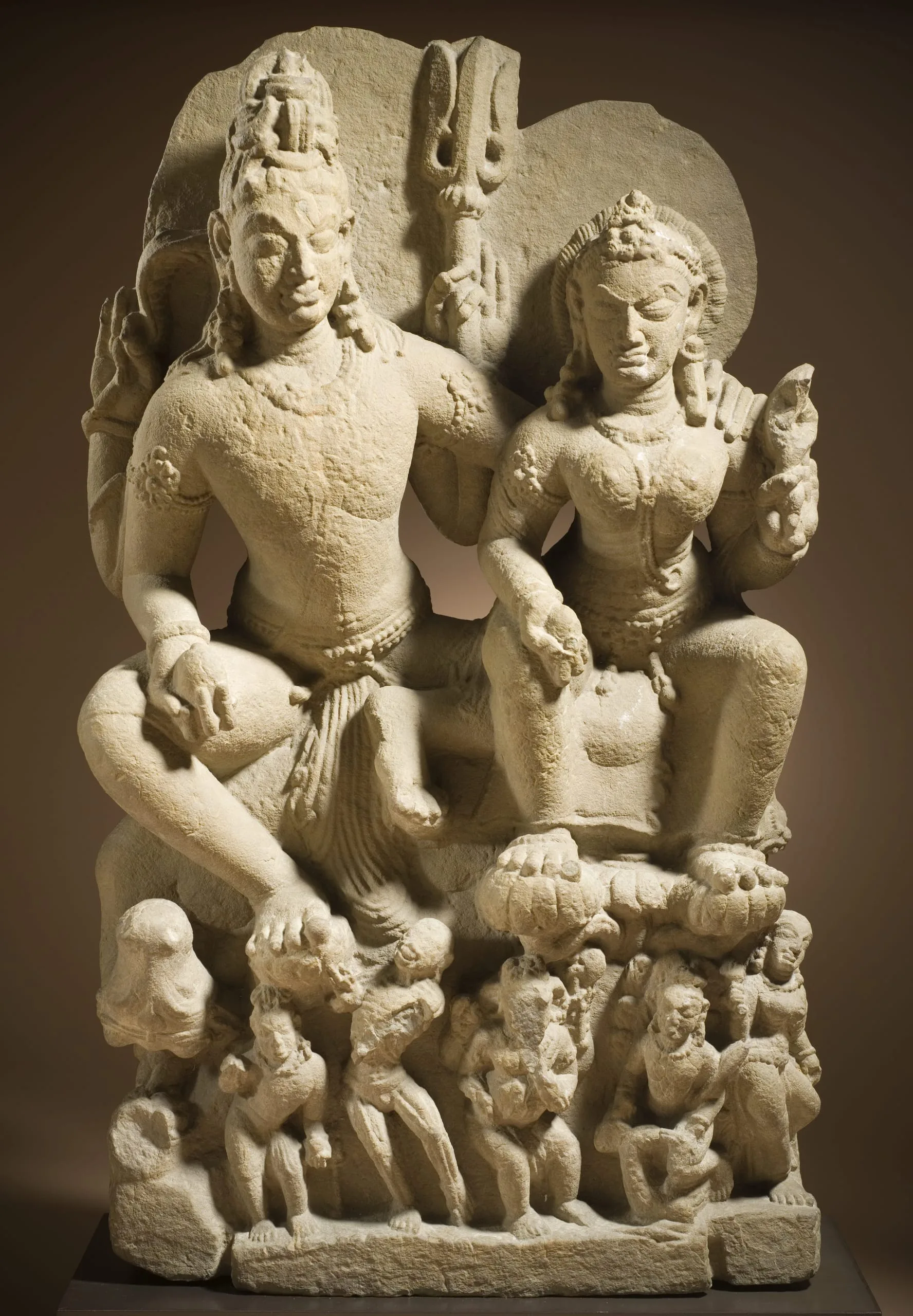
Umapati (Shiva, the Primeval Father God, and Uma, the Great Mother Goddess)circa 750-800

Not on view
Sandstone sculpture of two large multi-armed seated figures with elaborate headdresses, flanked by smaller attendant figures carved at the base, on a dark pedestal
Tall limestone Maya stela, photographed in profile, depicting a standing figure in elaborate headdress and jewelry above a stacked column of supernatural and human figures, with detailed low-relief carving throughout.
Sandstone sculpture of two back-to-back yakshi figures with large circular halos, rounded forms, and ornamental belts; a small crouching figure carved in relief at the base
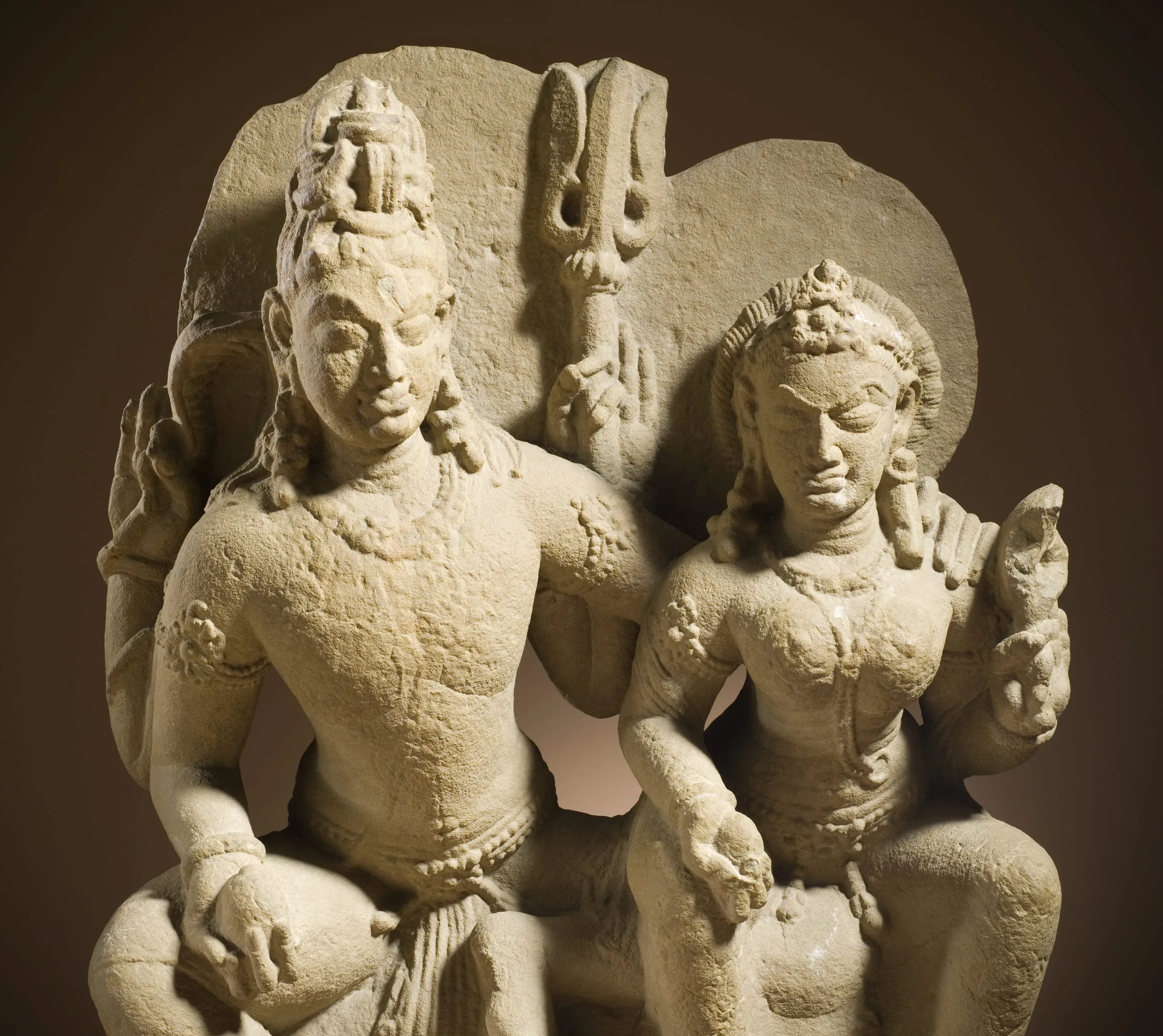
Sandstone relief sculpture of two seated divine figures with multiple arms, adorned with jewelry and elaborate headdresses, a trident visible behind them, with smaller attendant figures and an animal carved in low relief at the base.
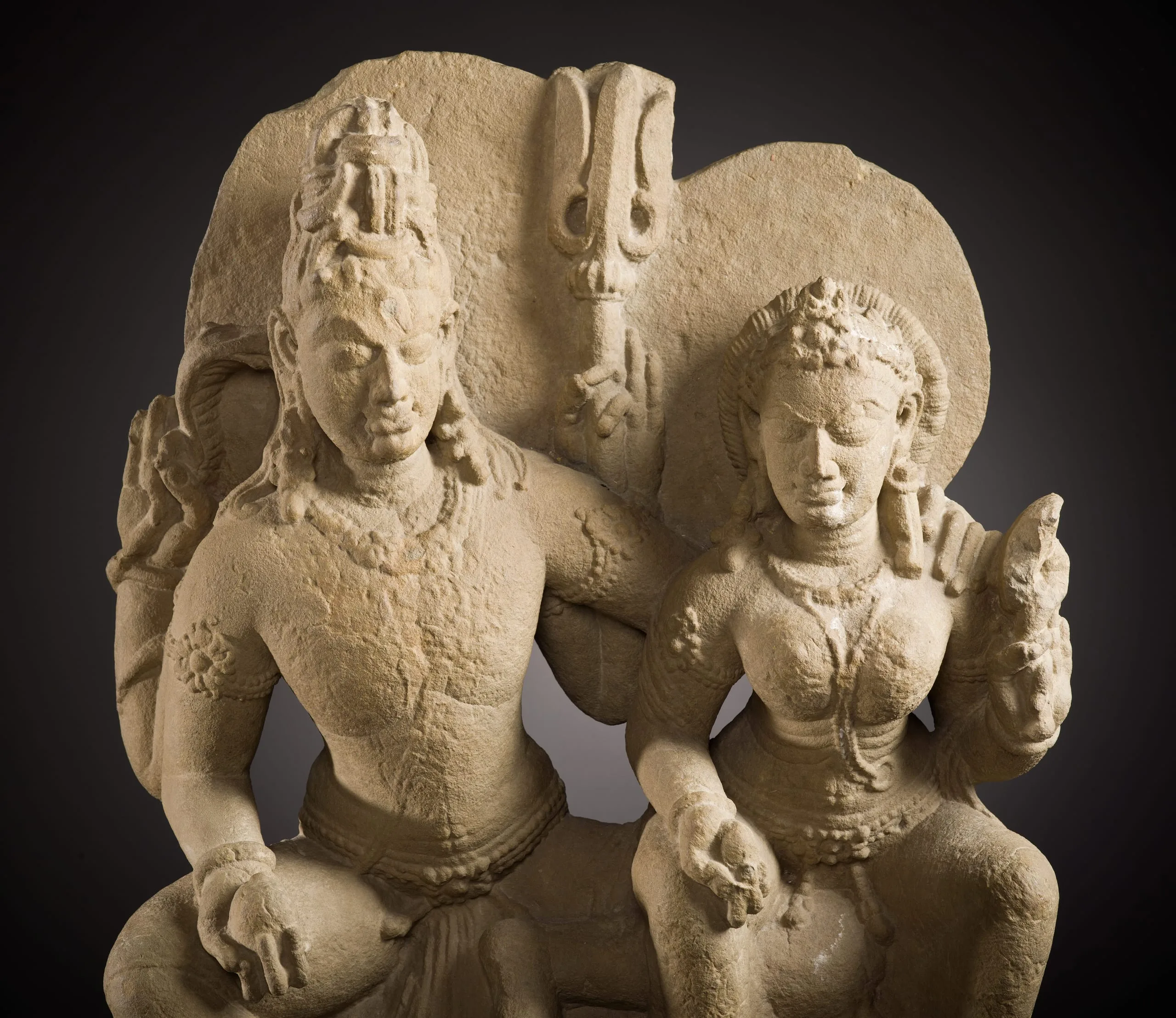
Sandstone sculpture of two seated figures shown from the waist up, adorned with elaborate jewelry, headdresses, and ornamental detail; a circular halo rises behind the figure at right, who holds a small animal; a serpent hood is visible at center top.
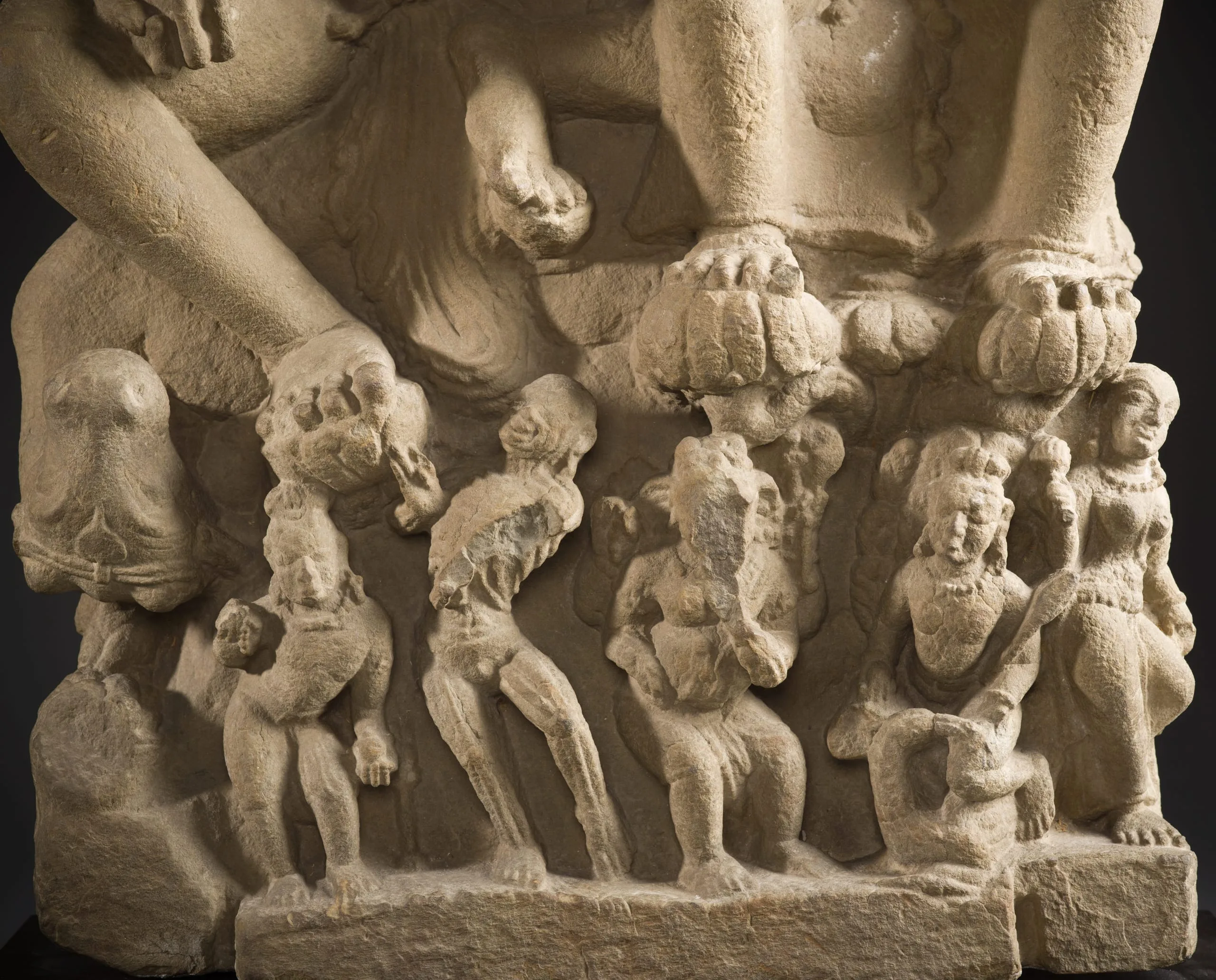
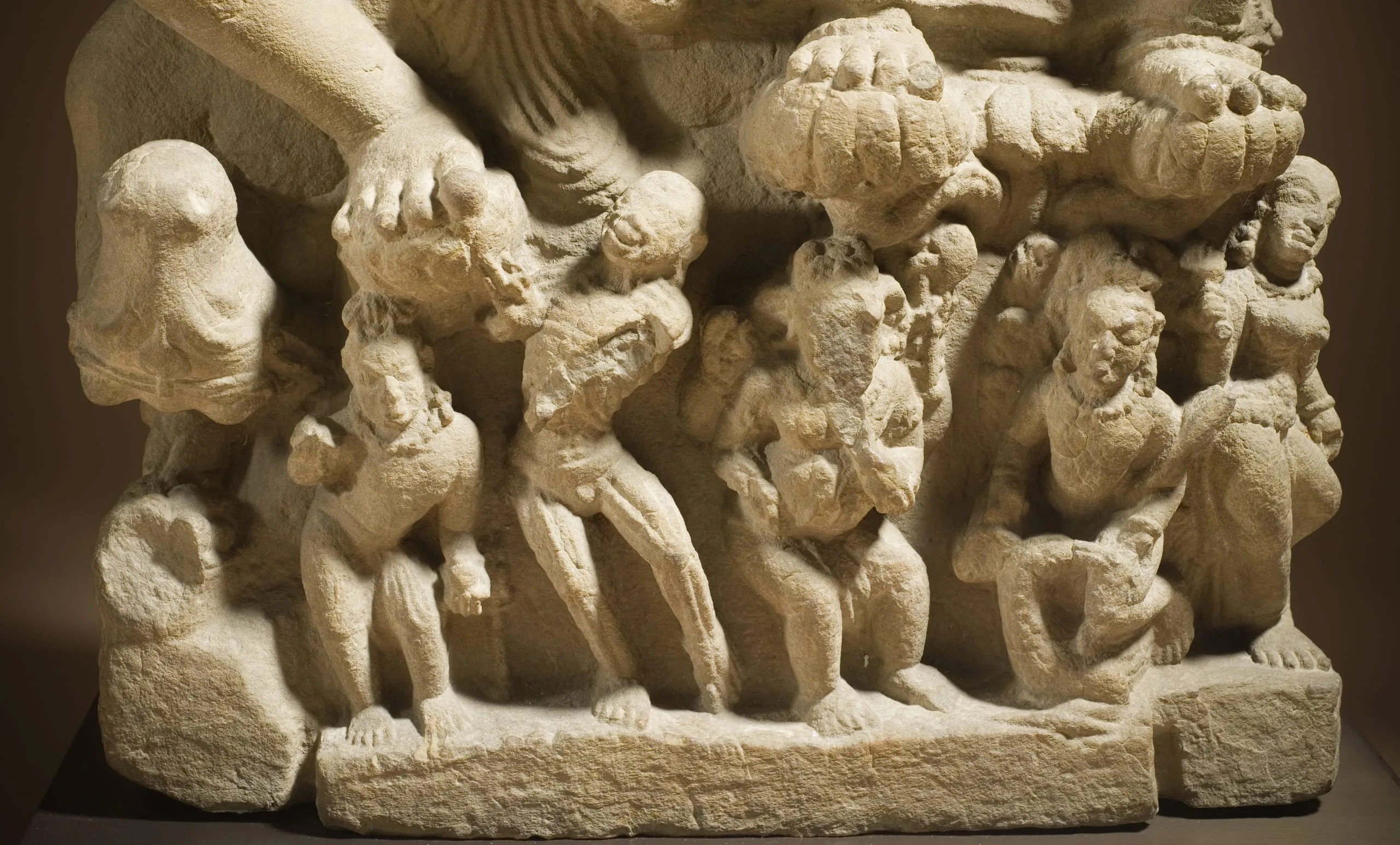
Sandstone sculptural relief detail showing a row of small stocky figures, likely ganas, supporting a larger deity above; figures are shown in active poses with rounded forms and weathered surface texture.
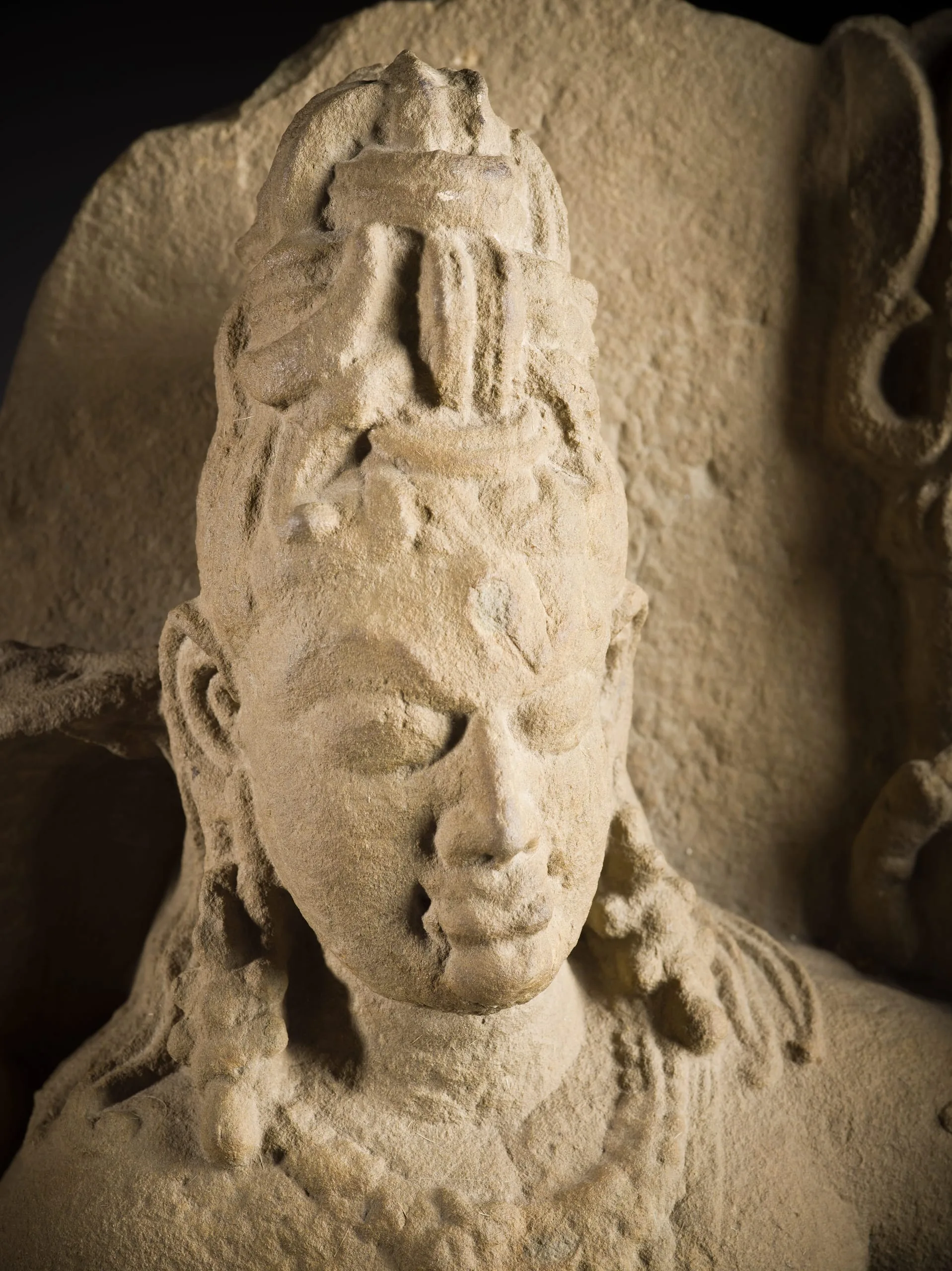
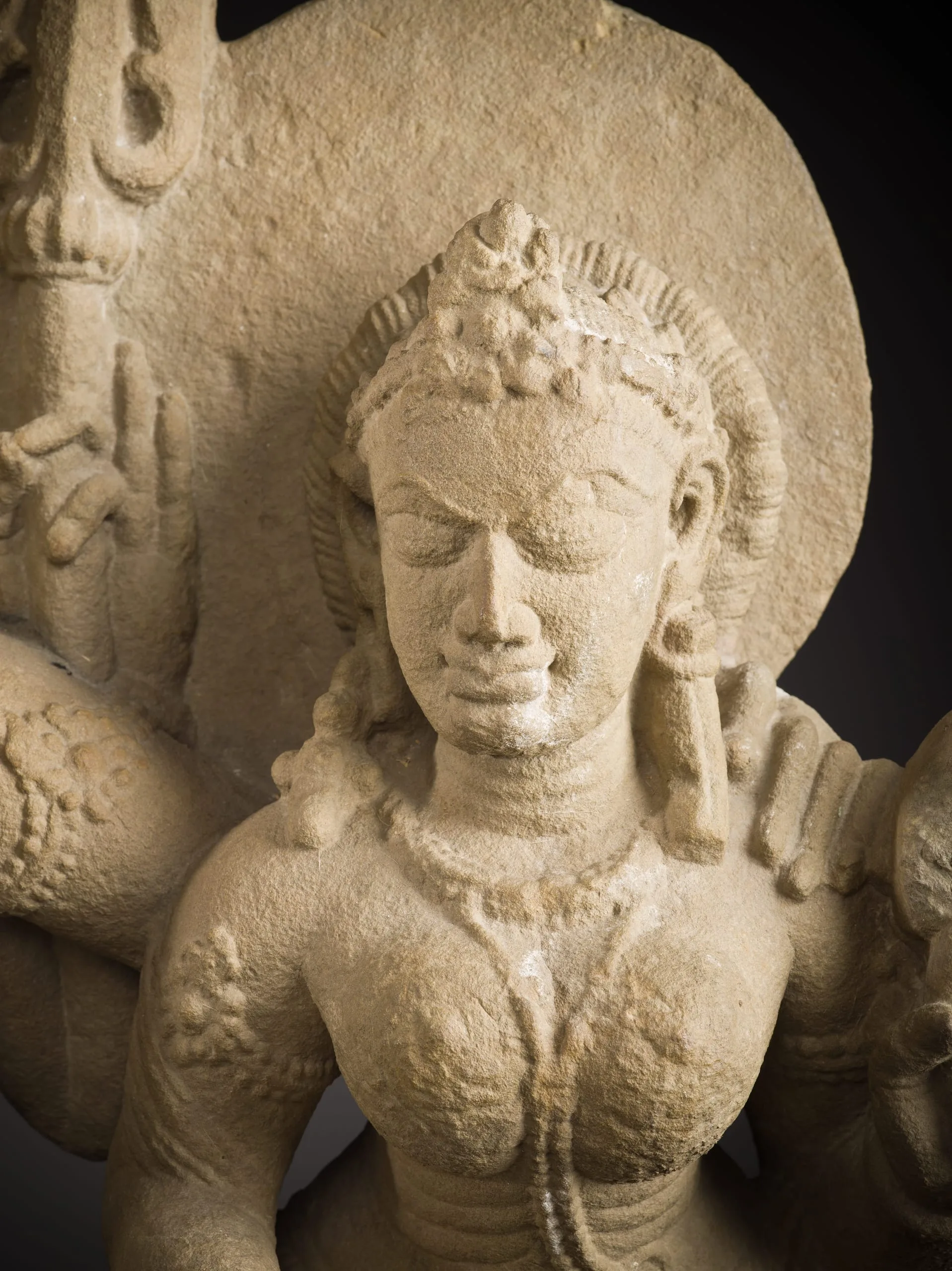
Sandstone sculpture, close-up of a deity's face with downcast eyes, elaborate jatamukuta crown with stacked ornaments, beaded necklace, and curling locks framing the cheeks; warm directional lighting against a dark background.
Sandstone sculpture, close-up of a multi-armed deity with a circular halo, wearing jewelry and a beaded necklace, with finely carved facial features and an elaborate crown, multiple hands visible at the sides.
Sandstone sculpture of two divine figures seated side by side, each with elaborate headdresses, jewelry, and multiple arms in mudra gestures; a trishula and circular prabhamandala visible in the background.
Stone relief sculpture fragment with multiple crouching and standing dwarf figures (ganas) in dynamic poses, supporting a large form above; weathered tan sandstone with roughly textured surface.
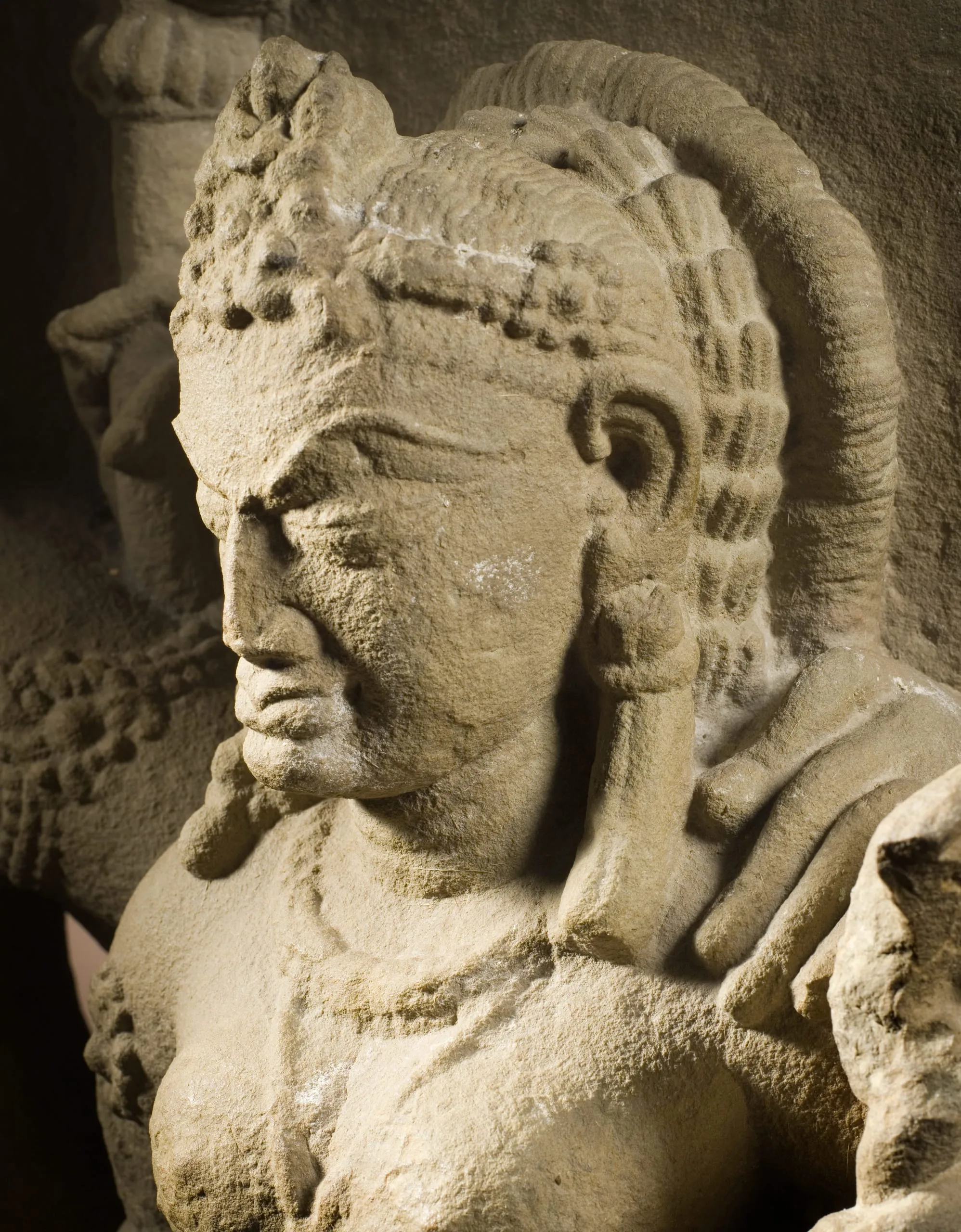
Stone sculpture, close-up of a figure's head and upper torso in three-quarter profile, with elaborately carved coiled hair, beaded crown, large circular earring, and fine facial features; weathered sandy-beige surface with visible erosion.
Artist or Maker
Unknown
Title
Umapati (Shiva, the Primeval Father God, and Uma, the Great Mother Goddess)
Place Made
India, Uttar Pradesh, Deogarh region
Date Made
circa 750-800
Medium
Gray sandstone
Dimensions
38 x 21 1/2 x 7 1/2 in. (96.52 x 54.61 x 19.05 cm)
Credit Line
From the Nasli and Alice Heeramaneck Collection, Museum Associates Purchase
Accession Number
M.72.53.2
Classification
Sculpture
Collecting Area
South and Southeast Asian Art
Curatorial Notes

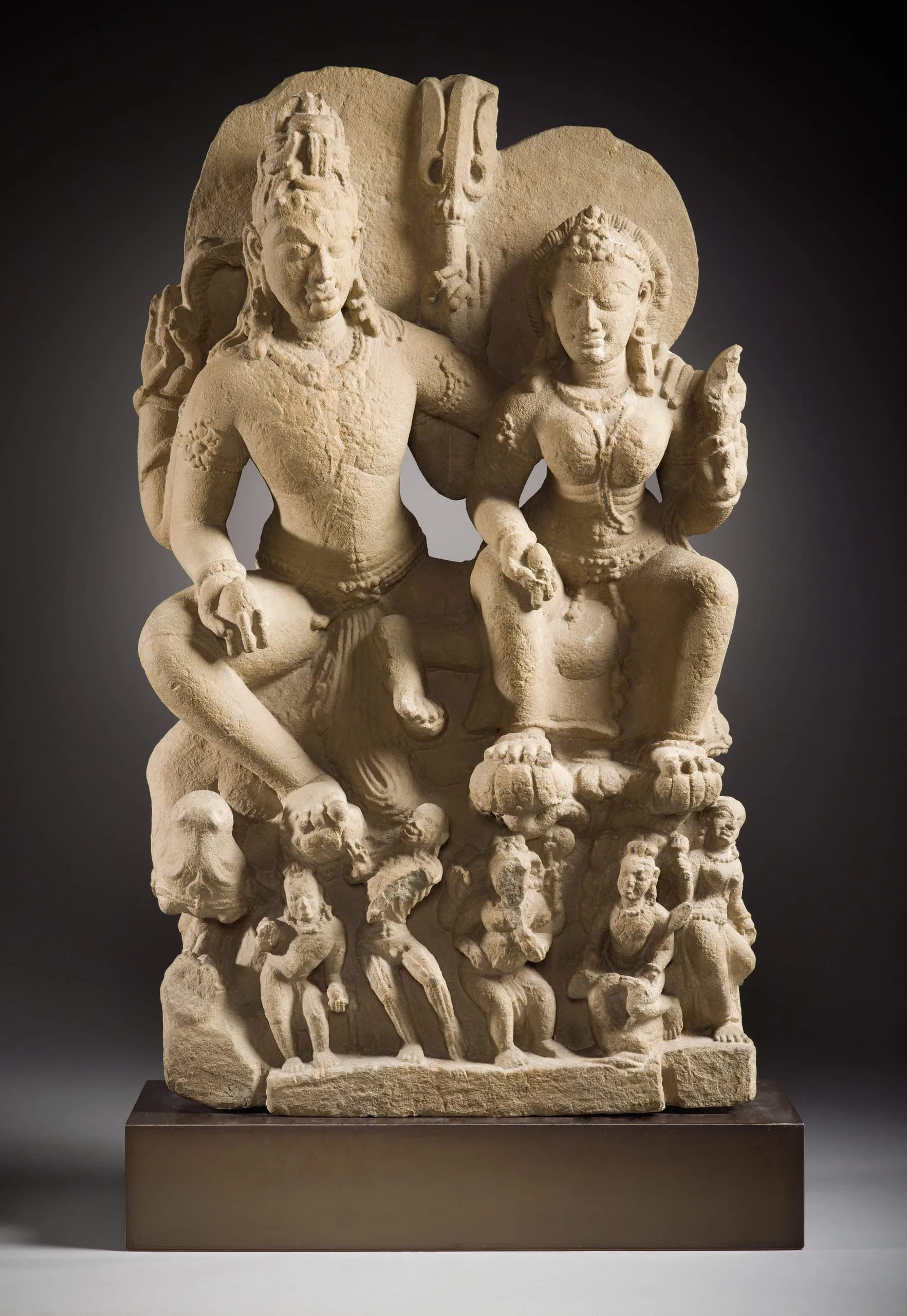
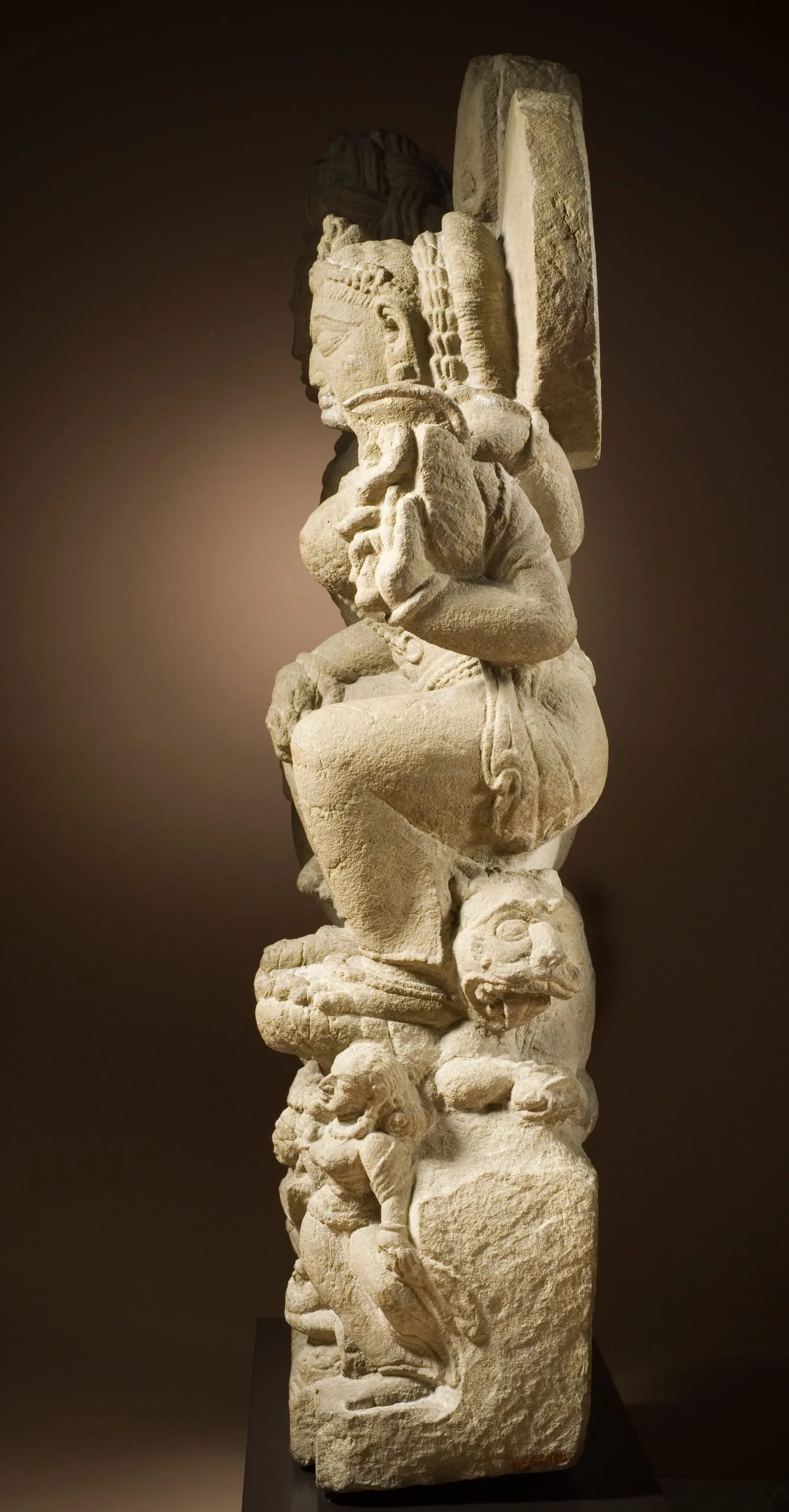
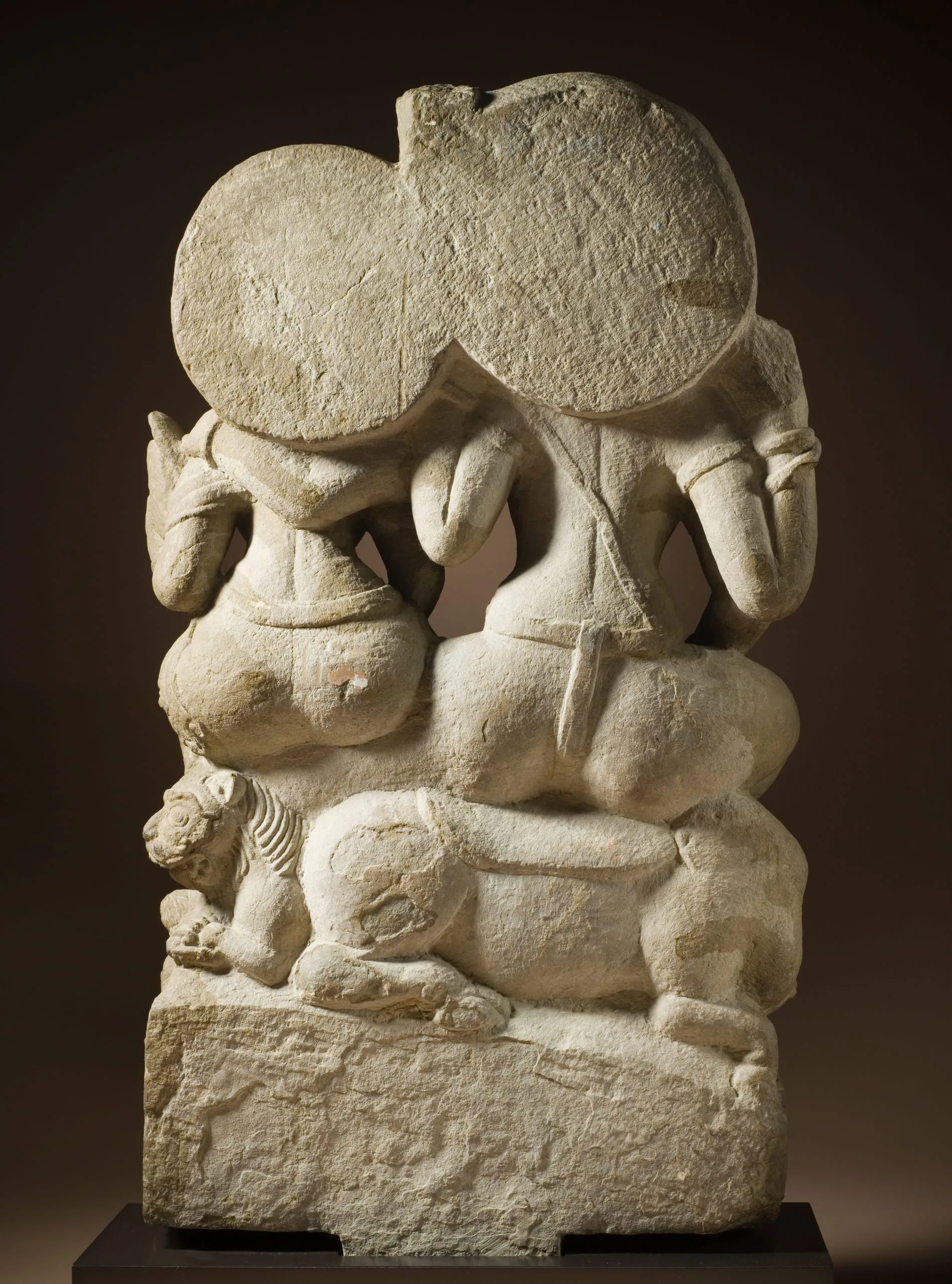
Made of gray sandstone, this sculpture depicts the Hindu god Shiva and his spouse Uma seated on their respective bull and lion mounts. Smaller figures below their feet represent their two sons Ganesha and Kumara (riding his peacock mount), the devout emaciated Bhringi, an unidentified male ascetic, and female fly whisk bearer. This type of composition is generally known in Sanskrit texts as Uma-Maheshvara (“Uma and the Great Lord” [Shiva]).

Here, however, a more specific title based on iconographic and stylistic grounds is appropriate. Known as “Umapati” (“husband of Uma”), the appellation denotes an iconological aspect of the deities that emphasizes Uma’s role as the “great Mother Goddess” and that of her beloved husband Shiva as the “primeval Father God.” Iconographically, Uma is seated with her legs pendent in the so-called European posture (pralambapadasana), which was shared by images of Mother Goddesses made in southwestern Uttar Pradesh during the 8th century. In addition, Uma and the Mother Goddesses wear a necklace with a pendant on a long chain that idiosyncratically curves off to the side instead of following the body’s vertical axis. Stylistically, the LACMA sculpture shares several traits characteristic of many stone sculptures made in Uttar Pradesh and Madhya Pradesh during the 8th and 9th centuries. These include a distinctive countenance created by exaggerated facial features and a stylized treatment of the ribcage indicating an ascetic nature and prowess.

See Stephen Markel, "The Disputed Umā-Maheśvara in the Los Angeles County Museum of Art: A Case Study in Reattribution and Reinterpretation," Archives of Asian Art 58 (2008): 87-111.
Selected Bibliography
  • El Universo de la India: Obras Maestras del Museo de Arte del Condado de Los Angeles. Santiago: Centro Cultural Palacio La Moneda, 2012.