LACMA

ShopMembershipMyLACMATickets
LACMA
Los Angeles County Museum of Art
5905 Wilshire Blvd.
Los Angeles, CA 90036
info@lacma.org
(323) 857-6000
Sign up to receive emails
Subscribe
© Museum Associates 2025

Museum Hours

Monday

11 am–6 pm

Tuesday

11 am–6 pm

Wednesday

Closed

Thursday

11 am–6 pm

Friday

11 am–8 pm

Saturday

10 am–7 pm

Sunday

10 am–7 pm


  • About LACMA
  • Jobs
  • Building LACMA
  • Host An Event
  • Unframed
  • Press
  • FAQs
  • Log in to MyLACMA
  • Privacy Policy
© Museum Associates 2025
Collections

Unknown
Varaha, the Boar Avatar of Vishnu3rd century

Not on view
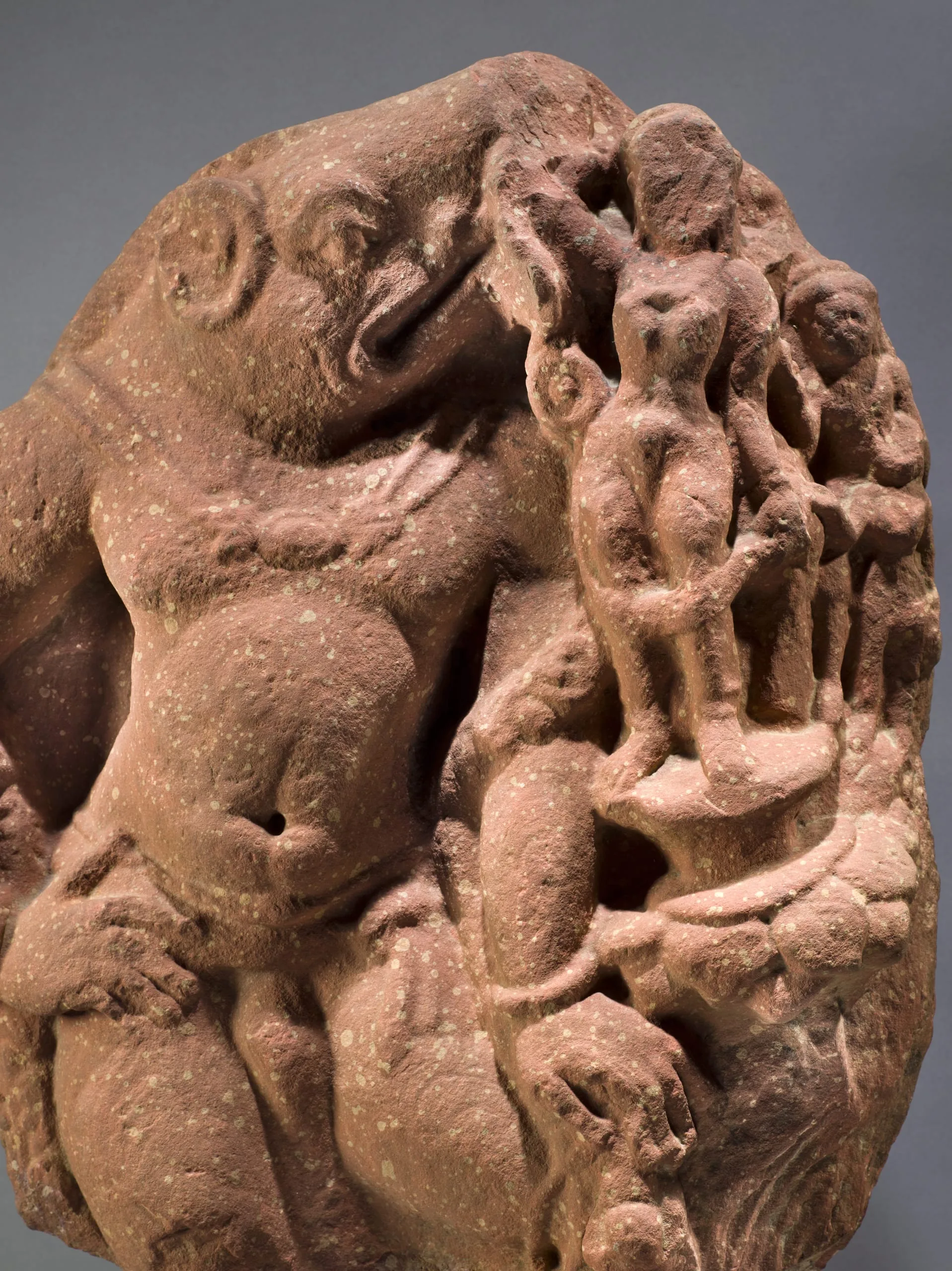
Terra-cotta stone relief fragment depicting a large, elephant-headed creature grasping smaller human-like figures, with rough, uneven edges suggesting a broken fragment
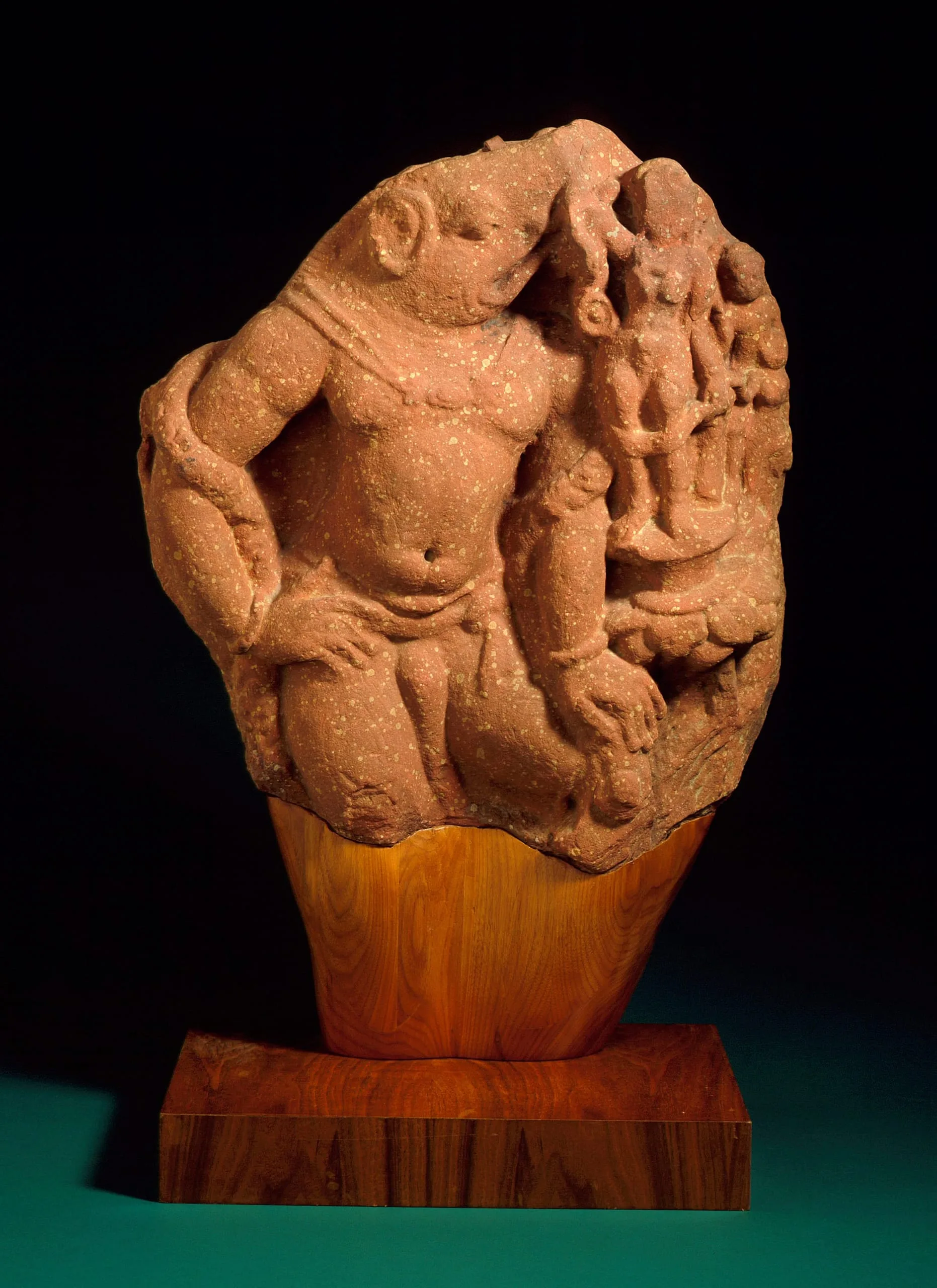
Fragmentary red sandstone relief sculpture of a standing monkey-faced figure in tribhanga pose, wearing ornaments, with smaller figures carved in relief to the right, mounted on a wooden base.
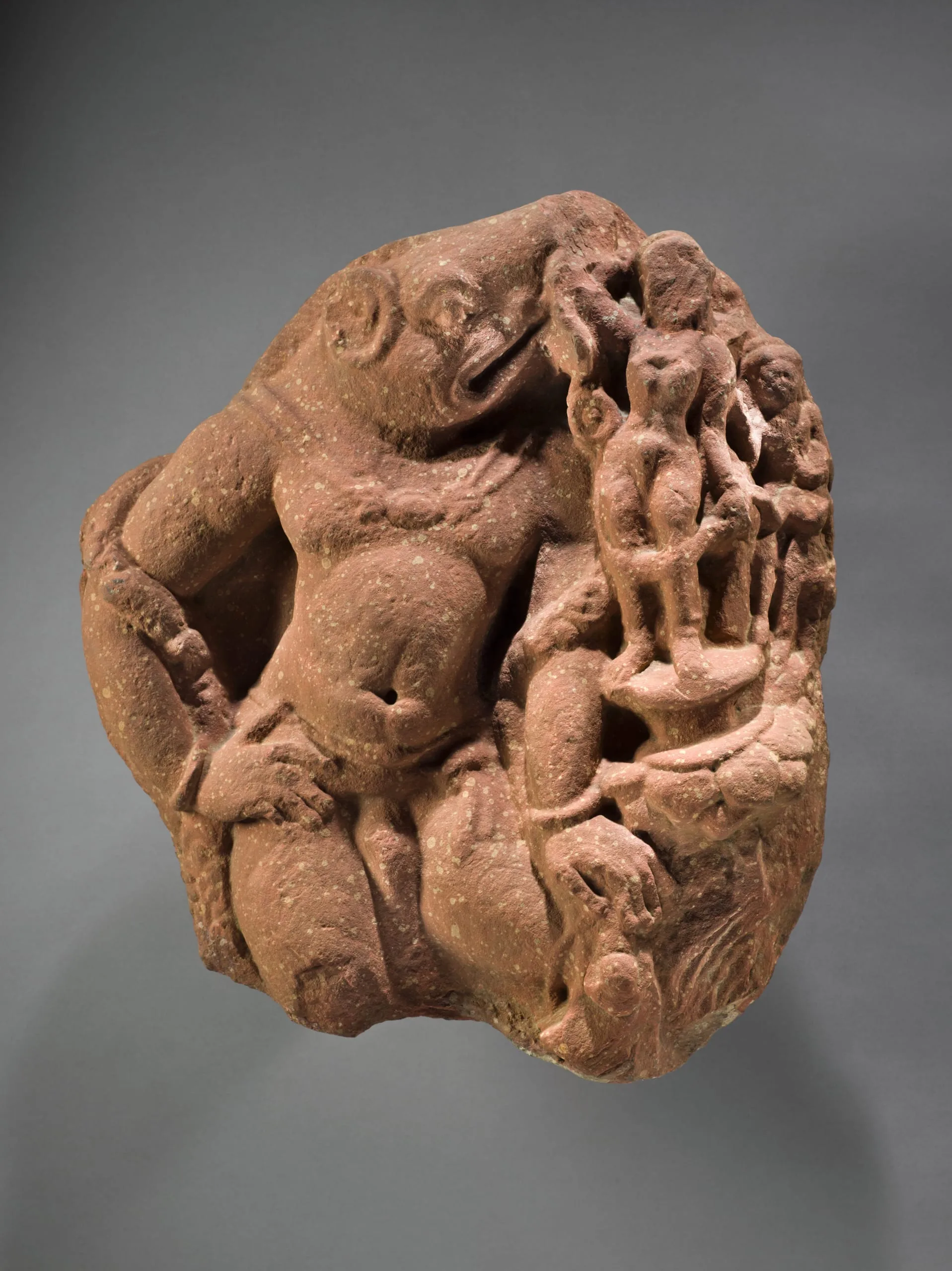
Sandstone sculpture fragment in reddish-brown stone, depicting a large crouching animal figure at left grasping a cluster of smaller human and animal figures arranged vertically at right, with weathered and pitted surface texture.
Artist or Maker
Unknown
Title
Varaha, the Boar Avatar of Vishnu
Place Made
India, Uttar Pradesh, Mathura
Date Made
3rd century
Medium
Mottled red sandstone
Dimensions
22 1/2 x 20 3/8 x 4 1/4 in. (57.15 x 51.75 x 10.8 cm)
Credit Line
From the Nasli and Alice Heeramaneck Collection, Museum Associates Purchase
Accession Number
M.72.53.8
Classification
Sculpture
Collecting Area
South and Southeast Asian Art
Curatorial Notes

Varaha is the third incarnation or avatar of Vishnu, the Hindu god of preservation. According to the most common version of the tale, the demon Hiranyaksha had seized the Earth and dragged her to the depths of the cosmic ocean. Under the protection of a boon, Hiranyaksha recited the names of all humans, gods, and other creatures, who thus could not harm him. But he neglected to mention the boar. Upon realizing this, Vishnu manifest himself as a giant boar and dove into the ocean. He killed Hiranyaksha with his tusks and rescued the Earth, here personified as the goddess Bhumi standing on a lotus next to his left shoulder. She grasps Varaha’s snout with her upraised right hand and is being lifted up to the surface of the ocean.

Varaha is depicted in a hybrid form with the head of a boar atop a muscular human body. He has two arms. His right hand rests on his hip and his left on his thigh. He wears a tripartite necklace and a long forest garland (vanamala) that hangs around his shoulders and crosses over his arms above his elbows. It would have originally continued to cross in front of his knees.
Selected Bibliography
  • El Universo de la India: Obras Maestras del Museo de Arte del Condado de Los Angeles. Santiago: Centro Cultural Palacio La Moneda, 2012.

  • Rod-ari, Melody. "The Pacific Rim: connecting peoples, collecting histories. The formation of South and Southeast Asian art collections in Los Angeles." Journal of the History of Collections 28 no.3 (2016): 479-492.