In both Theravada and Mahayana Buddhism, the arhats are believed to have been the Buddha Shakyamuni’s original disciples, and to attained enlightenment through their own efforts. They were endowed with transcendent wisdom (prajna). Functioning much like saints, their role was to protect the Dharma, or Buddhist teaching, until the coming of Maitreya, the Buddha of the Future.
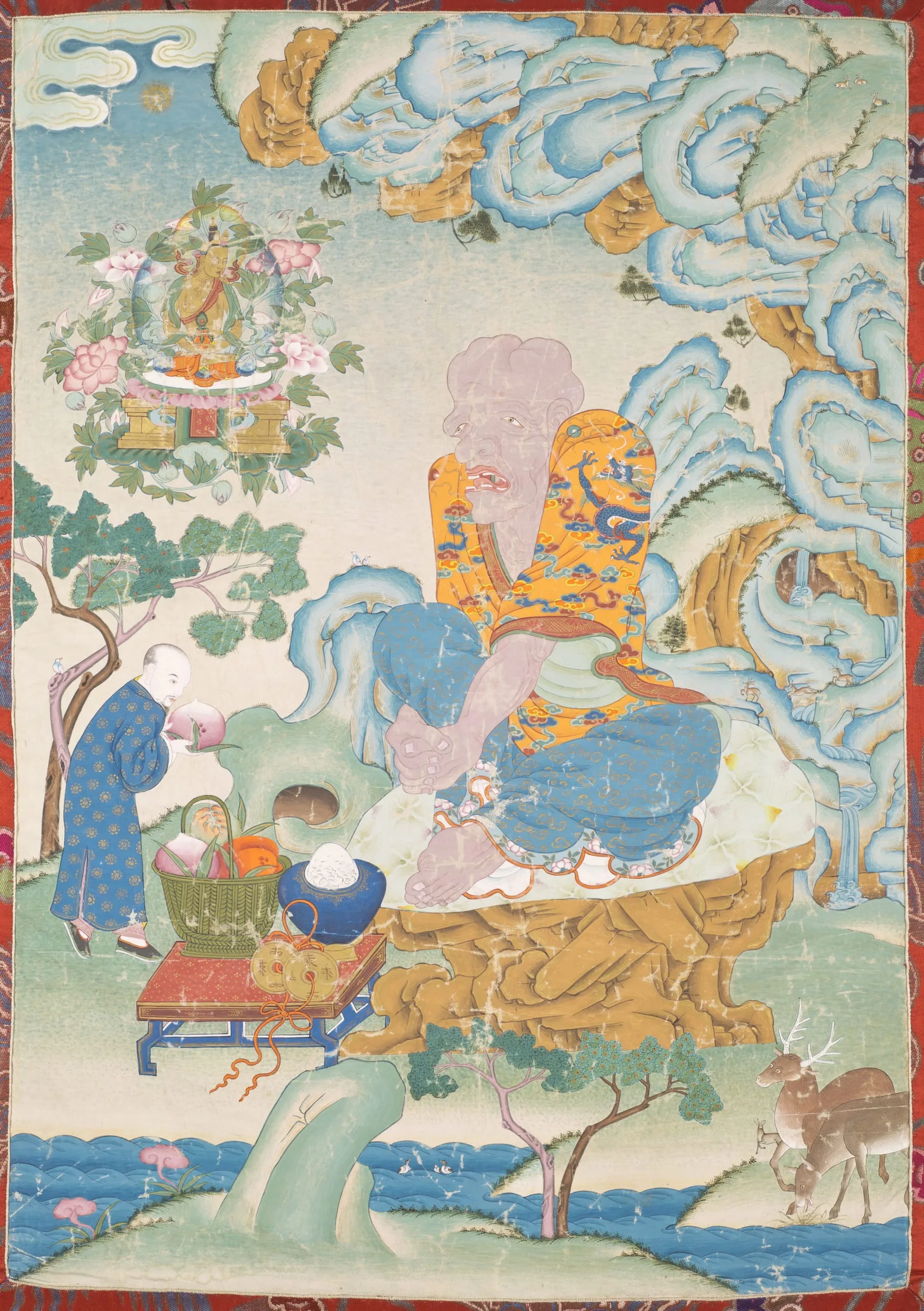
Arhat Ajita (Unconquered) was a wealthy man who married the daughter of King Prasenajit of Shravasti, the ancient capital in present-day Uttar Pradesh of the Kosala Kingdom (circa 7th-5th century BCE). In a past life, Ajita and his wife had made offerings to the Buddha Vipashyin, who predicted their eventual marriage and joining the Buddhist monastic community (Sangha). He is thought to dwell on Drang-song (the "hermit-sage mountain") along with 100 other Arhats.
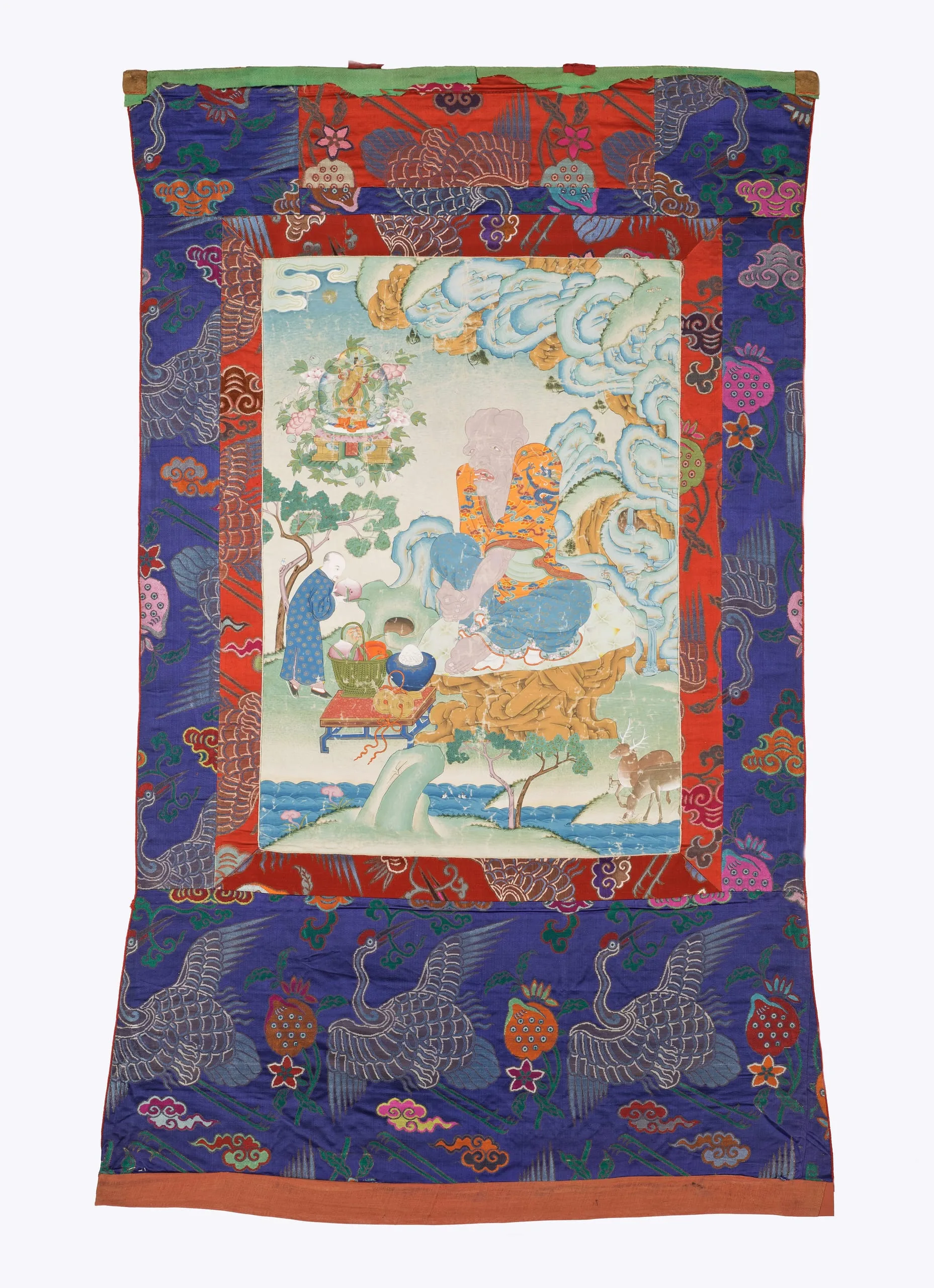
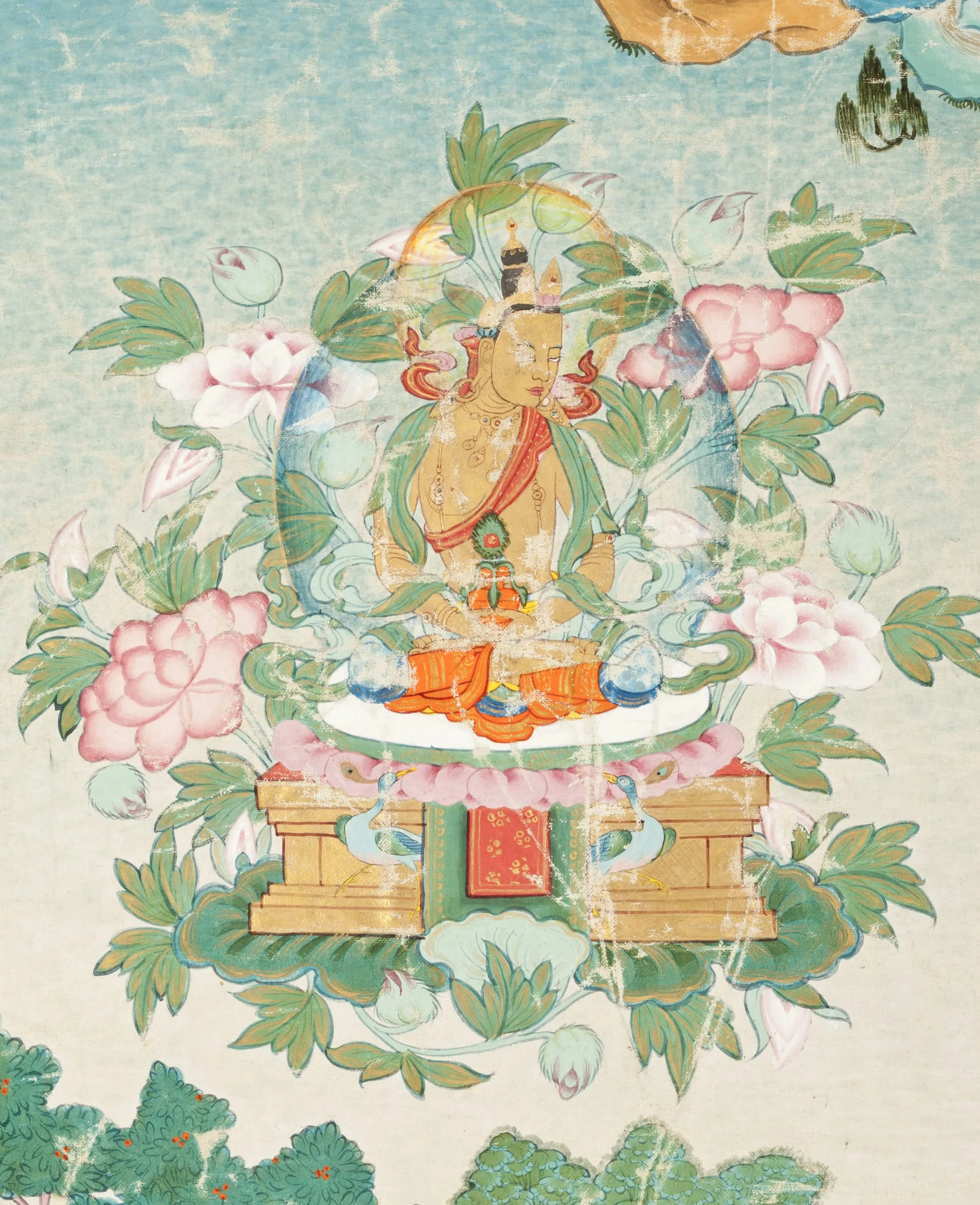
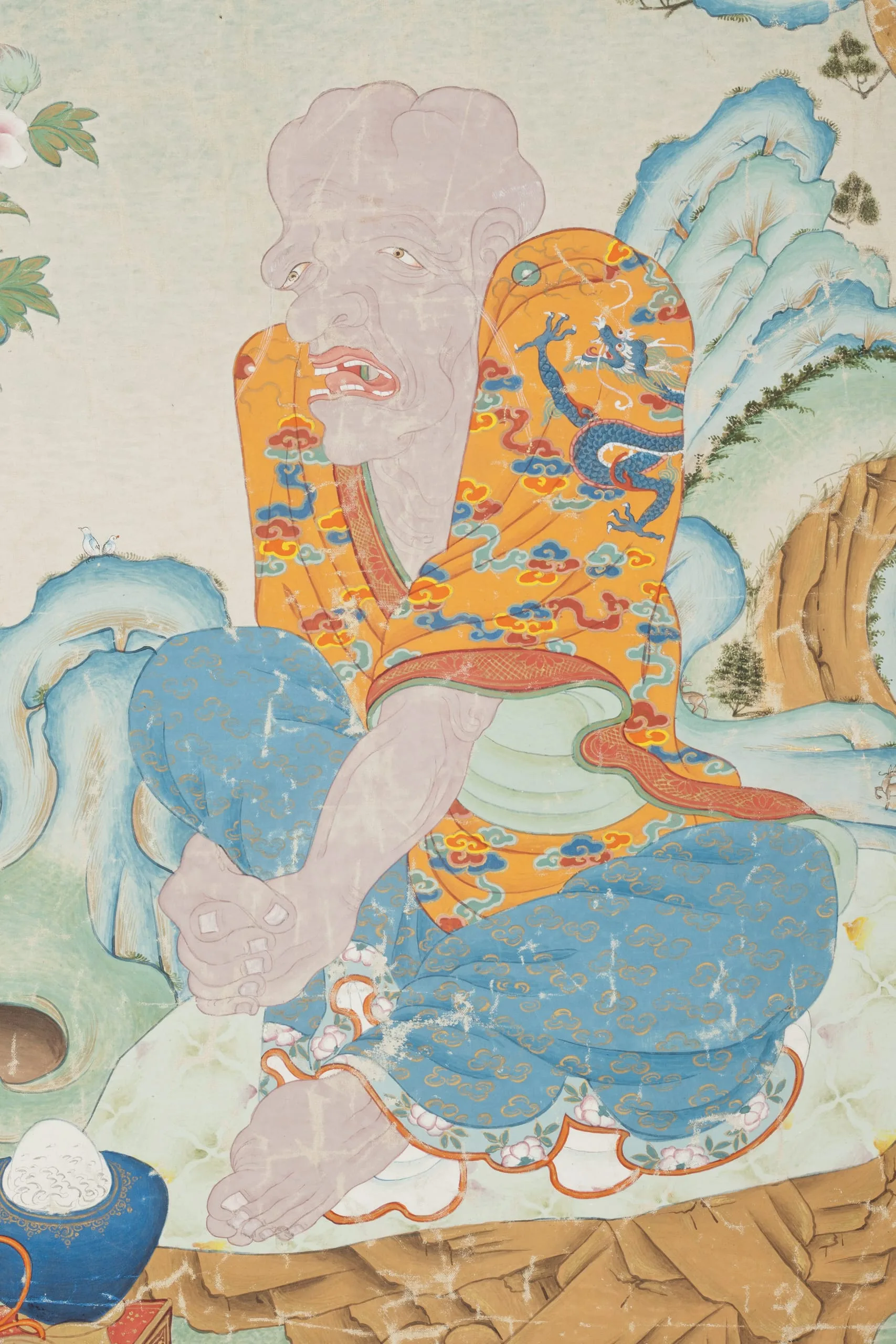
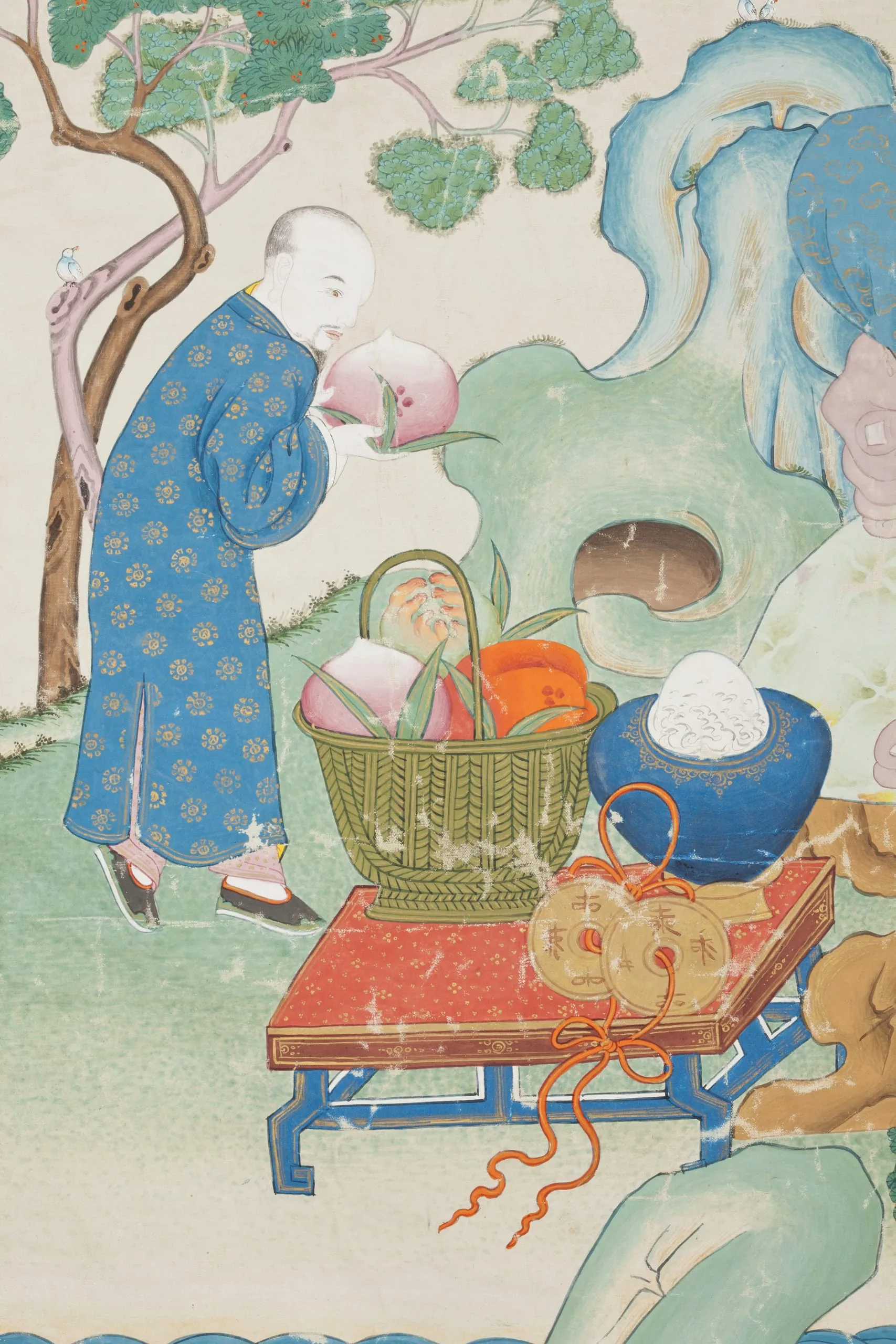
Although he is said to have been quite handsome, here is depicted with a gnarled face and crying in anguish. He wears Chinese robes and grasps his hands together below his upraised right knee, rather than holding them in his more common gesture of meditation (dhyana mudra). Ajita sits on a rock formation in a fantastical landscape. An enthroned image of Amitayus, the Jina Buddha of Eternal Life, floats in the air above him. An attendant offers him fruit from a bowl on a low table in front of him. In the bottom right corner are a family of deer, which may reference his riding as deer when he returned to Shravasti to preach the Dharma. The thangka is presently mounted in an elaborate brocade mount adorned with flying cranes.
Comparable Tibetan individual portraits of Ajita are in the Brooklyn Museum (1993.192.4), Nelson-Atkins Museum of Art, Kansas City (2001.5), and Rubin Museum of Himalayan Art, New York (P1994.9.4 and F1997.9.2).