- Title
- Avian Celt Pendant
- Date Made
- 300–700 CE
- Medium
- Jadeite
- Dimensions
- 4 3/8 × 1 × 1 in. (11.11 × 2.54 × 2.54 cm)
- Accession Number
- M.71.73.310
- Curatorial Notes
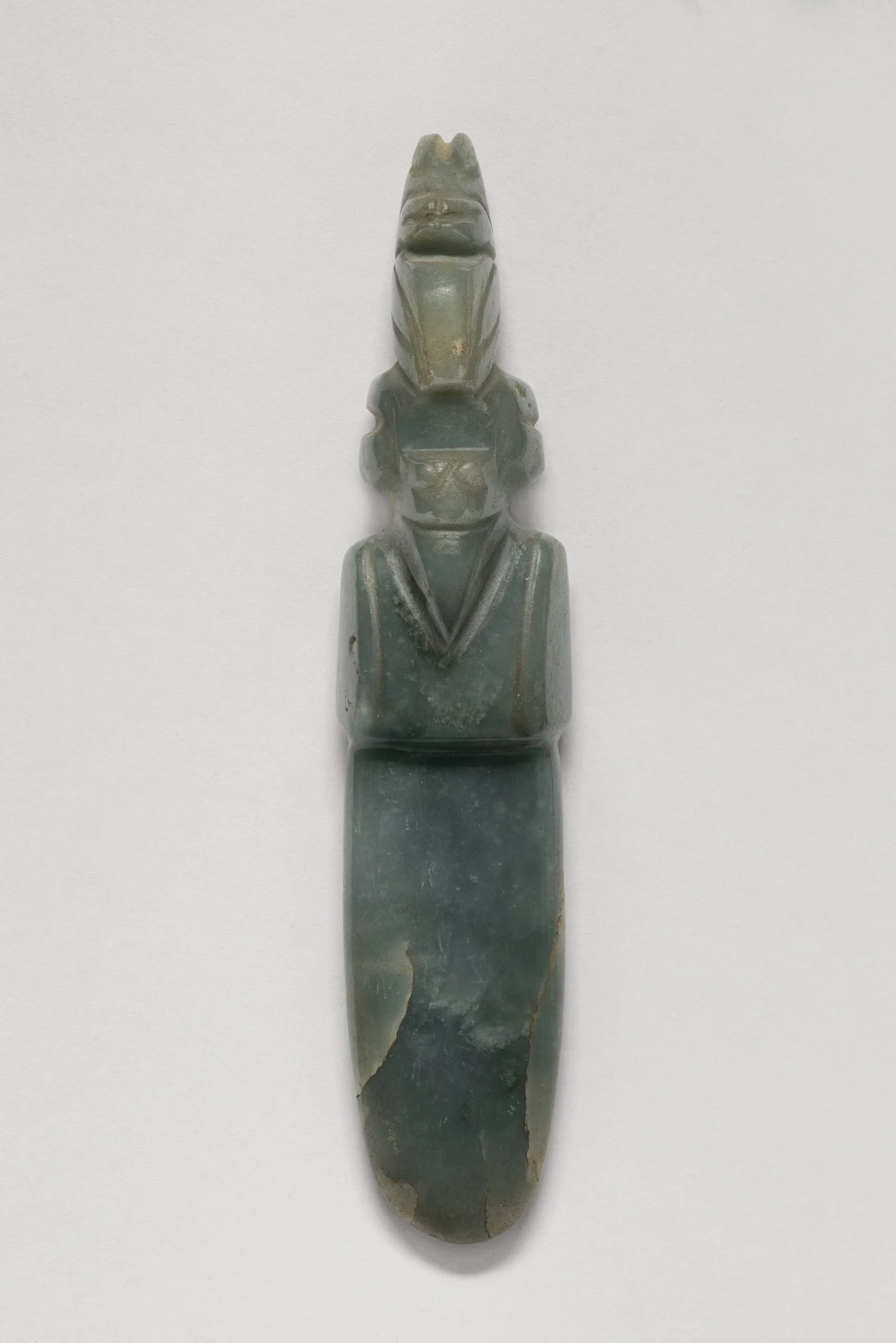
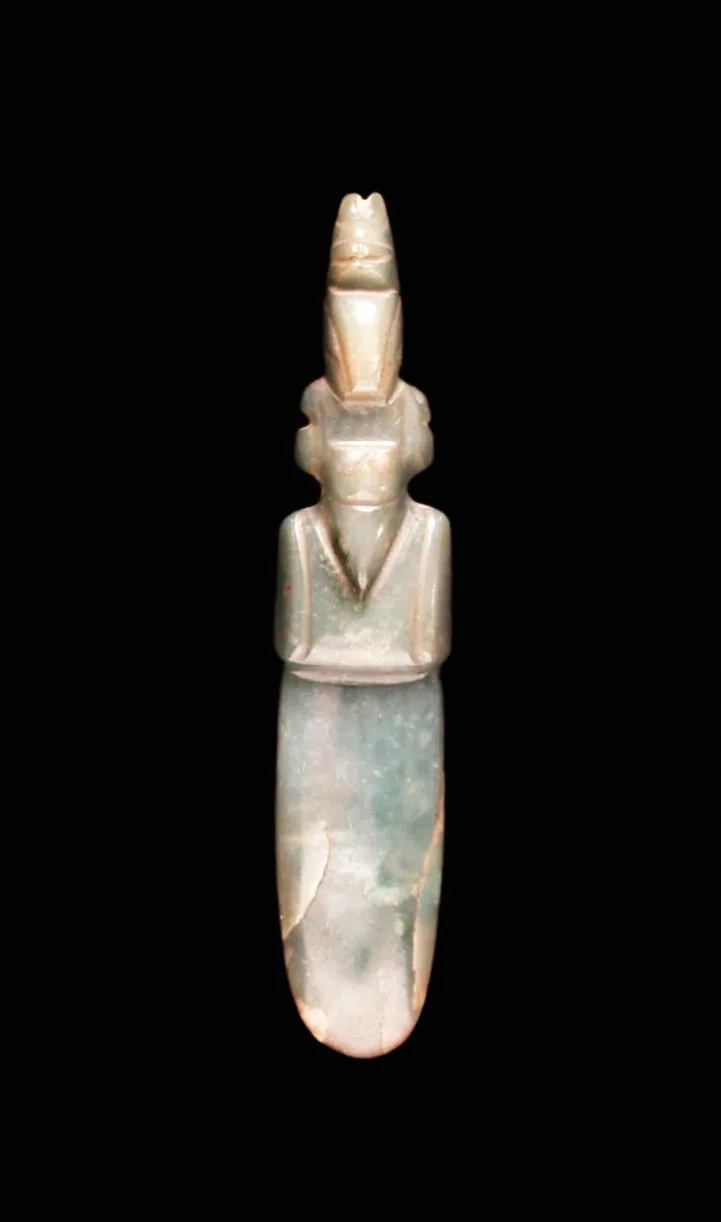
Celtiform pendants carved into a shape depicting stacked birds have been found widely in Costa Rica. This example shows an avian figure with a prominent triangular beak, stylized wings, and a smaller bird perched on its head. Stacked birds, or beings with other animals on top of the head, are common motifs in the ancestral iconography of Central America and beyond, and are often interpreted as representing the idea of an alter ego or spirit helper. Pendants like this one would have been worn as amulets to provide protection against evil or disease, or as symbols of power signaling the appropriation of avian qualities such as flight or enhanced vision.
Julia Burtenshaw
2024
- Selected Bibliography
- Berg, Phil. Man Came This Way: Objects from the Phil Berg Collection. Los Angeles: Los Angeles County Museum of Art, 1971.