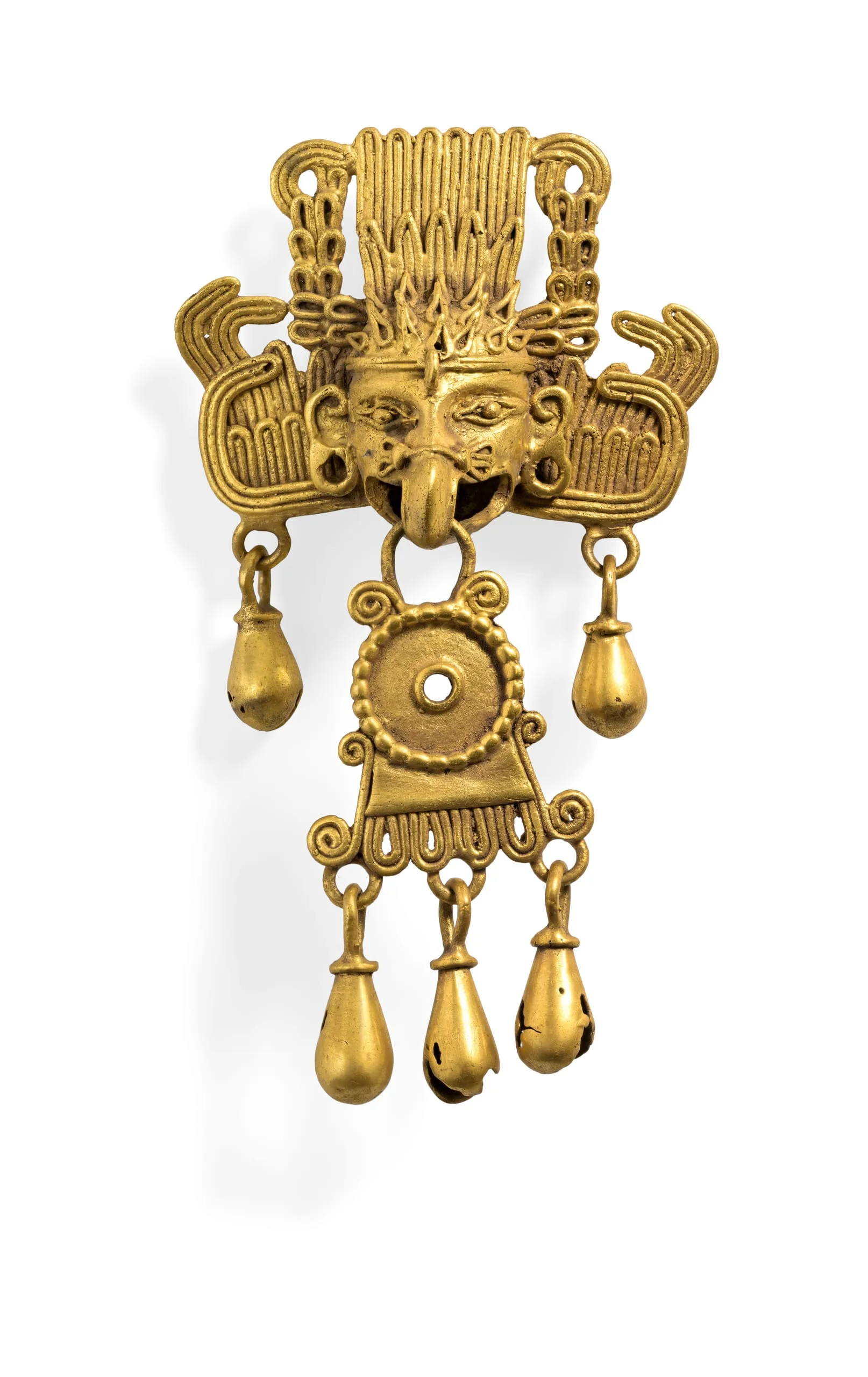
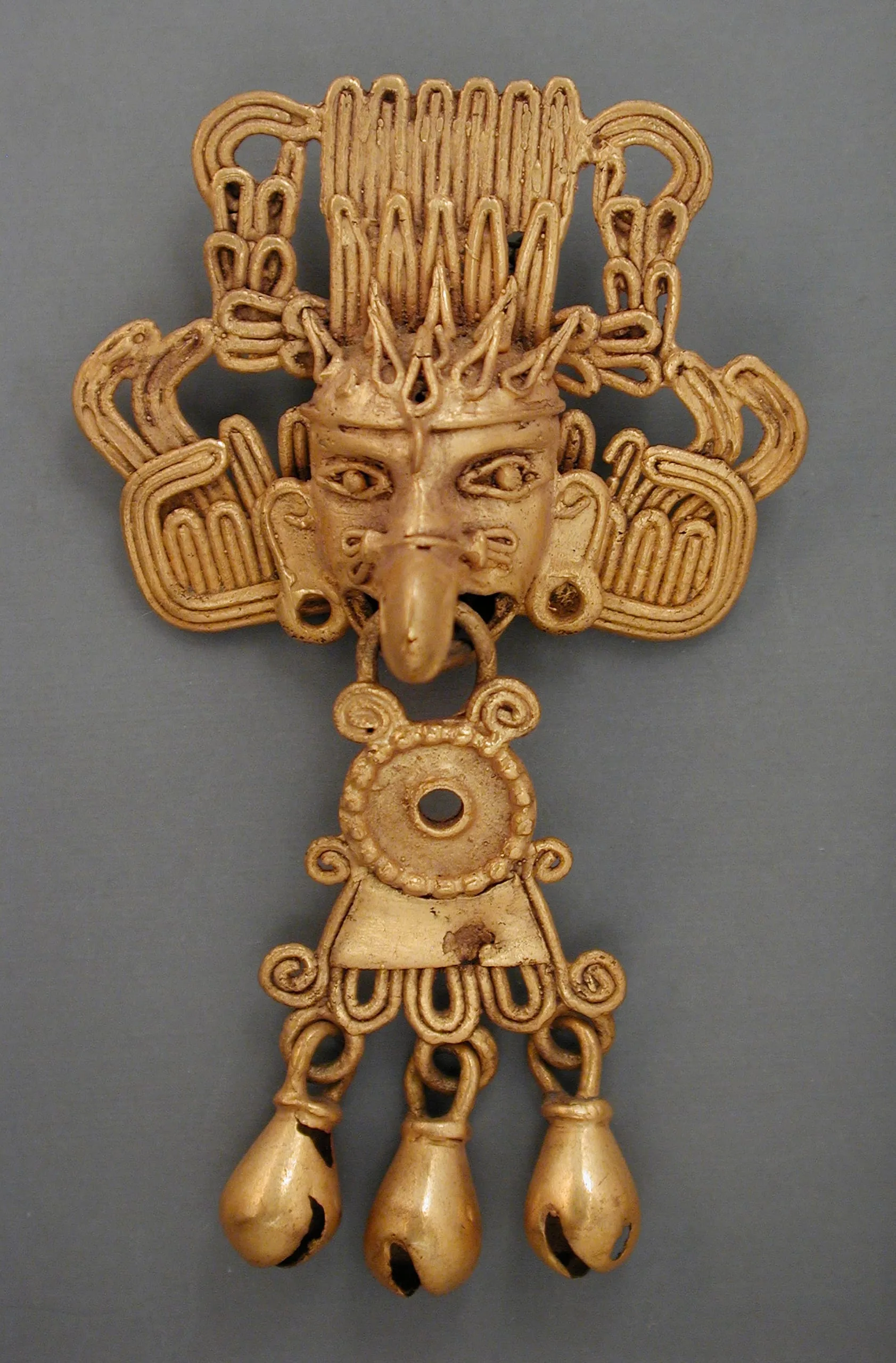
Among the colonial-era Mixtec, gold was thought to embody sunlight through its metallic shine and was classified according to its yellow hue (dziñuhu quaa, “yellow precious metal”). This gold pendant depicts an avian personage in descending flight, a pan-Mesoamerican character with solar associations. Goldsmiths cast his wings and tail feathers, which extend upward from his anthropomorphic face, with a false filigree technique that creates a lacelike form. Bells dangle from the figure’s nose ornament and, in some cases, his wings as well.
Mixtec nobility adorned themselves with pendants like this one—as earrings, necklaces, and other ornaments—in both life and death. Archaeologists excavated similar objects from Tomb 7 at the site of Monte Albán, Oaxaca, a royal burial where hundreds of precious gold items accompanied the dead.
Alyce de Carteret
2024