- Title
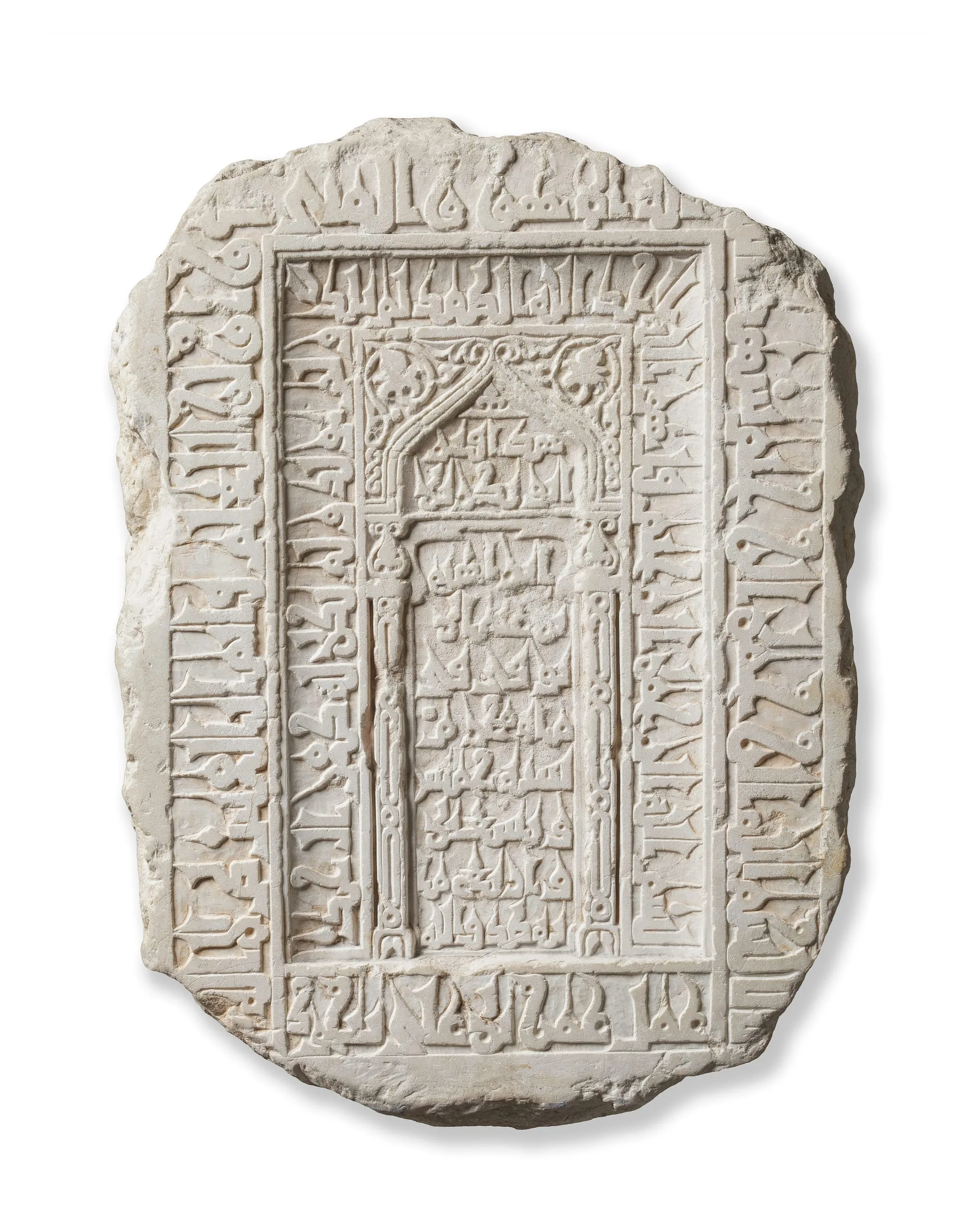
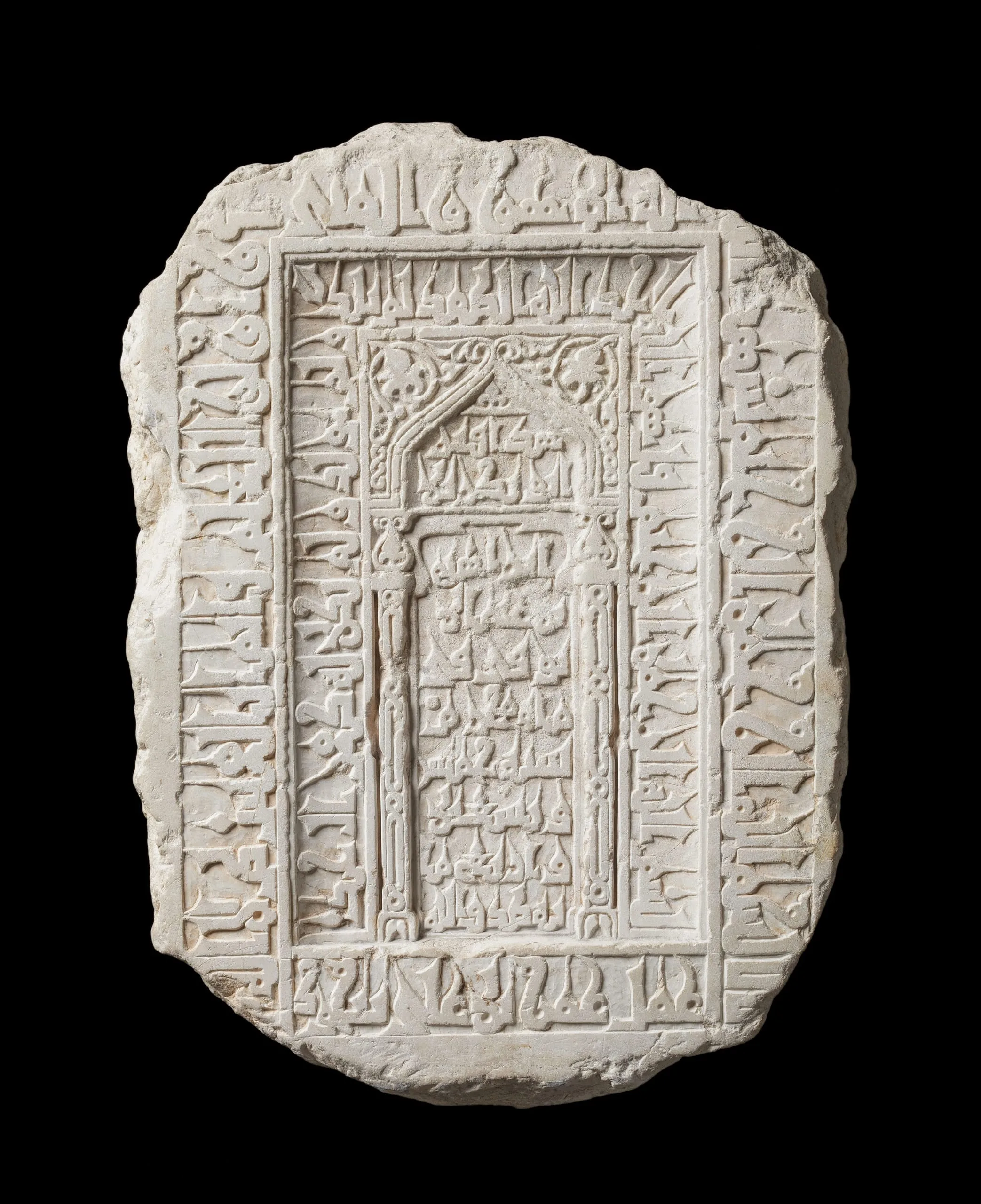
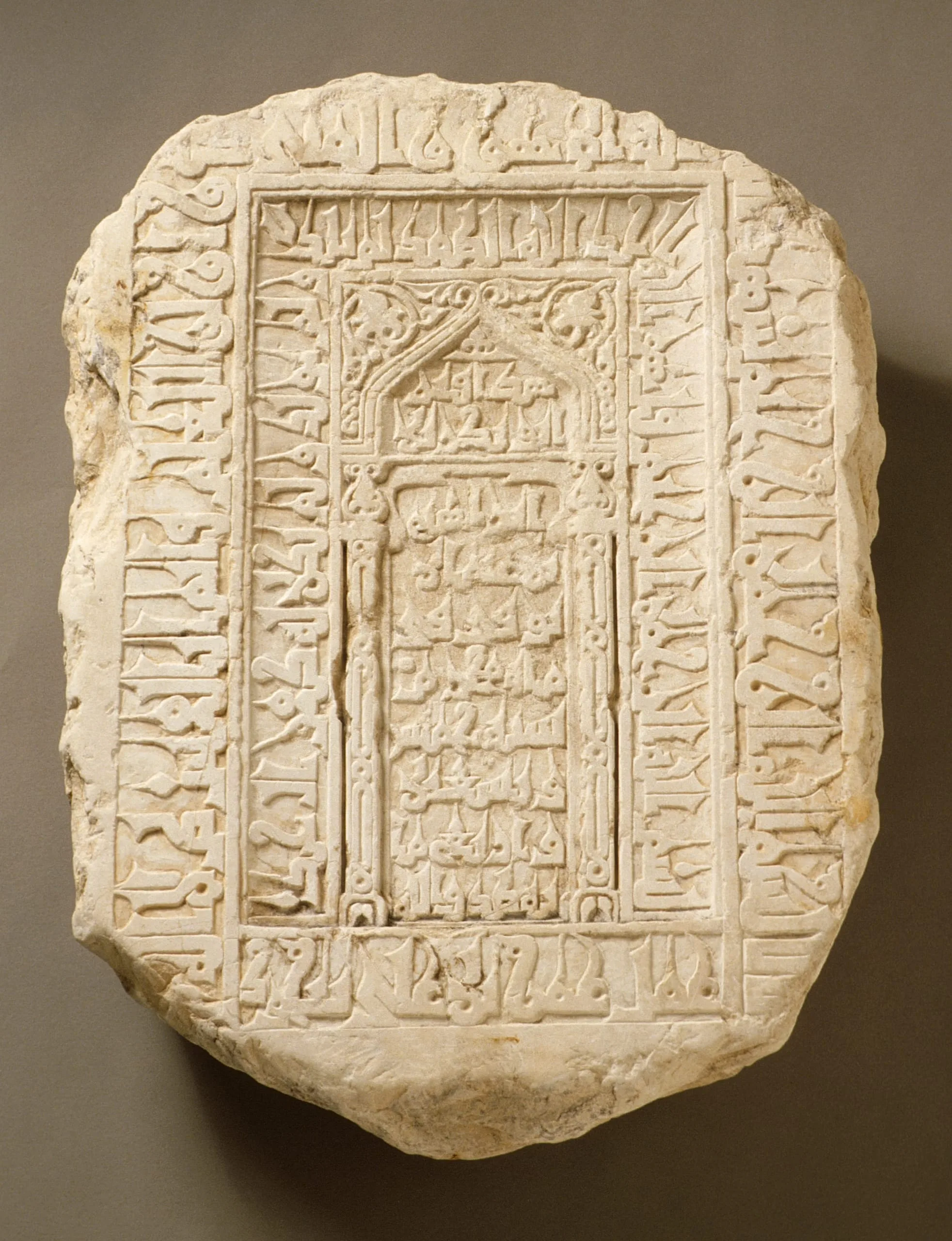
- Tombstone
- Date Made
- 1101/495 A.H.
- Medium
- Marble, carved
- Dimensions
- Height: 18 3/4 in. (47.63 cm)
- Accession Number
- M.71.73.34
- Curatorial Notes
The inscriptions of this twelfth-century Iranian tombstone are executed in a rectilinear form of Arabic script known as Kufic. While similar to the Kufic calligraphy used in early Qur’an manuscripts, here the varying thickness of the "strokes" is more exaggerated, and the letters end in decorative curves, points, and occasionally leaflike forms. The difference between this stylized version of Kufic and the simpler script of early Qur’an manuscripts is analogous to the distinction between the serif and sans serif fonts used in Roman type today.
The bands of inscription on the inner and outer borders are surahs 92 and 3:6 from the Qur′an, respectively. The text in the center reads “this is the tomb of Abu Bakr ibn [son of] Ibrahim ibn Uthman who died in the month of Muharram of the year 495, God [the almighty and His noble messenger] spoke the truth.” Below this the text reads “Work of Umar ibn Ali…."
- Selected Bibliography
- Berg, Phil. Man Came This Way: Objects from the Phil Berg Collection. Los Angeles: Los Angeles County Museum of Art, 1971.
Lo Terrenal y lo Divino: Arte Islámico siglos VII al XIX Colección del Museo de Arte del Condado de Los Ángeles. Santiago: Centro Cultural La Moneda, 2015.
Pal, Pratapaditya, Thomas W. Lentz, Sheila R. Canby, Edwin Binney, 3rd, Walter B. Denny, and Stephen Markel. "Arts from Islamic Cultures: Los Angeles County Museum of Art." Arts of Asia 17, no. 6 (November/December 1987): 73-130.