LACMA

ShopMembershipMyLACMATickets
LACMA
Los Angeles County Museum of Art
5905 Wilshire Blvd.
Los Angeles, CA 90036
info@lacma.org
(323) 857-6000
Sign up to receive emails
Subscribe
© Museum Associates 2025

Museum Hours

Monday

11 am–6 pm

Tuesday

11 am–6 pm

Wednesday

Closed

Thursday

11 am–6 pm

Friday

11 am–8 pm

Saturday

10 am–7 pm

Sunday

10 am–7 pm


  • About LACMA
  • Jobs
  • Building LACMA
  • Host An Event
  • Unframed
  • Press
  • FAQs
  • Log in to MyLACMA
  • Privacy Policy
© Museum Associates 2025
Collections

Unknown
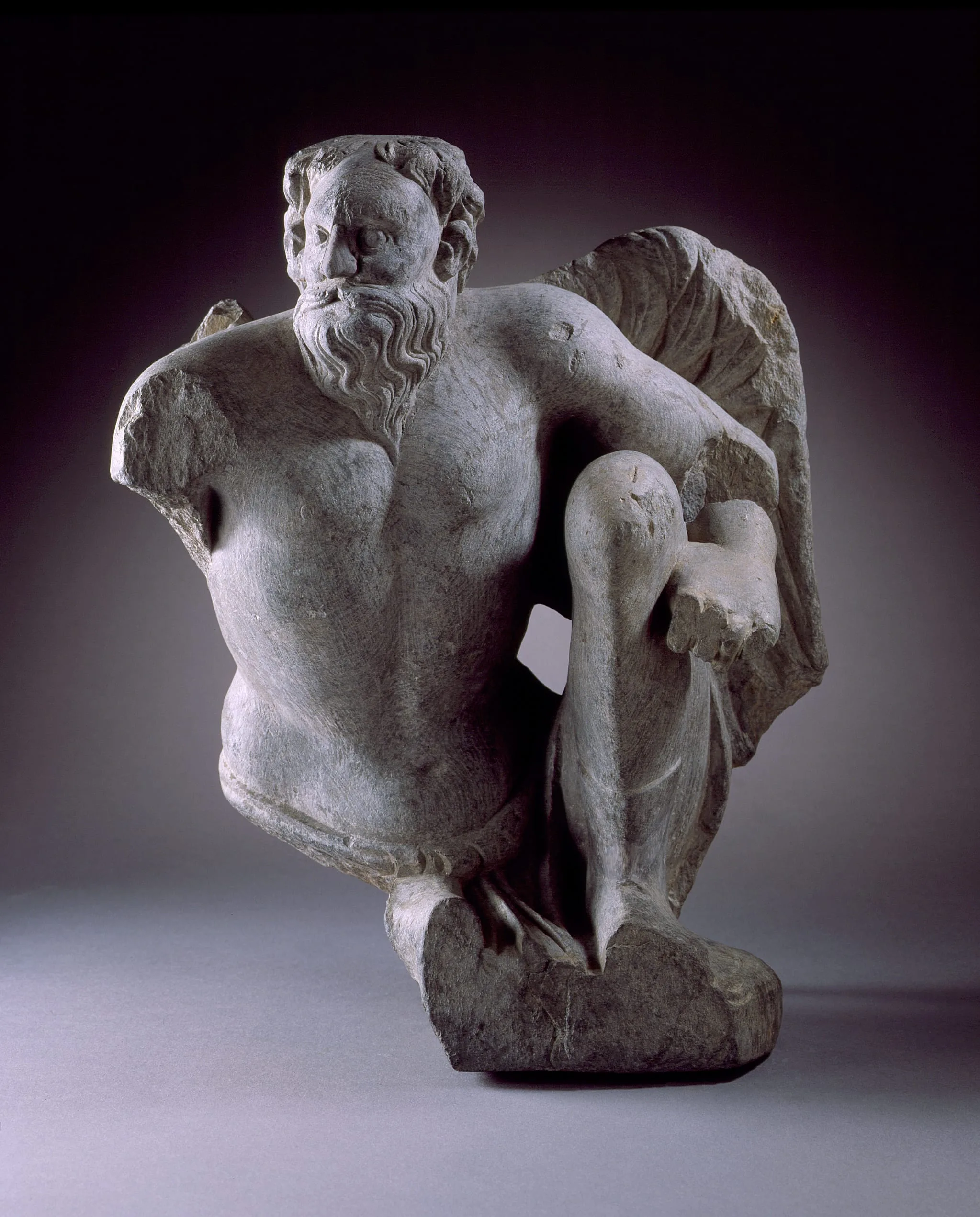
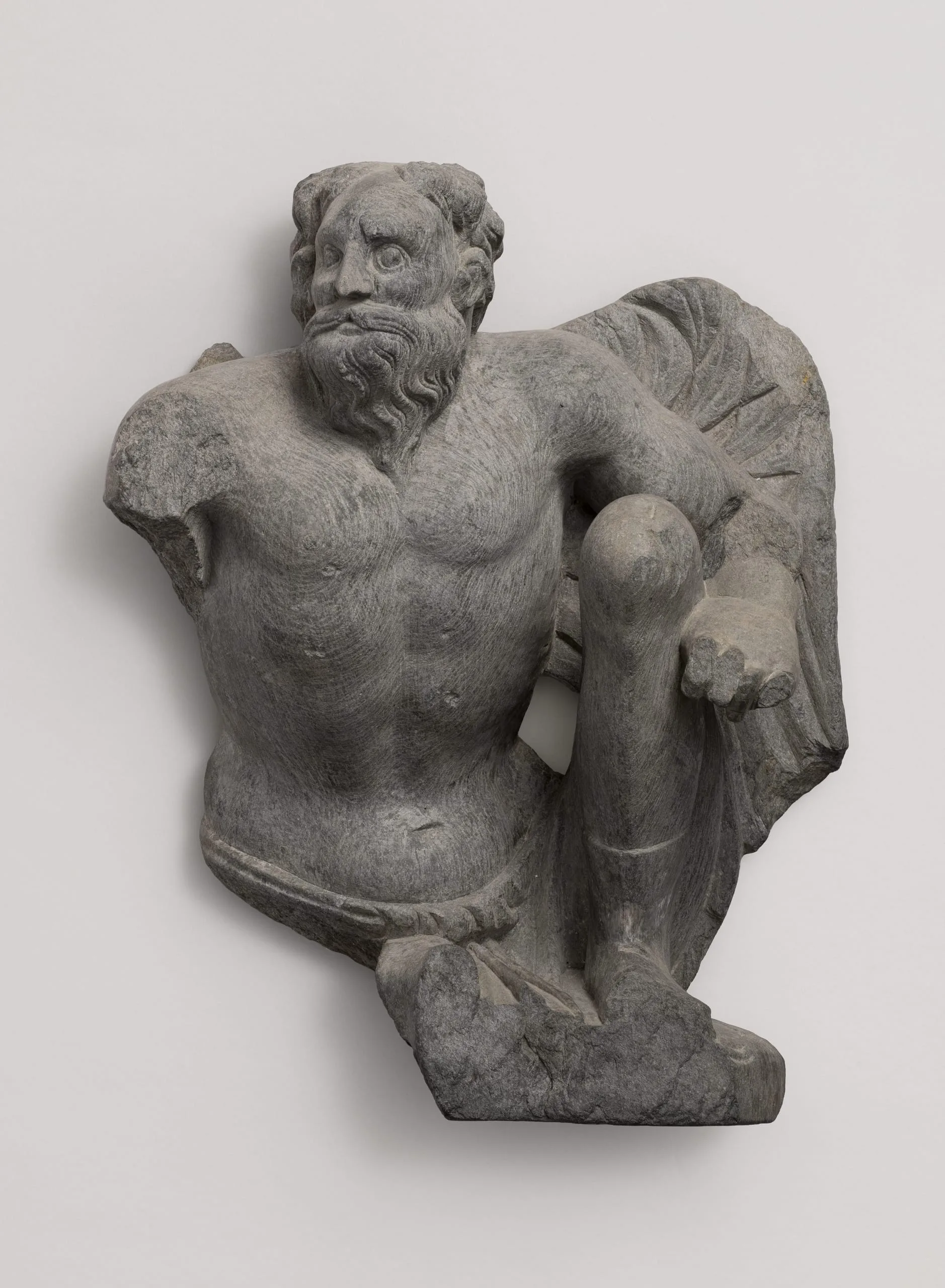
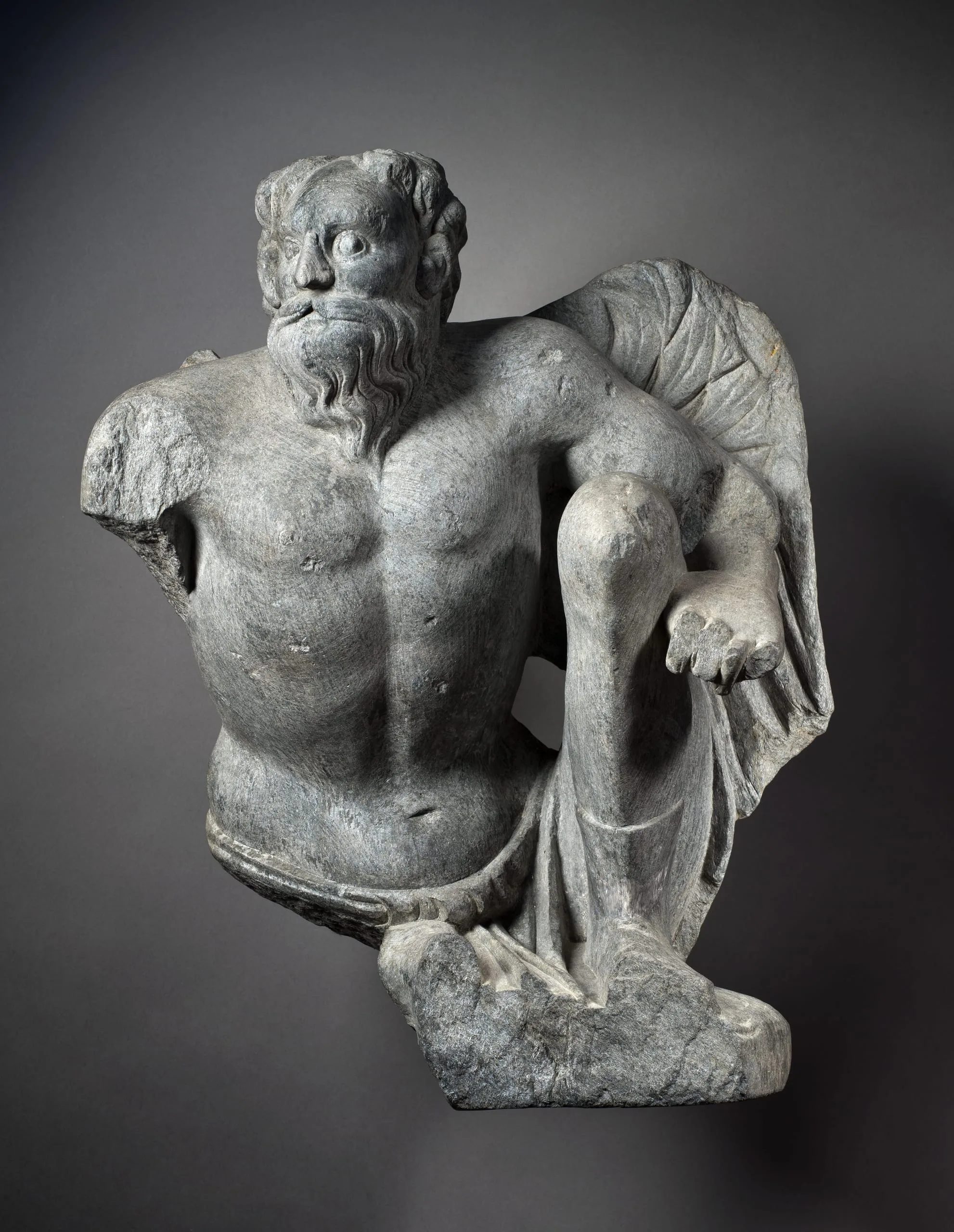
Atlas2nd-3rd century

Not on view
Gray stone sculpture of a muscular, bearded male figure, torso twisted, one arm raised gripping a cylindrical object, with a large fan-like form behind him; legs broken away
Marble sculpture of a muscular bearded male torso, fragmentary, with curly hair and intense facial expression, drapery flowing over one shoulder, leaning forward dynamically on a rocky base; weathered gray surface with visible age pitting.
Marble sculpture of a bearded male figure, semi-recumbent with one knee raised, torso twisted forward; arms broken at the shoulders, with drapery carved behind; rough-hewn base.
Artist or Maker
Unknown
Title
Atlas
Place Made
Pakistan, Gandhara region
Date Made
2nd-3rd century
Medium
Gray schist
Dimensions
15 3/8 x 12 x 5 1/4 in. (39.05 x 30.48 x 13.33 cm)
Credit Line
The Phil Berg Collection
Accession Number
M.71.73.136
Classification
Sculpture
Collecting Area
South and Southeast Asian Art
Curatorial Notes

This winged Atlas and myriad analogous representations in stone and stucco originally served as atlantes figures encircling the bases of Buddhist stupas (funerary monuments) in ancient Gandhara (an important nexus of the Silk Routes and the transmission of Buddhism in present-day northwestern Pakistan and northeastern Afghanistan). Conceptually based on Classical Western atlantid architectural support figures, but portrayed as a winged version of the muscular Greek titan Atlas who supported the celestial spheres on his shoulders for eternity, Gandharan Atlas figures were fashioned seated with varying leg and arm positions. Here, Atlas sits with his left knee and leg upright and his now-missing right knee and leg probably originally lying flat on the ground. His left arm extends horizontally so that the overturned hand is adjacent to the knee. His now-lost right arm may have originally been extended straight or slightly crooked with the right hand resting on or beside the knee. Some renditions have one or two arms upraised in a supporting pose. Atlas figures can have exposed genitalia or be covered by lower garments or sashes. The mustachioed and bearded head is generally slightly cocked to one side, as here, or is sometimes staring straight ahead if the body is in a symmetrical frontal posture.

Comparable Gandharan Atlas figures are in the British Museum, London (1880.178, .181, and .183), Cleveland Museum of Art (24.330 and 2011.136), Norton Simon Museum of Art, Pasadena (F.1975.17.17.S), and Victoria and Albert Museum, London (IM.123-1918 and IS.55-1948).
Selected Bibliography
  • Berg, Phil. Man Came This Way: Objects from the Phil Berg Collection. Los Angeles: Los Angeles County Museum of Art, 1971.