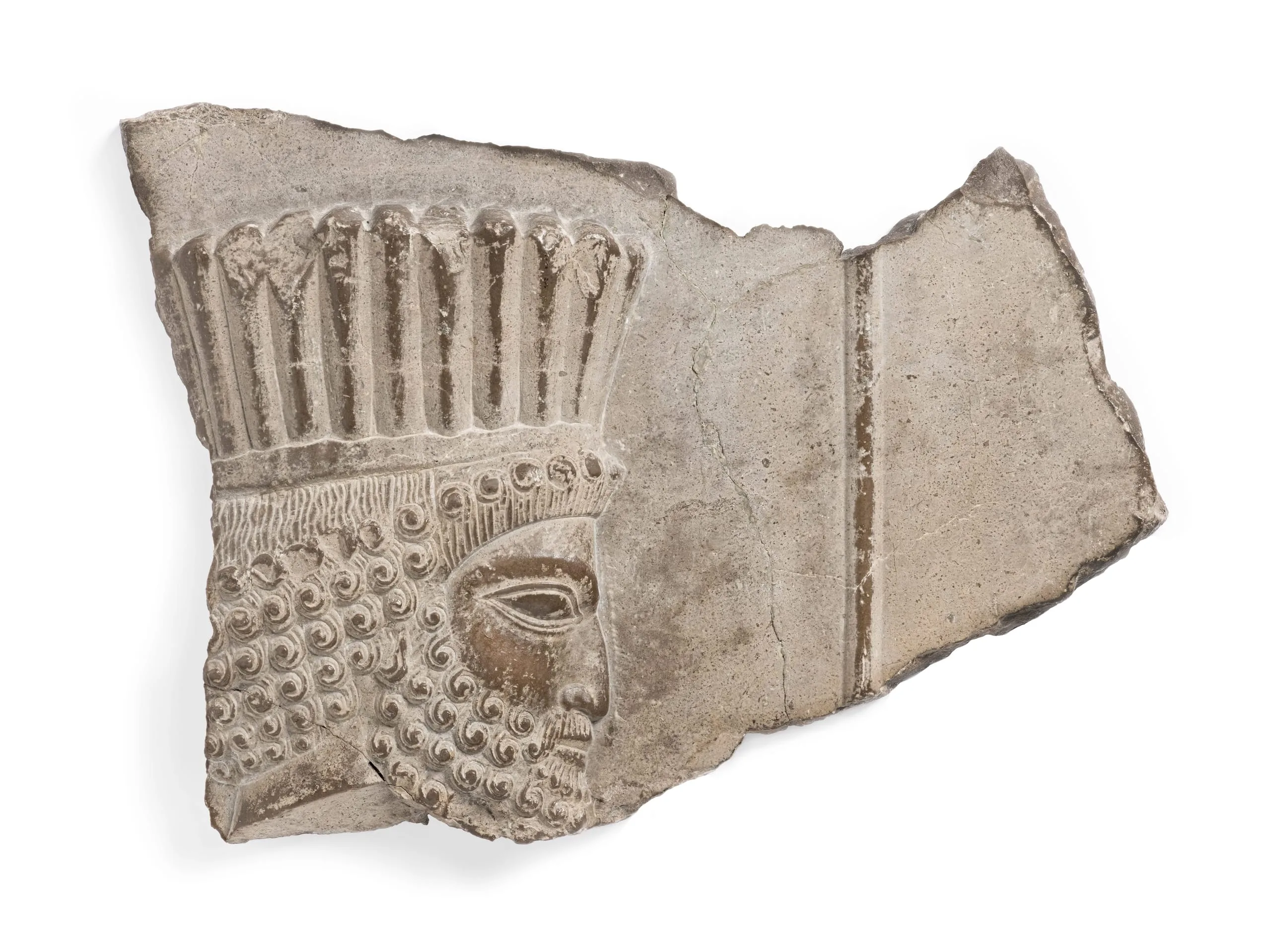
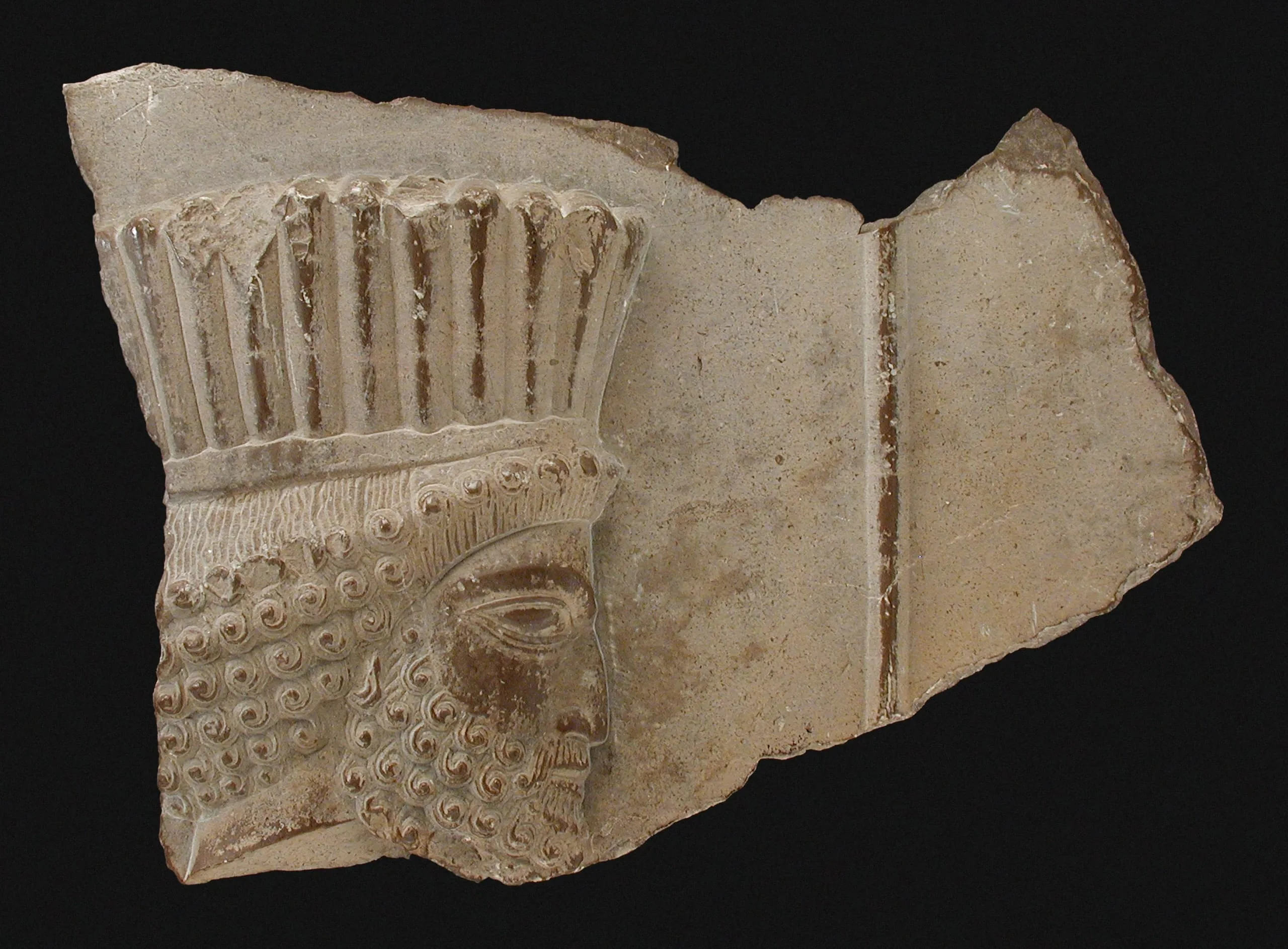
The magnificent palaces of the Persian capital of Persepolis were built around 518 BCE by Darius I (or Darius the Great, r. 521–486 BCE). Work on the site continued for more than sixty years, resulting in the construction of a large number of buildings. These structures, built on raised platforms, were scaled via monumental staircases decorated with friezes of glazed bricks or polychrome bas-reliefs. The Persepolis palaces contain the best-known examples of stone relief decoration from the Achaemenid Empire. The Apadana, the king's main audience hall, had double staircases with an elaborate series of reliefs that were mirror images of each other. Delegations from all over the empire, including Median and Persian noblemen, guards, and attendants, are represented on the reliefs bringing presents and tribute.
This fragment comes from one of the panels decorating the staircases of either the Apadana or the Central Hall, and it represents a Persian guard holding his spear.