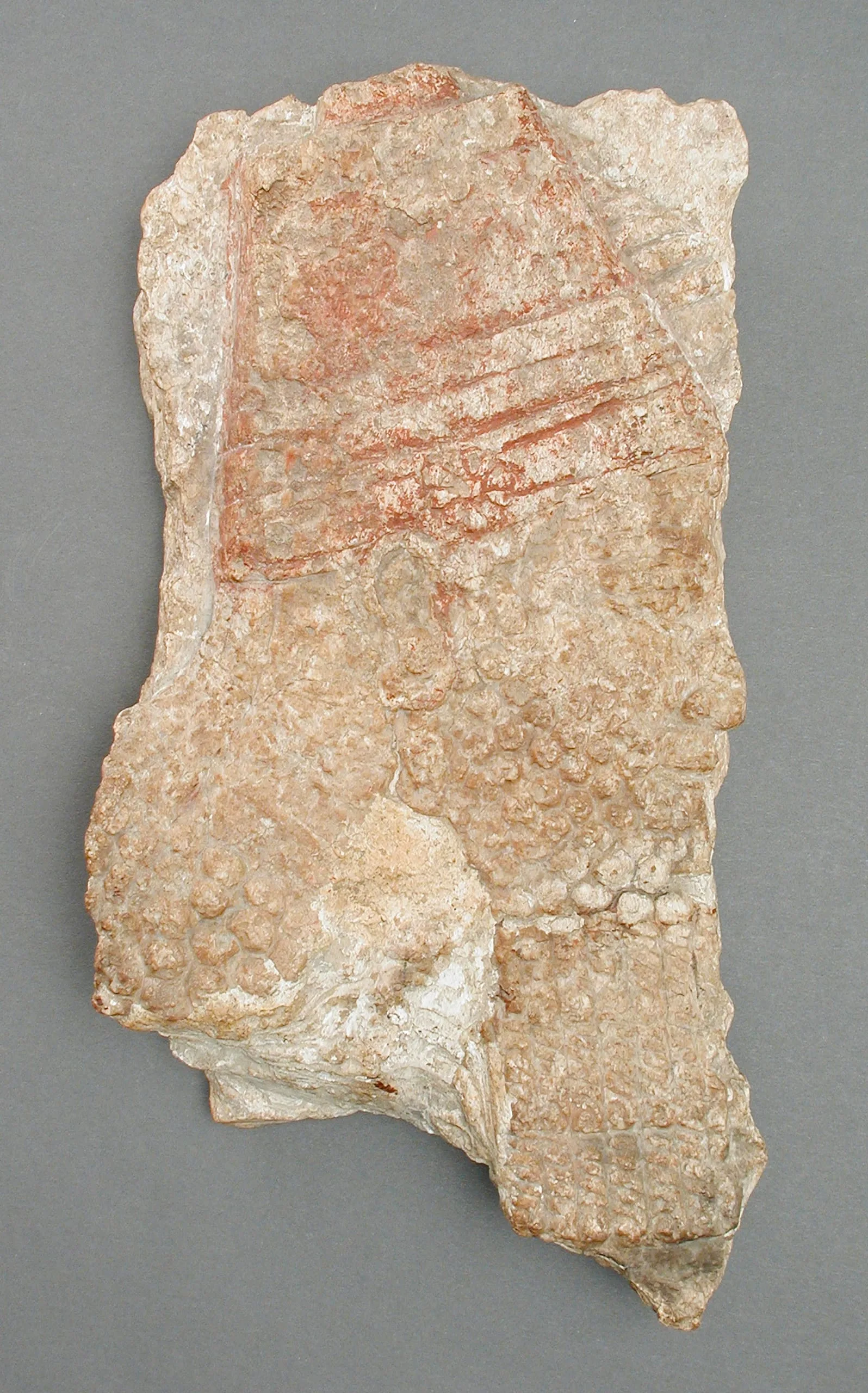
Khorsabad (ancient Dur-Sharrukin, or the City of Sargon) was founded around 710 BC by Sargon II (reigned 722-705 BC) and, like Nimrud, was an important Assyrian city. The site was excavated by French archaeologist Paul-Emile Botta between 1844 and 1846. Although the Louvre has the finest collection of Khorsabad materials, a number of sculptures from that site can be found in collections in England and North America. LACMA's fragment, probably from a large relief, depicts the head of an Assyrian sovereign, likely Sargon himself; it still displays exceptional traces of the pigments that once covered all Assyrian reliefs.