LACMA

ShopMembershipMyLACMATickets
LACMA
Los Angeles County Museum of Art
5905 Wilshire Blvd.
Los Angeles, CA 90036
info@lacma.org
(323) 857-6000
Sign up to receive emails
Subscribe
© Museum Associates 2025

Museum Hours

Monday

11 am–6 pm

Tuesday

11 am–6 pm

Wednesday

Closed

Thursday

11 am–6 pm

Friday

11 am–8 pm

Saturday

10 am–7 pm

Sunday

10 am–7 pm


  • About LACMA
  • Jobs
  • Building LACMA
  • Host An Event
  • Unframed
  • Press
  • FAQs
  • Log in to MyLACMA
  • Privacy Policy
© Museum Associates 2025
Collections

Unknown
Jain Altarpiece with the Jina Parshvanatha flanked by the Jinas Mahavira and Neminatha (?)dated 988

Not on view
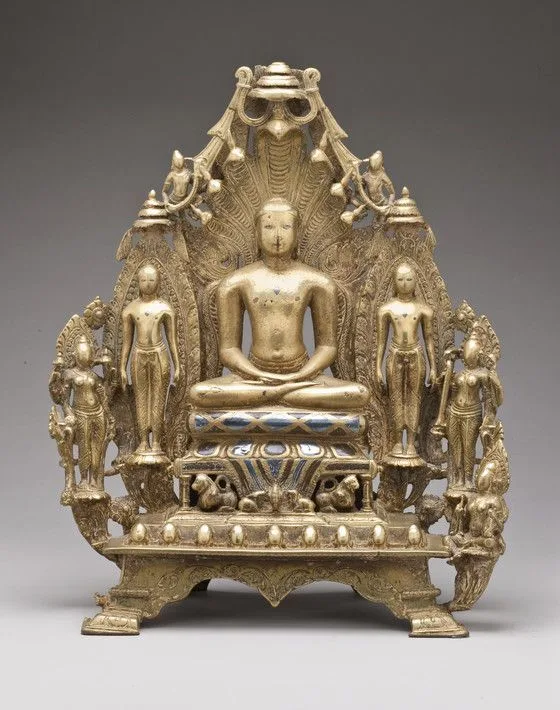
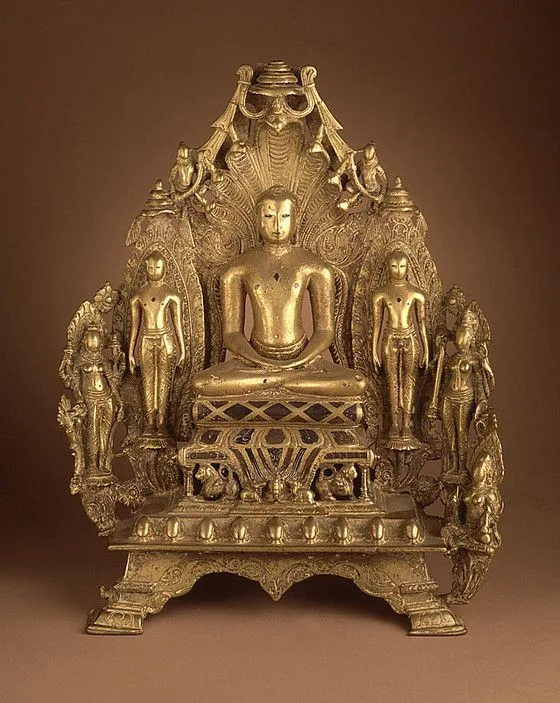
Brass or bronze Jain shrine sculpture with central seated figure in meditation, flanked by standing attendants, backed by a pointed arch halo with radiating carved lines, on an engraved tiered throne with cobalt blue enamel inlay
Unknown, Jain Altarpiece with the Jina Parshvanatha flanked by the Jinas Mahavira and Neminatha (?)
Artist or Maker
Unknown
Title
Jain Altarpiece with the Jina Parshvanatha flanked by the Jinas Mahavira and Neminatha (?)
Place Made
India, Gujarat, Bharuch
Date Made
dated 988
Medium
Brass inlaid with copper and silver
Dimensions
14 1/2 x 11 1/2 x 5 1/4 in. (36.83 x 29.21 x 13.335 cm)
Credit Line
Gift of Mr. and Mrs. J. J. Klejman of New York
Accession Number
M.71.26.38
Classification
Sculpture
Collecting Area
South and Southeast Asian Art
Curatorial Notes

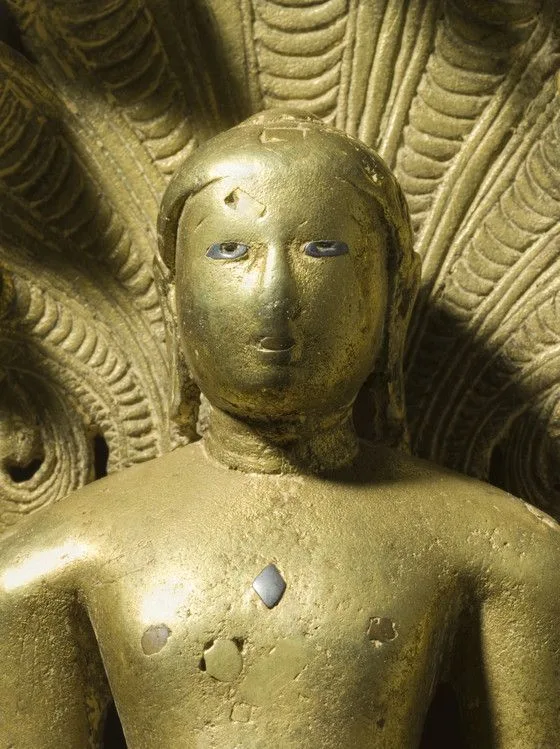
This sumptuous Jain altarpiece features the Jina Parshvanatha seated on a lion throne. He is flanked by the Jinas Mahavira and Neminatha (?). The Jinas are clothed, indicating that this image triad (tritirthika) was made for a member of the Svetambara (‘white-clad’) Jain order. Parshvanatha was the 23rd Jain savior. He was born in Varanasi, Uttar Pradesh in the 9th or 8th century BCE. Along the edges are two of the sixteen Goddesses of Knowledge (Vidyadevis). On Parshvanatha’s right is Chakreshvari who holds two lotuses and a wheel (chakra). On his left is Vairotya (or Vairoti) who holds two snakes, a sword, and a shield. Seated beneath her is the goddess Ambika holding a child and a bunch of mangoes. The missing figure on the opposite side would have likely been the demigod (yaksha) Sarvanubhuti or Dharanendra. Directly beneath Parshvanatha is a wheel flanked by a pair of deer, which was originally a Buddhist symbol borrowed by the Jains to indicate an enlightened teacher. The nine heads along the front of the platform represent the nine planetary deities (nava graha).

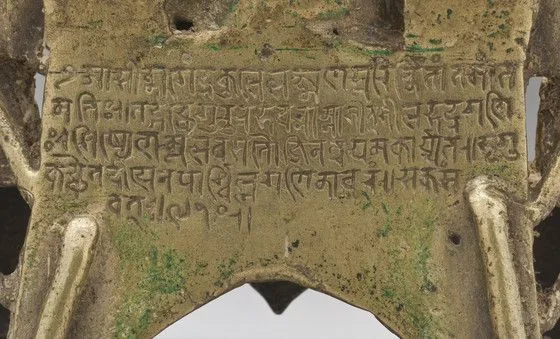
A devanagari dedicatory inscription inscribed on the reverse of the base states that the altarpiece was commissioned by the Jain pupil Parshvillagani, a disciple of the Jain pontiff Shilabhadraqgani, in the Mulavasati shrine in Bhrigukachchha (modern Bharuch [formerly Broach]) in 988 CE (Shaka era 910).
Selected Bibliography
  • El Universo de la India: Obras Maestras del Museo de Arte del Condado de Los Angeles. Santiago: Centro Cultural Palacio La Moneda, 2012.

  • Cort, John E. "God's Eyes: The Manufacture, Installation, and Experience of External Eyes on Jain Icons." in Sacred Matters: Material Religion in South Asian Traditions, edited by Tracy Pintchman and Corinne G. Dempsey, 39-66. Albany: State University of New York Press, 2015.