- Title
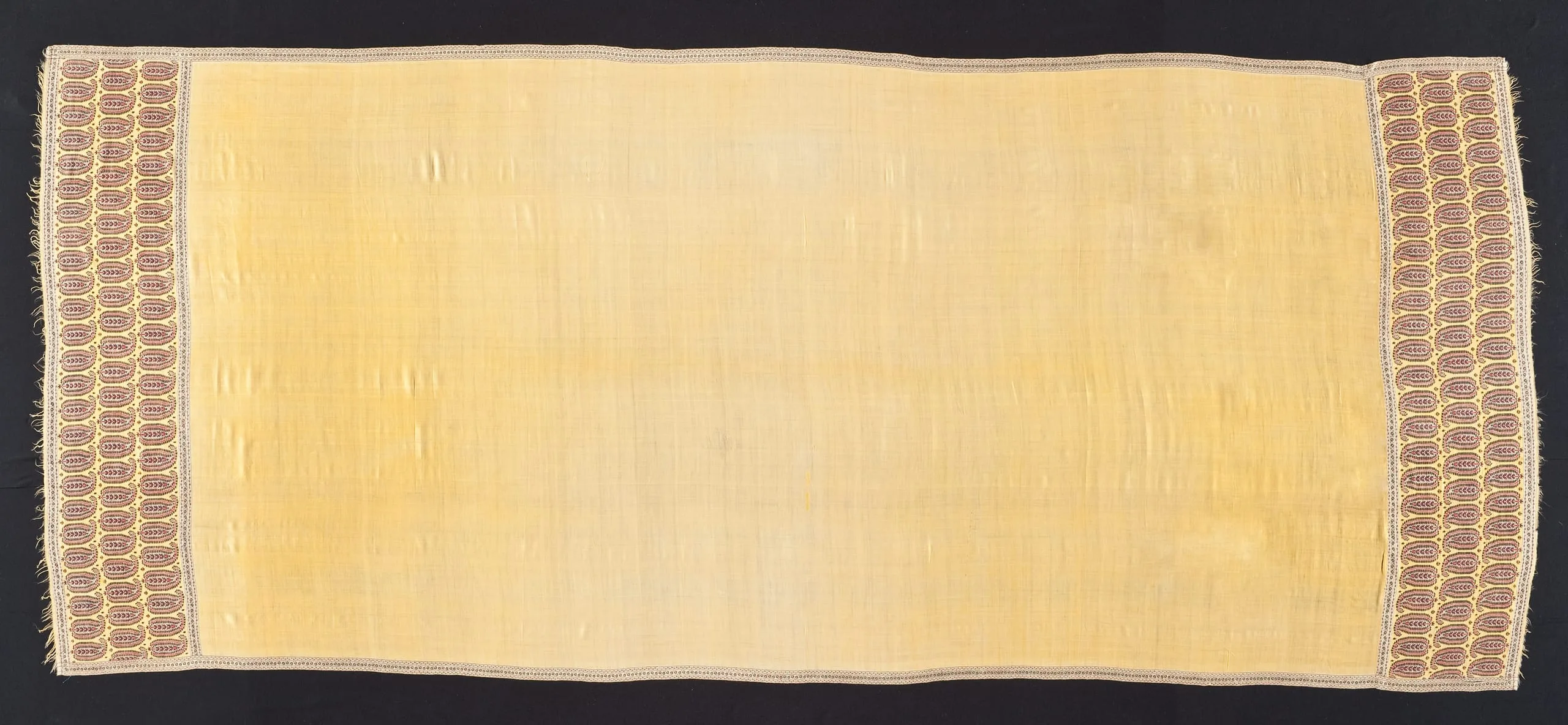
- Woman's Shawl
- Date Made
- circa 1800
- Medium
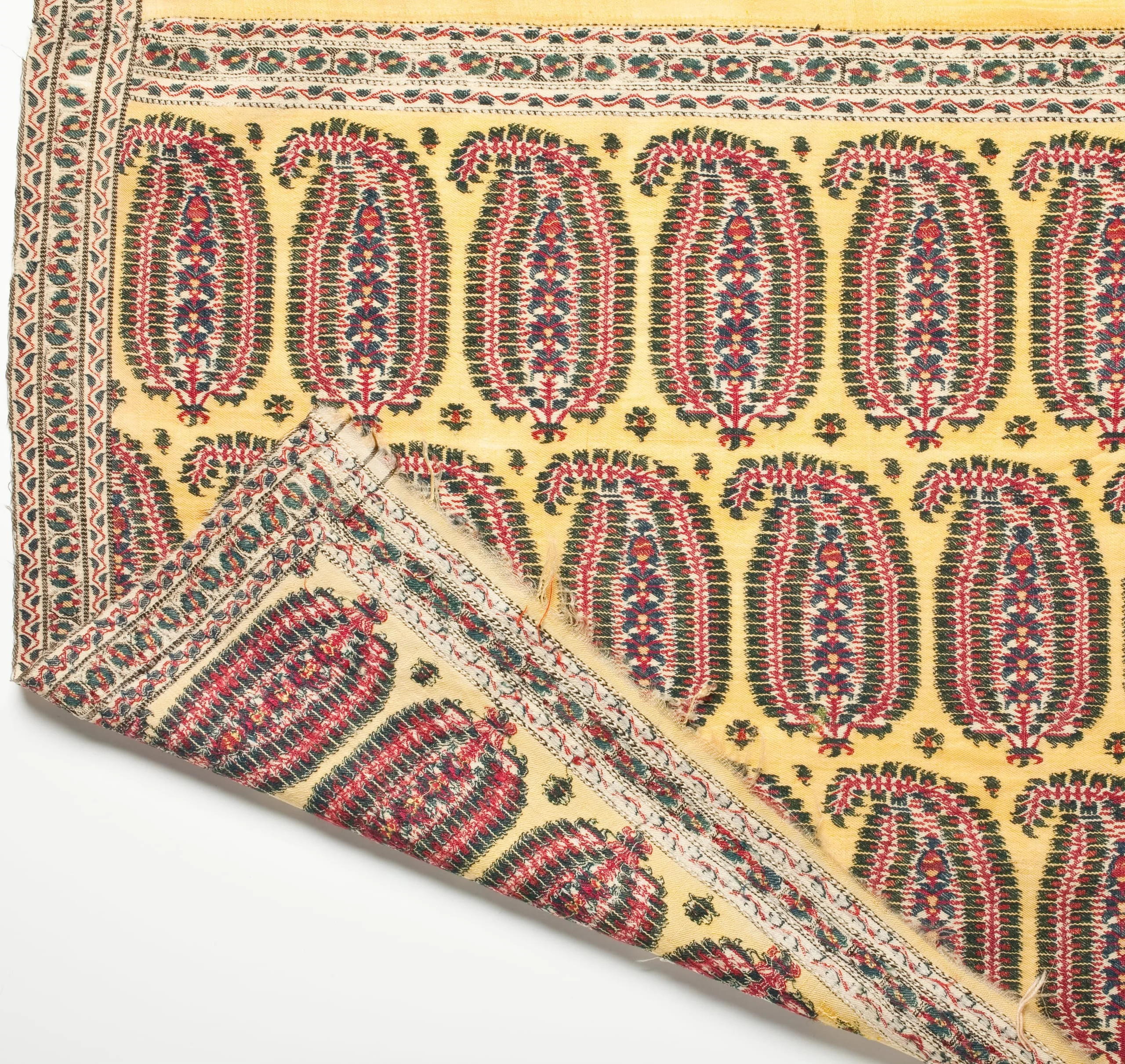
- Goat-fleece underdown (cashmere wool) interlocking twill tapestry weave
- Dimensions
- 126 x 53 in. (320 x 134.6 cm)
- Accession Number
- M.71.1.39
- Curatorial Notes
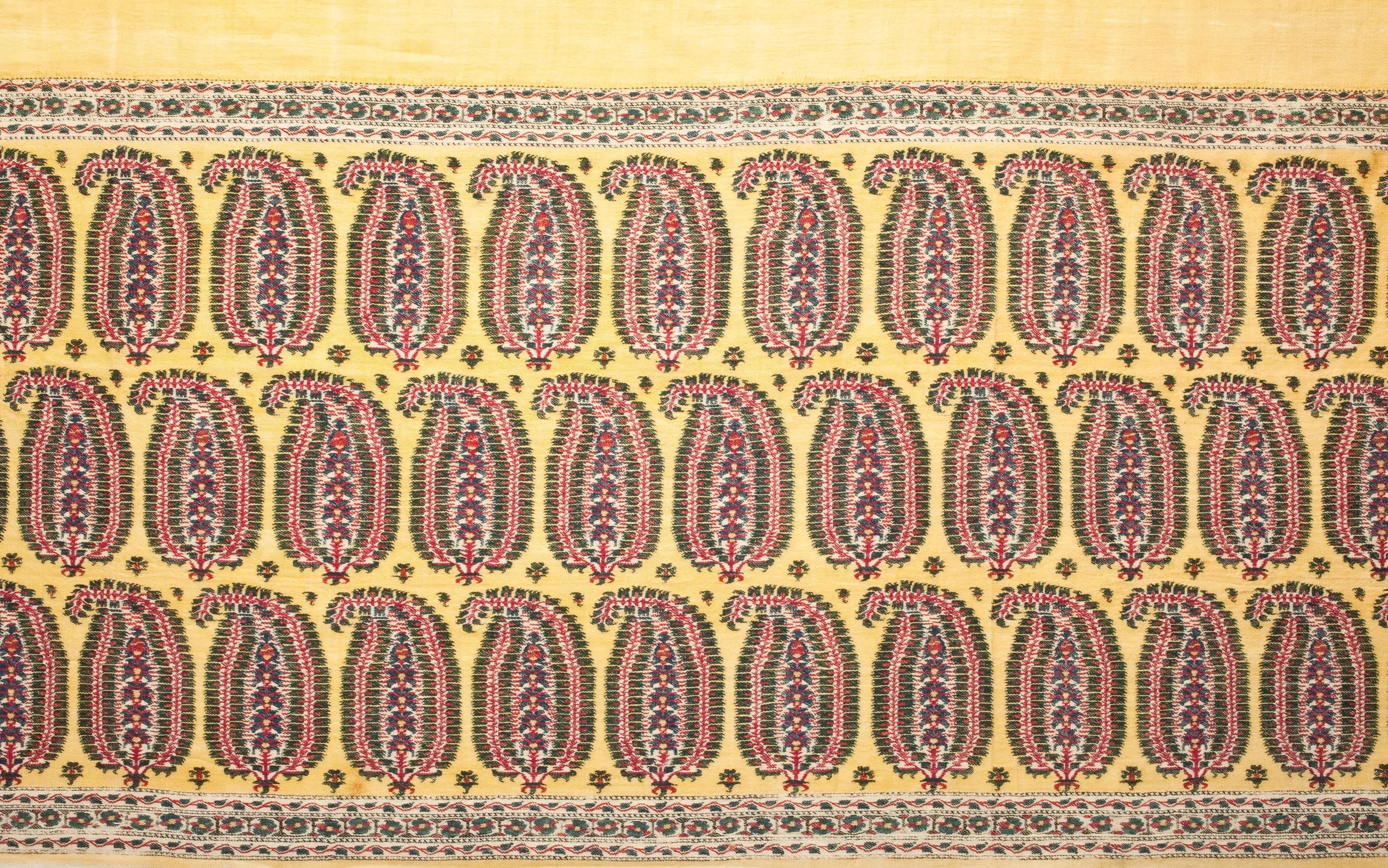
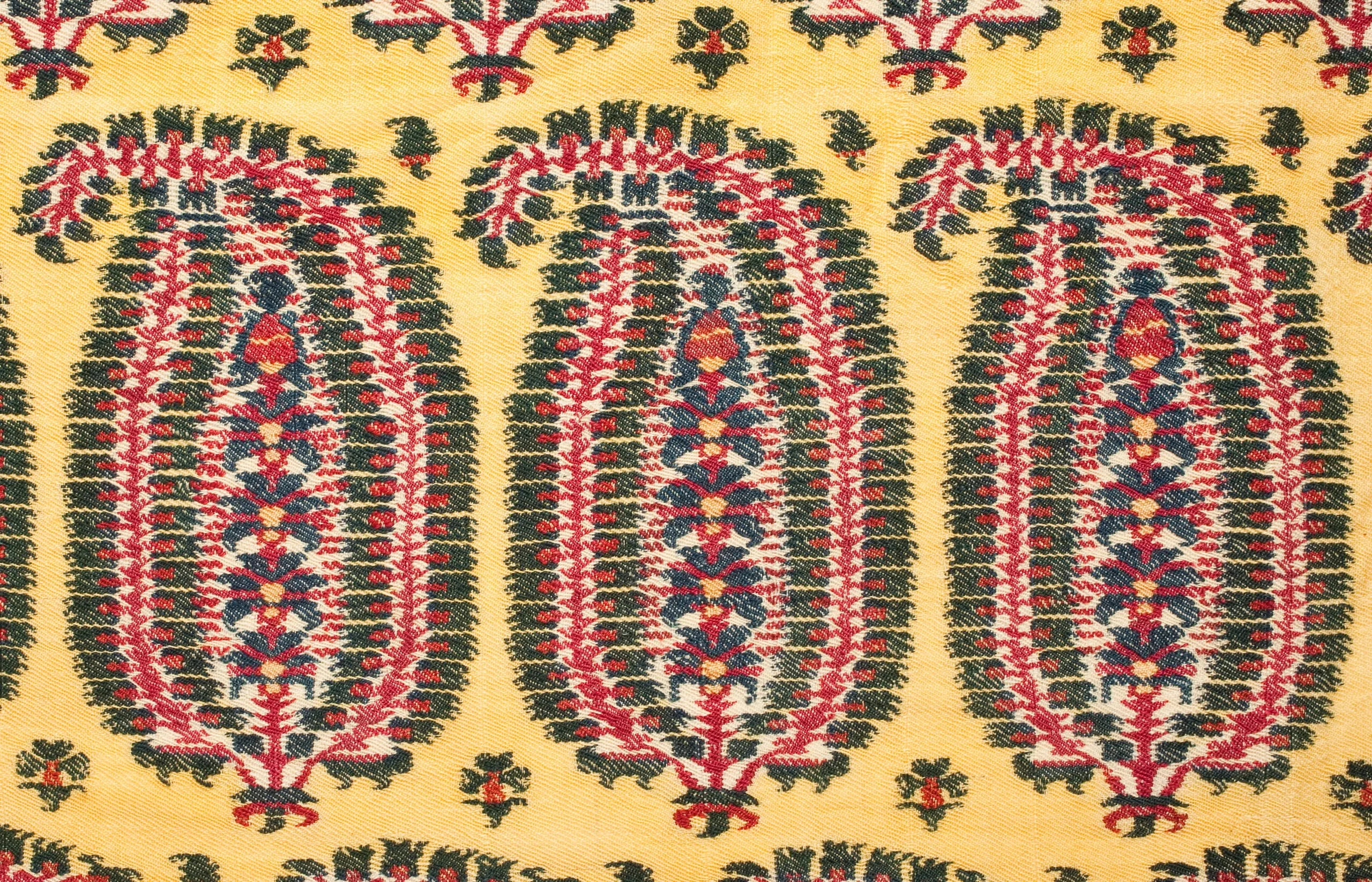
Long shawls produced in Kashmir, India, of the finest goat-fleece underdown became fashionable accessories worn with the diaphanous Neoclassical dresses of the late eighteenth and early nineteenth centuries. Woven in twill, these shawls often had decorative borders of stylized flowers or shrubs with bending tips (buta). Twill is a weave structure in which one set of warps and wefts passes over two or more elements and under one or more elements of the opposing set to form floats in a diagonal alignment.
- Selected Bibliography
- Rosenfield, John. The Arts of India and Nepal: The Nasli and Alice Heeramaneck Collection. Boston: Museum of Fine Arts, Boston, 1966.
- Takeda, Sharon Sadako and Kaye Durland Spilker. Fashioning Fashion: Deux Siècles de Mode Européenne, 1700-1915. Paris: Arts Décoratifs; Los Angeles: Los Angeles County Museum of Art; Munich; New York: Delmonico Books-Prestel, 2013.
- Takeda, Sharon Sadako and Kaye Durland Spilker. Fashioning Fashion: European Dress in Detail, 1700-1915. Los Angeles: Los Angeles County Museum of Art; Munich; New York: Delmonico Books/Prestel, 2010.
- Takeda, Sharon Sadako and Kaye Durland Spilker. Fashioning Fashion: Europäische Moden, 1700-1915. Los Angeles: Los Angeles County Museum of Art; Munich; New York: Prestel, 2012.
- Örmen, Catherine. L'Art de la Mode. Paris: Citadelles & Mazenod, 2015.