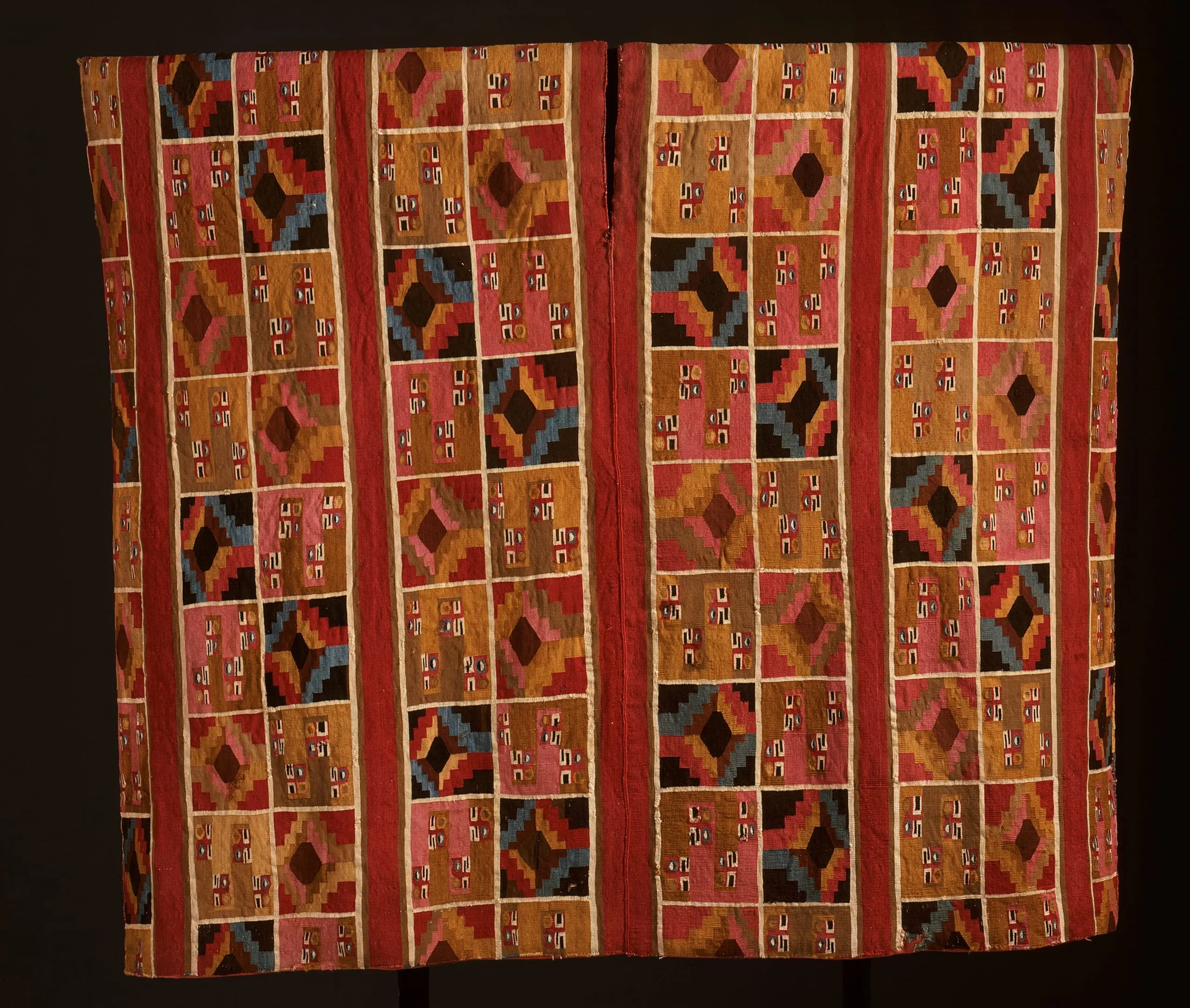
Peru possesses two dramatically different geographies: the eastern side, which slopes down to the Amazon jungle; and the western side, with its crags of the Andes, barren highlands, and windswept coastal deserts. Color played a compelling role in the clothing worn in this austere landscape, so that virtuosity in weaving was complemented by masterful developments in the dyer’s art.
Indigo, a dye that gradually appears blue only after a lengthy and complex process of fermentation and oxidation, was used not only as a color for depth and contrast but also for its value as a sign of prestige. The intense red of this tunic comes from a dye made of the dried and pulverized bodies of the cochineal beetle, a parasite of the prickly pear cactus. These insects were cultivated in vast numbers to meet the demand for large quantities of this brilliant and permanent red—a hue that still retains its vibrancy well after a thousand years.
Nicole LaBouff via Kaye Spilker
2009