LACMA

ShopMembershipMyLACMATickets
LACMA
Los Angeles County Museum of Art
5905 Wilshire Blvd.
Los Angeles, CA 90036
info@lacma.org
(323) 857-6000
Sign up to receive emails
Subscribe
© Museum Associates 2025

Museum Hours

Monday

11 am–6 pm

Tuesday

11 am–6 pm

Wednesday

Closed

Thursday

11 am–6 pm

Friday

11 am–8 pm

Saturday

10 am–7 pm

Sunday

10 am–7 pm


  • About LACMA
  • Jobs
  • Building LACMA
  • Host An Event
  • Unframed
  • Press
  • FAQs
  • Log in to MyLACMA
  • Privacy Policy
© Museum Associates 2025
Collections

Unidentified artist
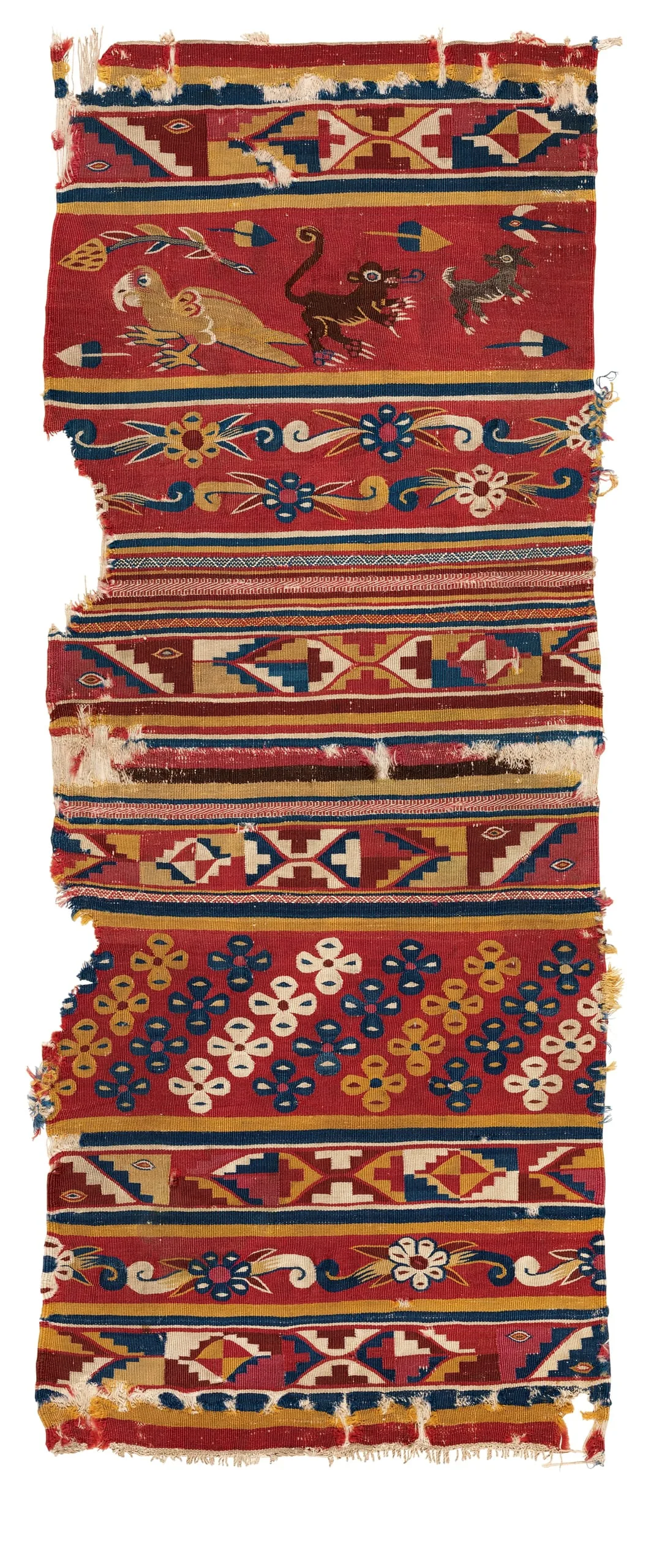
Coca Bag (Ch’uspa) Fragment with Birds, Animals, and Floral and Geometric Patterns (Fragmento de bolsa de coca [ch’uspa] con motivos animales, florales y geométricos)late 16th-early 17th century

Not on view
Flat-weave textile fragment with horizontal bands featuring stylized animals, scrolling vines, geometric diamonds, and rosette flowers in crimson, navy, gold, and ivory
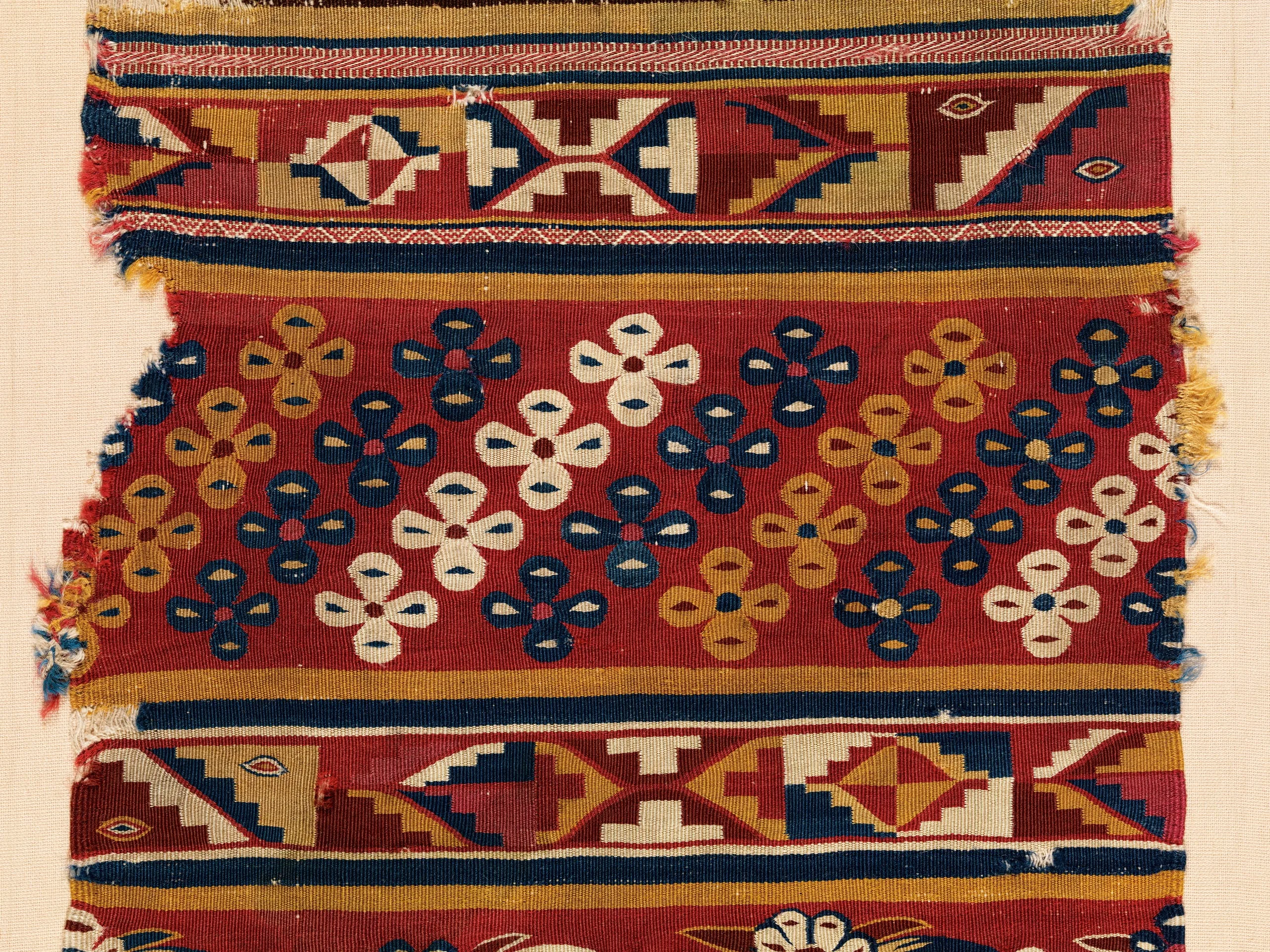
Kilim textile fragment with flat-woven bands in red, navy, ivory, and gold; a wide central field filled with rosette motifs alternates with geometric border bands featuring hourglass and stepped diamond forms; fringe visible on left edge.
Artist or Maker
Unidentified artist
Title
Coca Bag (Ch’uspa) Fragment with Birds, Animals, and Floral and Geometric Patterns (Fragmento de bolsa de coca [ch’uspa] con motivos animales, florales y geométricos)
Place Made
Peru
Date Made
late 16th-early 17th century
Medium
Cotton and camelid-fiber tapestry weave
Dimensions
35 1/8 × 14 3/8 in. (89.2 × 36.5 cm)
Credit Line
Los Angeles County Fund
Accession Number
70.3.2
Classification
Costumes
Collecting Area
Costume and Textiles
Curatorial Notes

This high-style colonial bag would have been folded in the center and sewn on the sides. Such bags were used to hold coca leaves, which were consumed to relieve symptoms caused by the high altitude of the Andes and offered in ceremonial contexts. Bags were also a frequent accessory of Inca coyas (queens). The exuberant design of this example—with tocapu (geometric motifs associated with the elite), animals, leaves, and feathers—suggests that it belonged to a noble Inca woman.


From exhibition Archive of the World, 2022 (for more information see the catalogue entry by Elena Phipps in the accompanying publication, cat. no. 31, pp. 167–69)

Provenance
Private collection, Huancavelica, Peru, 1969; Arts of the Four Quarters Ltd., New York, 1970; LACMA, 1970.
Selected Bibliography
  • Katzew, Ilona, ed. Archive of the World: Art and Imagination in Spanish America, 1500–1800: Highlights from LACMA’s Collection. Exh. Cat. Los Angeles: Los Angeles County Museum of Art; New York: DelMonico Books/D.A.P., 2022.
Selected Exhibition History
  • Contested Visions in the Spanish Colonial World. November 6, 2011 - January 29, 2012
  • Contested Visions in the Spanish Colonial World. November 6, 2011 - January 29, 2012
  • Archive of the World: Art and Imagination in Spanish America, 1500–1800. June 12, 2022 - October 30, 2022
  • Archive of the World: Art and Imagination in Spanish America, 1500–1800. June 12, 2022 - October 30, 2022
  • Archive of the World: Art and Imagination in Spanish America, 1500–1800. October 20, 2023 - January 28, 2024
  • Archive of the World: Art and Imagination in Spanish America, 1500–1800. October 20, 2023 - January 28, 2024
  • Archive of the World: Art and Imagination in Spanish America, 1500–1800. June 22, 2024 - September 08, 2024
  • Archive of the World: Art and Imagination in Spanish America, 1500–1800. June 22, 2024 - September 08, 2024