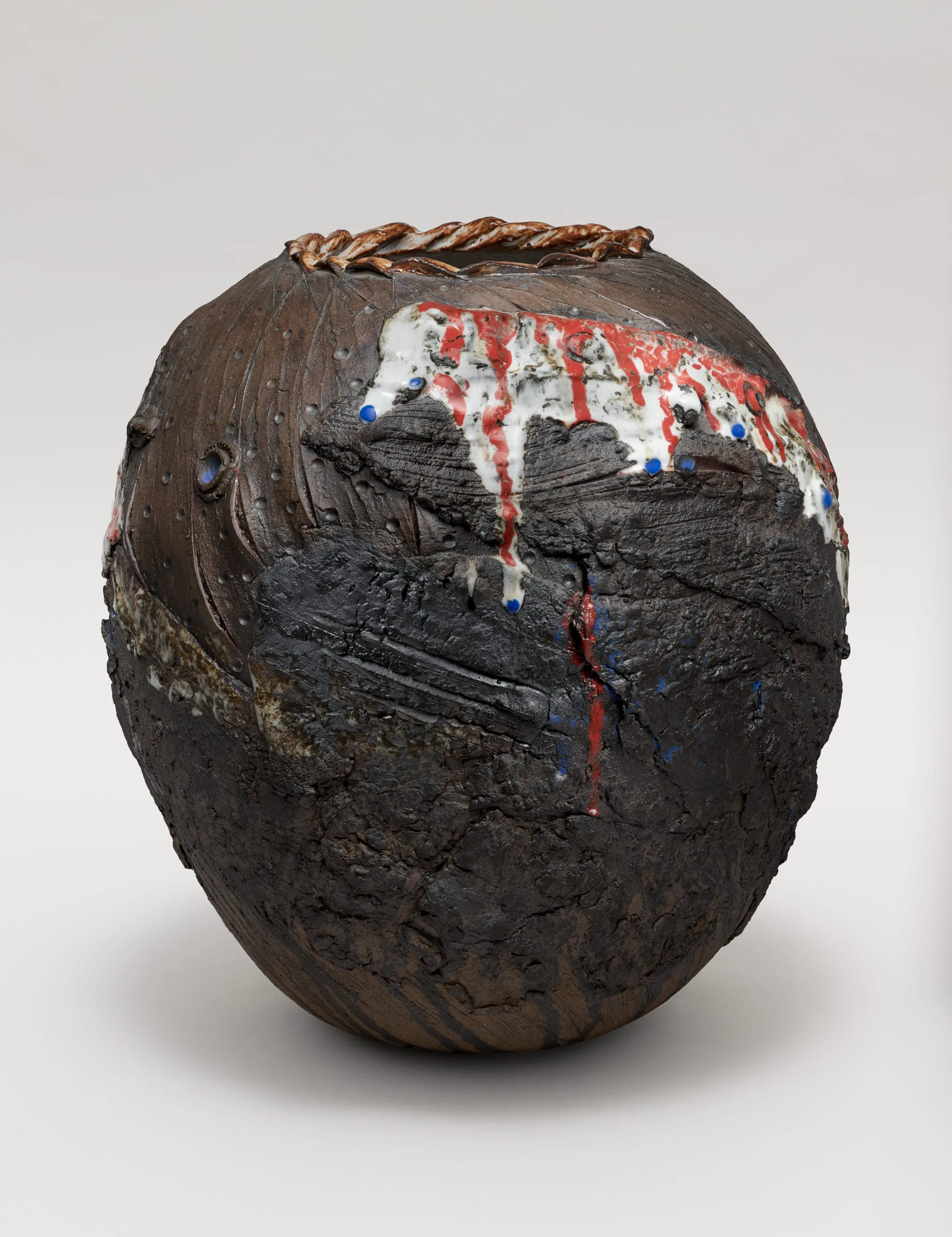
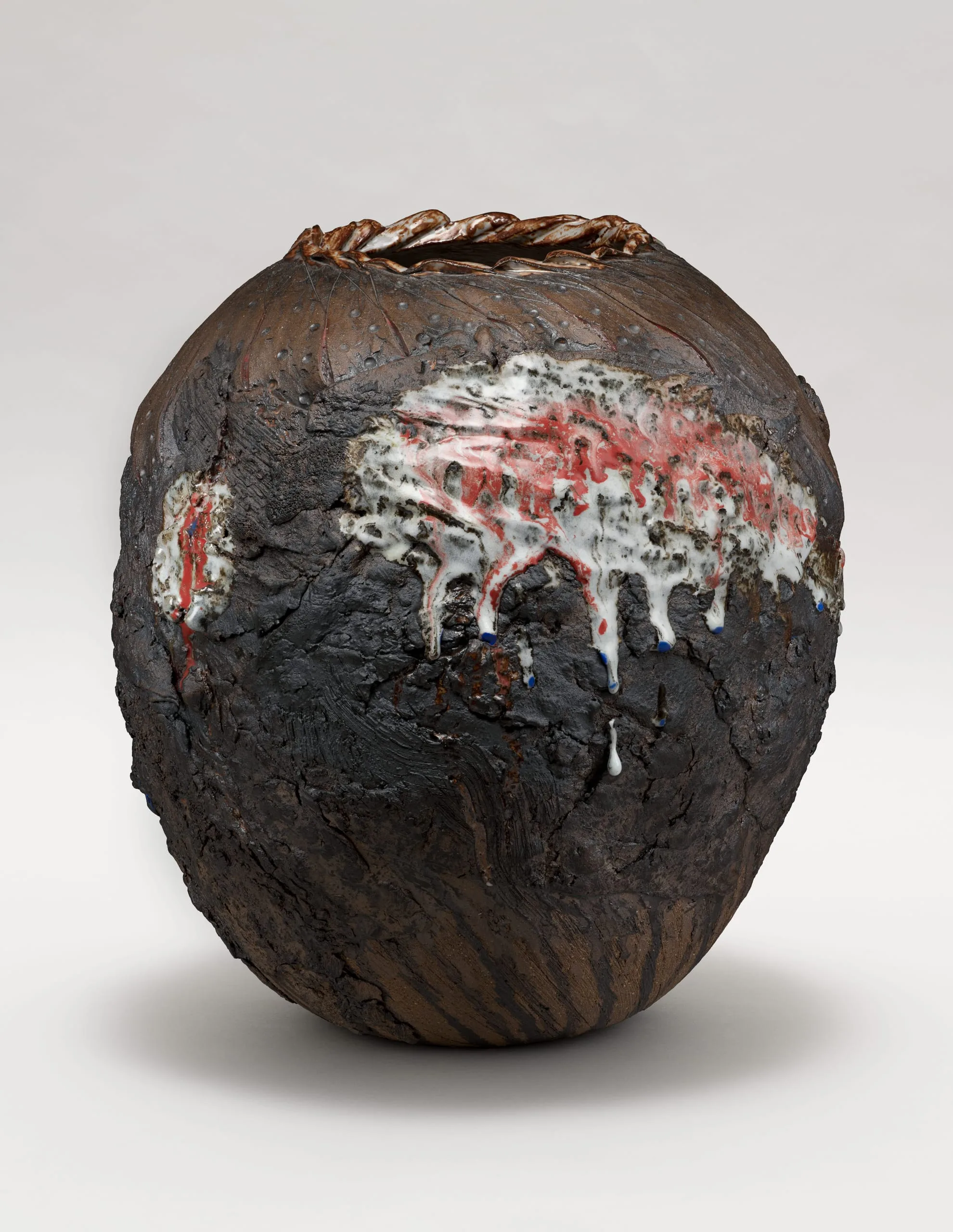
For South African artist Andile Dyalvane, clay is a communicative tool. He uses his chosen material to evoke the sensory and spiritual experiences of his childhood on a farm in the Eastern Cape. He often draws on the forms and textures of African artifacts as a way to honor and preserve historic practices of making. But while deeply rooted in his native culture, he also embraces global pottery lineages, learned through residencies in Denmark, the United States, Taiwan, and elsewhere. Cornish Pasty was made at one such residency, at the Leach Pottery in St. Ives, Cornwall, England. Founded in 1920 by Bernard Leach, considered the father of British Studio pottery, with leading Japanese potter Shо̄ji Hamada, the studio embodied Leach’s vision of life built around making. Deeply immersed in Asian philosophy and aesthetics, Leach combined techniques from Japan, China, and Korea with those from Britain, such as salt-glazing and slipware. This work resonated deeply with Dyalvane, who approaches ceramics as a collaboration between maker, material, and environment.
Cornish Pasty is among the thirty hand-built vessels, bowls, and platters that Dyalvane made at Leach Pottery over the course of two months. Exploring the region’s vernacular stoneware traditions, he used Cornish clay rather than his typical terracotta. To Dyalvane, the rough textures of this body of work reference the craggy seaside landscape of St. Ives as well as the dongas—washed-out ravines—of the Eastern Cape.
Staci Steinberger
2024