LACMA

ShopMembershipMyLACMATickets
LACMA
Los Angeles County Museum of Art
5905 Wilshire Blvd.
Los Angeles, CA 90036
info@lacma.org
(323) 857-6000
Sign up to receive emails
Subscribe
© Museum Associates 2026
  • About LACMA
  • Jobs
  • Building LACMA
  • Host An Event
  • Unframed
  • Press
  • FAQs
  • Log in to MyLACMA
  • Privacy Policy
© Museum Associates 2026
Collections

Homa Delvaray
Kolsum-Naneh2012

On view:
David Geffen Galleries, Art of the Word, Word as Art
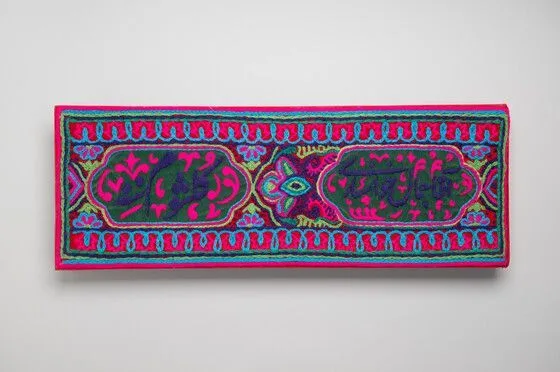
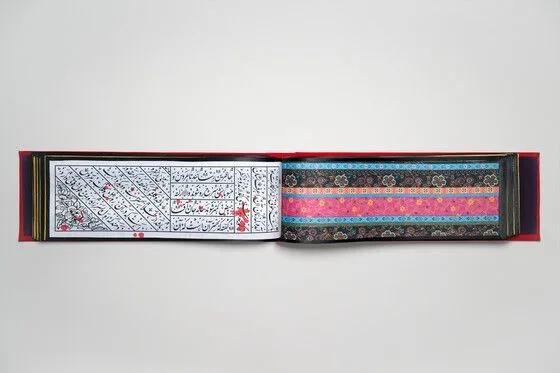
Horizontal embroidered textile panel with hot-pink border, dense floral and scrolling motifs in magenta, cyan, and green on a dark ground, with a central stylized animal-head medallion
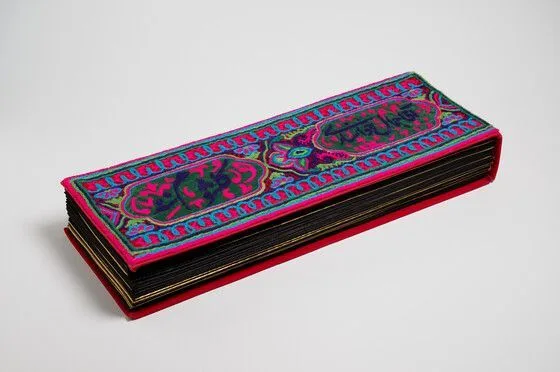
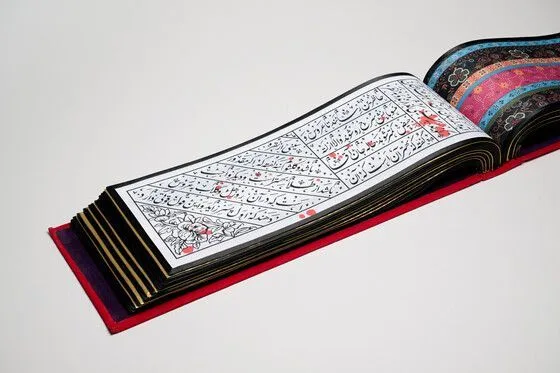
Homa Delvaray, Kolsum-Naneh
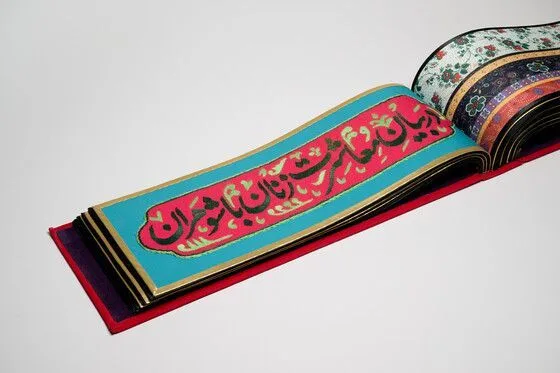
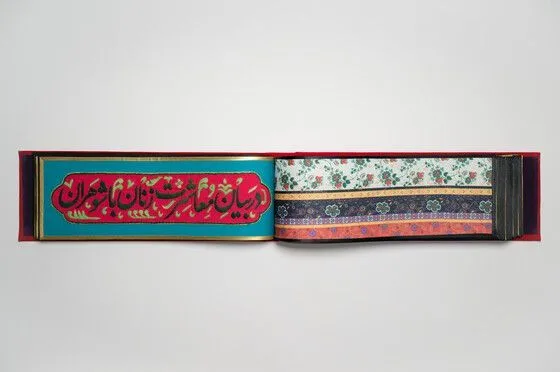
Horizontal accordion-fold book partially unrolled, displaying a turquoise panel with bold Persian calligraphy on a red ground framed by gold borders; rolled portion reveals floral patterned fabric covers in deep red and blue.
Homa Delvaray, Kolsum-Naneh
Artist or Maker
Homa Delvaray
Iran, born 1980
Title
Kolsum-Naneh
Date Made
2012
Medium
Hand embroidery and silk screen printing on fabric
Dimensions
Closed: 3 1/16 × 18 15/16 × 6 7/8 in. (7.78 × 48.1 × 17.46 cm)
Credit Line
Gift of Sabrina and Kamran Younesi
Accession Number
M.2024.167
Classification
Books
Collecting Area
Art of the Middle East: Contemporary
Curatorial Notes

Homa Delvaray’s Kolsum-Naneh is a modern reinterpretation of the Aqa’id al-Nisa’, a satirical work written in the seventeenth century by the progressive Iranian cleric Aqa Jamal Khansari. While Khansari’s original text aimed to challenge superstition and criticize the misguidance of certain religious clerics, Delvaray’s adaptation explores the enduring nature of popular beliefs, long-held customs, and quasi-religious teachings in Iranian culture largely preserved through oral tradition.

The artist chose the format of the safineh, an oblong manuscript generally comprising anthologies of lyric Persian poetry, which was popular at the time the Aqa’id al-Nisa’ was composed, while she used the classical Persian nasta‘liq script for the text, adding to the historicism of her work. Delvaray’s safineh is structured into seven chapters, narrated by five superstitious women, including Kolsum-Naneh, who seek to educate young girls. As was customary, these old wives’ tales on topics such as marriage, consummation, and childbirth, often were imparted while women engaged in traditional crafts. Reflecting this custom, Delvaray has created a manuscript using traditional needlework techniques like patchwork, quilting, and embroidery.

2024