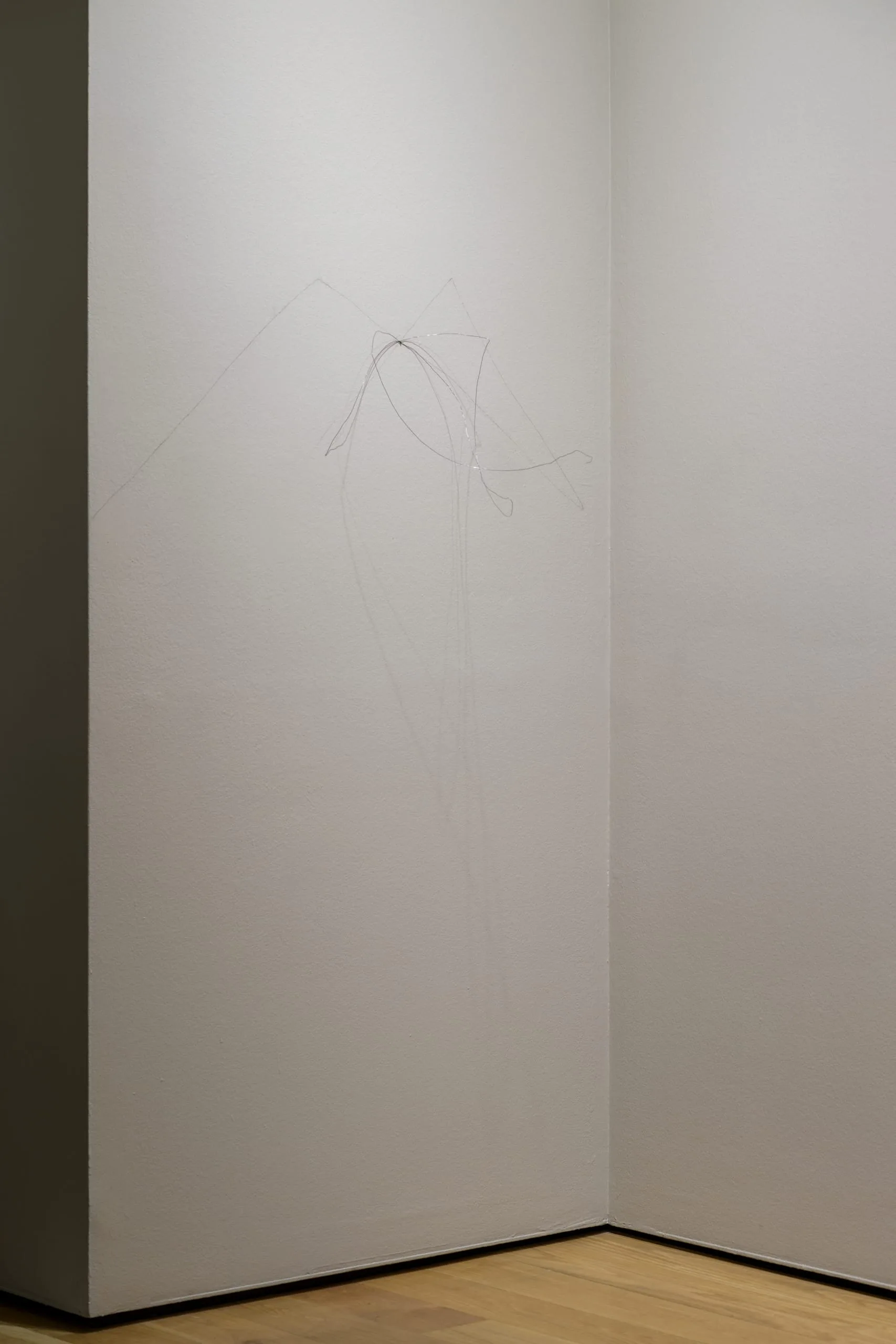
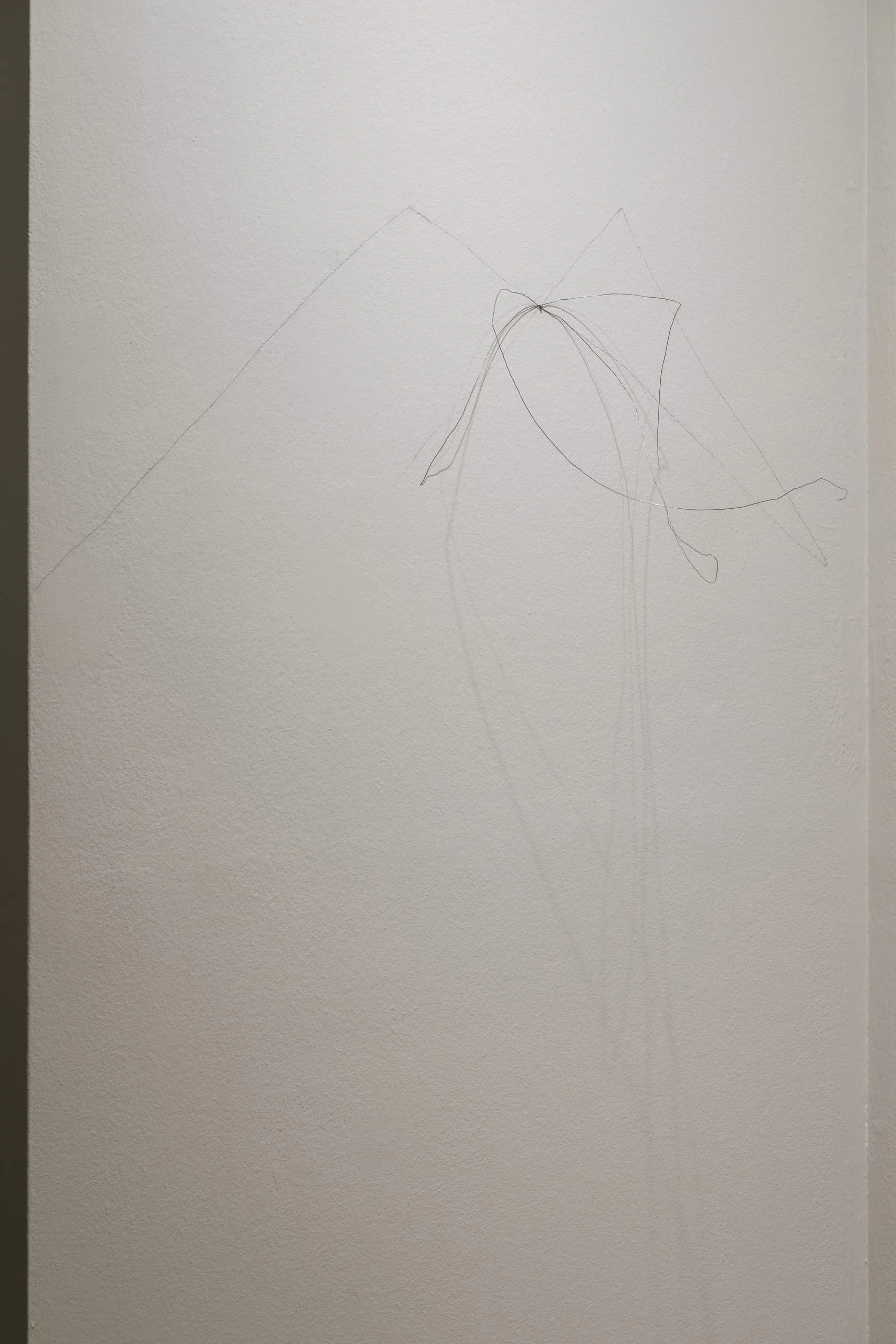
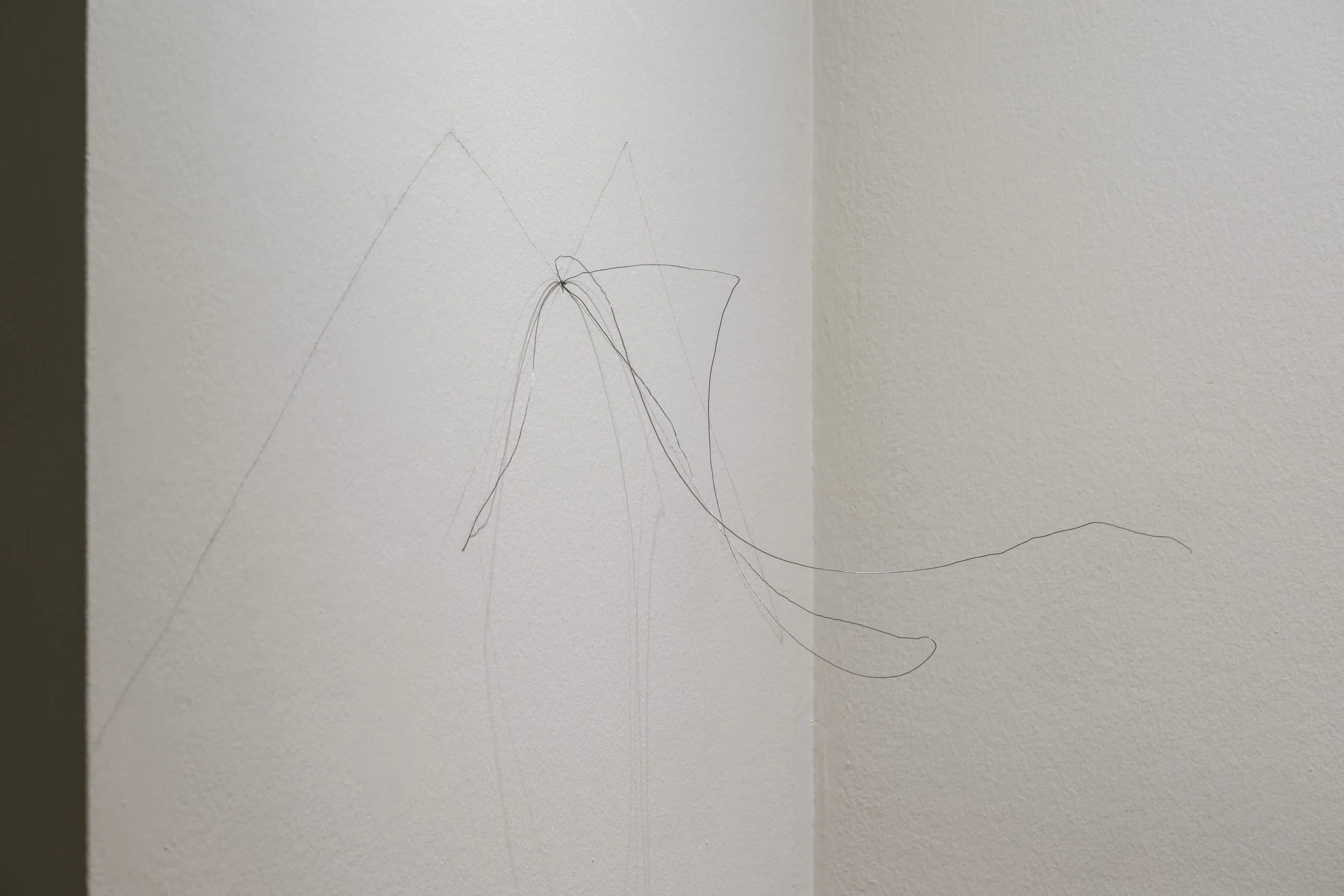
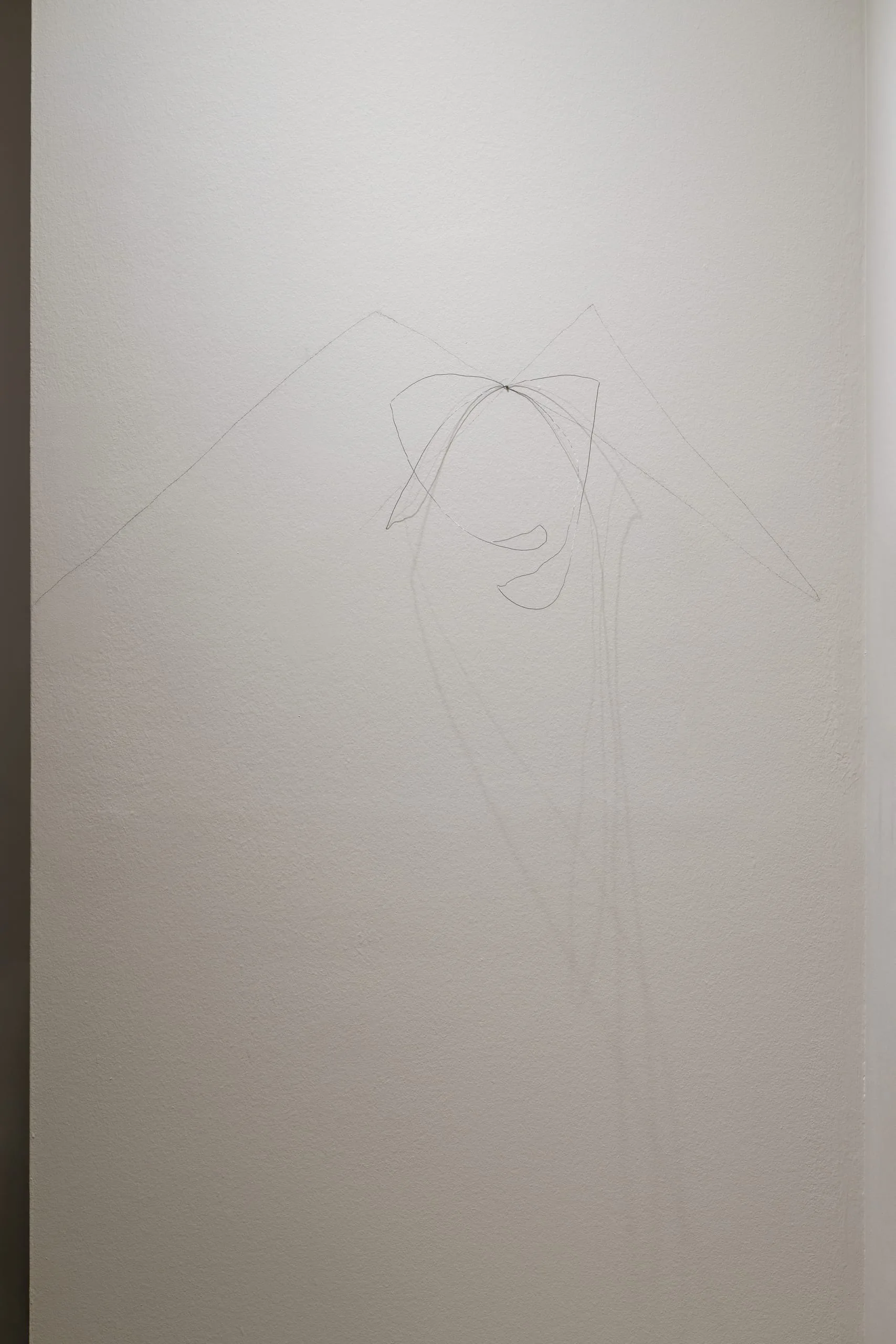
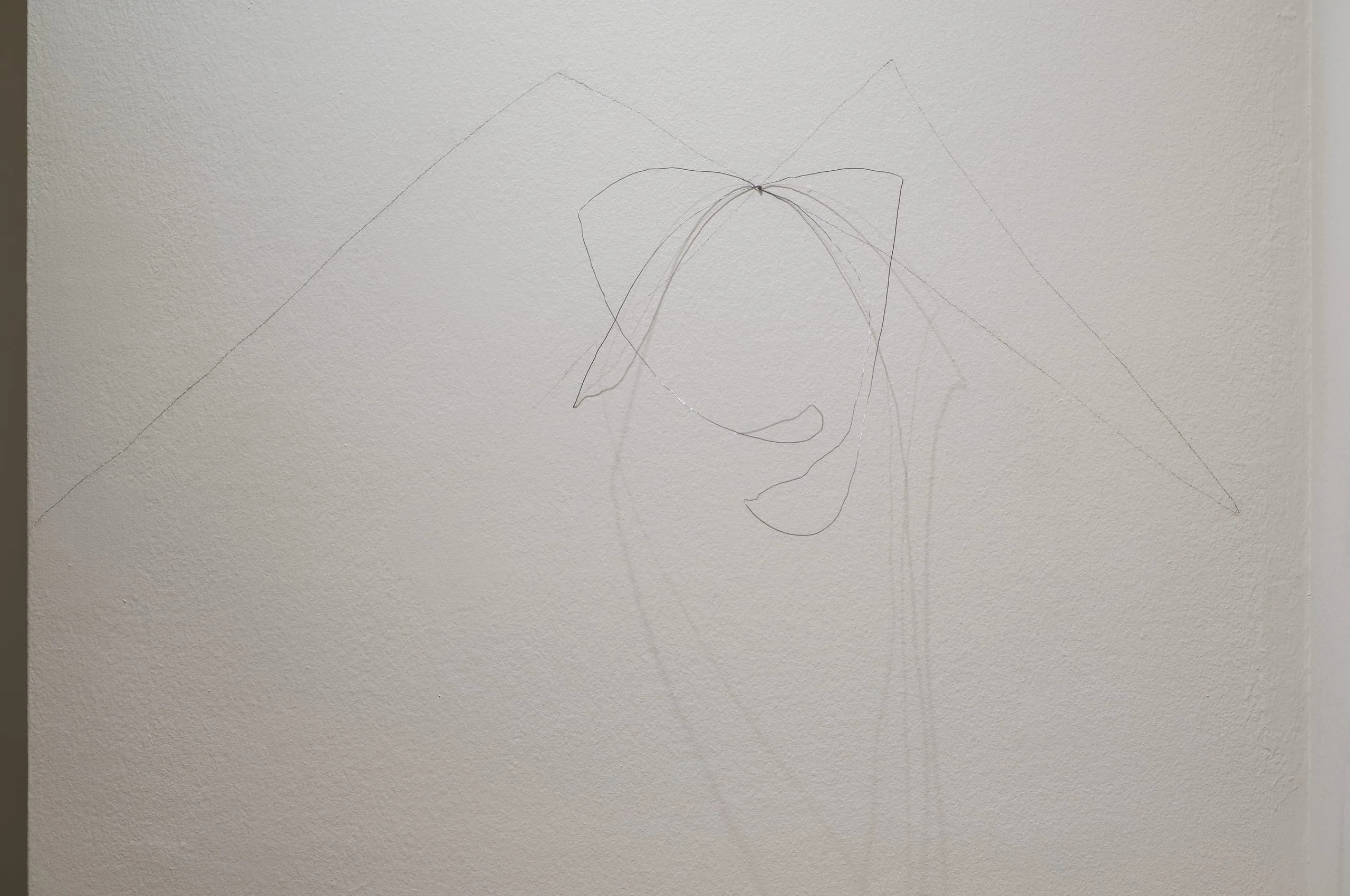
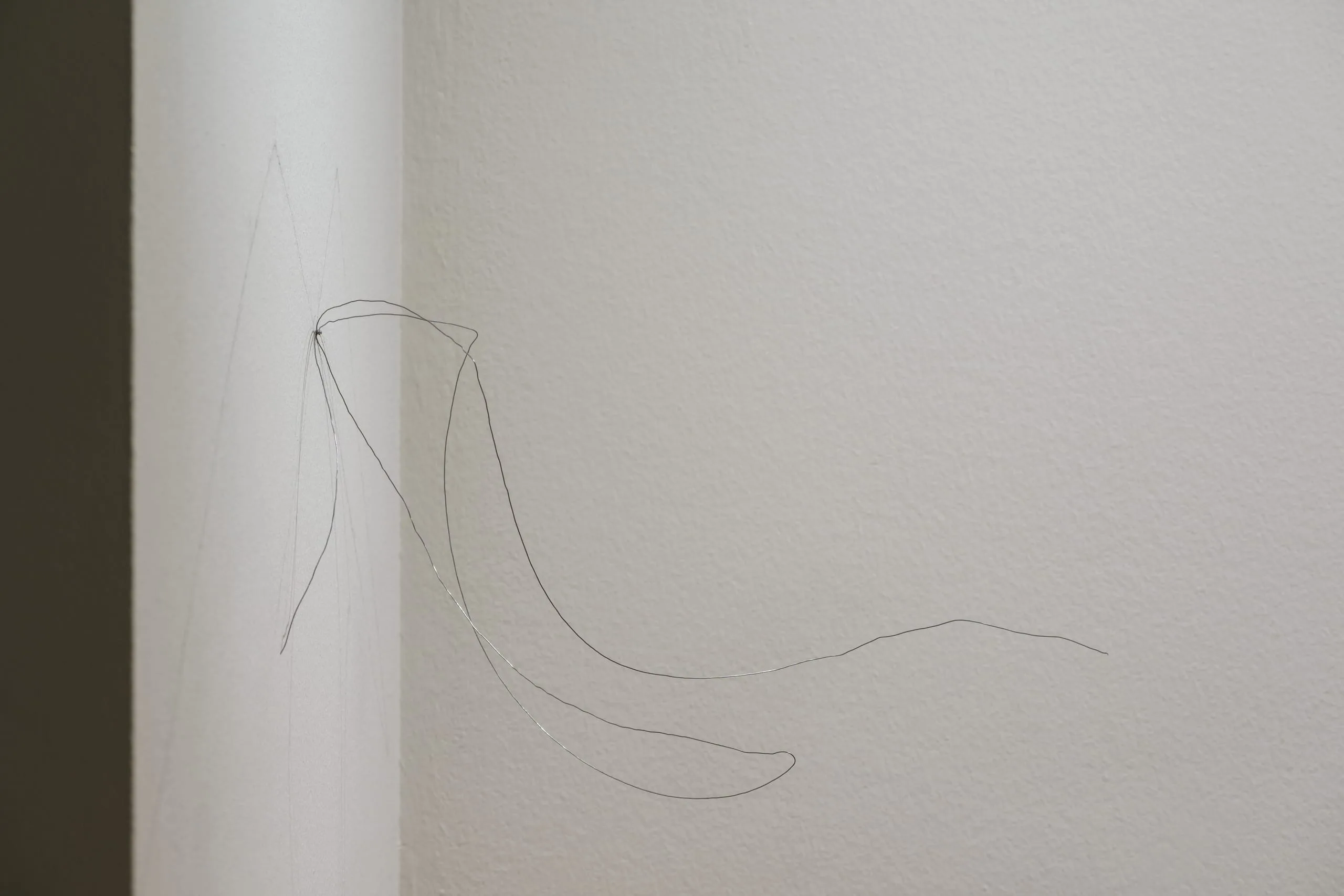
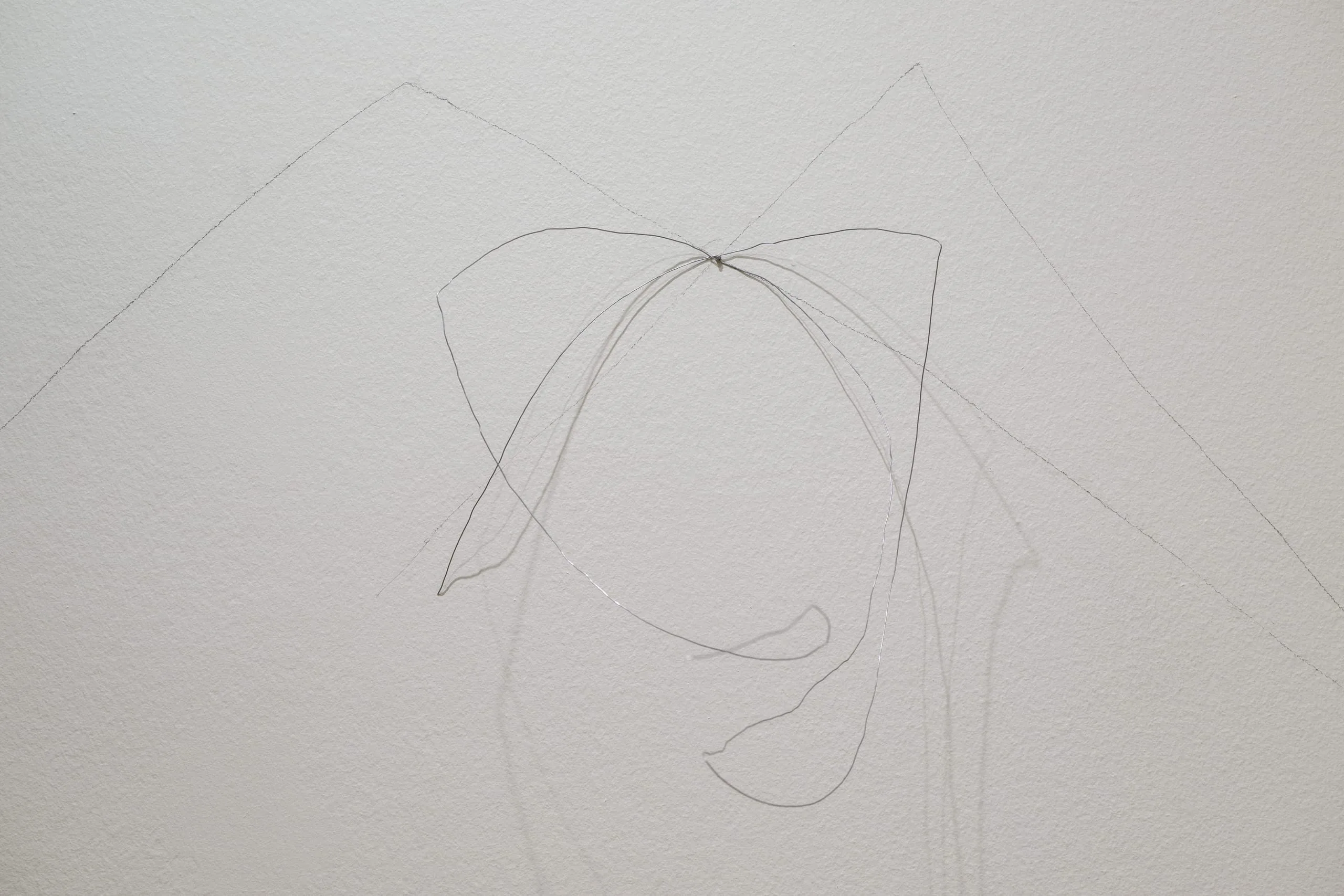
Richard Tuttle’s post-minimalist artworks dissolve the boundaries between conventional sculpture, painting, and drawing. Among his most radical and innovative works are a series of forty-eight wireworks from the early 1970s. These liminal sculptures are composed of three elements: graphite marks drawn directly on the wall; thin, flexible florist wires that trace the marks; and the shadows cast by the wires as they spring away from the wall when released. The interplay of mark, material, and shadow creates delicate, almost weightless forms, inviting viewers to discover the quiet beauty of humble materials and their relationship to architectural space.