LACMA

ShopMembershipMyLACMATickets
LACMA
Los Angeles County Museum of Art
5905 Wilshire Blvd.
Los Angeles, CA 90036
info@lacma.org
(323) 857-6000
Sign up to receive emails
Subscribe
© Museum Associates 2026
  • About LACMA
  • Jobs
  • Building LACMA
  • Host An Event
  • Unframed
  • Press
  • FAQs
  • Log in to MyLACMA
  • Privacy Policy
© Museum Associates 2026
Collections

Manjunath Kamath
Vikatonarva2024

On view:
Geffen Galleries, Images of the Divine in South Asia
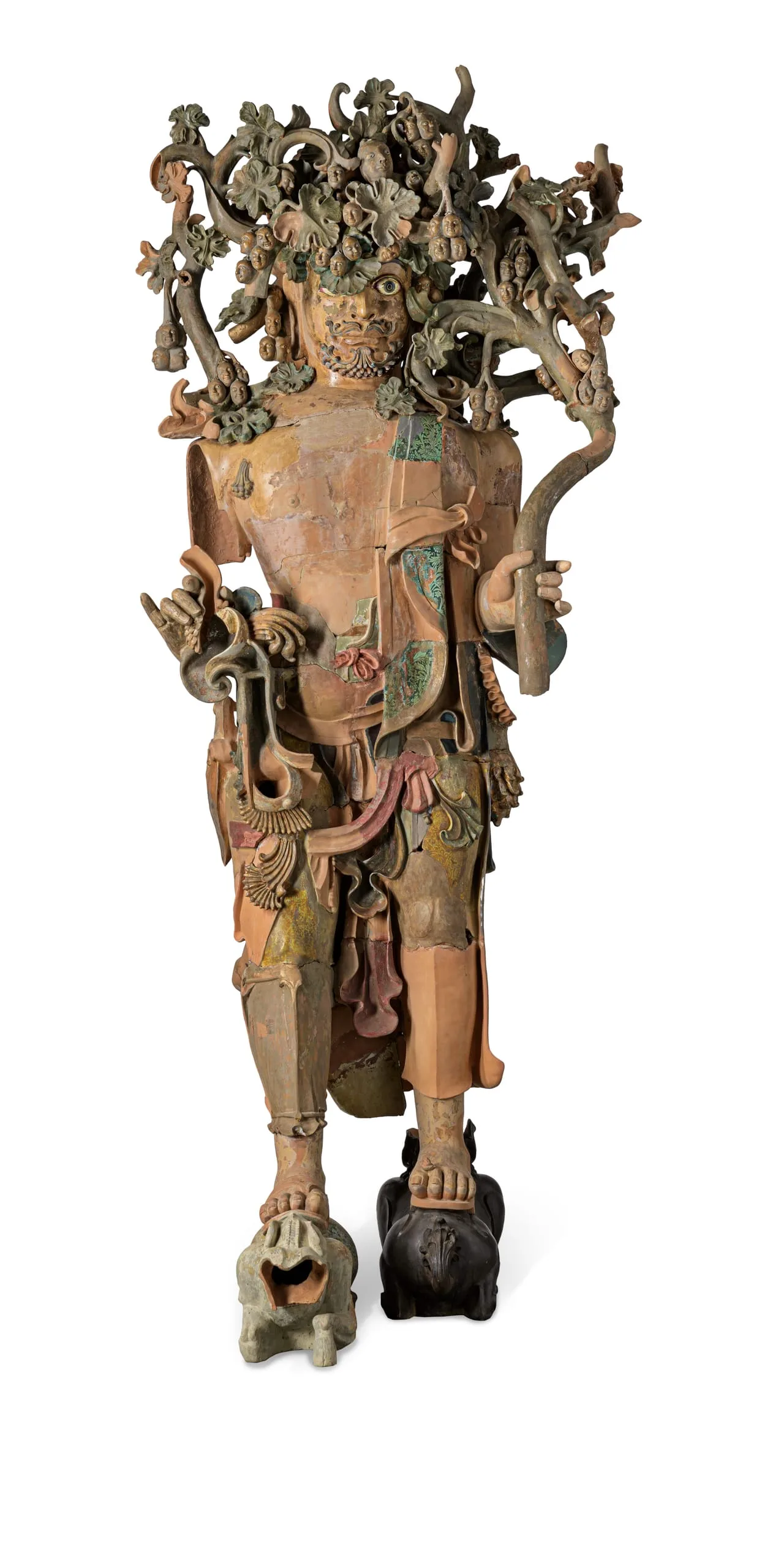
Tall polychrome sculpture of a standing armored deity figure with a branching headdress, feet planted on small crouching creatures, paint worn to reveal the clay body beneath
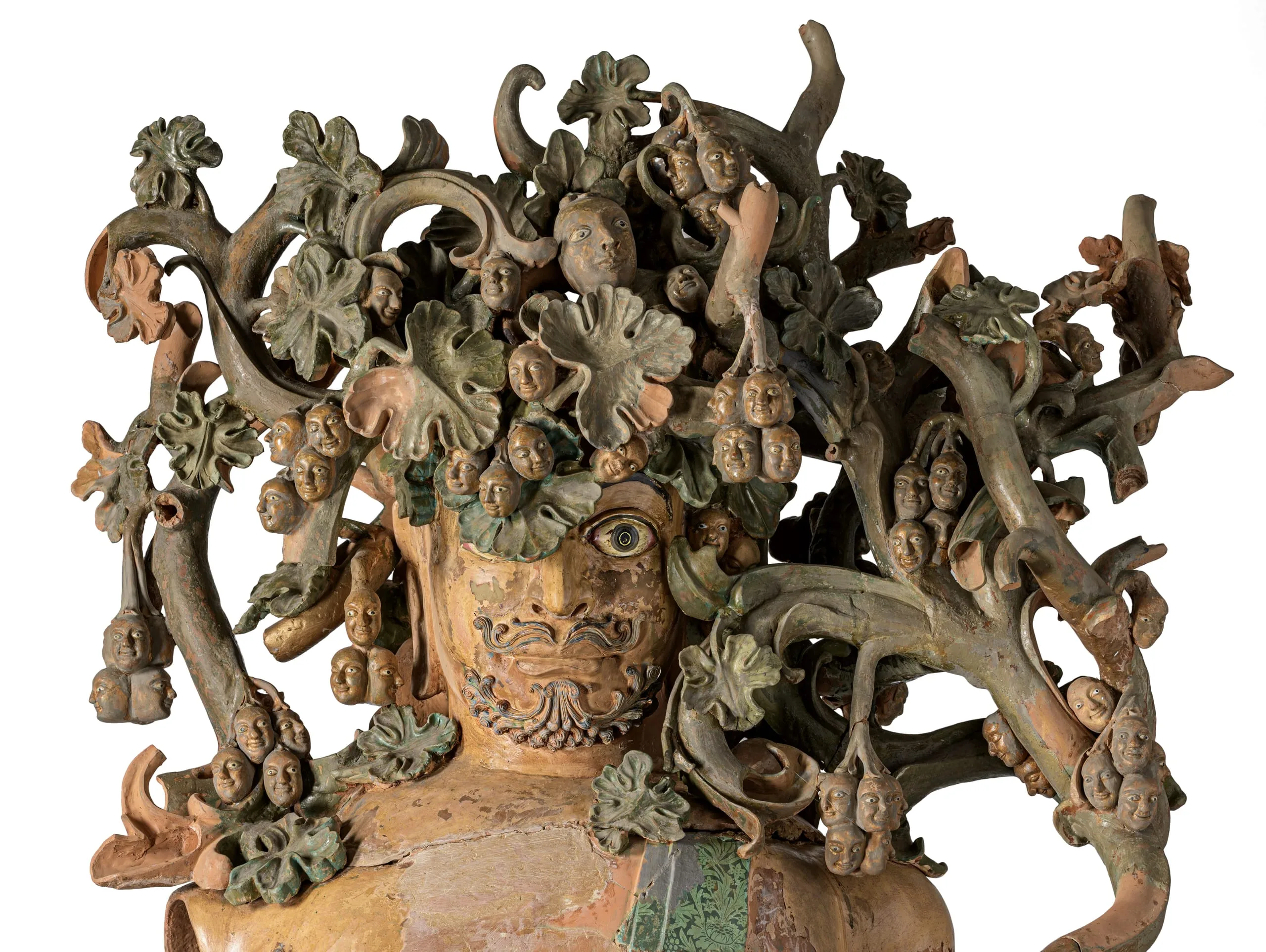
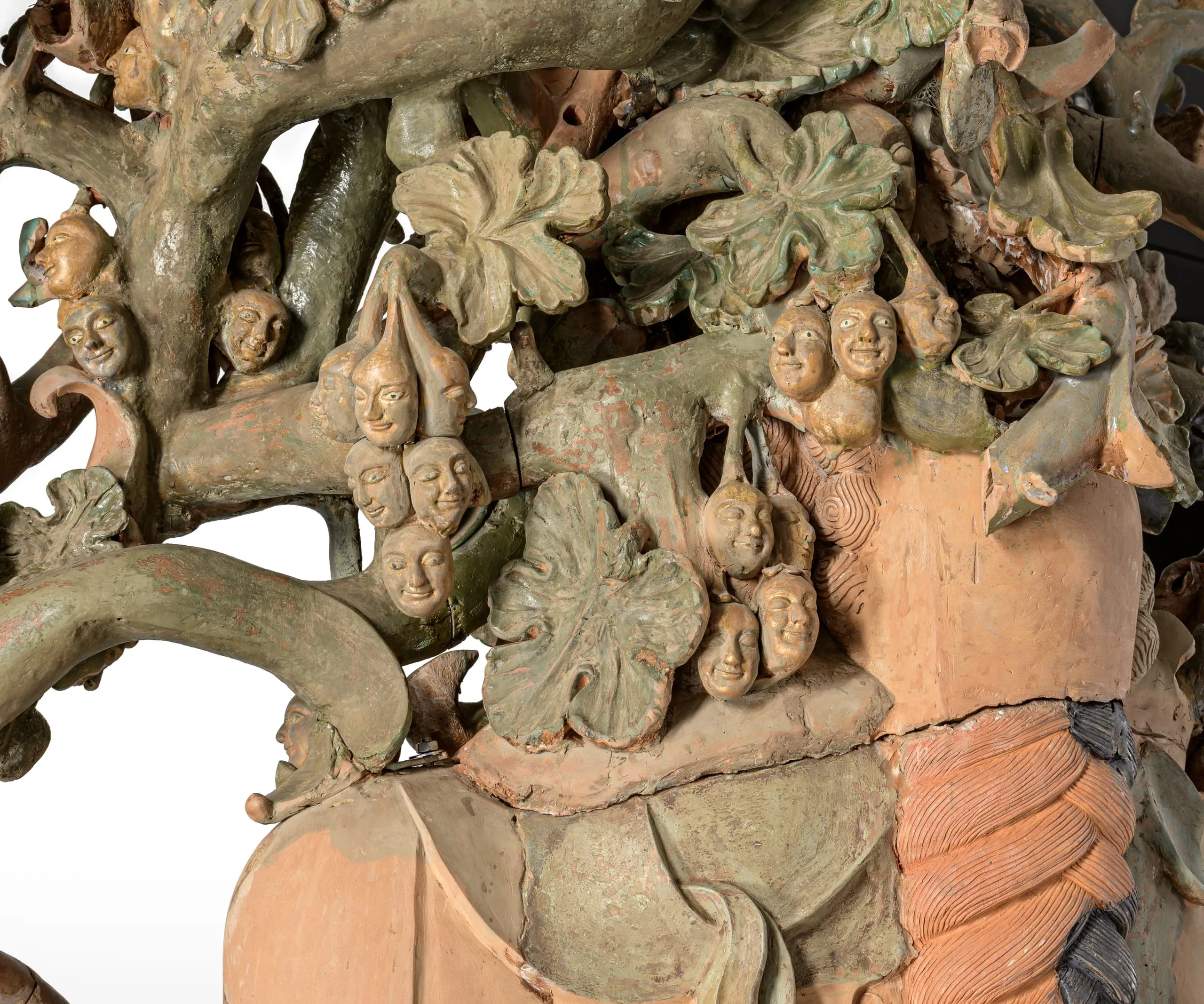
Ceramic sculpture, upper portion of a large vessel featuring a central grotesque face with a single eye, surrounded by elaborately modeled branching forms adorned with numerous small human faces, leaves, and curling tendrils; warm terracotta tones with green-glazed foliage details.
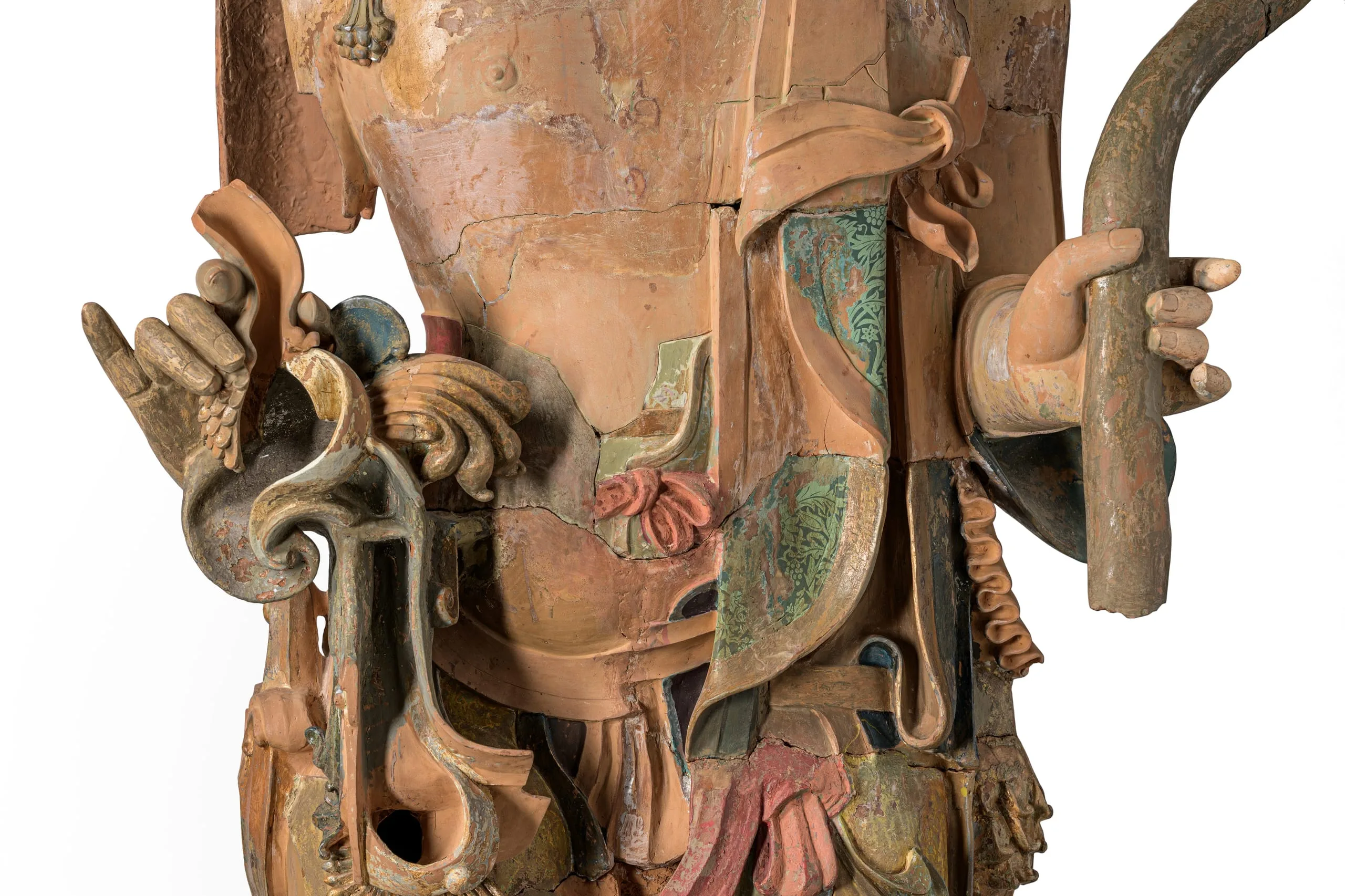
Polychrome wood sculpture fragment showing a torso with multiple hands and arms extending outward, with carved scrollwork and decorative drapery in muted terracotta, green, and blue, with cracked and flaking paint surface revealing the underlying wood.
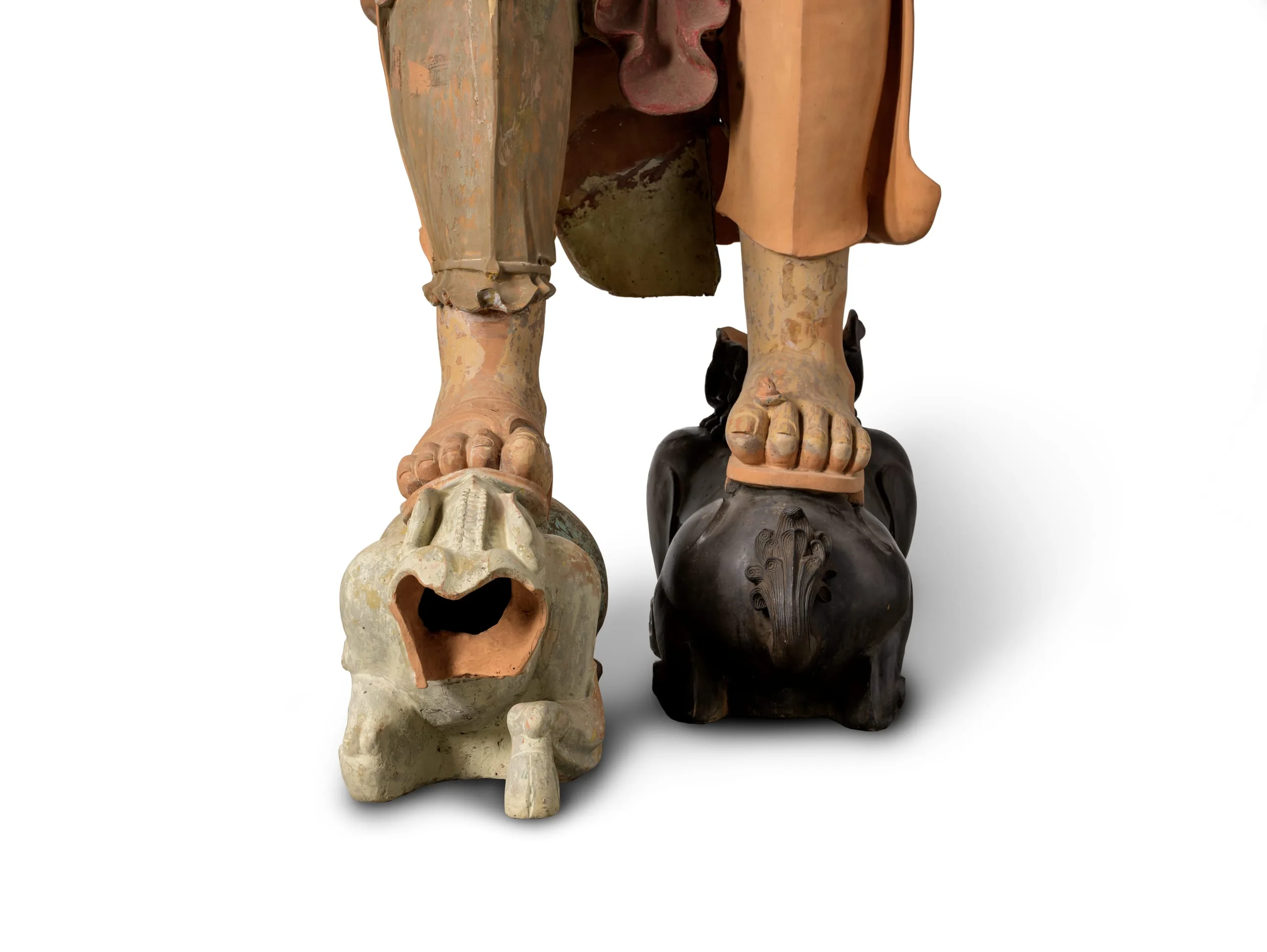
Painted terracotta sculpture, close-up of lower legs and feet of a standing figure, each foot treading on a small crouching demon—one pale green with an open mouth, one dark brown with molded floral detail; traces of original polychrome pigment visible.
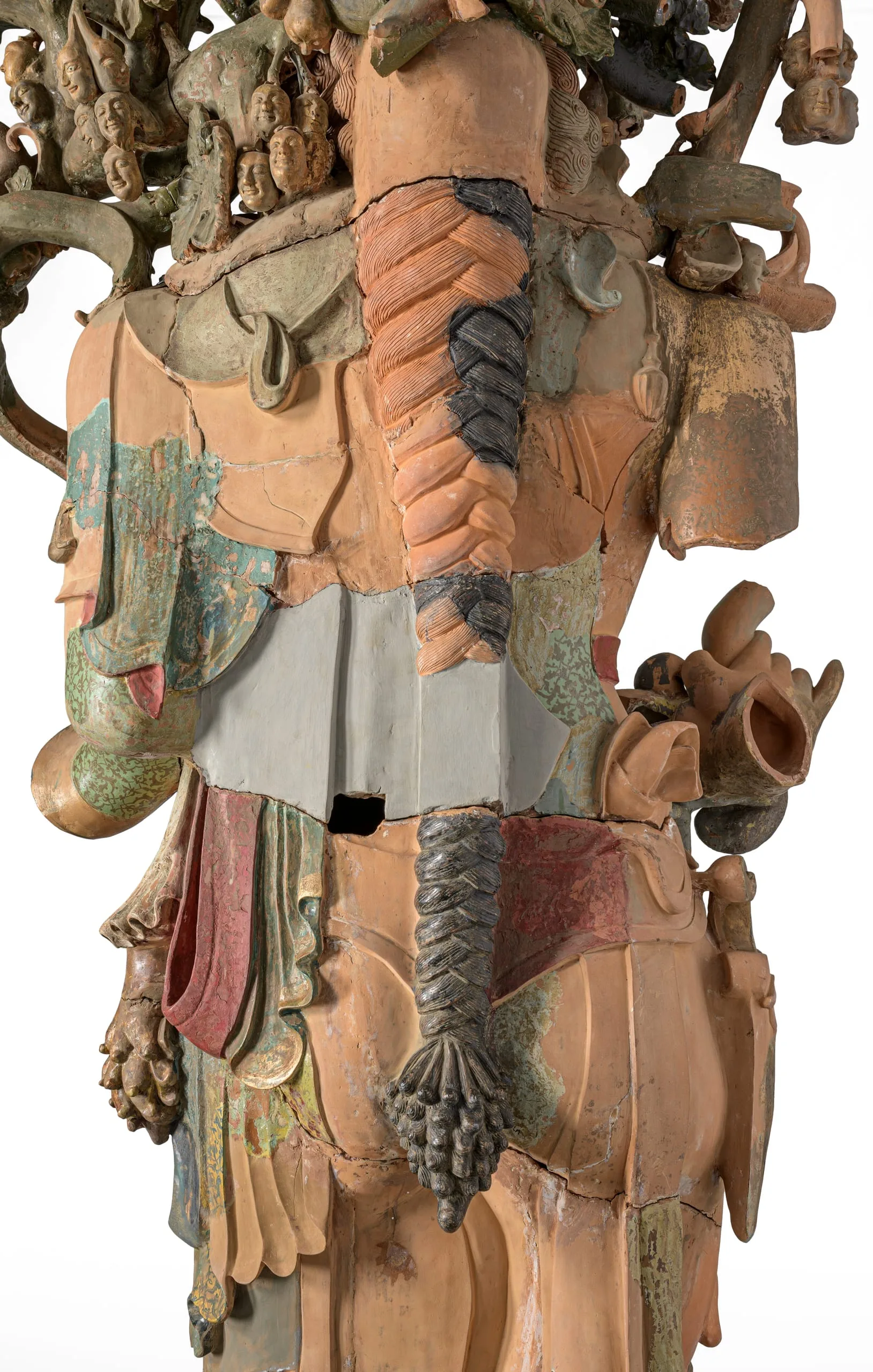
Ceramic sculpture, close-up of a tall columnar figure with fragmented terracotta surfaces revealing painted layers in muted pink, green, and gray. A braided or rope-like element runs vertically down the center, flanked by applied sculptural details including draped forms, small vessel shapes, and clusters of human faces and heads crowding the top.
Ceramic sculpture detail with terracotta and green-glazed surfaces; twisted branches and large leaves surround clusters of small molded human faces emerging from the composition, with incised wave patterns on a vessel form at lower right.
Artist or Maker
Manjunath Kamath
Indian, born 1972
Title
Vikatonarva
Date Made
2024
Medium
Coloured Terracotta
Dimensions
138 × 45 × 45 in. (350.52 × 114.3 × 114.3 cm)
Credit Line
Gift of Kelvin and Hana Davis through the 2024 Collectors Committee
Accession Number
M.2024.101a-i
Classification
Sculpture
Collecting Area
Contemporary Art
Curatorial Notes

Manjunath Kamath assembles iconography inspired by cultures across history into sculptures. Characters from Indian epic poems come together with motifs from Classical Greek architecture and Tang-dynasty China. Kamath does not reference any drawings when he works. He starts with a lump of clay and builds three-dimensional forms from his imagination.

“You see the sky,” Kamath said. “It’s endless. There are no boundaries for it. Similarly in my work, viewers look to identify an image, or the era, but they can’t find exactly what it is. Artworks have layers of meanings which can be infinitely peeled.”

Vikatonarva is a 12-foot-tall terracotta sculpture. Terracotta, which in Latin means “baked earth,” is the most common sculptural material around the world. Artists from Greece to Iran, China, and the Americas have worked in clay. The oldest terracotta figurines excavated from present-day India date from the seventh millennium BCE.

Kamath discovered terracotta as a boy—he passed a potter’s yard as he walked to school and watched as the artist pinched and coiled mounds of clay. There were no museums in Mangalore where Kamath grew up. Instead, he learned art history in temples and churches. He saw gods with thousands of hands. He saw towering terracotta animals. Despite not knowing what these icons meant, they stirred his imagination.

Vikatonarva depicts a man stepping toward the viewer, tangled in a headdress composed of branches and faces. His stoic gaze recalls the terracotta warriors who protect the tomb of China’s first emperor. His right hand resembles the shape of the karana mudra, a hand gesture believed to ward off evil in Buddhism. Vikatonarva may reference the Sanskrit words for “monstrous” or “boundless.” Kamath said he made up the name.

Artists have carved giant icons to inspire patriotism, devotion, hope, or nostalgia. Kamath constructed a fictional character. He improvised its motifs. The viewer may feel they recognize Kamath’s sources, but they cannot quite identify them.

Rather than finding the meaning of an artwork from a singular reference, Kamath’s work opens limitless possibilities. In this, he conveys the concept of infinity—an idea deeply embedded in Indian culture, where the theorization of “emptiness” and “void” laid the groundwork for the mathematical adoption of the number zero in the fifth century CE.

Vikatonarva manifests the philosophy behind LACMA’s David Geffen Galleries, where artworks from many world cultures are presented on the same floor. Like the motifs in Kamath’s sculpture, infinite connections can be discovered among them.

Dhyandra Lawson

2024
Copyright
© Manjunath Kamath, courtesy Gallery Espace Art Pvt. Ltd.

Related Unframed

Related Unframed

50 Works 50 Weeks: Manjunath Kamath’s “Vikatonarva”
  • June 3, 2025
  • Dhyandra Lawson
New Acquisition: Manjunath Kamath’s “Vikatonarva”
  • April 30, 2024
  • Dhyandra Lawson
LACMA Announces 10 New Acquisitions During the 38th Collectors Committee Weekend
  • April 29, 2024
  • Editors