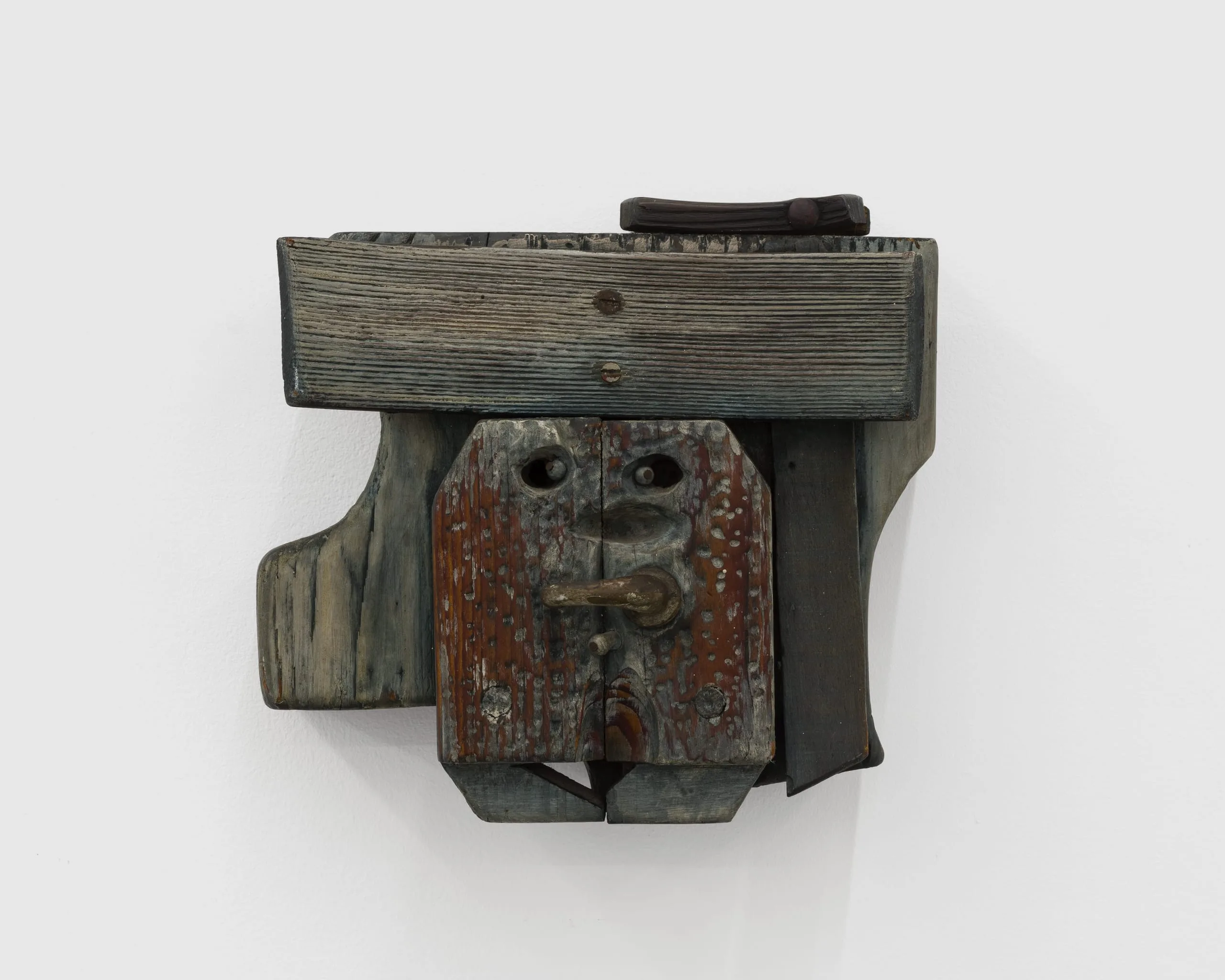
In 1967, John Outterbridge quit his day job at a Los Angeles production studio, abandoning painting and “concentrating on nothing but sculpture” for the next two years. During this intensive period of experimentation with wood, metal, and stone, he established a lifelong engagement with assemblage. Outterbridge grew up in North Carolina, where his father earned a living by recycling metal equipment. Moving to L.A. in the 1960s, the artist described the city as having an “assembled kind of culture” that resonated with a childhood surrounded by objects and materials his father salvaged and collected from hauling jobs. The integration of recycled urban detritus and found materials in his three-dimensional works echoes his personal philosophy: “It seems that we all assemble notions, directives, disciplines, disappointments. We put all these things together as we seek a mode of expression and a way to live.” In this work, Outterbridge cobbled an anthropomorphic visage out of debris, crafting a makeshift mask that hints at his heritage and his own assembled culture.
Lauren Hanson