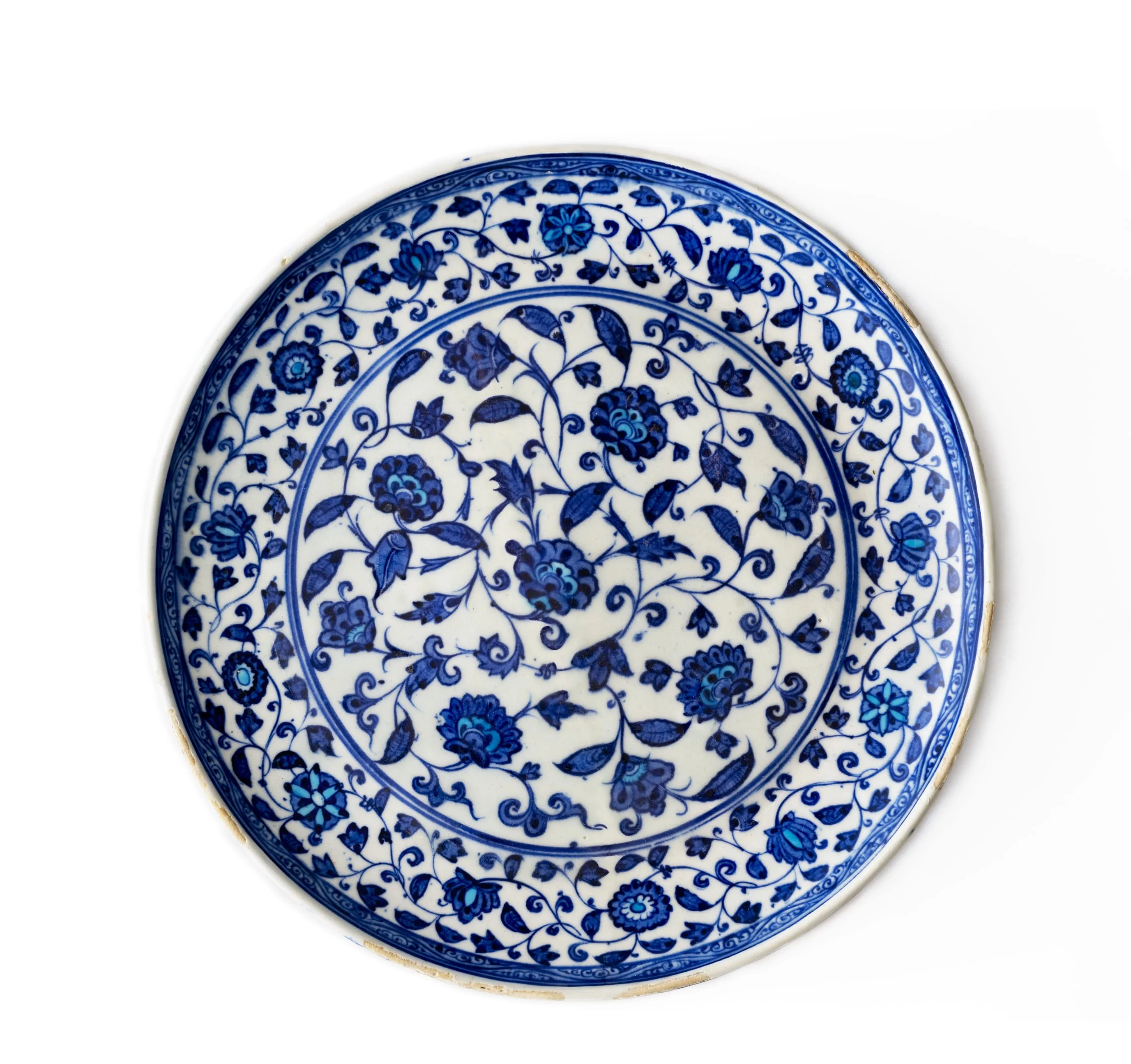
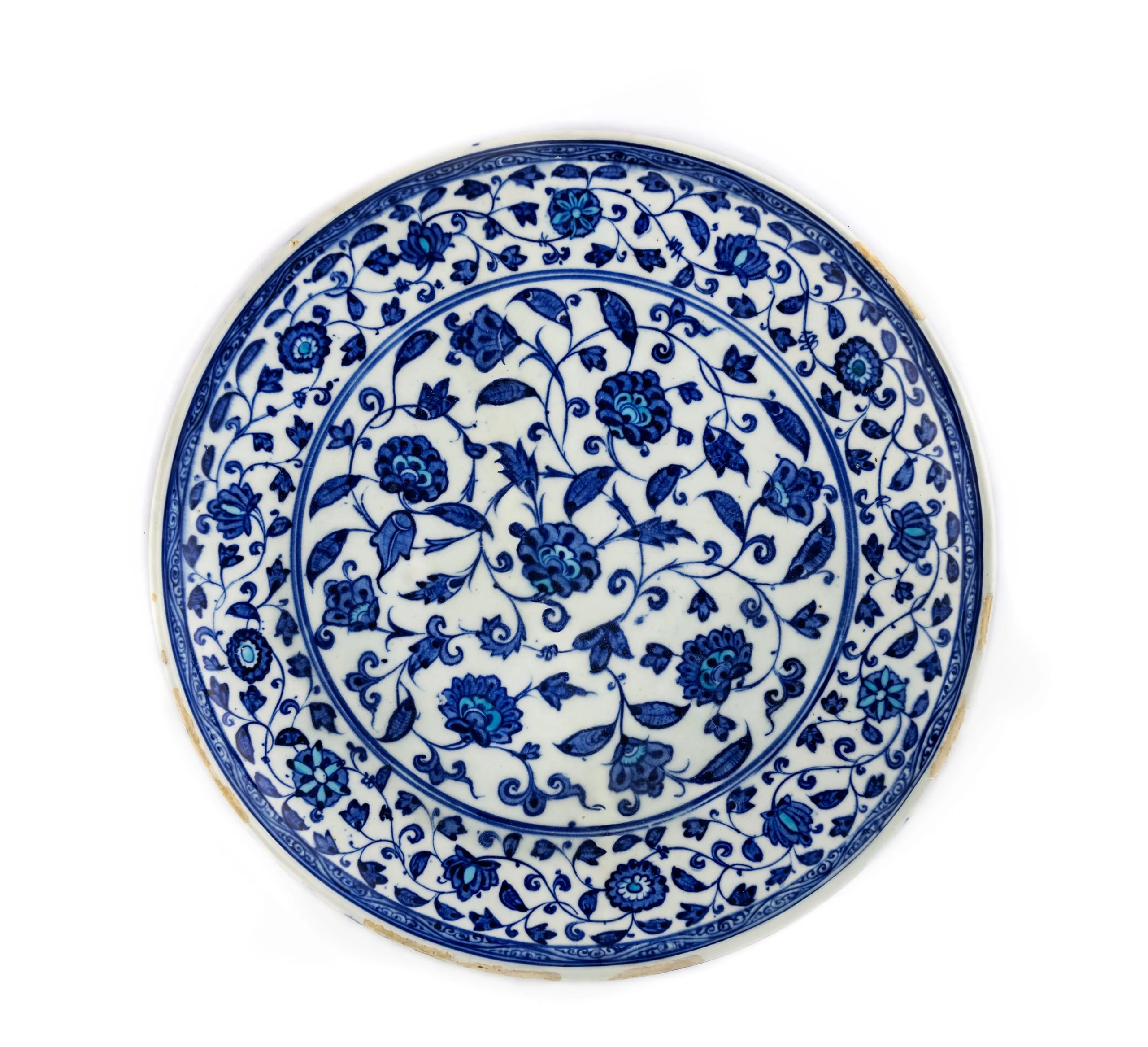
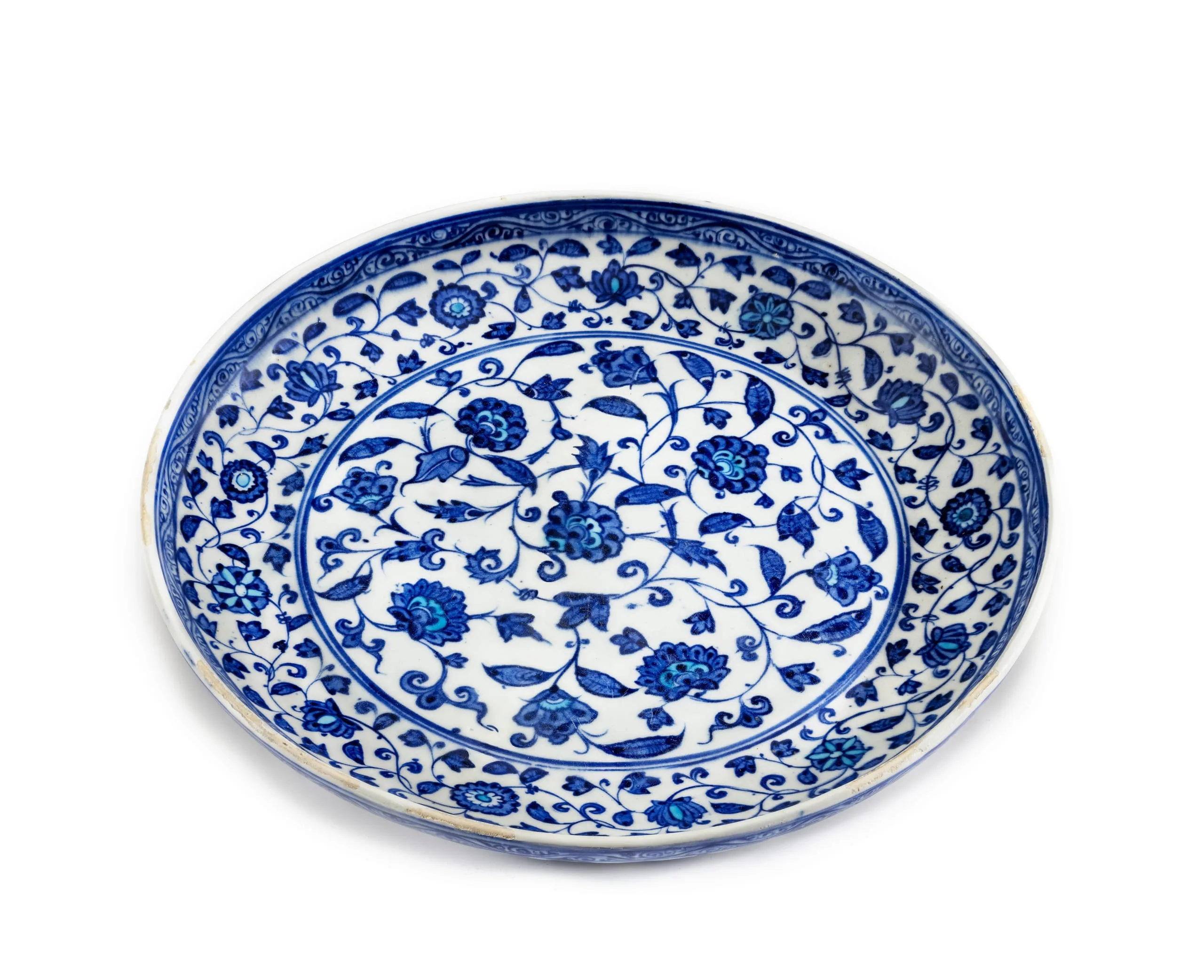
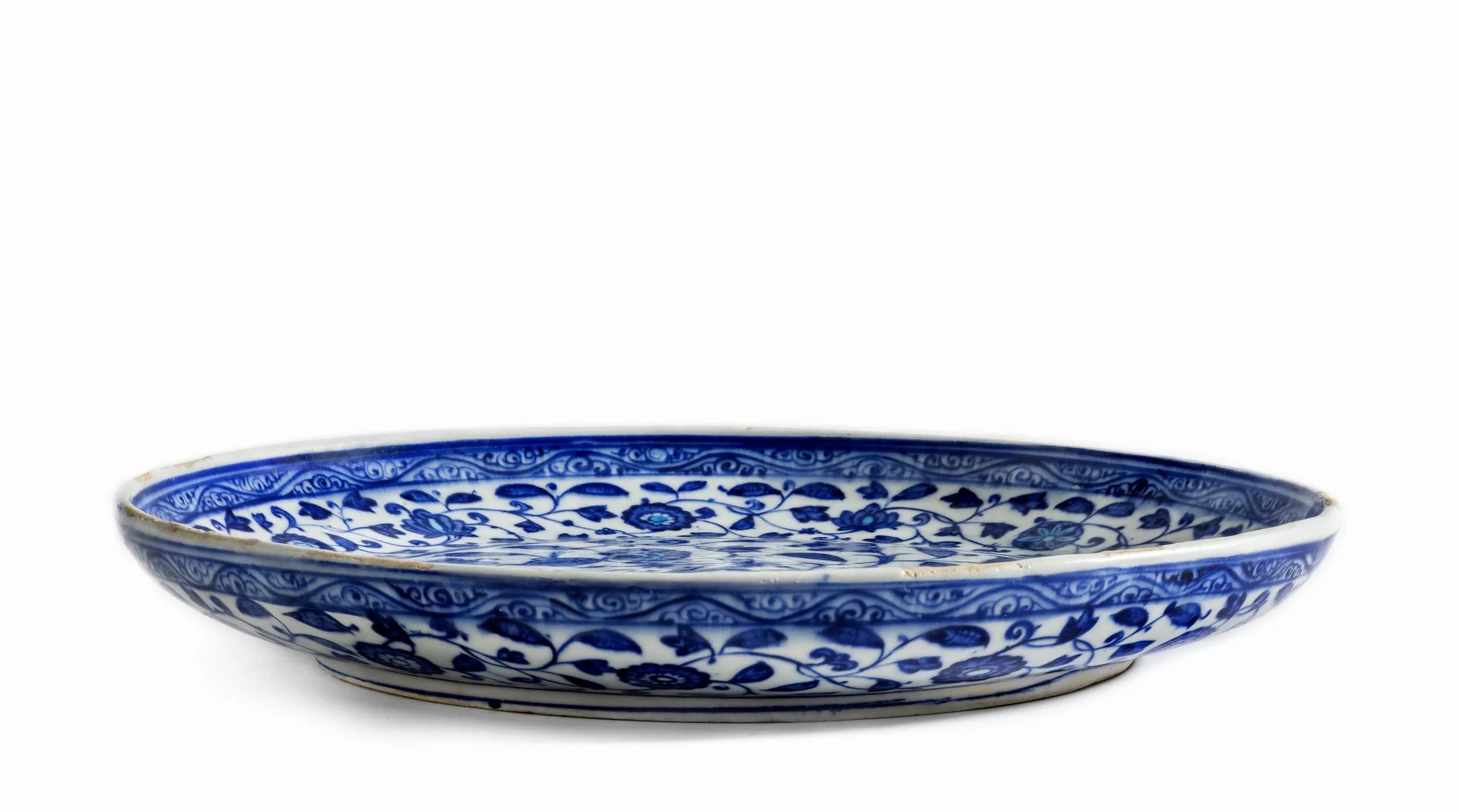
In China, the development of porcelain decorated in underglaze blue in the early decades of the fourteenth century had an enormous impact in Islamic lands, both as an imported elite tableware and as a source of emulation. But perhaps the greatest of the Islamic wares influenced by Chinese porcelain are those from Iznik, in western Turkey, such as this beautiful dish. Inspiration would have been close at hand given that the fourteenth- and fifteenth-century Chinese blue-and-white porcelains preserved in the Topkapı Palace, Istanbul, represent some of the finest products of the Yuan and early Ming periods. Significantly, these were not necessarily specifically acquired for the palace kitchen, but many appear to have come in through a form of imperial taxation, suggesting they were also widely owned among the Ottoman urban elite.
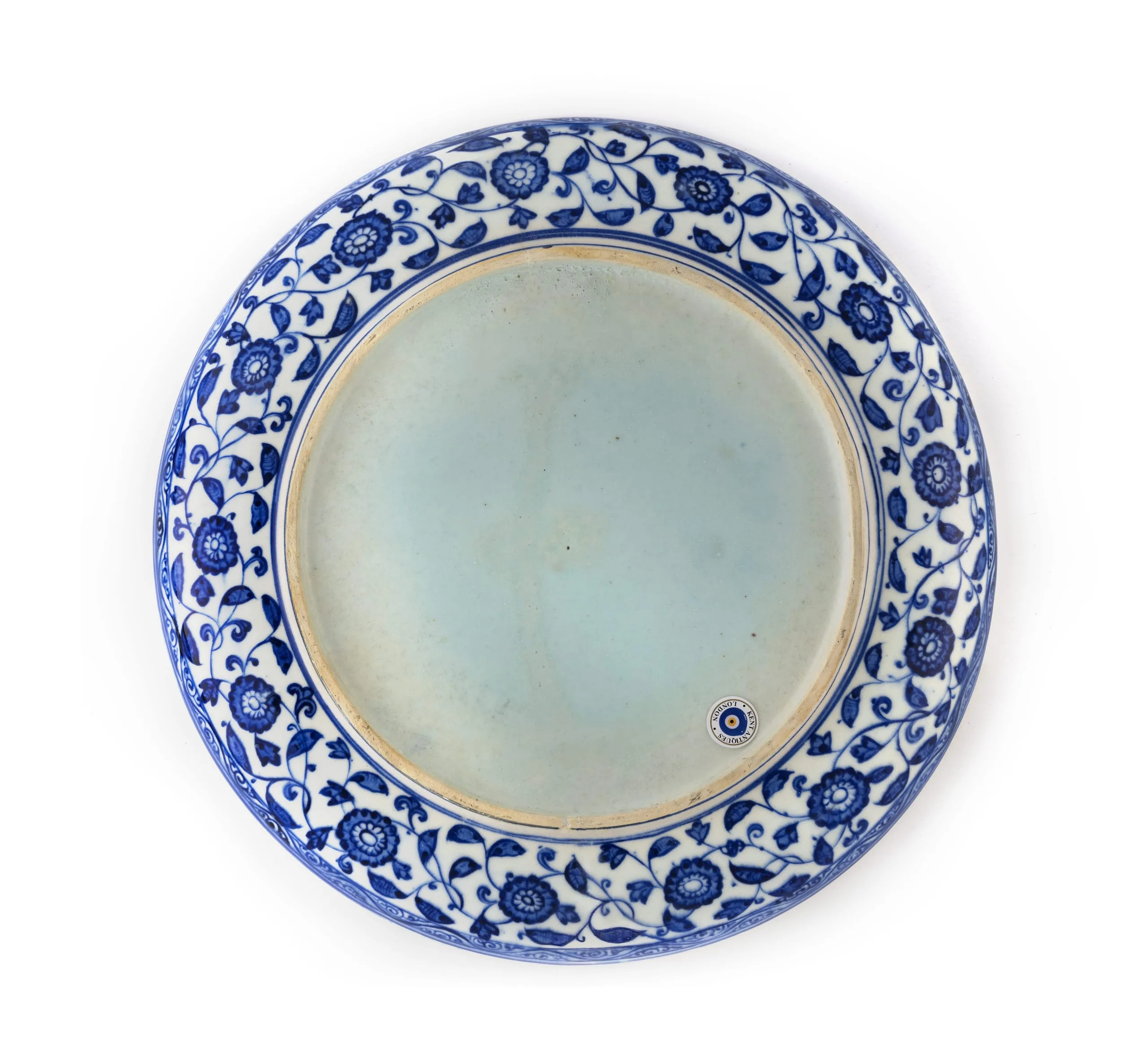
The dynamic floral scrolls on the interior and exterior of this dish are clearly inspired by related designs in Chinese porcelain though organized in the more symmetrical manner that suited Ottoman taste. The use of turquoise blue accents, a deep cobalt blue, and a lighter shade of blue portends the expansion of the Iznik palette introduced by the mid-sixteenth century. Not only the decoration but the dish’s shape is indebted to porcelain prototypes. Ottoman archival documents refer to this type of rimless form as a sahn, used to designate a vessel topped with a metal cover, which would keep the food warm on the often-long trek from kitchen to dining room.
2024