TR.19646.1
North Star: Healing Generations
Patrisse Cullors (United States, Los Angeles, born 1983)
Rita Nazareno (Philippines, Manila, born 1972)
For Crenshaw Dairy Mart (United States, Los Angeles, established 2020)
2023
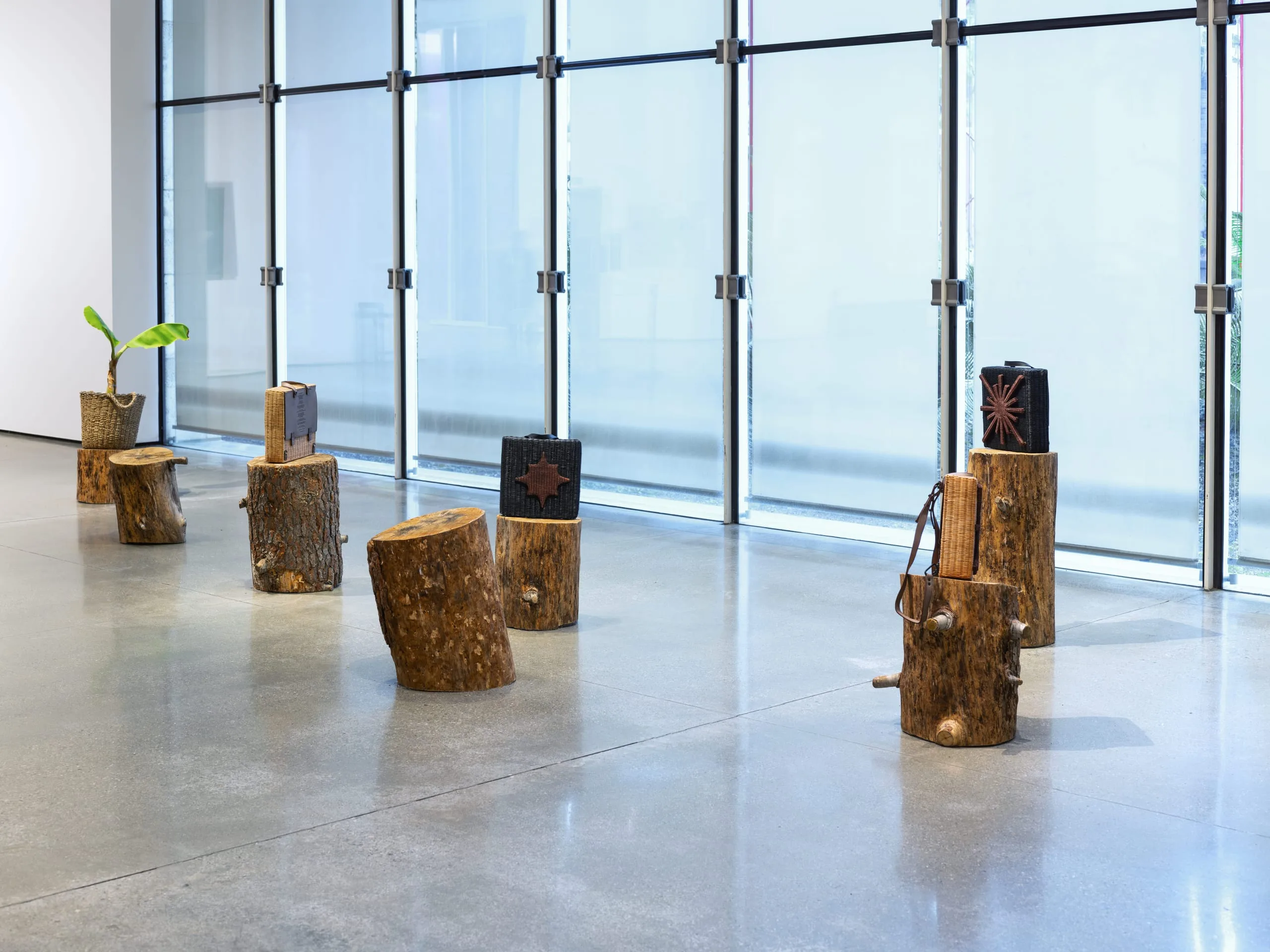
Wicker and leather baskets, pine logs, and banana tree
North Star: Healing Generations was born from a common history of basketmaking, celestial wayfinding, and unwavering hope shared by Black Americans and people of the Philippines. Four basket bags, made by weavers in the workshop of artist Rita Nazareno, who is from a third-generation Filipino basketmaking family, feature prominent stars in black and natural brown tones. The raised stars were inspired by “quilt code theory,” where hidden meanings in quilted motifs are believed to have guided North American enslaved people through safe passage along the Underground Railroad. The baskets sit atop pine logs from the yard of artist and activist Patrisse Cullors, an extension of the home where she lived during the most difficult months of anti−Black Lives Matter attacks. The logs are configured in the shape of the Little Dipper (Ursa Minor), the constellation that holds the North Star—historically, a source of wayfinding for those in search of freedom in the American South, and for the ancestral inhabitants of the Philippines who navigated the unknown waters of the archipelago and beyond.
The leather straps of the basket bags allow the wearer to carry the basket as a crossbody bag or as a backpack. An interior leather flap is printed with a poem by Black poet Nissi Berry called “carrying freedom.” Specially commissioned for this project, the poem speaks to the historic, figurative, and current power of carrying the basket: “we carry freedom wherever we go / strapped over shoulders / slung ’cross-backs / practiced like religion.”
Celebrating resilience and hope, North Star demonstrates the collaborative spirit of artists committed to civil rights and abolition. Cullors and Nazareno met in 2022, shortly after Nazareno saw rafa esparza’s tender depiction of Cullors in LACMA’s exhibition Black American Portraits. They discovered a shared interest in the significance of baskets in their respective cultures. What began as an examination of the Philippine-made “peacock chair” or “empress chair,” which jointly resonated with the artists, evolved into this thoughtful installation work conceived from an art-inspired first encounter at LACMA.
Clarissa M. Esguerra
2024