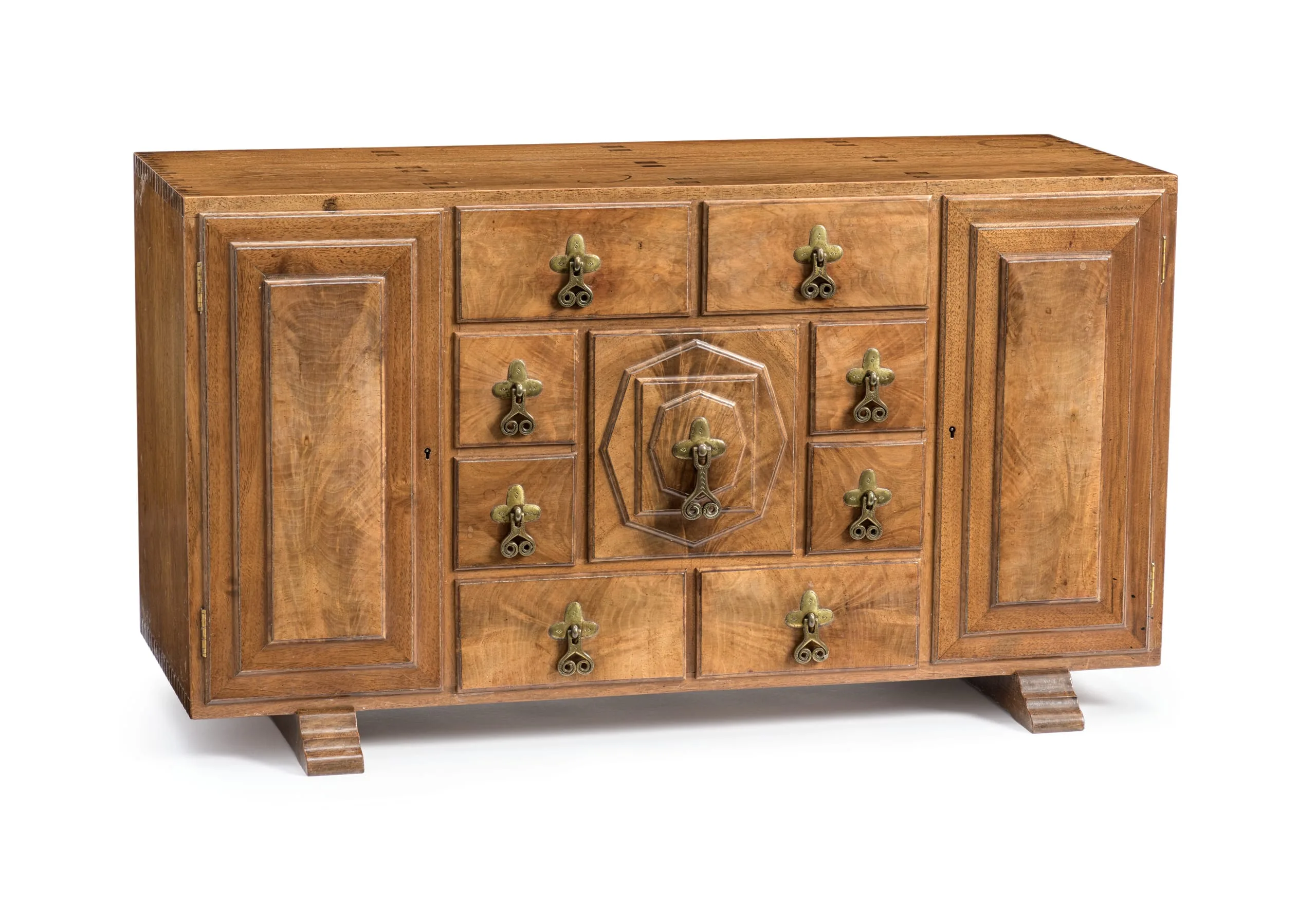
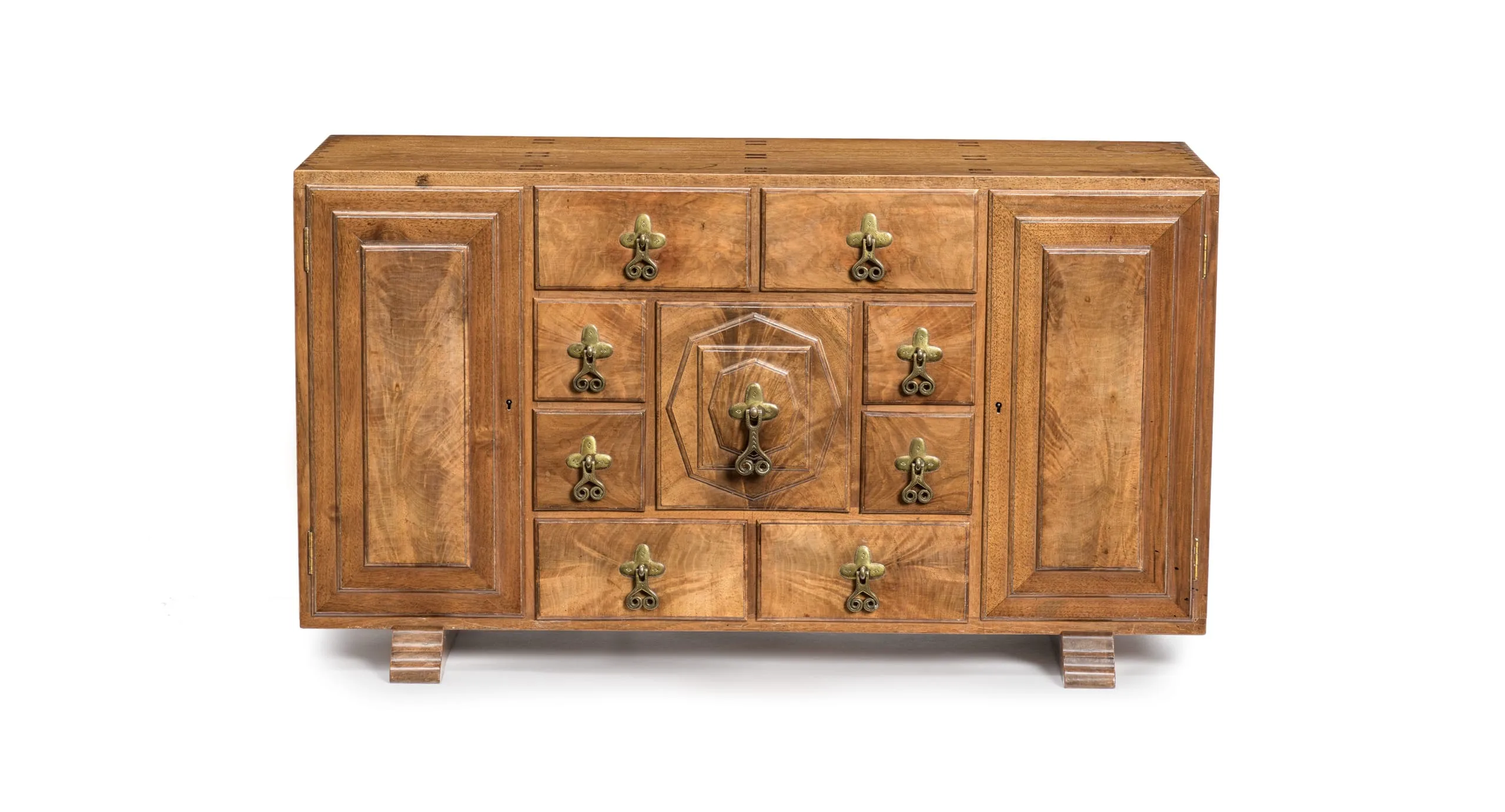
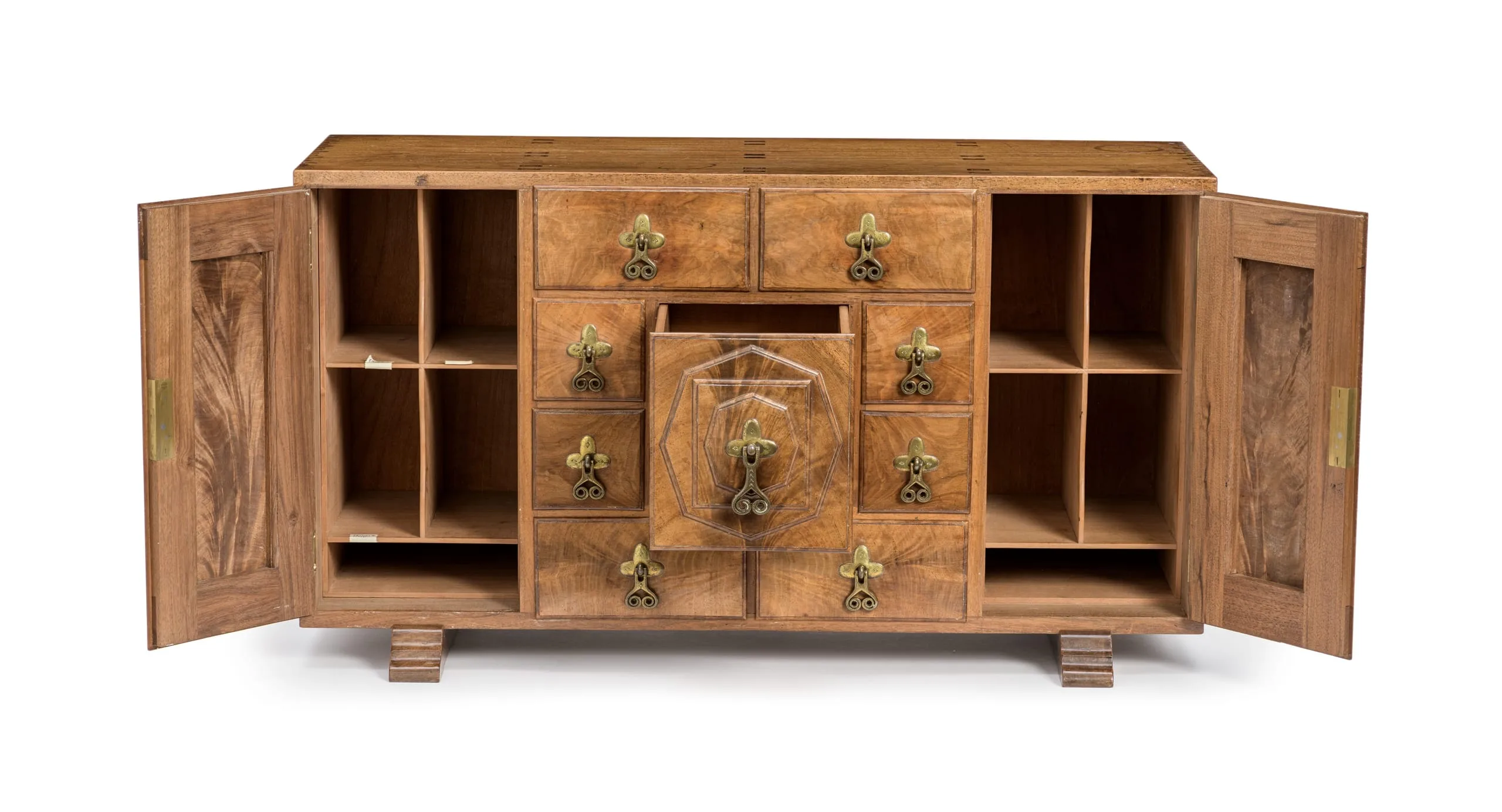
British architect and designer Ernest Gimson devoted his life to the Arts and Crafts ideal that the best design would be produced in workshop communities modeled on those of the preindustrial past, located in the countryside, and inspired by vernacular traditions. He left London for the bucolic Cotswolds in 1893, setting up workshops in various villages there before leasing, in 1903, the fourteenth-century Daneway House in the small town of Sapperton. This well-documented table cabinet (the term used in the Daneway House account book and in period literature) is an extraordinary example of Gimson’s design ethos. It is plain, the only ornamentation fielded panels and scrolled forms on drop handles. The solid English walnut was worked with consummate craftsmanship.
The cabinet was part of a room display at London’s Arts and Crafts Exhibition Society in 1916, where Gimson’s furniture was paired with wallpaper and textiles designed by William Morris and his daughter May. The exhibition catalogue describes Gimson’s utopian dreams for a new life based on collaboration and time-honored craft techniques, noting “meantime his workshops and his smith employ local labour, and develop the traditional skill in the crafts which is latent in most English villages, [but] in danger of dying out altogether.” While all the Gimson furniture on display was listed in the catalogue, this cabinet was the work selected for illustration when the Arts and Crafts exhibition was reviewed in the preeminent art journal The Studio (December 1916), attesting to its significance.
Wendy Kaplan, Department Head and Curator, Decorative Arts and Design