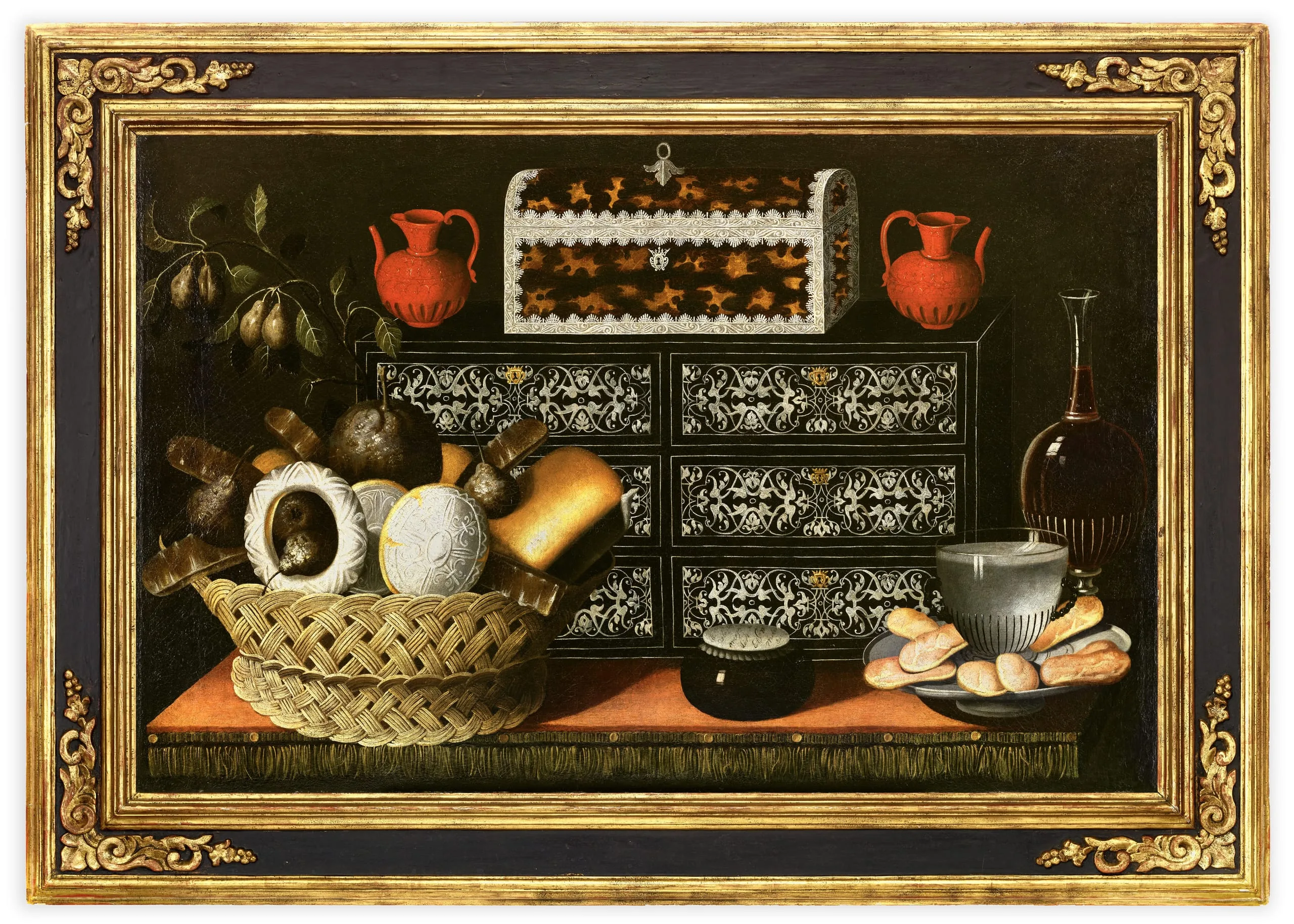
Few paintings can tell an expansive, global story through the mere representation of household goods. Yet this alluring still life, painted by the successful but enigmatic Spanish artist Bernardo Polo, does just that. It features the luxury objects and comestibles typical of an aristocratic home in seventeenth-century Southern Europe. Through such items, and the costly materials and ingredients needed to make them, the painting becomes a veritable map of Asian, African, and American trade to, through, and from Spain.
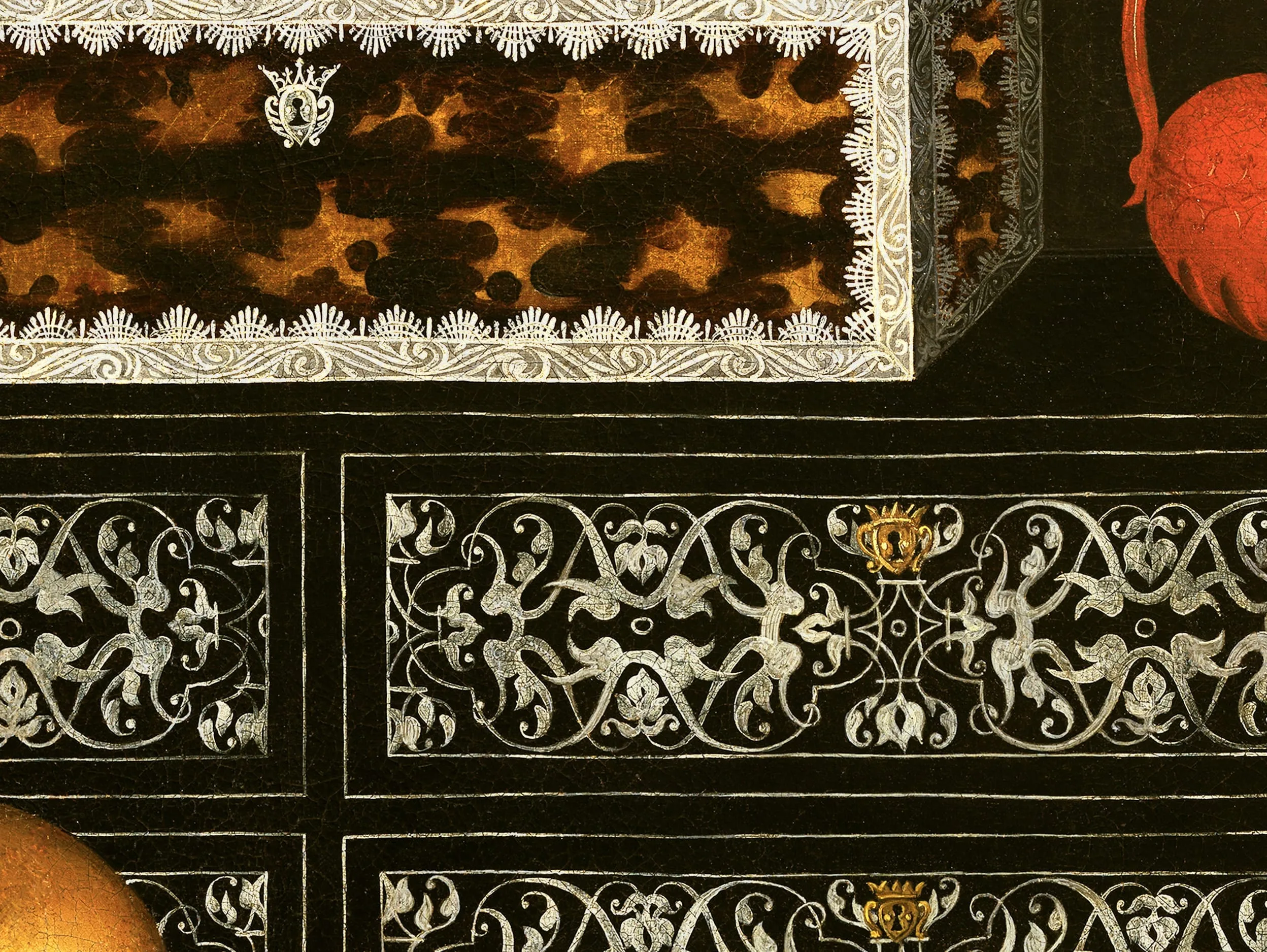
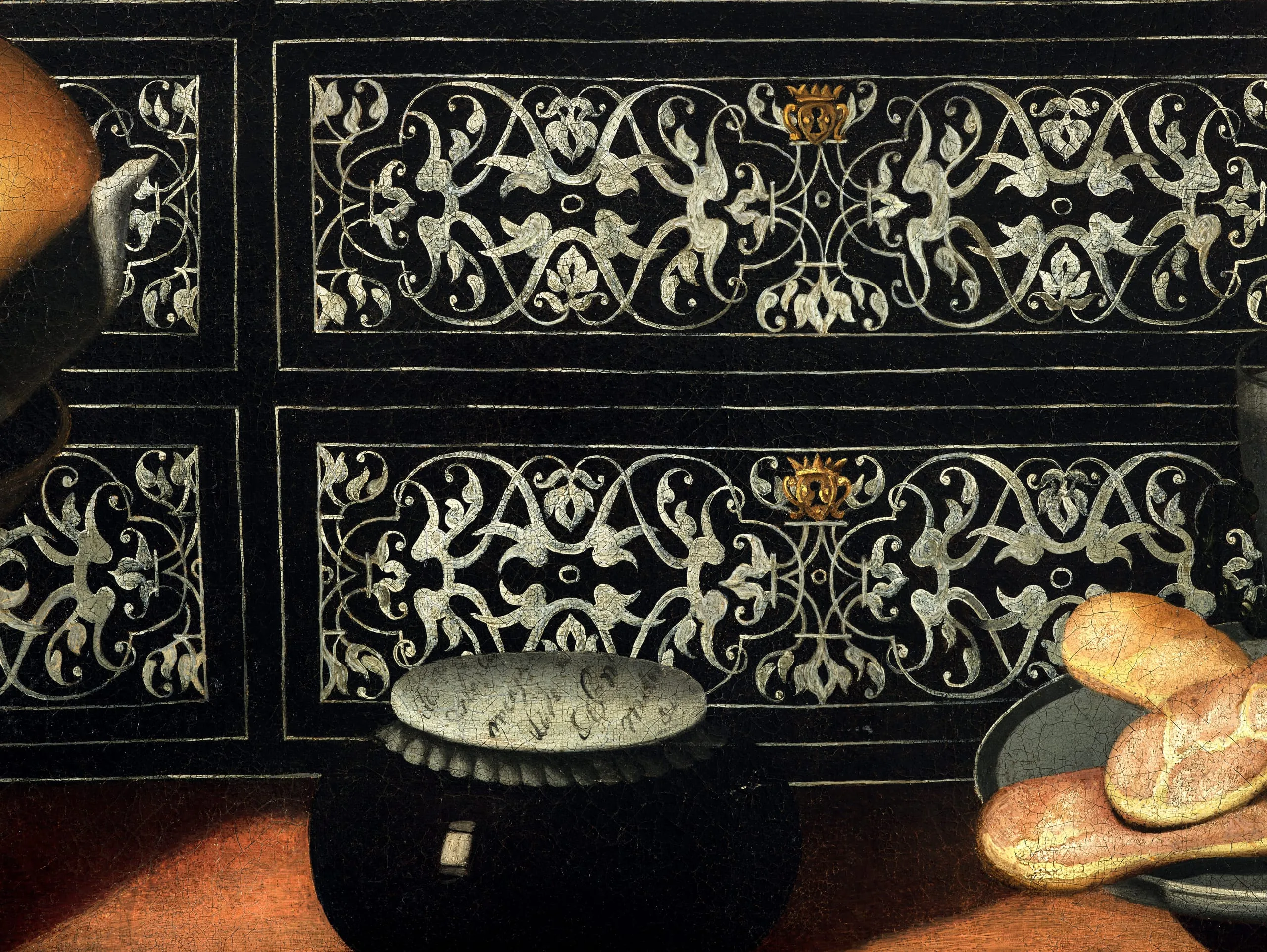
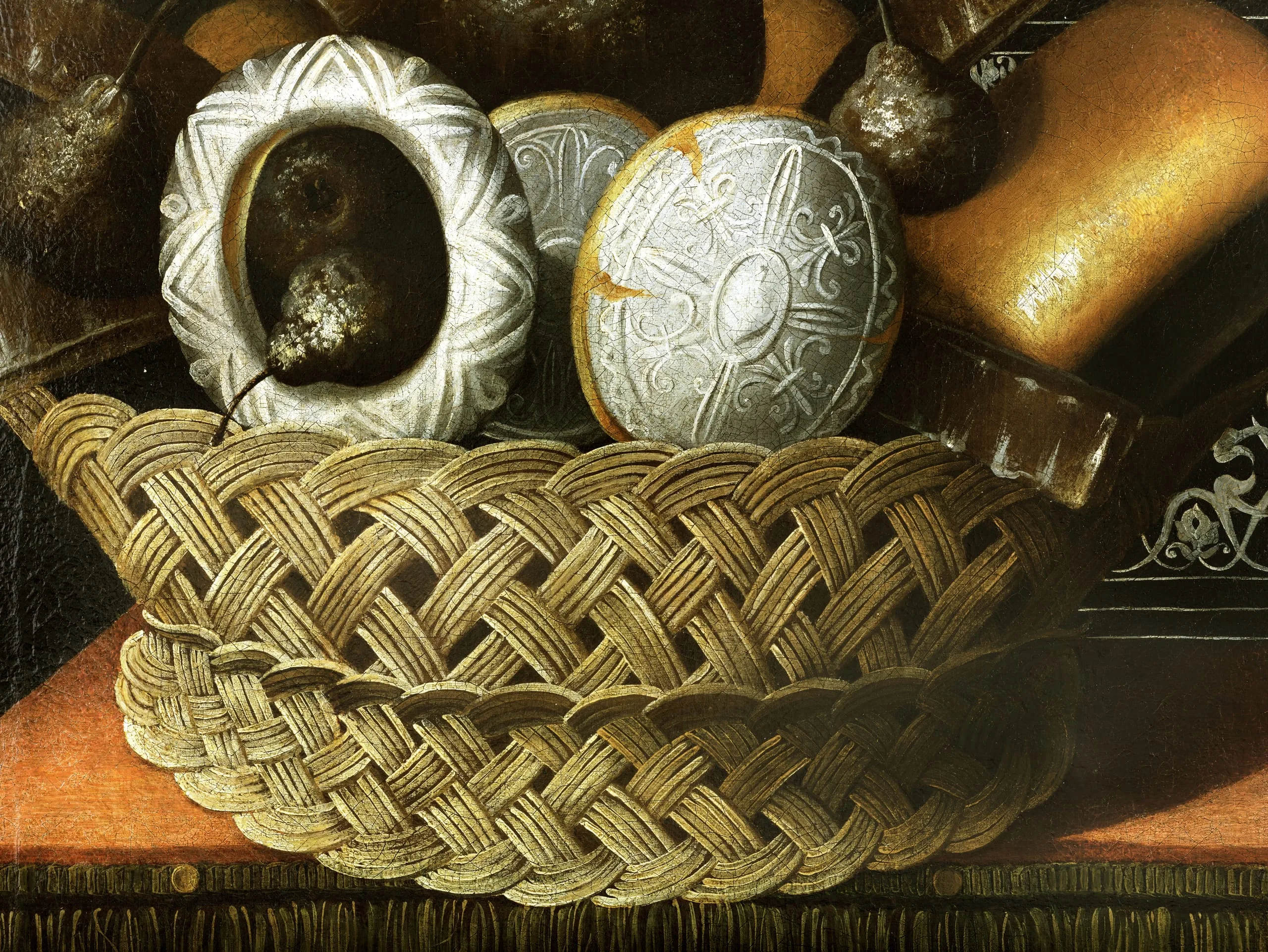
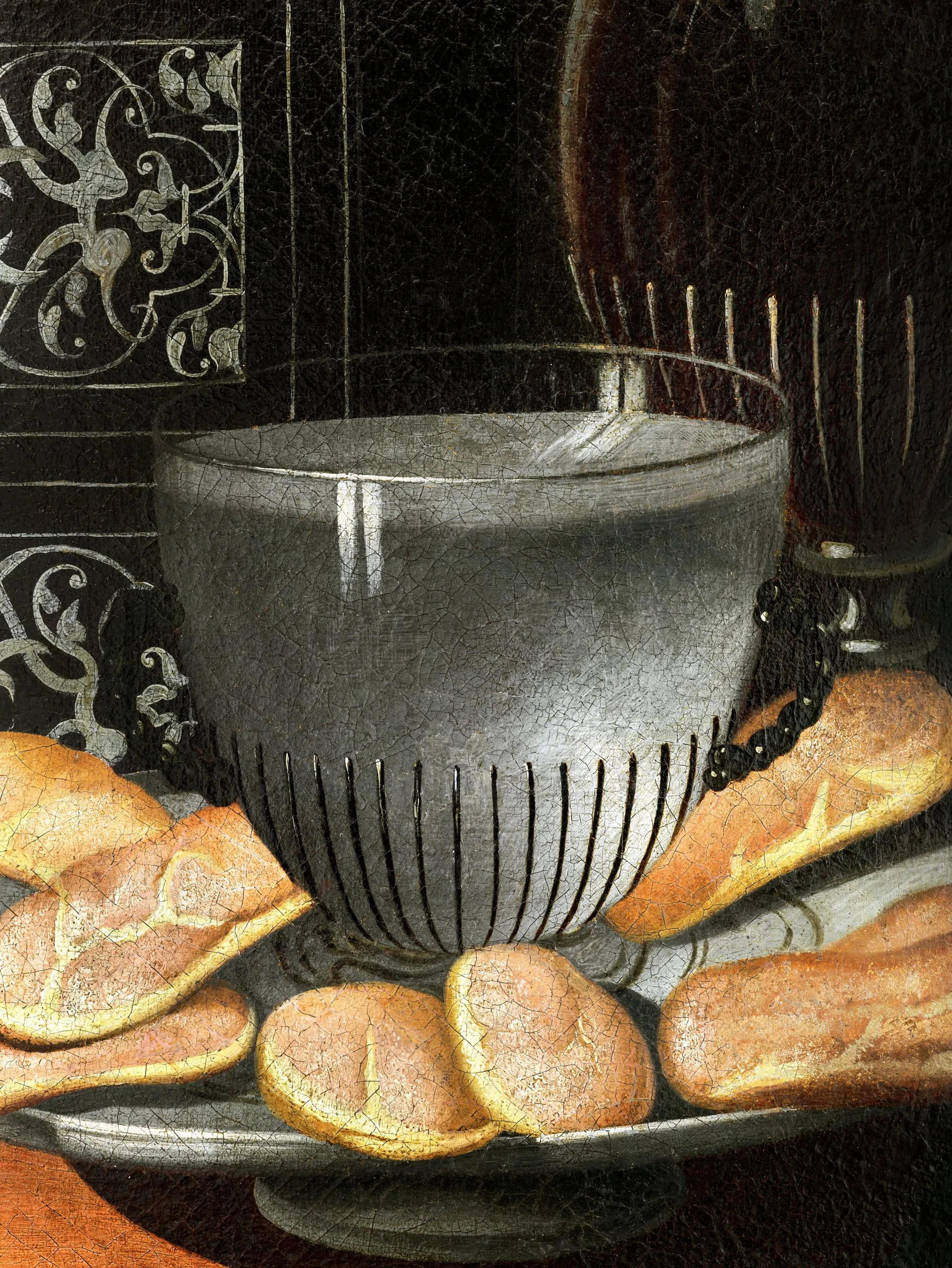
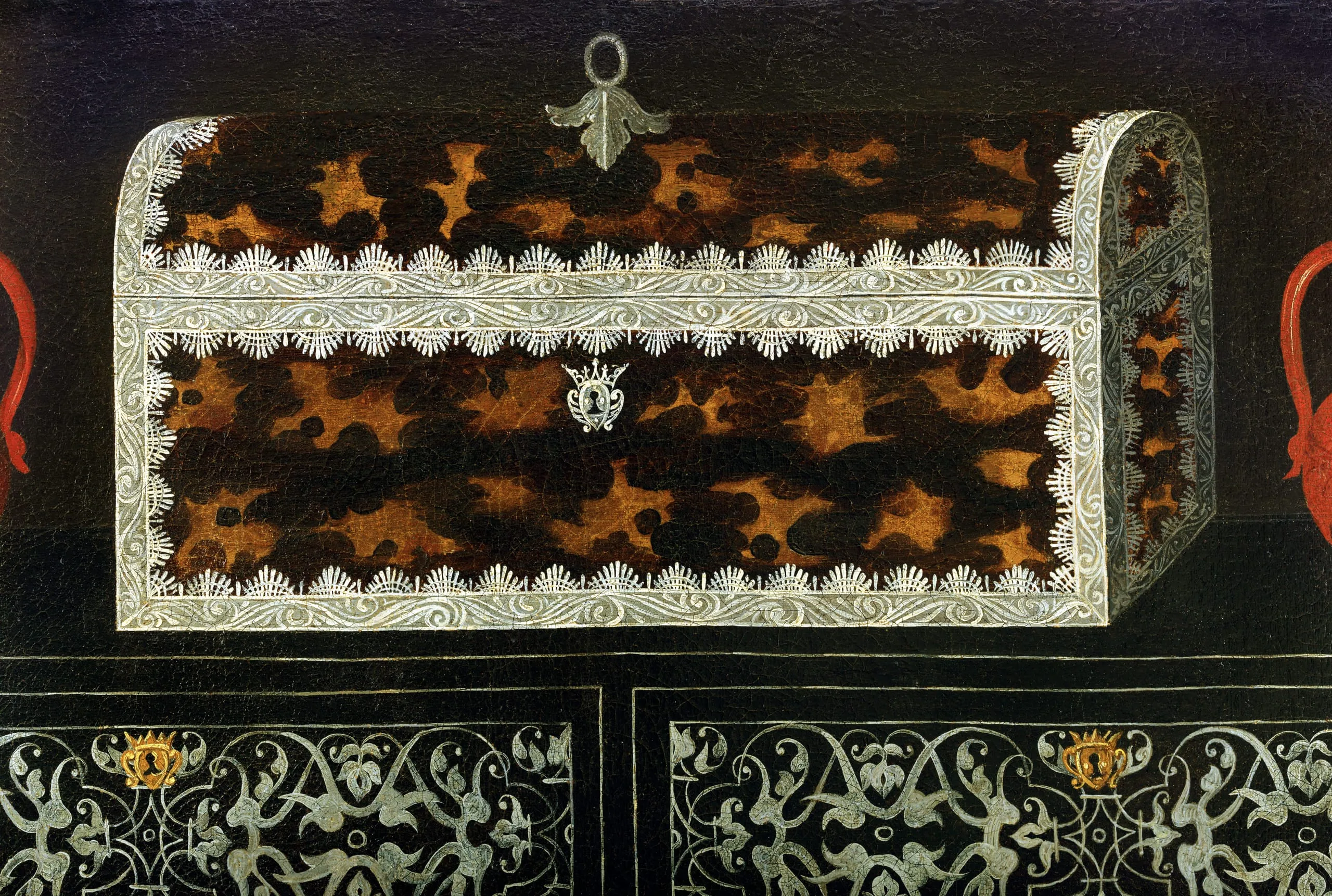
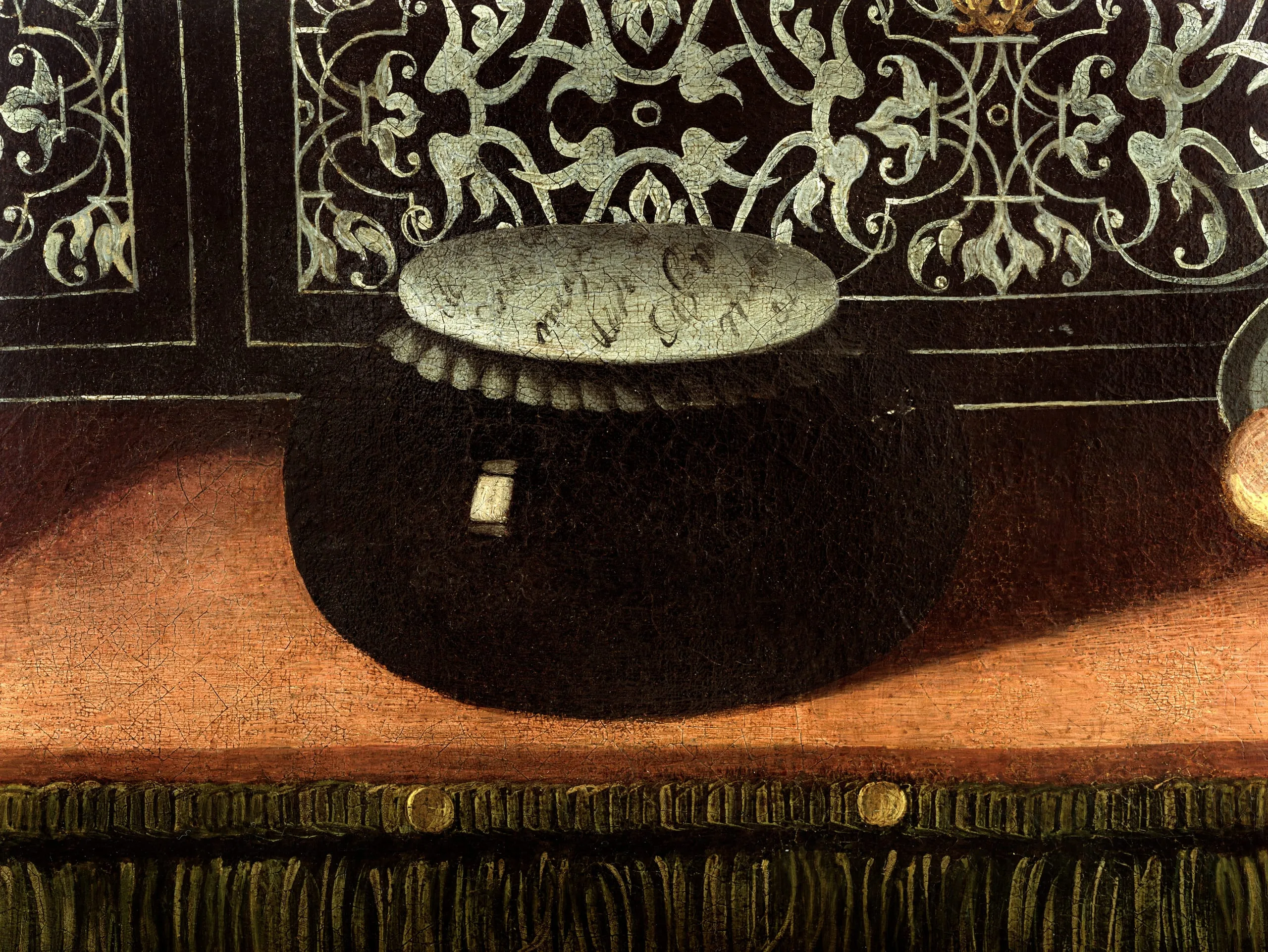
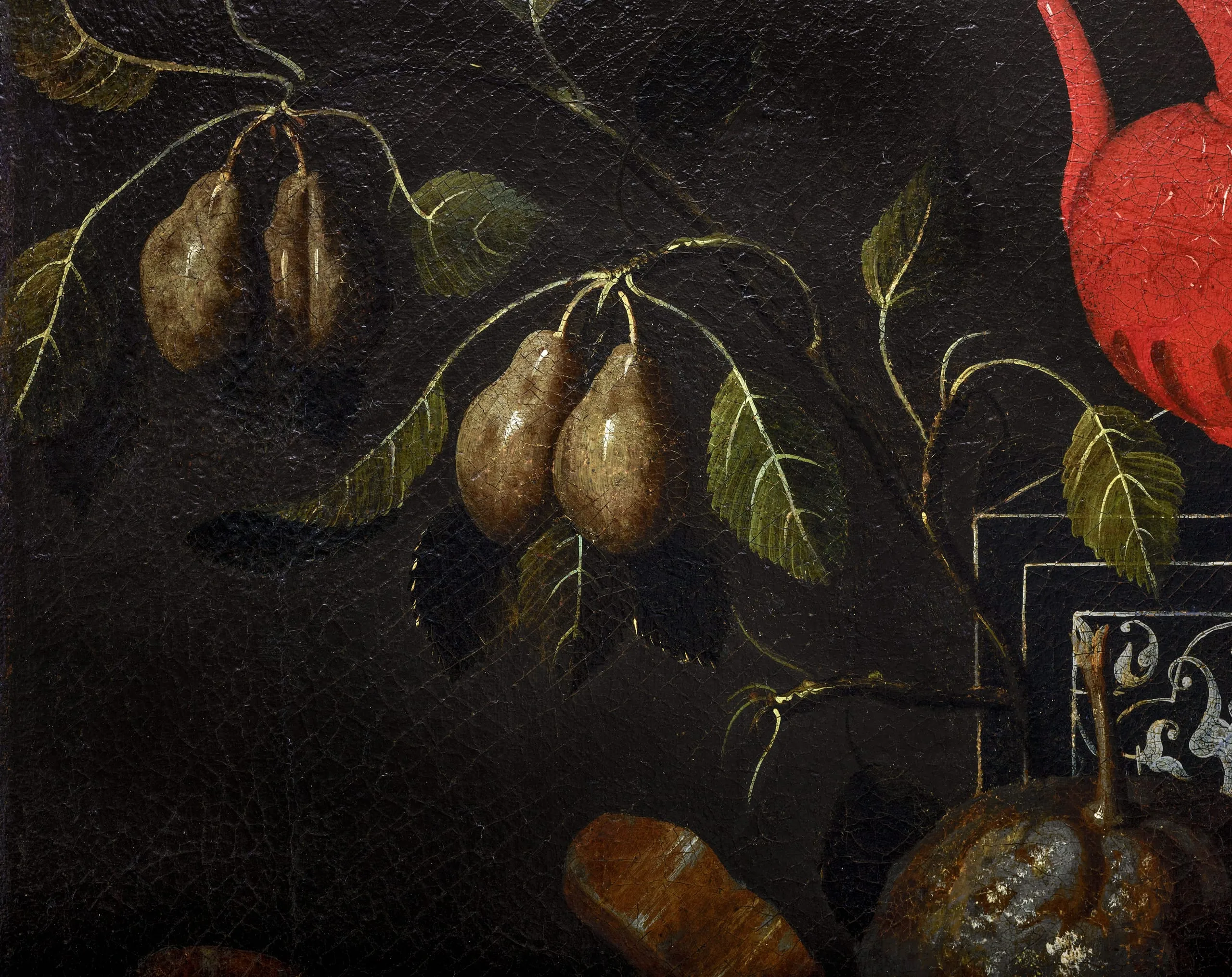
At left, on a leather-fringed table cover, is a woven grass basket that holds a variety of sweets: a shiny loaf of bread, candied fruit, and beautifully iced galletas. At center is a jar of preserves, and further to the right, a cup of sugar water and a bottle of wine in matching striated glassware, their mirrored surfaces reflecting an open window behind the viewer. These consumables testify to Europe’s newfound sweet tooth. Sugar was a primary export commodity from the Americas after European colonizing powers established plantations using enslaved African and Indigenous labor to cultivate and process the cane. The ebony and ivory cabinet, or papelera, held important documents and treasured small objects, often with secret compartments. The example featured here may well have been assembled in Flanders or Naples (both part of the Spanish empire at this time), but the ebony wood was harvested in West Africa, southern India, or Indonesia, and the ivory inlay was carved from the tusks of Indian or African elephants. The tortoiseshell chest, by comparison, was probably made in its entirety on the west coast of India, either by Gujarati craftsmen, whose skills had been honed in the Islamic world over centuries, or by Indo-Portuguese laborers working further south in Goa. The silver for the chest’s embellishments would have been sourced through a worldwide network initiated by the Spanish, who mined extraordinary amounts of the metal from Potosí, in present-day Bolivia.
Finally, atop the papelera rest two red clay vessels, known as búcaros, whose glossy finish and delicate geometric designs pick up the light traveling across the painting from left to right. Imported from Portugal, or perhaps Mexico, these vessels were valued for their aroma—the red clay itself emits a fragrance—and the flavor it infused in the water stored within. In the seventeenth and eighteenth centuries, Spanish and Italian women often took small bites of the clay for its purported medicinal properties. The búcaro’s ubiquity is confirmed by its appearance at the center of one of the most important and well-known paintings of seventeenth-century Spain, Velázquez’s Las Meninas.
2025