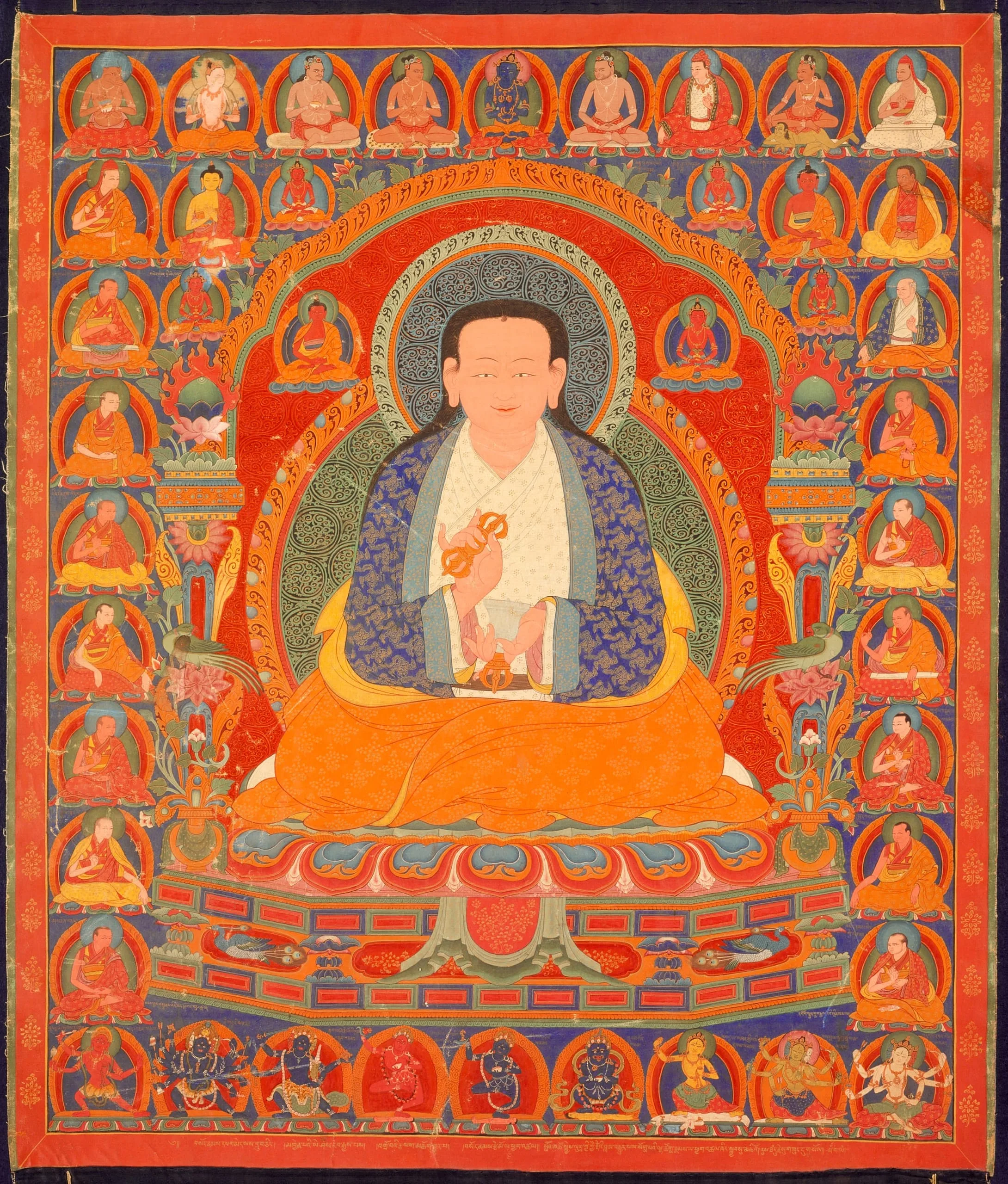
The central figure of this painting is Sonam Tsemo (1142-1182), the eminent Sakyapa (Sakya sect) lay scholar who is honored for his systematization of tantric doctrine and literature. Unlike Sakyapa monks who are depicted with short hair, Sonam Tsemo is shown with long hair and a richly embroidered blue coat indicating that he never took the full set of monastic vows and remained a layperson. Sonam Tsemo holds the ritual emblems of the Sakyapa hierarchs: the thunderbolt (vajra) and the bell (ghanta). These attributes refer to the Buddha Vajradhara, the ultimate originator of Sakyapa religious practices who is depicted at the center of the top register colored blue and wearing jewelry. Vajradhara is flanked by the yogis and great adepts to whom he initially imparted his teachings. The next lower register portrays various Buddhas, bodhisattvas, and the religious teachers who introduced Buddhist teachings to Tibet.
This painting is part of a dispersed series commemorating the Sakyapa hierarchs. Its brilliant coloring typifies the Sakyapa preference for bright, deep tones. The elegant floral arabesques on the throne back and the fine detailing are characteristic of paintings produced at Ngor monastery in the early 17th century.
Dedicatory inscription on the bottom border:
Reverence to Sonam Tsemo who achieves immeasurable virtue, extends knowledge and wisdom, and is an excellent friend to all creatures. Doing reverence to the assembly of deities of the Lama Kagyupas of the tradition of Tshoskyes Dorje (Saroruha), I take refuge in them and pray at all times to follow their teaching.
(Translation by H. E. Richardson.)