M.2022.250.29
Mat
Malaysia, Sarawak, Penan people, c. 1982
Rattan
57 × 86 in. (144.78 × 218.44 cm)
Gift of Don R. Bierlich
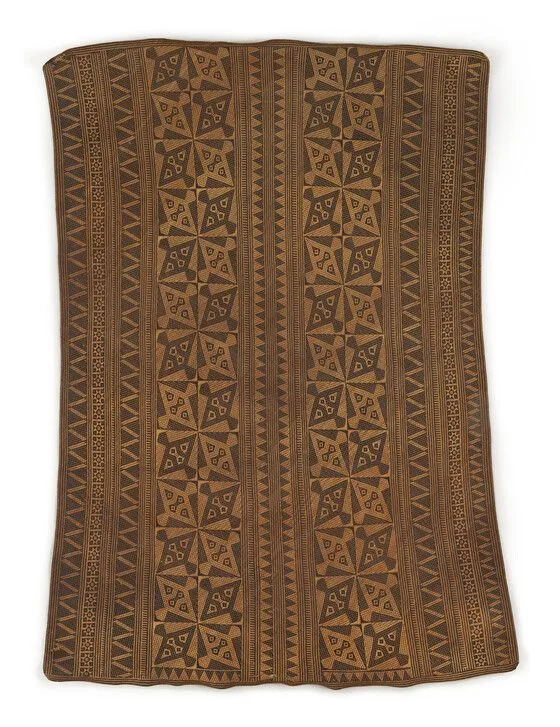
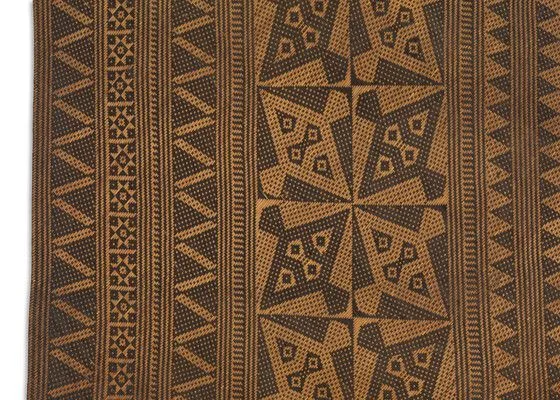
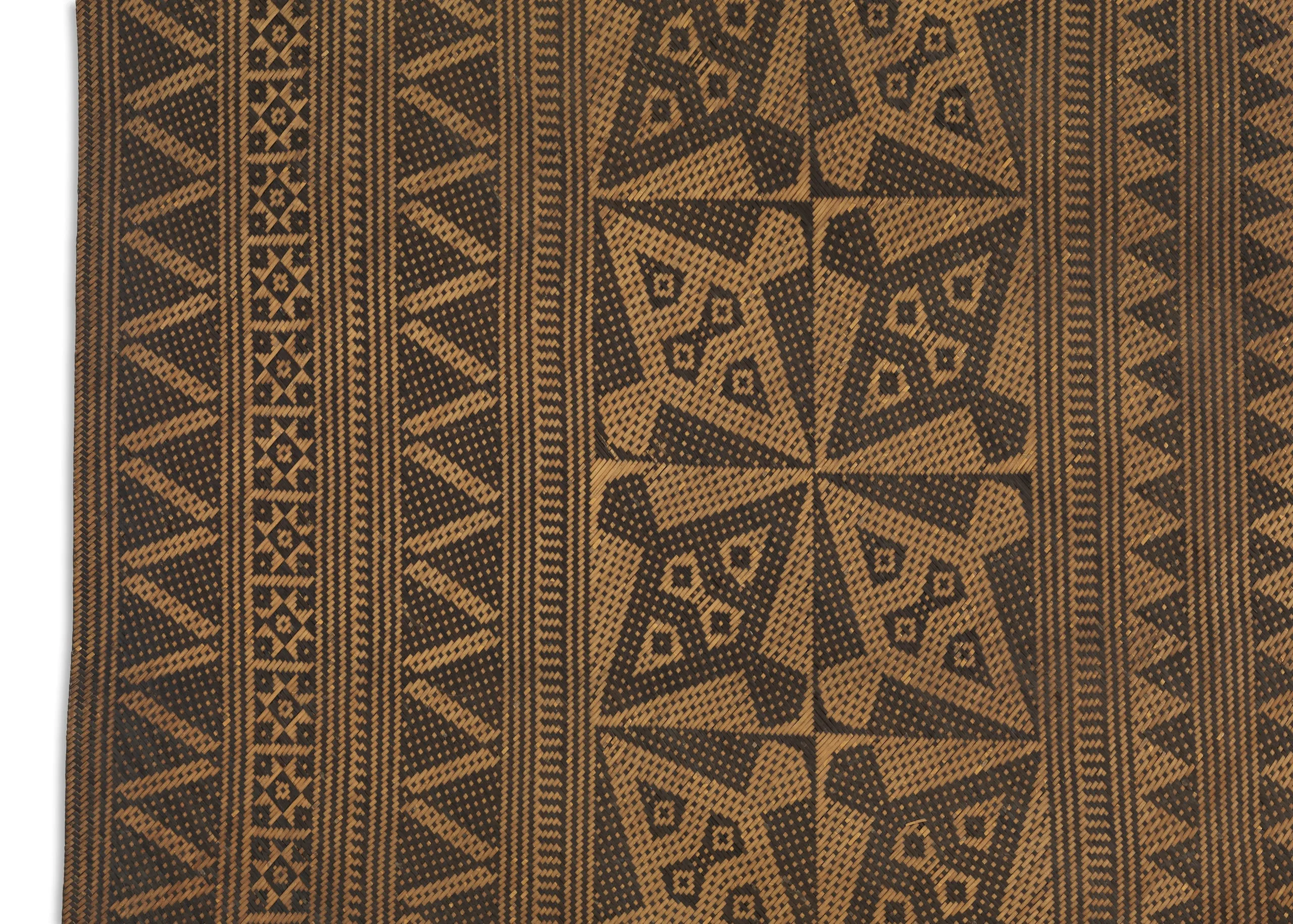
Woven mats have been essential to Southeast Asian homes for generations as a place to gather, eat, sleep, and perform communal rituals. The island of Borneo is home to a rich history of mat making, where these objects of daily life are treasured personal possessions and symbols of community. This mat of plaited rattan features a tessellation of birds in flight, abstracted and at times interlocked into roundel patterns, along with triangular shapes that recall ocean waves and the island’s mountains. Typically monochromatic, these bold patterns were achieved with black-dyed and undyed strips of locally grown rattan.
The use of mats, which predates European-style tables, chairs, and beds and continues today, illustrates how living cultures have survived colonization and globalization, even as they adapt to Western-style furniture. The techniques and designs used by the weaver, who is typically female, are passed down and taught matrilineally. As a result, mats are respected for the collective wisdom that they hold, and designs are not historically credited to the individual weaver alone but rather regarded as communal expressions.
Clarissa M. Esguerra
2024