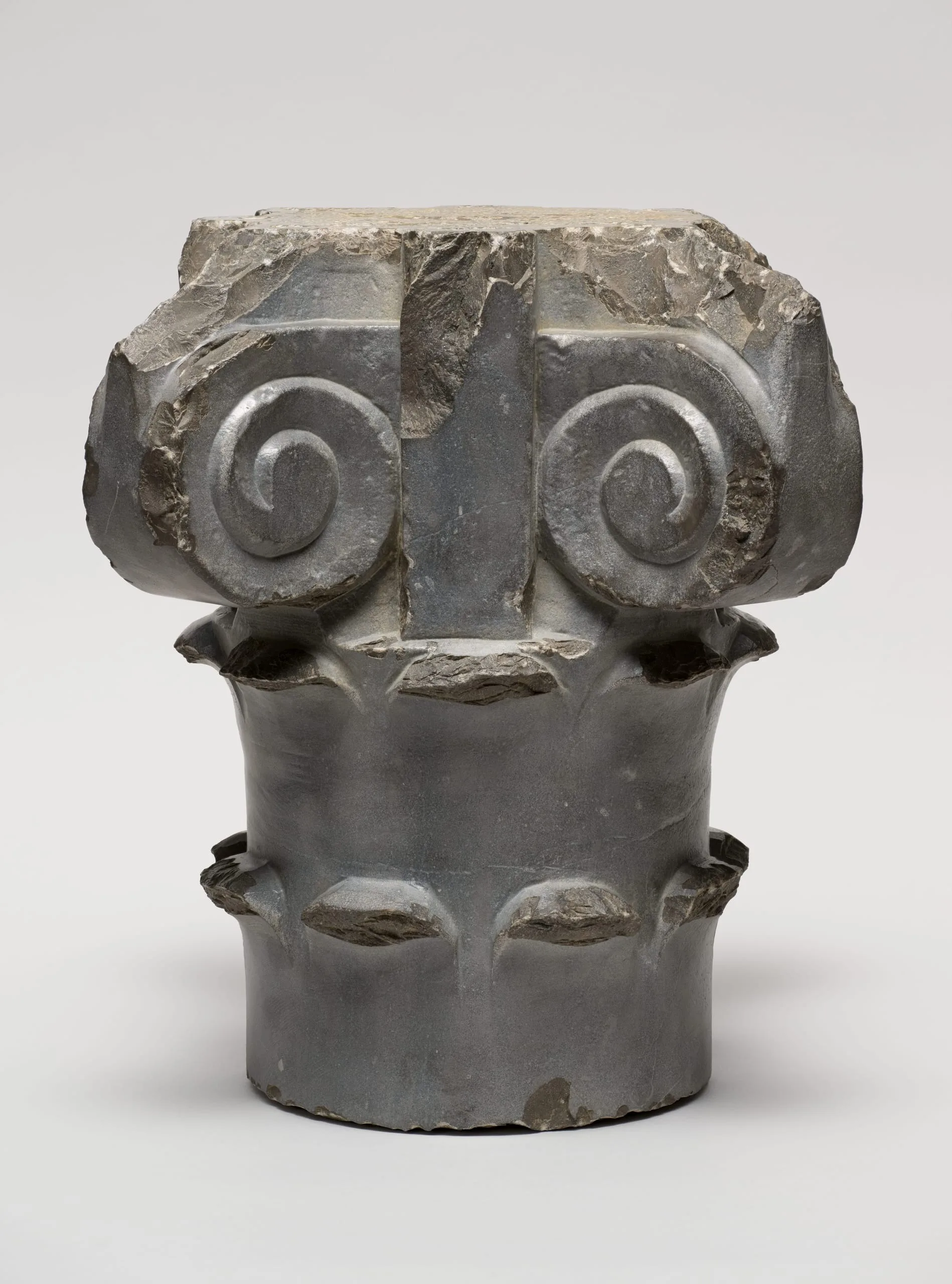
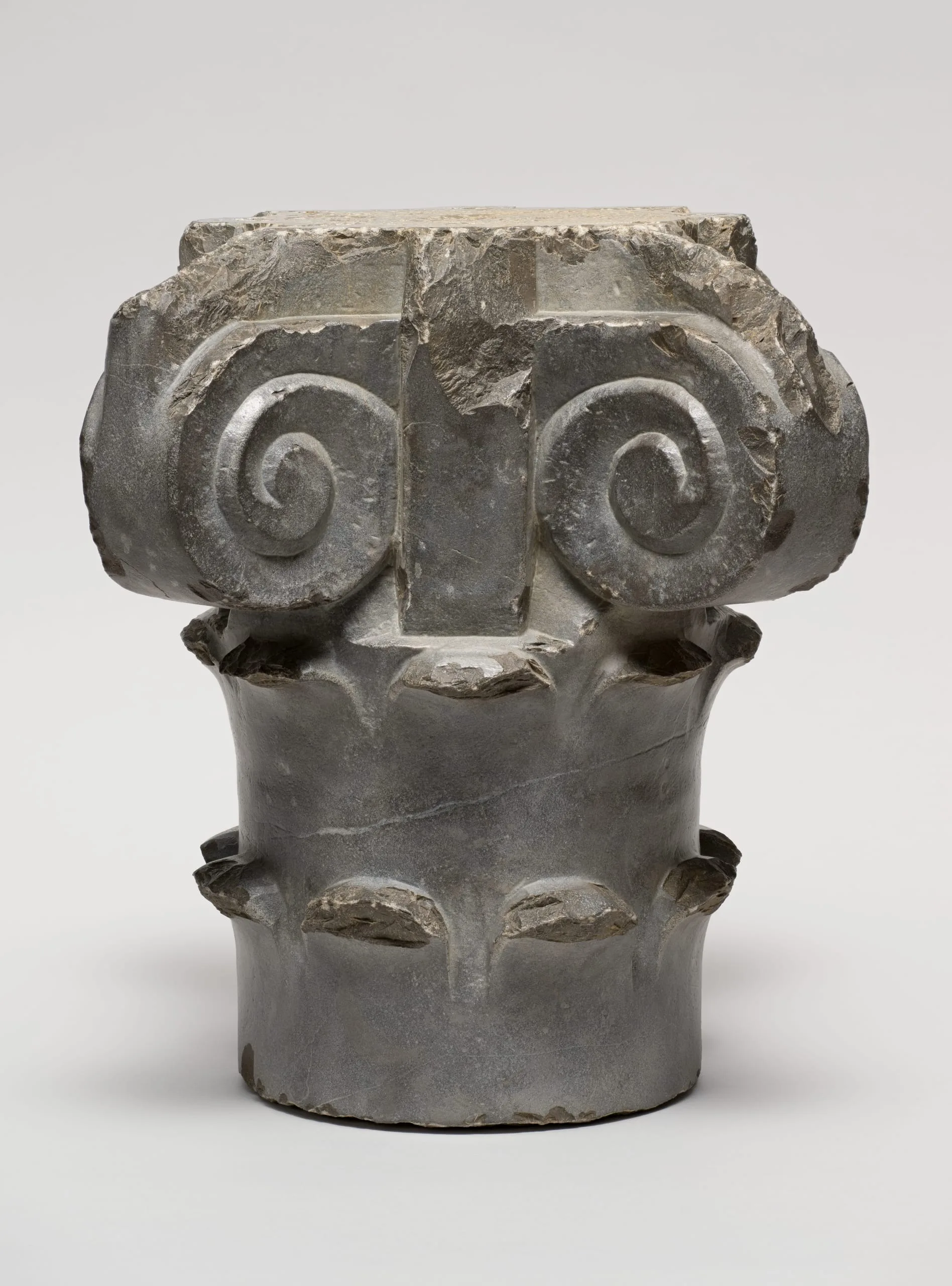
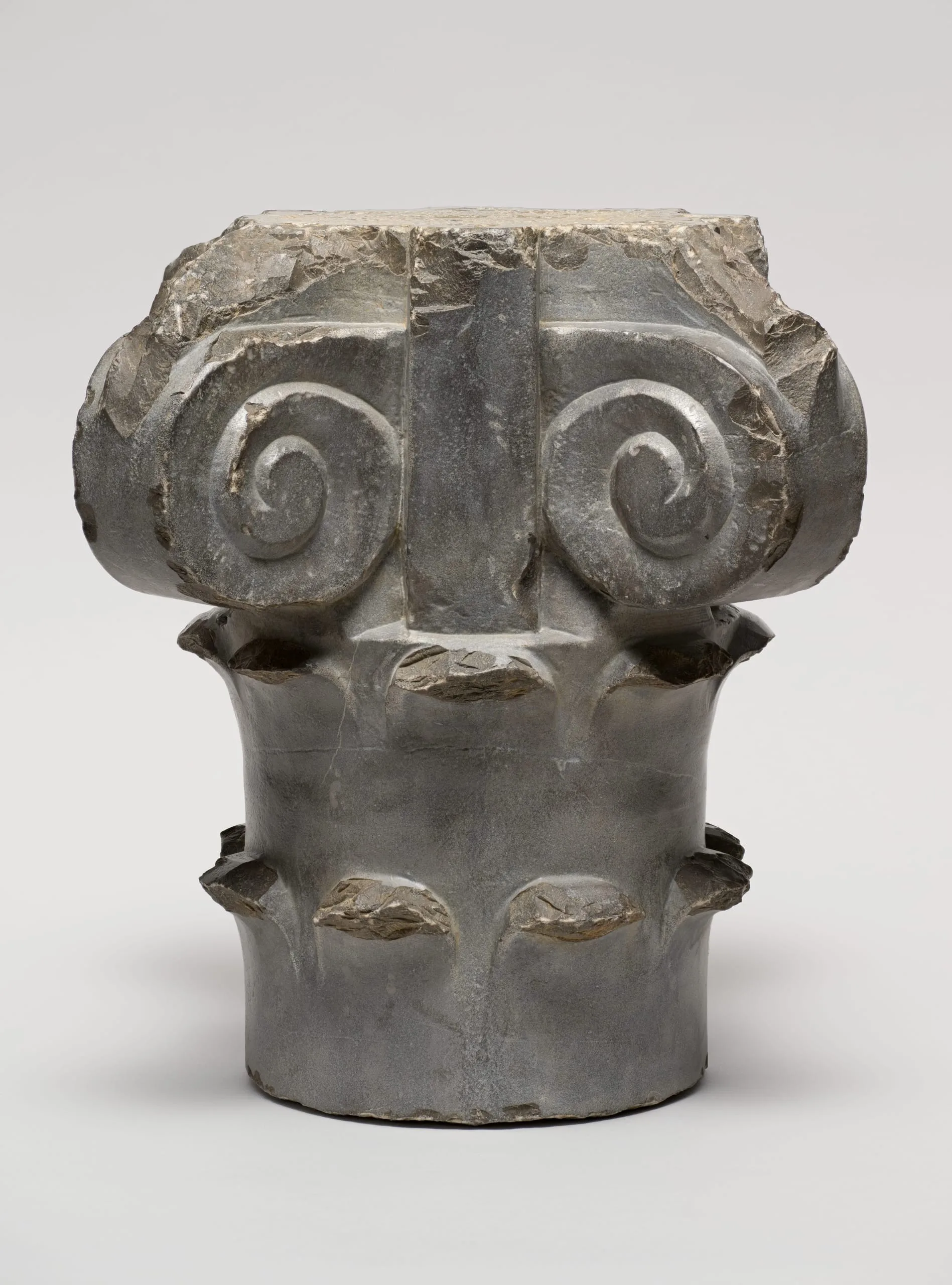
Dating from the thirteenth to the fifteenth century, the Alhambra is one of the world’s most famous buildings and the best-preserved palace of medieval Islam. But before the Alhambra, there was another palace built on the same hill, a spur of the Sierra Nevada mountains known as Sabika. This capital, along with several similar capitals and columns, now in the Alhambra Museum, may have belonged to this earlier though no longer extant building, completed around the mid-eleventh century.
The capital has a well-documented provenance that supports an attribution to the site of the first palatial fortress. It was previously in the collection of Mariano Contreras Granja (1853–1912), architect and director of conservation at the Alhambra, then passed by descent to his daughter and granddaughter. Mariano Contreras Granja was the third generation in a family of important restorers of the Alhambra Palace. In 1821, an earthquake damaged the Alhambra, and an extensive repair program was initiated by the architect José Contreras in 1830. After his death in 1847, his son Rafael Contreras Muñoz took over the work, continuing it for almost four decades, until he passed it on to his son, Mariano Contreras Granja. Given the family’s extended involvement in the Alhambra, it is possible that any one of these three generations acquired the present capital.
In addition to its outstanding provenance, the capital is also a thing of beauty, in terms of its exceptional coloring, which varies with the light, and its skillful carving. It is one of several architectural elements in LACMA’s collection from the Alhambra itself, such as a stucco plaque (M.2002.1.685) inscribed in Arabic, the springing of a large stucco arch (M.73.5.2), and a luster wall tile (M.73.5.782).
2025