LACMA

ShopMembershipMyLACMATickets
LACMA
Los Angeles County Museum of Art
5905 Wilshire Blvd.
Los Angeles, CA 90036
info@lacma.org
(323) 857-6000
Sign up to receive emails
Subscribe
© Museum Associates 2025

Museum Hours

Monday

11 am–6 pm

Tuesday

11 am–6 pm

Wednesday

Closed

Thursday

11 am–6 pm

Friday

11 am–8 pm

Saturday

10 am–7 pm

Sunday

10 am–7 pm


  • About LACMA
  • Jobs
  • Building LACMA
  • Host An Event
  • Unframed
  • Press
  • FAQs
  • Log in to MyLACMA
  • Privacy Policy
© Museum Associates 2025
Collections

Unidentified Guaraní artists
Cabinet and Writing Desk (Armario de aparato y papelera)18th century

On view:
Geffen Galleries, South American Symbolic Universes
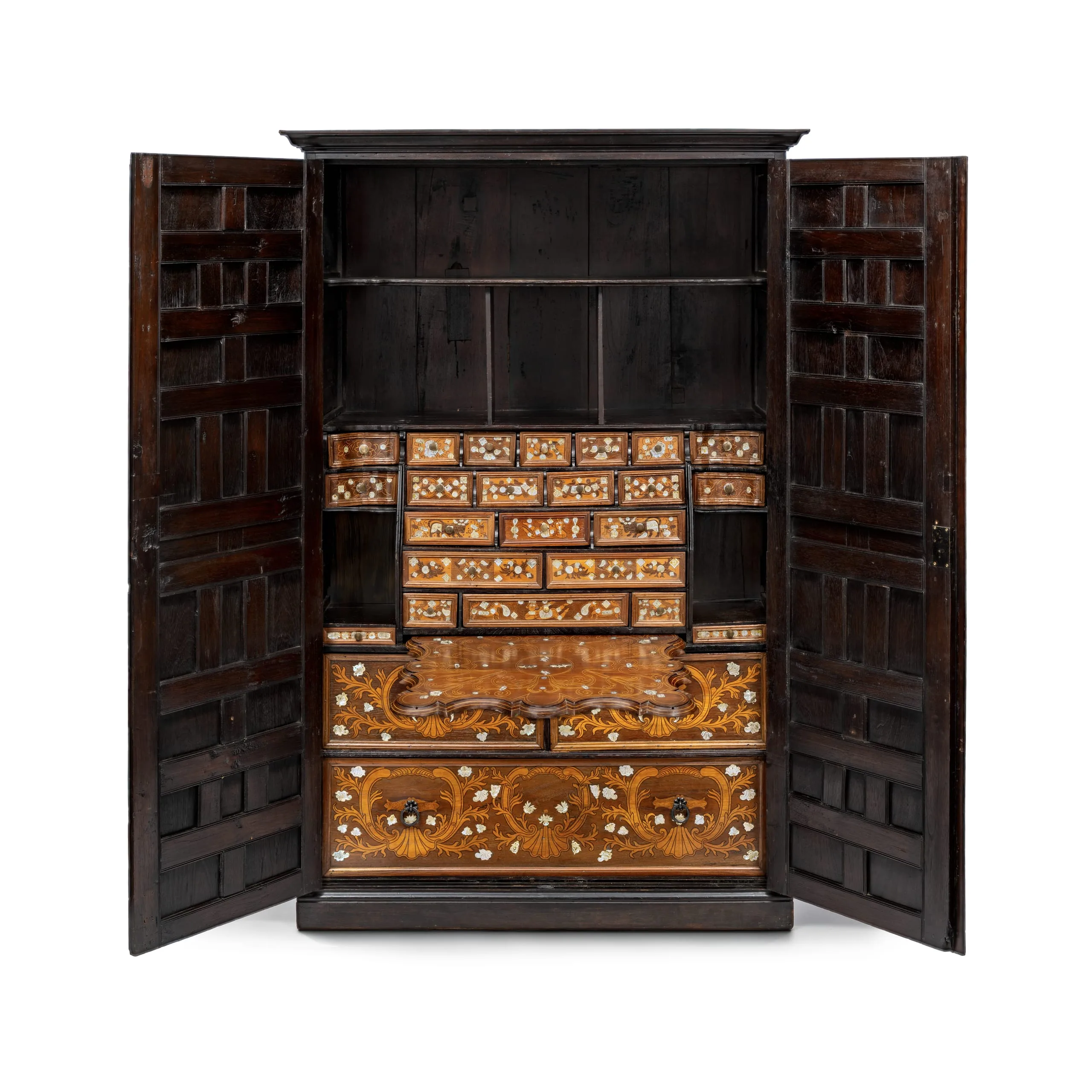
Large ebonized wood cabinet with both doors open, revealing interior fitted with rows of small marquetry drawers inlaid with floral motifs in amber and honey tones with white flower inlay
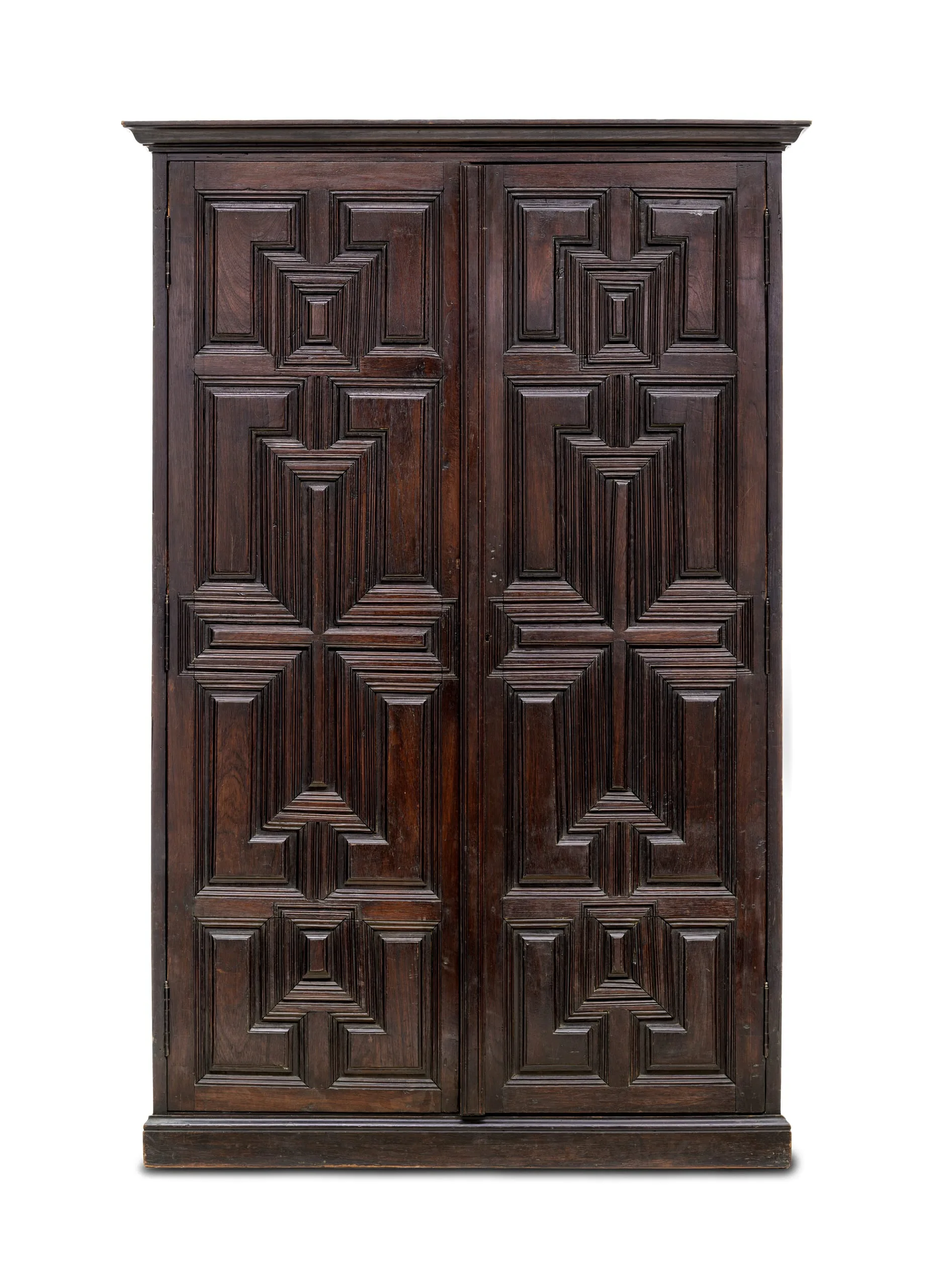
Dark walnut two-door cabinet with deeply molded raised geometric panels in a repeating diamond and rectangle pattern, flat cornice top and plinth base.
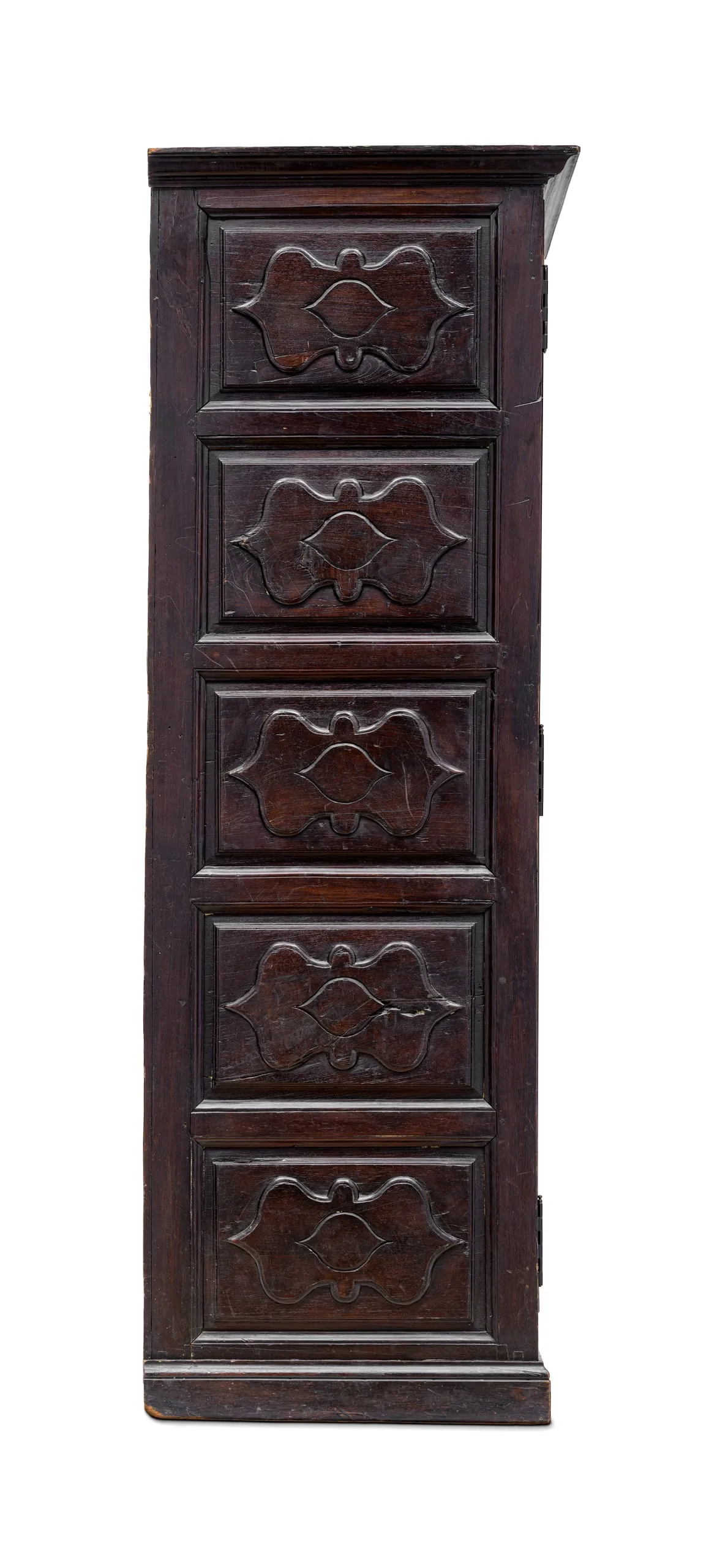
Tall narrow wooden cabinet with dark walnut finish, featuring five stacked drawer fronts each carved with a symmetrical cartouche-style raised motif.
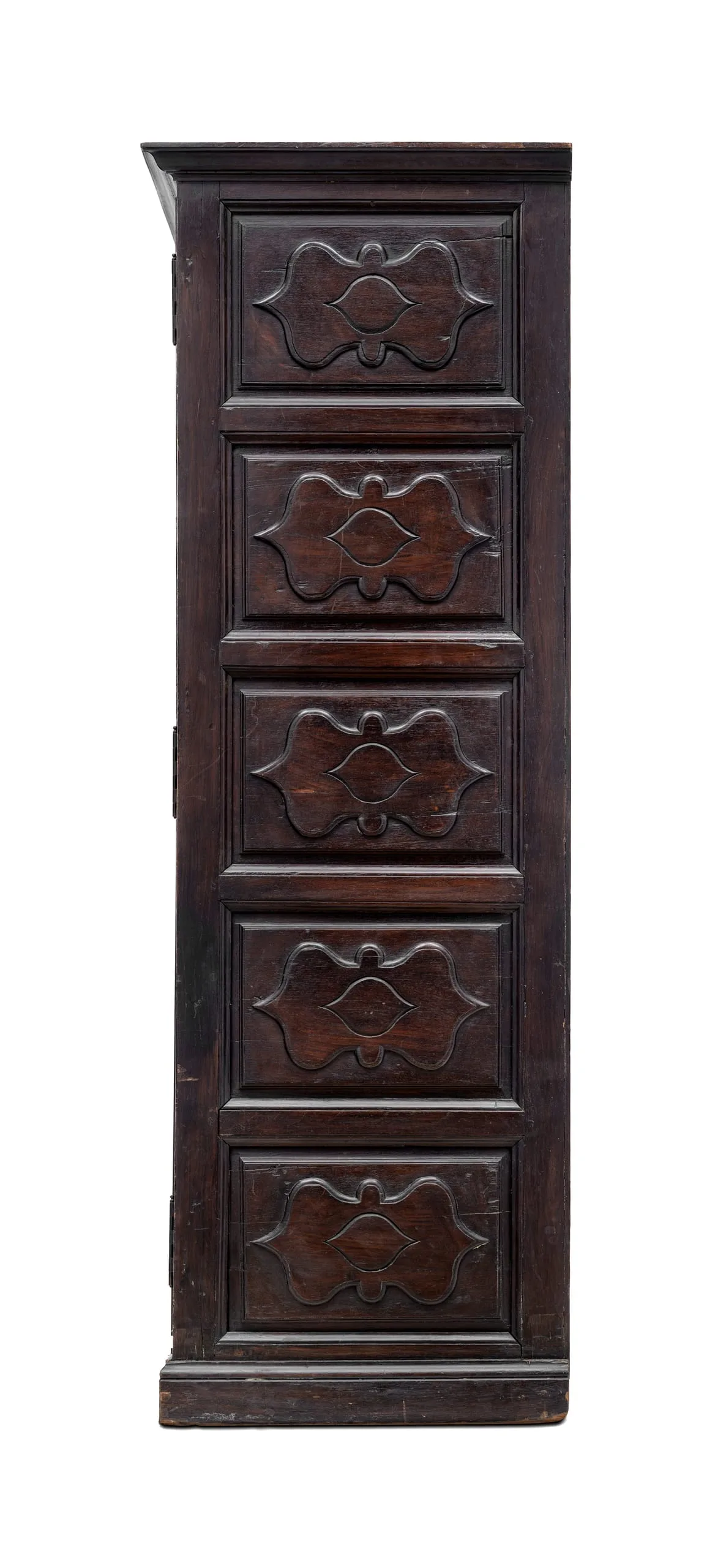
Tall, narrow dark wood cabinet with five drawers, each featuring a carved cartouche motif with scrolled edges, set within a raised rectangular panel; deep mahogany tone with worn surface.
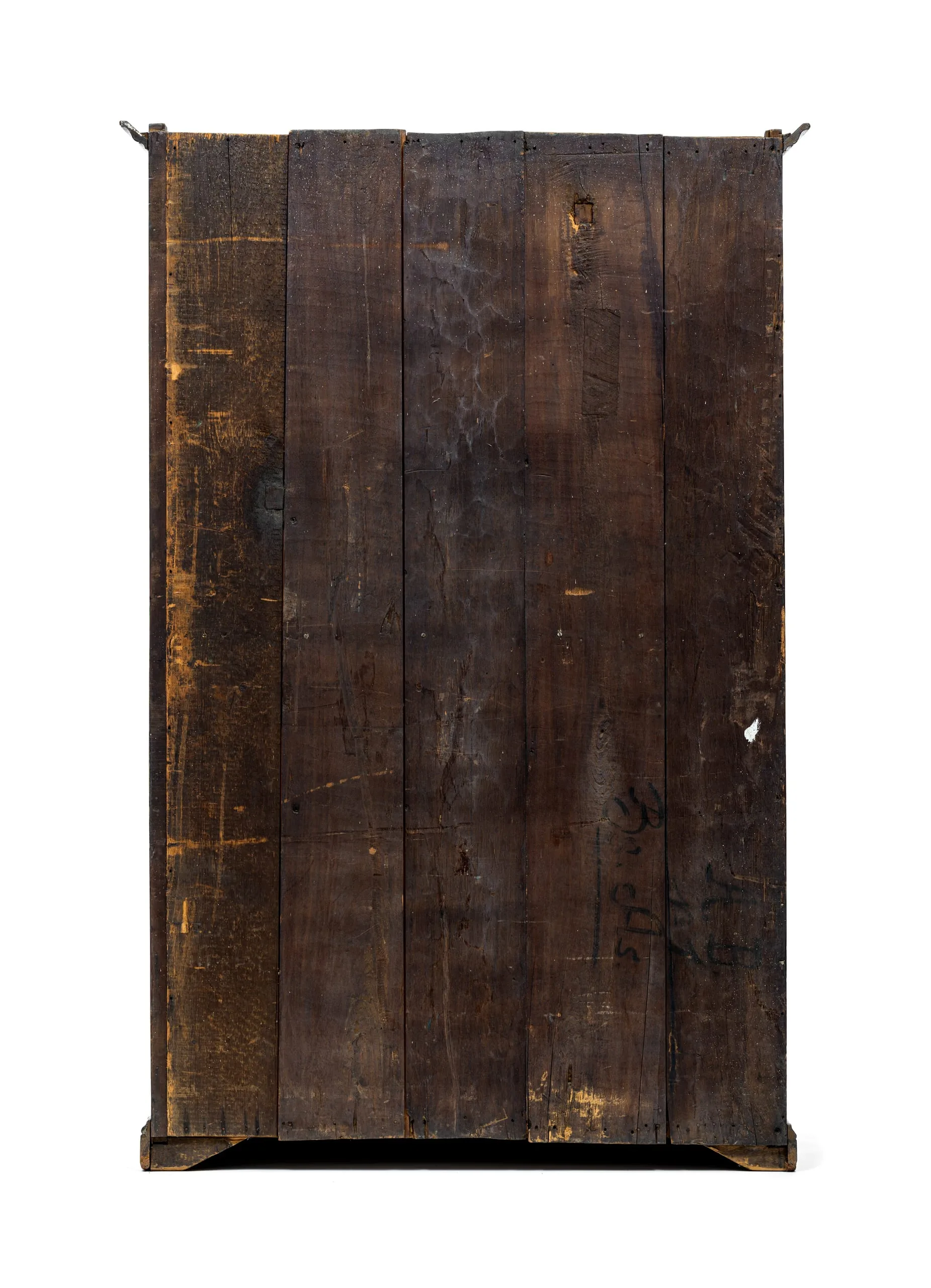
Reverse of a wooden panel or cabinet showing dark, aged wood planks with visible scratches, stains, and faint inscriptions; small metal hardware visible at top corners.
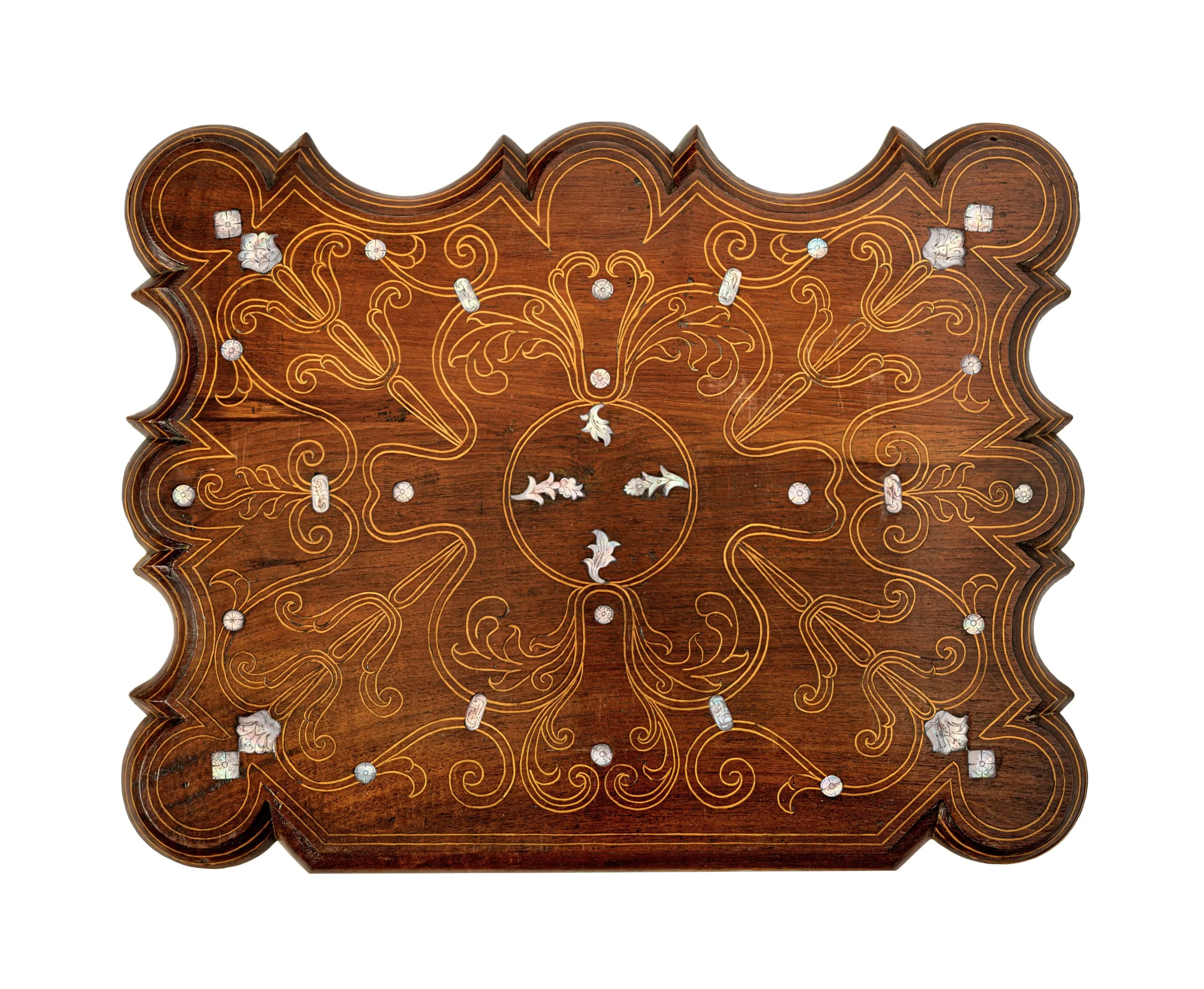
Wooden panel with scalloped and notched edges, decorated with symmetrical scrolling vine and acanthus marquetry inlay in lighter wood on dark walnut ground, with small mother-of-pearl floral and figural insets scattered across the surface.
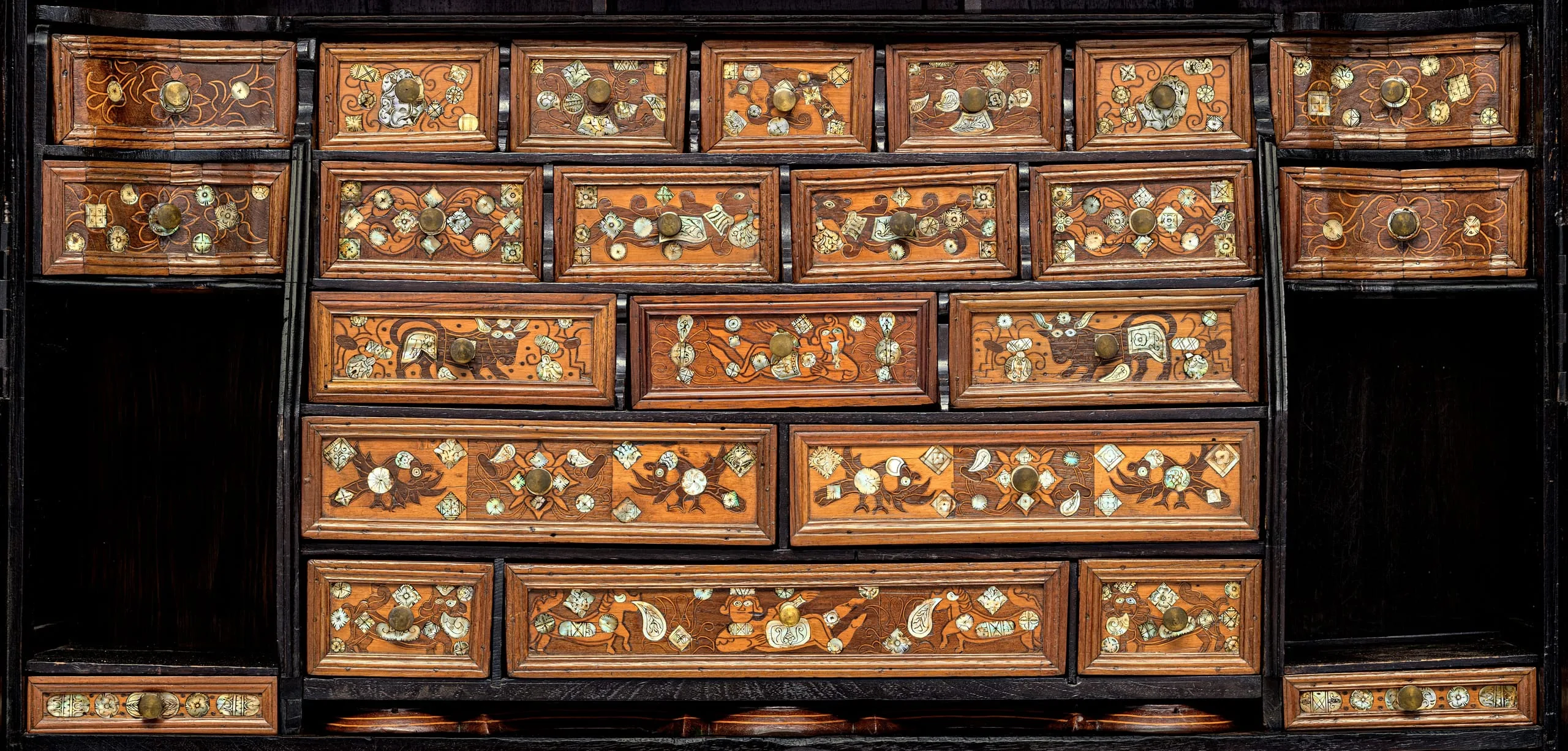
Wooden cabinet front with ebonized framing and multiple small drawers, each panel decorated with marquetry and inlaid metalwork depicting animals, birds, and foliage in warm amber and orange tones against darker wood.
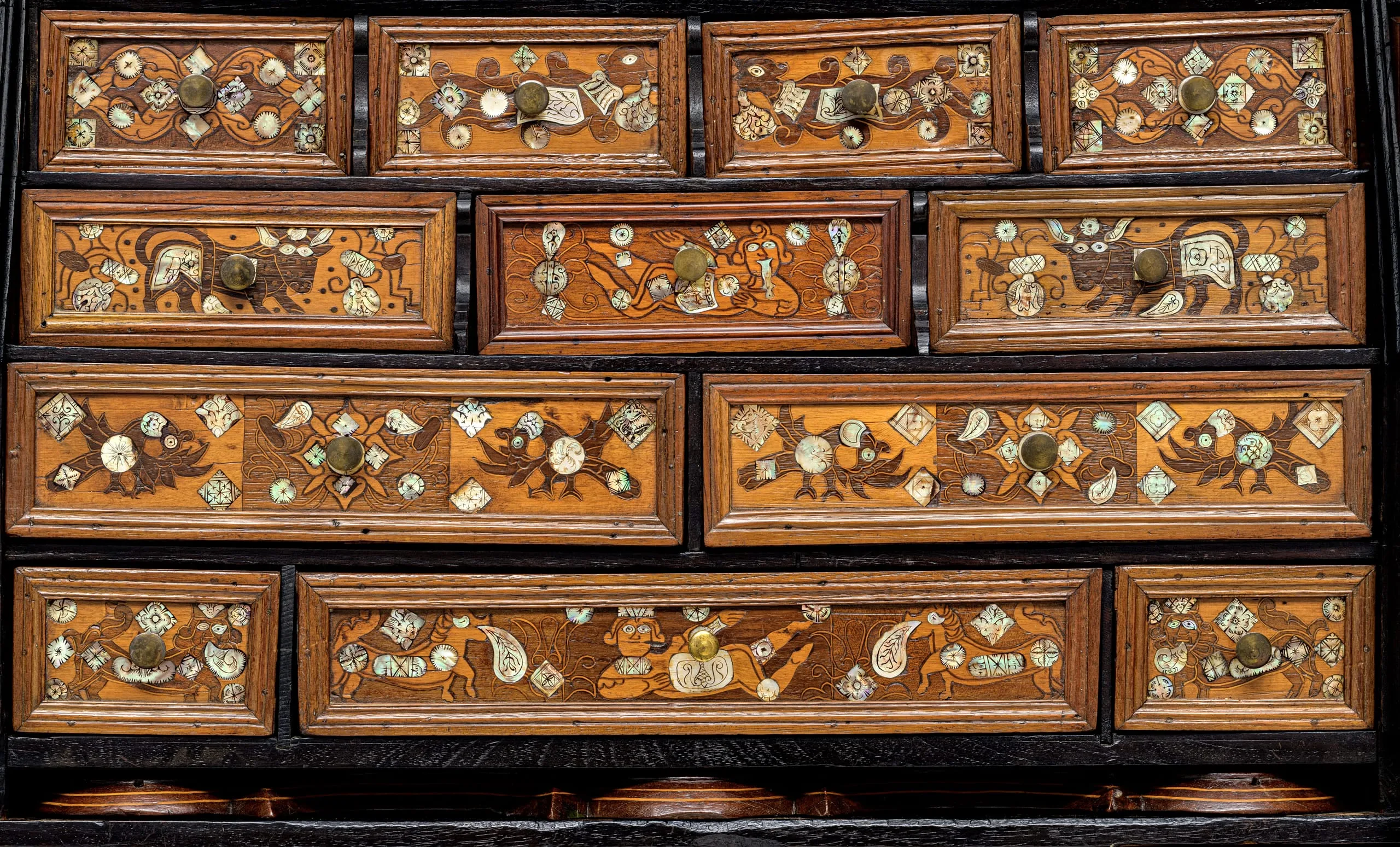
Detail of a wooden cabinet with multiple drawers, each panel decorated with marquetry inlay depicting animals, birds, and hybrid creatures amid scrolling foliage, accented with mother-of-pearl and brass ring pulls against an ebonized frame.
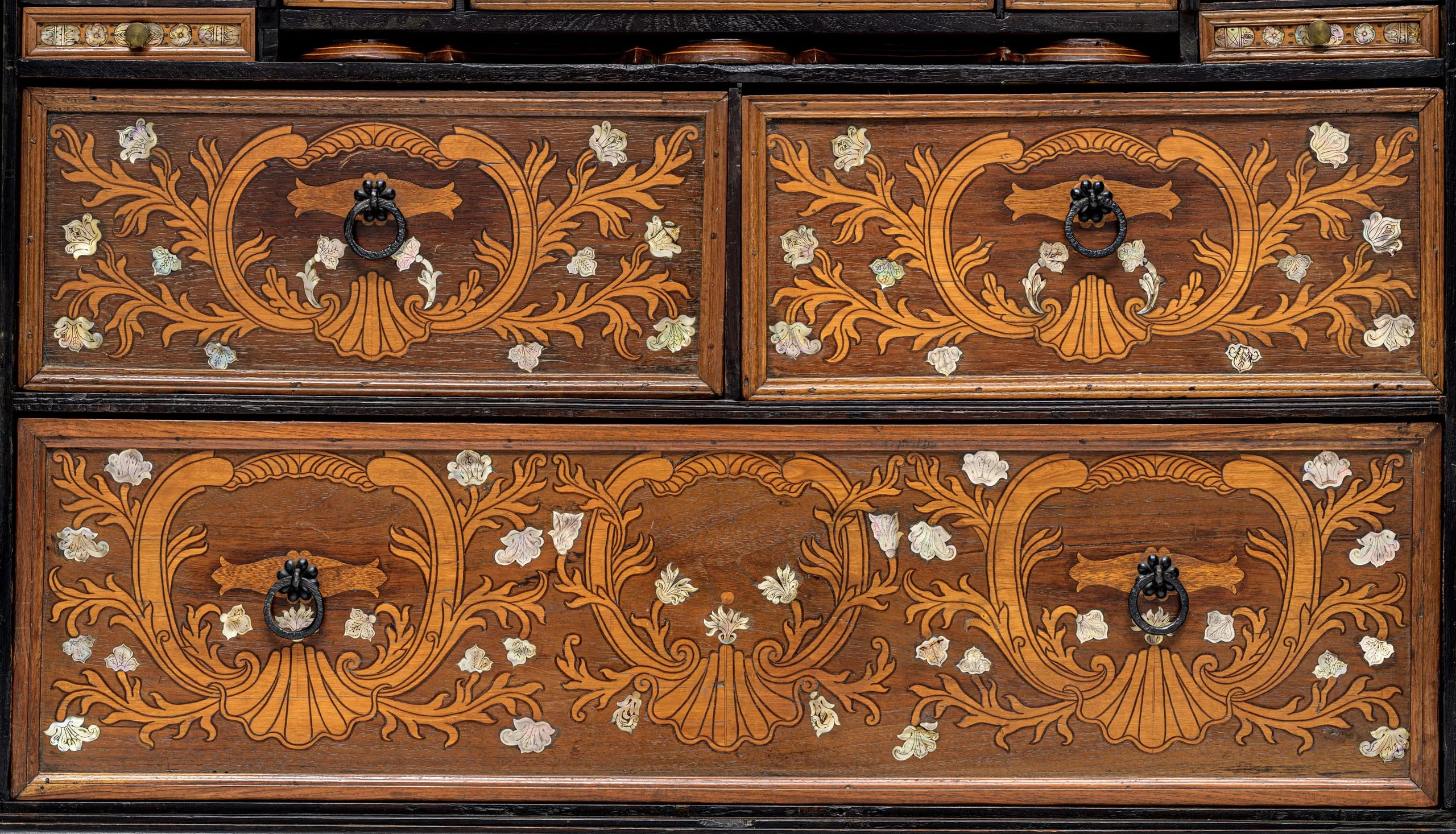
Wooden cabinet drawers with marquetry inlay of scrolling acanthus leaves and shell motifs in light and dark wood, accented with small mother-of-pearl floral insets and black iron ring pulls.
Row of five wooden cabinet drawers with carved and inlaid decorative panels, each featuring a central brass pull surrounded by polychrome inlaid motifs of scrolling foliage and small figural or geometric elements against a warm brown wood ground.
Wooden panel with inlaid decoration across three sections, depicting dynamic figures and animals in warm brown, white, and gold tones against a carved and gilded ground.
Three wooden drawer fronts with brass circular pulls, each panel decorated with carved scrolling designs and inlaid polychrome fragments of shell, bone, or ceramic in geometric and figural shapes set against warm honey-toned wood.
Four wooden drawer fronts with inlaid marquetry decoration, each featuring scrolling foliate patterns and embedded medallions in polychrome enamel and metal hardware.
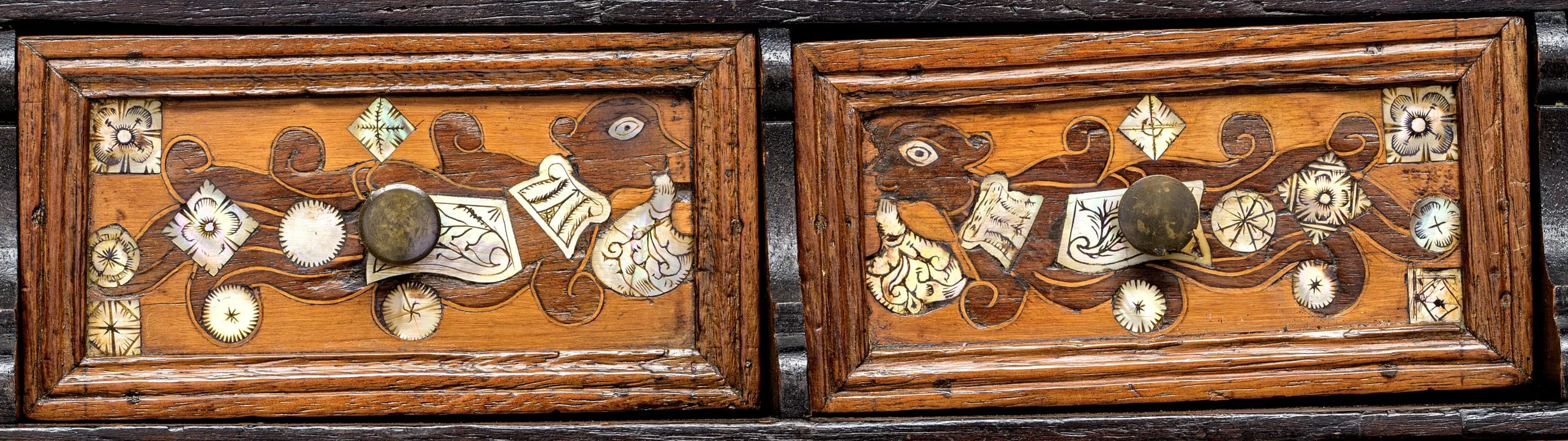
Two matching wooden drawer panels with elaborate inlay work featuring scrolling vine motifs, bone or ivory figural and floral medallions, and small diamond-shaped corner insets, each centered with a round brass pull.
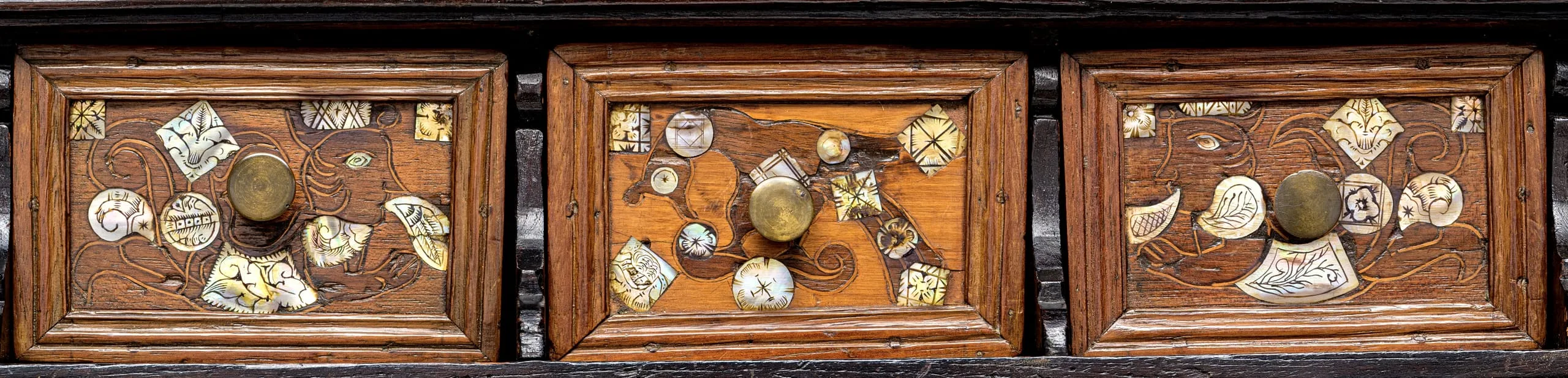
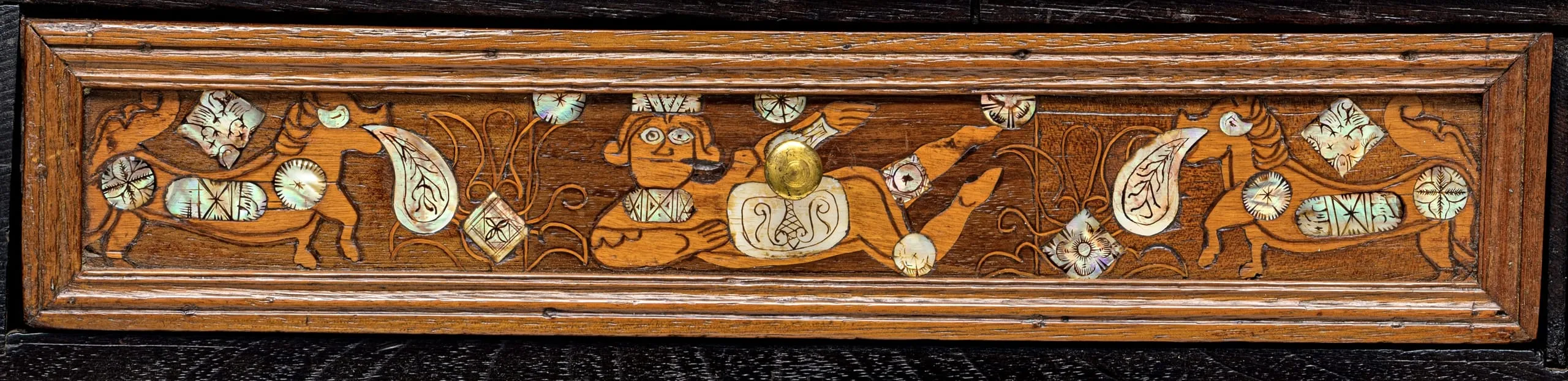
Three decorative wooden drawer fronts with inlaid marquetry panels in warm amber tones, depicting animals and stylized figures with bone or ivory accents; outer panels show quadrupeds flanked by foliate motifs, center panel features reclining human figures amid floral designs, each drawer fitted with a circular brass pull.
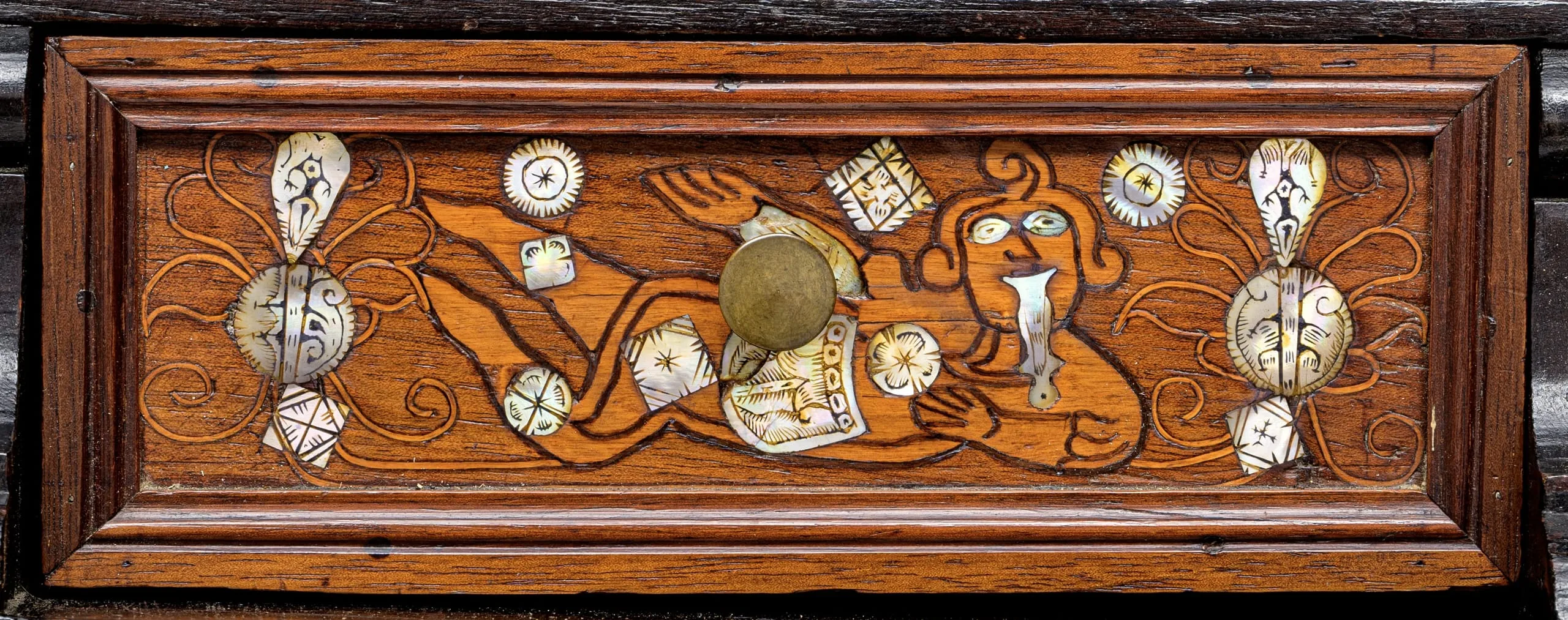
Wooden panel with inlaid mother-of-pearl decoration; a crouching figure with outstretched arms rendered in engraved lines at center, flanked by symmetrical foliate scrollwork and geometric medallions inlaid in shell, with a circular brass boss at the figure's torso.
Two rectangular wooden panels with inlaid decoration, featuring symmetrical bird and floral marquetry in dark wood, set with polychrome ceramic tile fragments and brass roundels against a warm walnut ground.
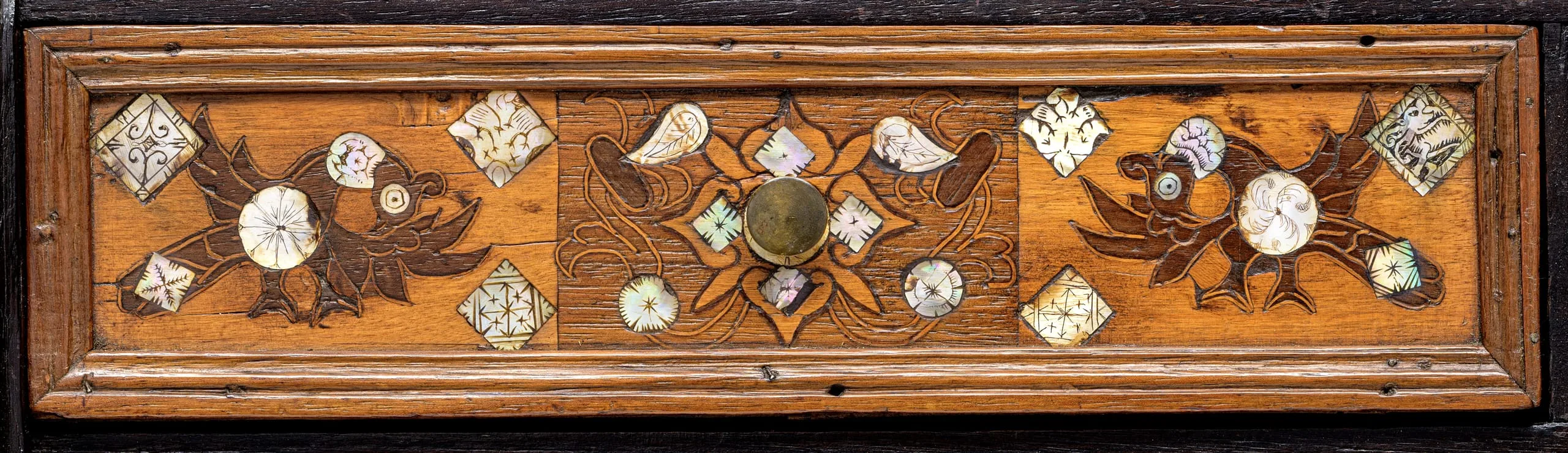
Rectangular wooden panel with inlaid mother-of-pearl decoration, featuring two carved bird figures flanking a central floral medallion with a brass or bronze roundel, set among diamond-shaped iridescent shell inlays on a warm honey-toned wood ground
Wooden panel with mother-of-pearl inlay, featuring two carved figural forms flanking a central metal boss, surrounded by diamond- and circular-shaped iridescent shell pieces with incised star and floral patterns on warm honey-toned wood.
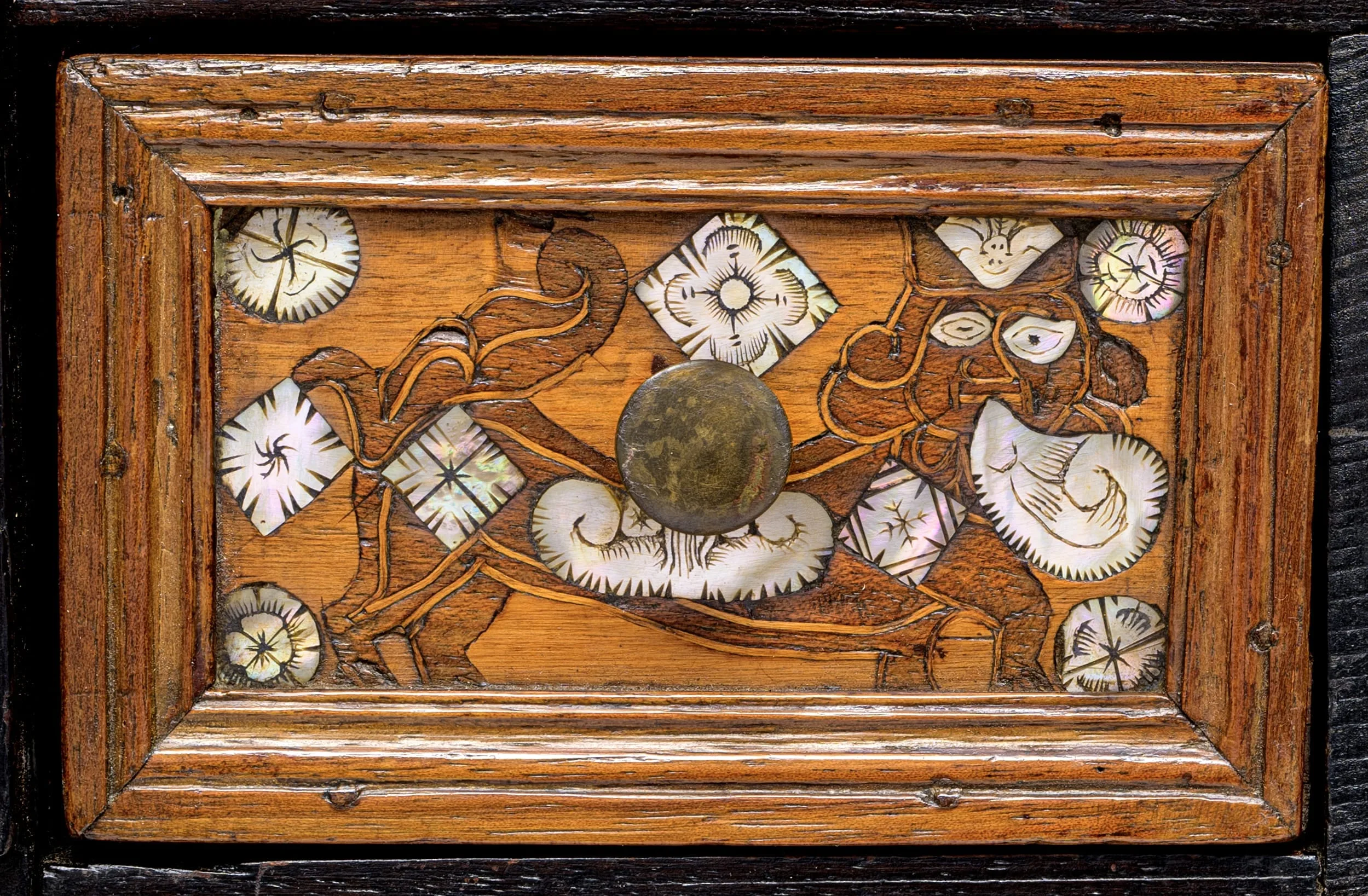
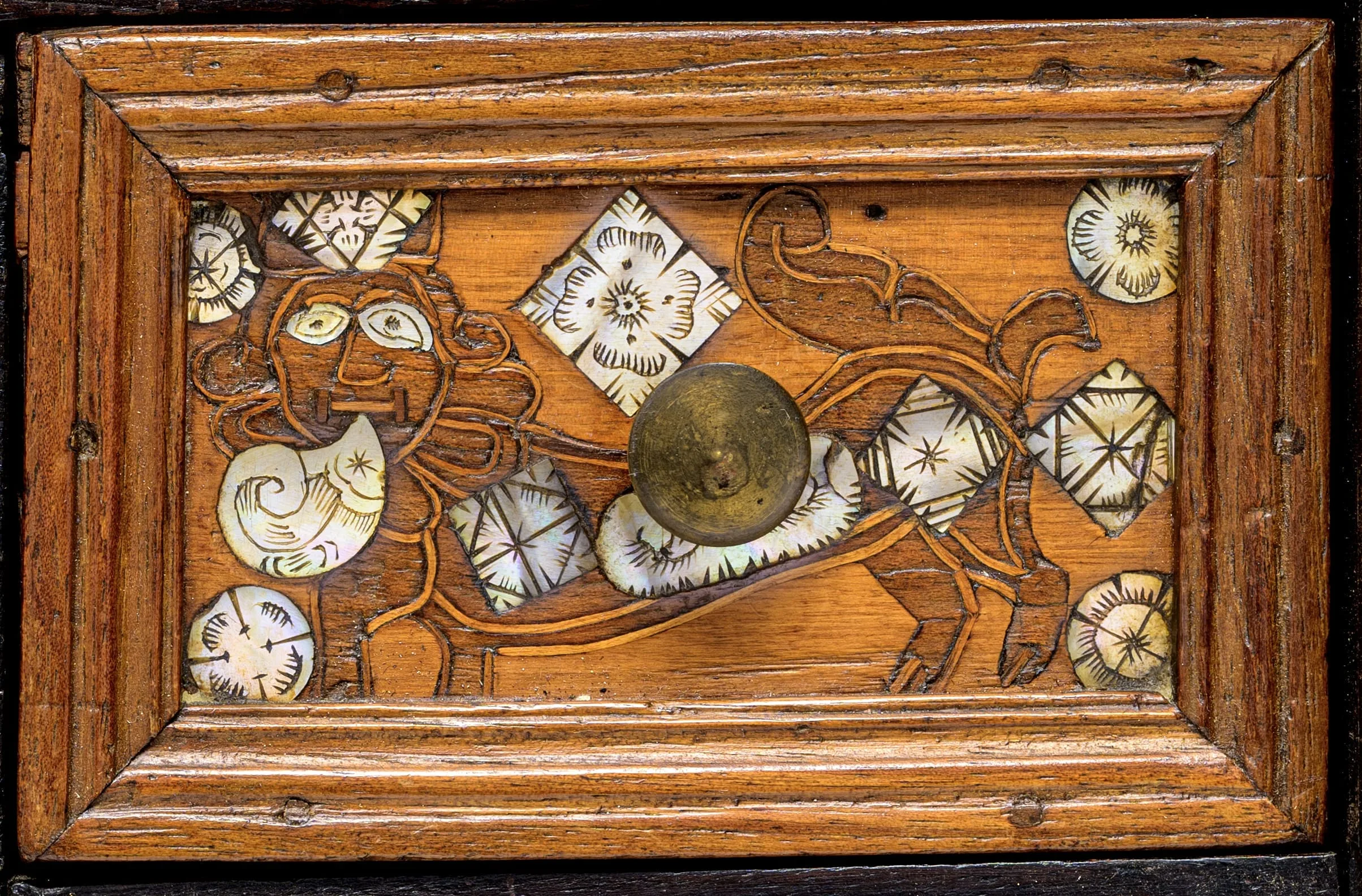
Wooden panel with carved and mother-of-pearl inlaid decoration depicting a mythical creature or lion figure, with iridescent shell pieces inset in geometric and floral patterns across the warm brown wood surface; a small brass knob at center.
Rectangular wooden panel with inlaid marquetry and mother-of-pearl, depicting a central winged figure flanked symmetrically by two lion-like creatures amid scrolling foliage, with a brass keyhole at center.
Artist or Maker
Unidentified Guaraní artists
Title
Cabinet and Writing Desk (Armario de aparato y papelera)
Place Made
Paraguay, possibly Franciscan mission of San Blas de Itá
Date Made
18th century
Medium
Wood, mother-of-pearl, and bronze
Dimensions
Open: 91 × 105 1/2 × 30 3/4 in. (231.14 × 267.97 × 78.11 cm); closed: 91 × 59 3/4 × 30 3/4 in. (231.14 × 151.77 × 78.11 cm); desk: 32 × 25 × 1 in. (81.28 × 63.5 × 2.54 cm)
Credit Line
Gift of the 2022 Collectors Committee with additional funds provided by Ryan Seacrest, Ann Colgin & Joe Wender, and the Bernard and Edith Lewin Collection of Mexican Art Deaccession Fund
Accession Number
M.2022.11.1-.28
Classification
Furnishings
Collecting Area
Latin American Art
Curatorial Notes

This extraordinary cabinet was likely produced by Indigenous Guaraní artists in one of the Franciscan missions of Paraguay, possibly San Blas de Itá, which was established in 1585. Elaborately decorated writing desks with multiple drawers derive from the Spanish escritorio or papelera. The decorative scheme of this exceptional piece combines local and European motifs, reflecting the active participation of Indigenous artists in the design of Spanish-style furnishings.


Missions became known for particular products. The Franciscan José de Parras, who visited Itá in 1753, noted that “I only found exceptional masters of carpentry and sculpture. They carve beautiful boxes and writing desks richly inlaid with nacre and shells.” Shells were abundant in the region. The Jesuit missionary José Sánchez Labrador (1714–1798) described an island known as the Isla de Conchas (Island of Shells), where Native people harvested mother-of-pearl by the bucketload and sold it in the nearby city of Asunción, remarking that the shell was employed to make “striking inlaid writing desks, tables, and cabinets.”


The sober exterior of this cabinet opens to reveal an exuberant writing desk inlaid with contrasting tropical woods and opalescent freshwater shells. Among the details that enliven the work are reclining figures of Indigenous chieftains, one wearing a lip ornament (a symbol of strength and virility); elements traditionally associated with the Spanish world (bulls, horses, and angels); and birds, flowers, and stylized geometric motifs. The amphibious creatures may have had some significance in Guaraní cosmology, while the shell speech scrolls could allude to the concept of song that was essential for the Guaraní to transmit memories of their past. The shells are intricately embellished with additional motifs and pictographs that might also hold special meaning. The work demonstrates a remarkable degree of Indigenous agency and the persistence of Guaraní traditions within the Spanish colonial system.


Ilona Katzew, 2023

Provenance
Ávalos Family, Corrientes, Argentina, by the early 20th century; Antonio Zacarías Muniz Barreto Sáenz Valiente (1882–1969), Buenos Aires, before 1931; by descent to his daughter Jacoba Juana Muniz Barreto de Duggan (1932–1982), Buenos Aires, 1962; by descent to her daughter Jovita Duggan Muniz Barreto de Decker, Buenos Aires,1982; J. C. Naón & Cía, SA – Auction House, Buenos Aires, July 1996, lot 268; Private collection, Buenos Aires, 1996; Eguiguren Arte de Hispanoamérica (Javier Eguiguren), 2022; LACMA, 2023.
Selected Bibliography
  • Ilona Katzew, “New Acquisition: A Special Spanish American Cabinet from Paraguay,” Unframed, March 16, 2023, https://unframed.lacma.org/2023/03/16/new-acquisition-special-spanish-american-cabinet-paraguay.

Selected Exhibition History
  • Archive of the World: Art and Imagination in Spanish America, 1500–1800. October 20, 2023 - January 28, 2024
  • Archive of the World: Art and Imagination in Spanish America, 1500–1800. October 20, 2023 - January 28, 2024
  • Archive of the World: Art and Imagination in Spanish America, 1500–1800. June 22, 2024 - September 08, 2024
  • Archive of the World: Art and Imagination in Spanish America, 1500–1800. June 22, 2024 - September 08, 2024