LACMA

ShopMembershipMyLACMATickets
LACMA
Los Angeles County Museum of Art
5905 Wilshire Blvd.
Los Angeles, CA 90036
info@lacma.org
(323) 857-6000
Sign up to receive emails
Subscribe
© Museum Associates 2025

Museum Hours

Monday

11 am–6 pm

Tuesday

11 am–6 pm

Wednesday

Closed

Thursday

11 am–6 pm

Friday

11 am–8 pm

Saturday

10 am–7 pm

Sunday

10 am–7 pm


  • About LACMA
  • Jobs
  • Building LACMA
  • Host An Event
  • Unframed
  • Press
  • FAQs
  • Log in to MyLACMA
  • Privacy Policy
© Museum Associates 2025
Collections

Unknown
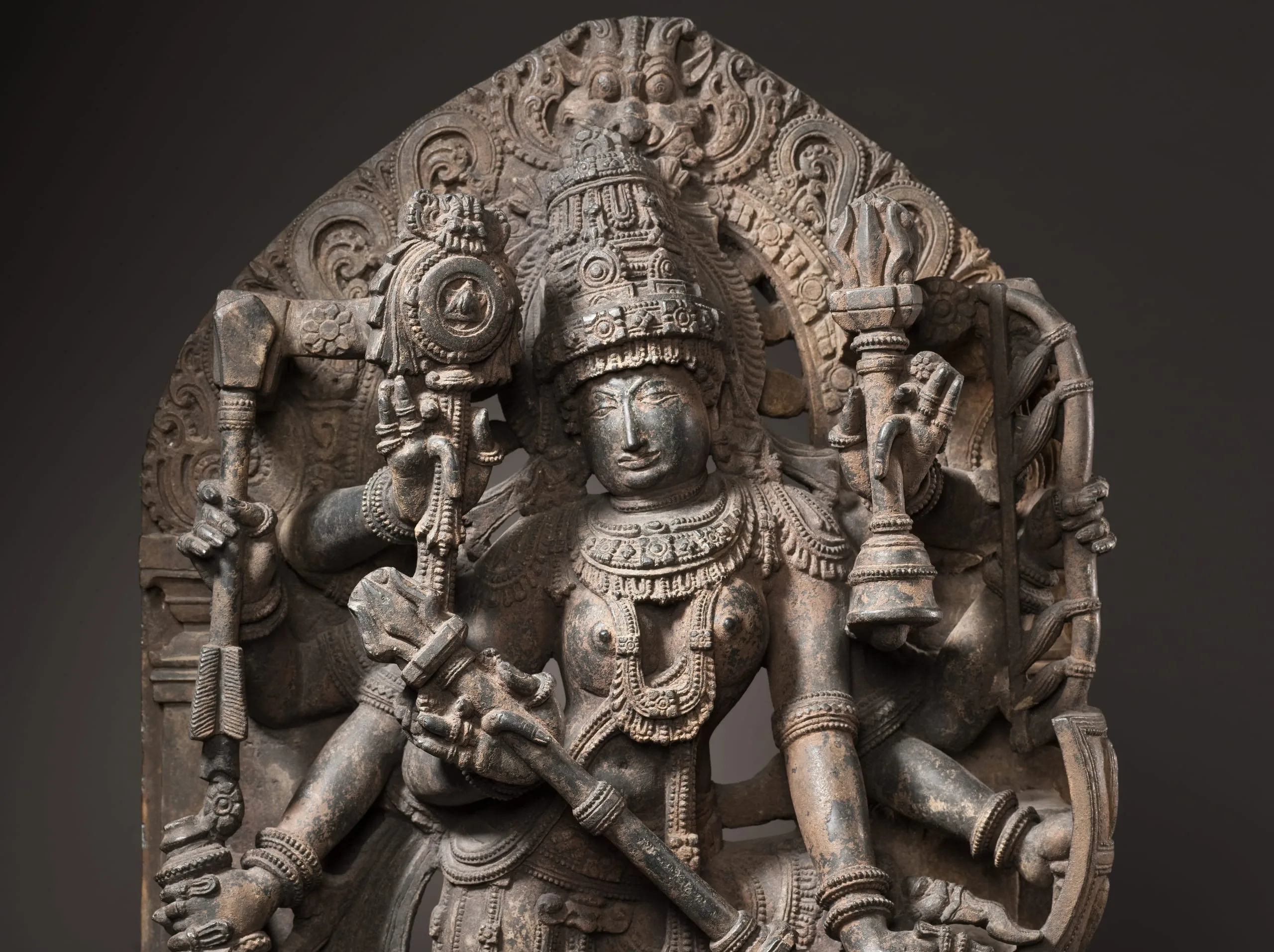
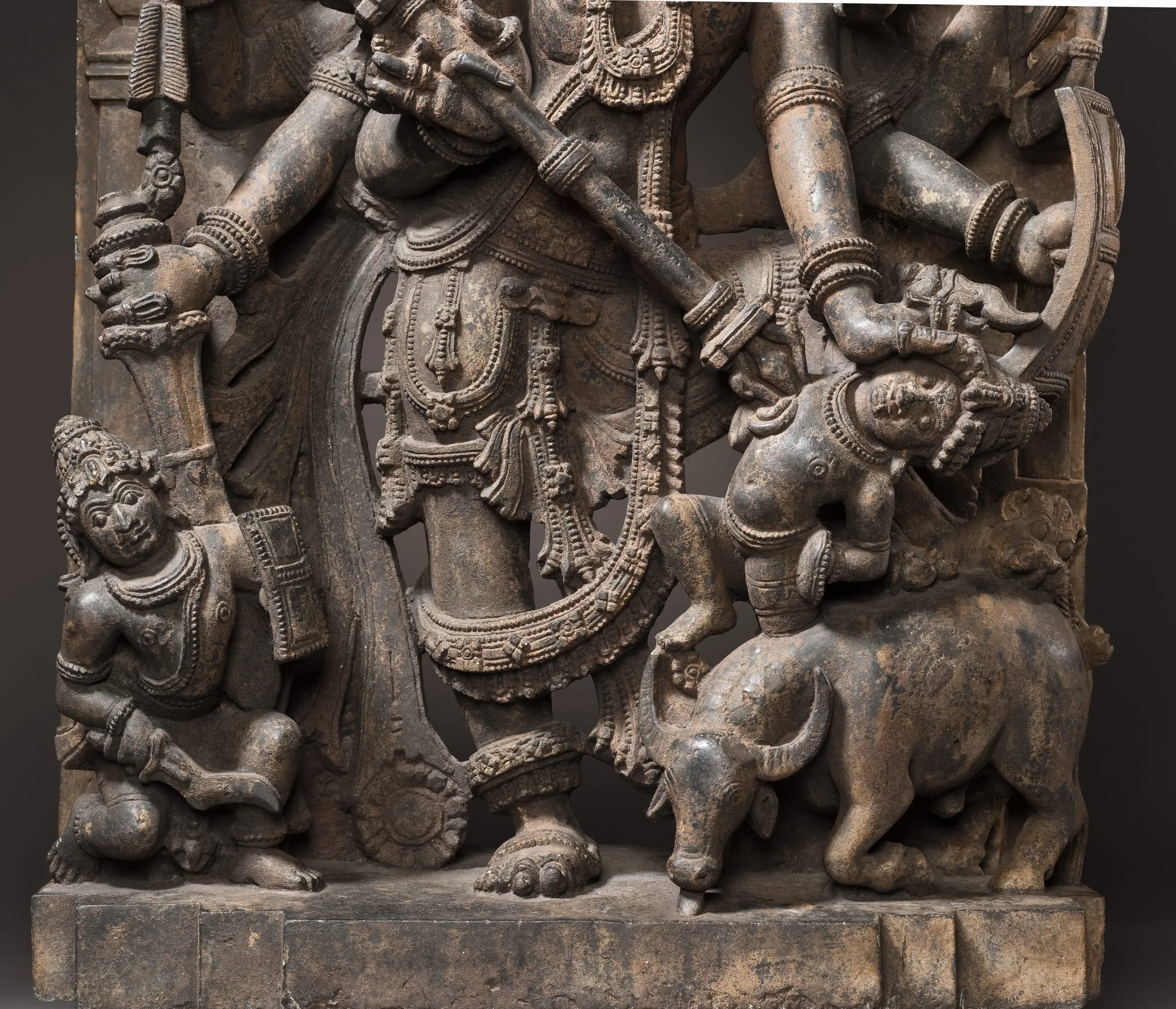
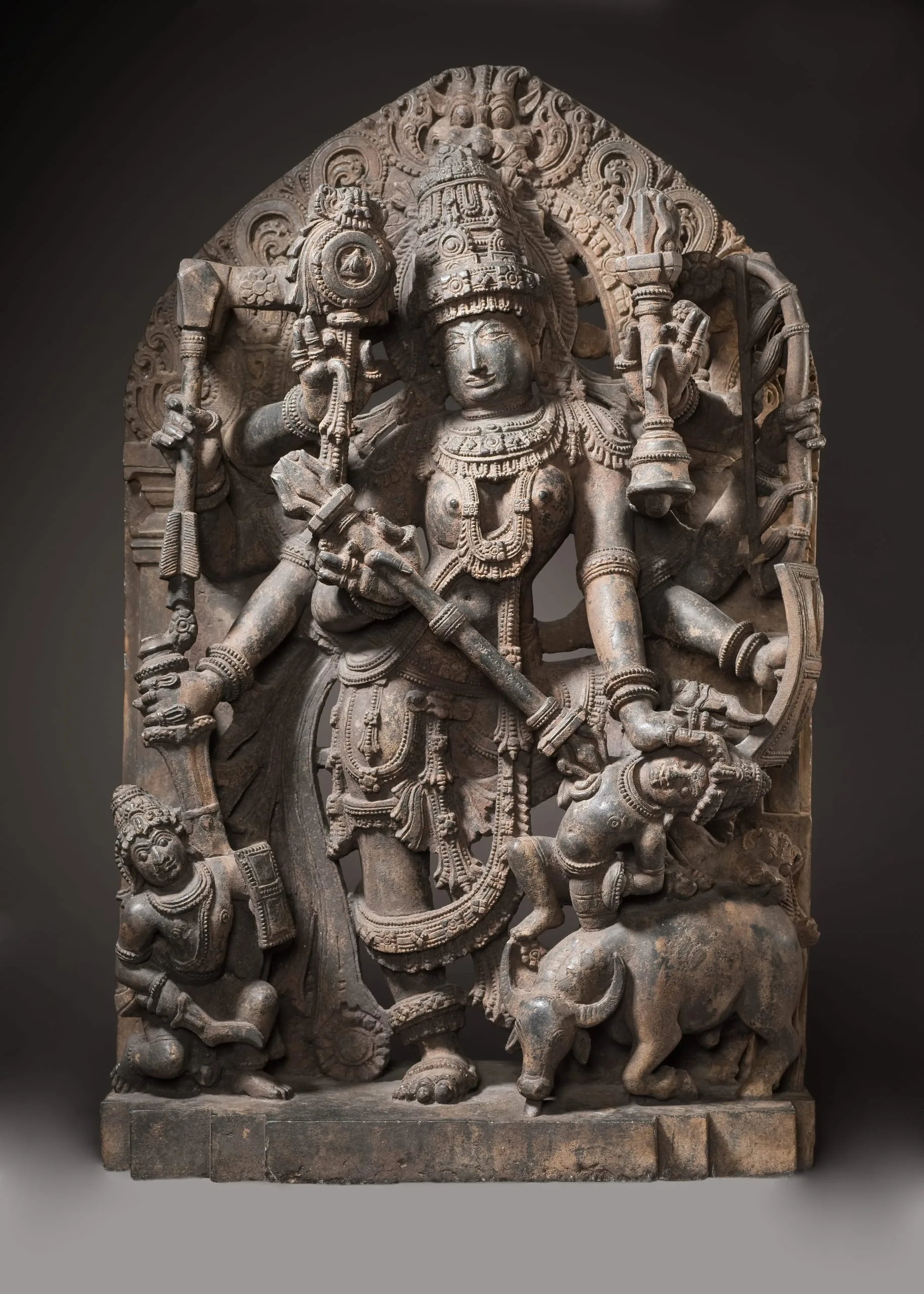
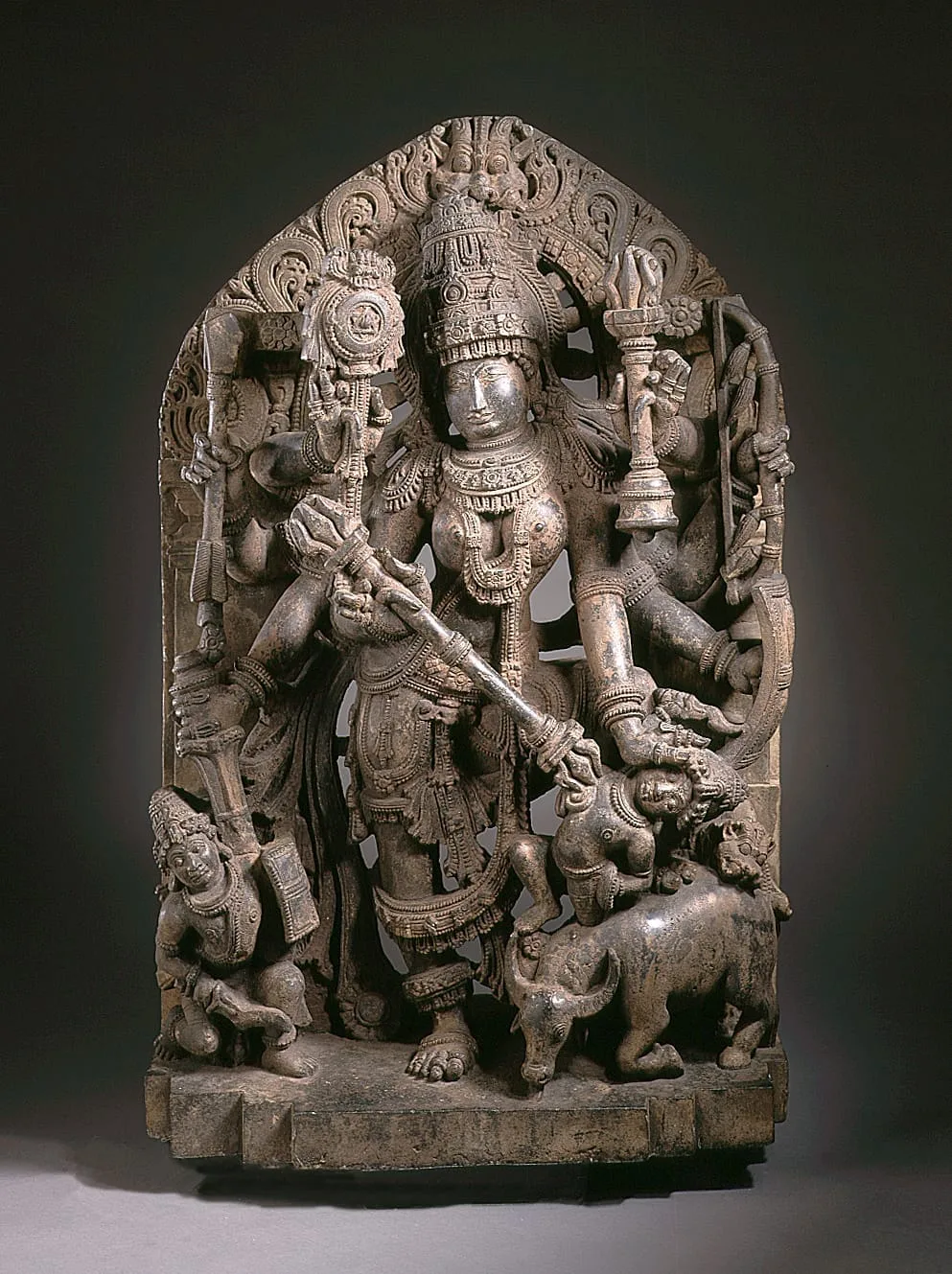
Durga Slaying the Buffalo Demon13th century

Not on view
Dark gray stone relief sculpture of a six-armed standing figure in an arched slab, wearing elaborate jewelry and crown, flanked by small figures and animals at the base
Stone sculpture of a multi-armed deity standing frontally within an arched nimbus, adorned with elaborate jewelry, crown, and garlands; lower registers include attendant figures and a buffalo, with densely carved surface detail throughout.
Dark stone sculpture of a multi-armed deity standing before an arched prabhamandala, adorned with elaborate crown, layered jewelry, and holding ritual objects in each hand; finely carved surface detail throughout.
Stone relief panel with finely carved multi-armed central figure adorned with elaborate jewelry and garlands, flanked by attendant figures; a buffalo and smaller crouching figure appear at the base, with intricate beaded ornamentation throughout.
Artist or Maker
Unknown
Title
Durga Slaying the Buffalo Demon
Place Made
India, Karnataka
Date Made
13th century
Medium
Magnesian schist
Dimensions
34 x 21 1/4 x 10 1/2 in. (86.36 x 53.98 x 26.67 cm)
Credit Line
From the Nasli and Alice Heeramaneck Collection, Museum Associates Purchase
Accession Number
M.70.1.1
Classification
Sculpture
Collecting Area
South and Southeast Asian Art
Curatorial Notes

The Hindu goddess Durga (Unconquerable) is one of the most widely worshipped deities of Hinduism, especially among the warrior classes. Although she can assume many guises, the most popular, and the form most often encountered in art, is that of the slayer of Mahisha, the buffalo demon. When the gods were unable to conquer the powerful Mahisha, Durga was created from the energy of their combined anger to fight for them. Each god gave her a portion of his powers, and she carries their various weapons in her multiple arms, including the discus of Vishnu, the trident of Shiva, and the spear of Karttikeya.

The myth of Durga' s slaying of the buffalo demon may be interpreted primarily in sectarian terms, as proclaiming the powers of the goddess over those of the gods; anthropologically, however, it may also represent the assimilation into mainstream Hinduism of a totemistic buffalo cult. Variances in the artistic depictions of the myth may also reveal additional layers of
interpretation and inherent cultural symbolism. Here, the medium is the message. The sculpture's lavish ornamentation and richness of detail aptly convey the spiritual glory of the triumphant goddess. In contrast, in a 9th-century sculpture of Durga from Rajasthan (M.77.19.27), the visual emphasis is on the act of slaying the buffalo demon. The medium of the stone is subservient to the image's religious meaning, and its spiritual intensity is conveyed through its powerfully stark forms and relative lack of surface embellishment.
Selected Bibliography
  • El Universo de la India: Obras Maestras del Museo de Arte del Condado de Los Angeles. Santiago: Centro Cultural Palacio La Moneda, 2012.